CarCareTruth Score
Recommended.
Opens Amazon in a new tab. No account needed to look.
Saved to your guest loadout. Sign up to also save to your Cabinet (consumables) or Kit (tools you own).
As an Amazon Associate I earn from qualifying purchases. Full disclosure
Prices may varyHealth score is for adult use as intended, per the manufacturer's SDS. It does not model child ingestion, accidental spill cleanup, or off-label use. See the safety panel below for full hazard classification, and /disclaimer for the full editorial scope.
GHS hazard codes are quoted from the manufacturer’s Safety Data Sheet. PPE tiers below translate those codes and the listed ingredient chemistry; they are not CarCareTruth recommendations.
Show details for all categories ▾Hide details ▴
Only when: high-speed DA/rotary use
Translated from the manufacturer’s Safety Data Sheet, Section 8
No H318 or H319 in SDS section 2. SDS section 8.2.2 specifies safety glasses as a precautionary measure (EN 166) without a specific eye-hazard H-code basis. Machine application at DA/rotary speeds is the realistic mechanism for incidental splash; safety glasses are appropriate during machine use.
CarCareTruth publishes the cited sources verbatim and does not advise what action a user should take. Consult the full SDS before use.
Only when: sensitive individuals · prolonged use
Translated from the manufacturer’s Safety Data Sheet, Section 8
SDS section 8.2.2 reports no chemical protective gloves are required for normal use. H317 (skin sensitizer Cat 1A) is driven by the MIT/CMIT preservative at <0.002%, a real allergen for sensitized individuals, but normal use exposure is incidental wipe-off contact. Gloves are warranted for anyone with a documented isothiazolinone allergy or for prolonged commercial-volume use.
U.S. regulatory standard
29 CFR 1910.138(a); 1910.132(d)
“appropriate hand protection when employees' hands are exposed to hazards such as those from skin absorption of harmful substances.”
OSHA standards apply to workplaces. Cited here as the U.S. reference threshold for the underlying hazard class.
CarCareTruth publishes the cited sources verbatim and does not advise what action a user should take. Consult the full SDS before use.
Only when: high-speed DA/rotary use · in enclosed space
Translated from the manufacturer’s Safety Data Sheet, Section 8
SDS section 8.2.2 states respiratory protection is 'none required' for normal use, and section 11 reports no known inhalation health effects. Section 8.1 does carry occupational exposure limits for aluminum oxide dust and glycerin mist, the realistic pathway when extended DA buffing throws fine polish residue into the air of a closed garage. A dust mask is a reasonable precaution in that scenario, not evidence of a mixture-level respiratory hazard.
CarCareTruth publishes the cited sources verbatim and does not advise what action a user should take. Consult the full SDS before use.
No PPE specified in published sources for ventilation. Absence does not imply “not needed” — consult the full Safety Data Sheet.
PPE tiers translate the manufacturer’s SDS and U.S. regulatory standards. Not professional safety advice. How we report safety.
This product ranks #2 of 8 in Finishing Polish.
Last reviewed June 7, 2026
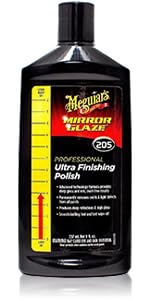
TL;DR The reference finishing polish in paint correction: hologram-free finish across virtually every soft pad on the market, long working time, and a clean formula profile aside from a trace preservative that drives the WARNING label. Silicone-free, body-shop safe after an IPA wipe.
Three or four dime-sized drops on a soft foam or microfiber pad, DA at 4,500 OPM, two slow passes per panel section: the residue wipes off clean and the finish holds up to an IPA wipe-down without holograms or filler-mask. Community consensus across Auto Geek, Detailing World, and r/AutoDetailing is that M205 is the polish other finishing polishes get compared against. It runs cleanly across Lake Country, Buff and Shine, and Rupes pad ecosystems with the same result, no proprietary pad chemistry required. Working time is generous and dusting is minimal under typical garage conditions; short flash windows are reported only above 90 degrees F. Quality scores 8.1 out of 10.
Anyone running a two-step paint correction (compound followed by M205) will find this is the de facto reference partner, with the broadest pad compatibility in the category and consistent results whether you're on a soft Honda clear or a hard BMW clear. Also a strong stand-alone finishing polish for lightly defected paint where you want to refine without cutting more clear coat than necessary. Skip it if your paint has scratches that need real compound cut; M205 is a finishing step, not a compound replacement. Skip it if you have a documented MIT/CMIT (isothiazolinone) skin allergy; the preservative is at trace levels but is the driver of the skin sensitizer classification.
The REACH SDS (rev. May 2020) carries signal word WARNING driven by a skin sensitizer classification from a biocidal preservative present at less than 0.002% by weight; no H-codes for eye damage, respiratory risk, or skin corrosion appear in Section 2. SDS Section 8 explicitly states no chemical-resistant gloves and no respirator are required for normal use; situational eye protection (safety glasses) is listed as a precaution for machine application splatter, not a hazard classification. The flash point is 93 degrees C. The product listing carries a Prop 65 warning; the petroleum distillate carrier is the likely trigger. Polish residue ends up in laundry wastewater via the wipe-off towel rather than direct stormwater discharge; no PFAS, no confirmed aquatic toxicity codes.
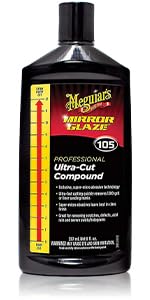
M205 is a finishing polish with a light cut (approximately 2000-2500 grit equivalent on the Meguiar's defect chart). It is designed to refine the finish after a compound step (M105 or M101) or as a stand-alone on lightly defected paint. It is not aggressive enough to remove deeper scratches; use a compound first for that.
M205 is the original Mirror Glaze finishing polish with a balanced abrasive system; M210 is the newer Mirror Glaze formula tuned for jeweling on hard German clear coats. M205 has the larger user base, broader pad compatibility, and is the more forgiving choice for inexperienced users. M210 is preferred by detailers working primarily on hard clears who want a finer final step.
Per the REACH SDS Section 3, M205 does not list silicone or polysiloxane ingredients. The carrier system is petroleum distillate plus C11-C14 isoalkanes with mineral oil. Meguiar's M-series is widely used in body shops and is generally considered body-shop safe, but for paint-prep work where any residual oil is unacceptable, an IPA wipe-down is standard practice after polishing.
Hand-application works on light defects, but the finishing performance the polish is known for comes from DA work at 4,500 OPM with a soft pad. Hand polishing produces a maintenance-level shine; the hologram-free, IPA-wipe-down-stable finish that distinguishes M205 in community testing requires machine application.
Typical use is 4-6 dime-sized drops per 16x16 inch panel section. A full midsize sedan finishing pass takes approximately 1-2 oz of product. An 8 oz bottle yields 4-8 full vehicle finishing passes depending on technique and pad cleanliness. The 32 oz bottle is the better value for anyone polishing more than two cars.
Marketing copy from Meguiar's, via Amazon. Not editorial.
Weekly pick
One product, one safety verdict, every week. No spam.
Currently in the top 2 of its category — appears as a pick in:













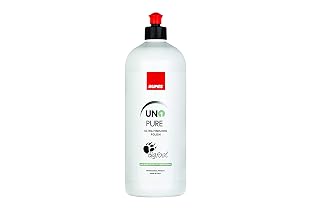
RUPES
UNO Pure Ultrafine Polish
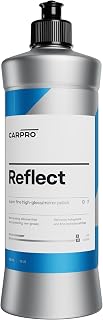
CarPro
Reflect High Gloss Finishing Polish
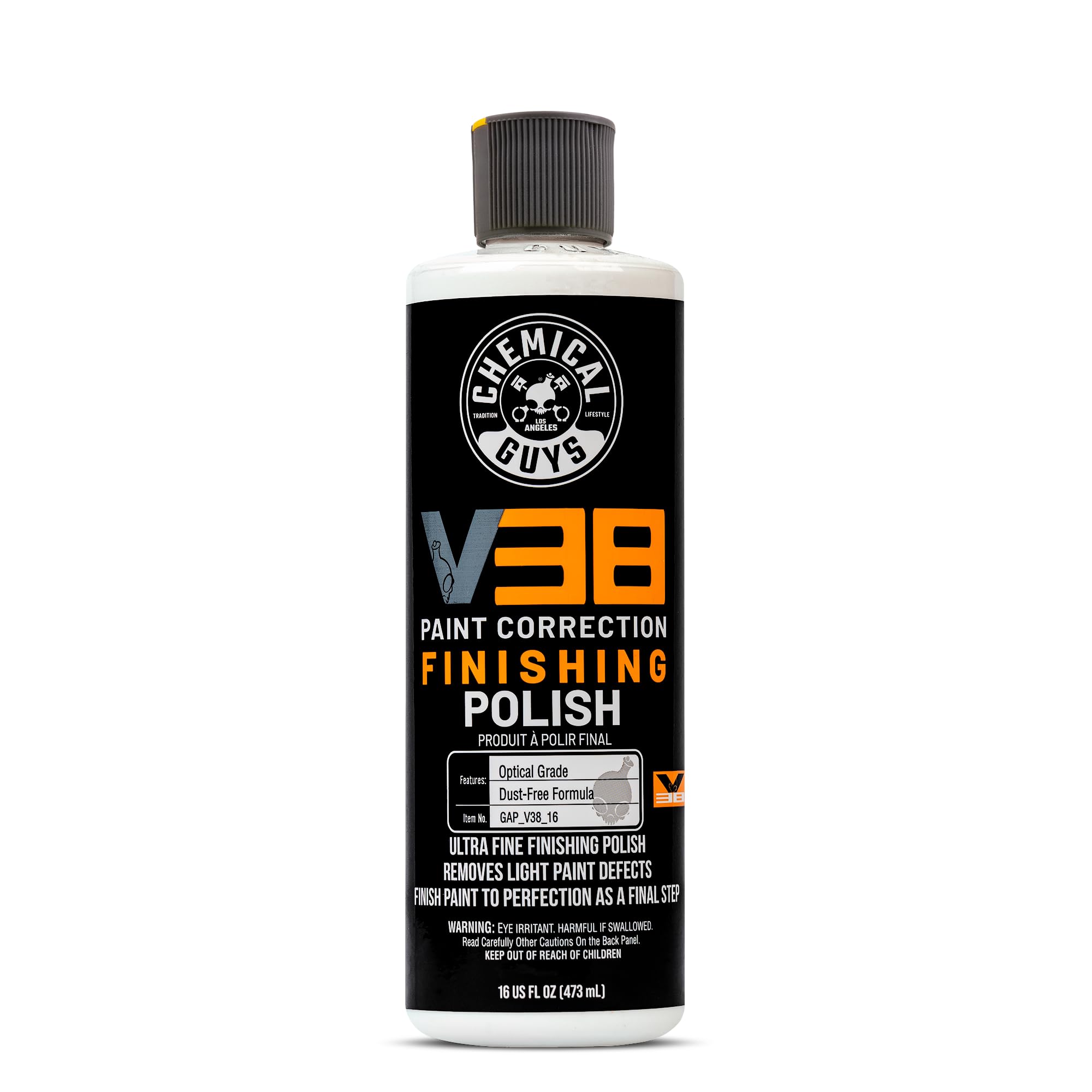
Chemical Guys
V38 Optical Grade Final Polish
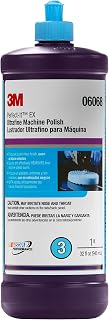
3M
Perfect-It EX Ultrafine Machine Polish (06068)
As an Amazon Associate I earn from qualifying purchases. Full disclosure

Community
0 postsShare how you use this product
Drop a quick comment or post a full review with photos and a star rating.
Sign in to postNew here? Create a free account.