
Best Car Polish of 2026: Compound, Polish & Glaze Scored and Ranked
We score every car polish we can verify, for performance and ingredient safety. These are the 10 best of 35 in our catalog.
CarCareTruth scored 35 car polishes for 2026, and Meguiar's M205 Mirror Glaze ranks first: the de facto reference finishing polish in pro paint correction, with a diminishing alumina abrasive that clears buffer haze and holograms to a mirror finish and posts the top score on our card. For cutting deep scratches and oxidation, Meguiar's Ultimate Compound is the best compound, and Sonax Perfect Finish is the best one-step for owners who want cut and gloss in a single pass. If you want that wet, oily show-car depth without correcting anything, Meguiar's M07 Show Car Glaze is the glaze to reach for. Chemical Guys All-in-One Polish + Sealant is the best value, doing light correction and protection together. The honest education most product pages skip: a compound cuts, a finishing polish refines, and a glaze only fills and glosses, so a glaze hides swirls temporarily rather than removing them.
Affiliate disclosure: CarCareTruth is reader-supported. As an Amazon Associate I earn from qualifying purchases. We may also earn commissions from other retailers linked on this page, at no extra cost to you. Affiliate revenue never influences our scores or rankings. Full disclosure
Best of Car Polish
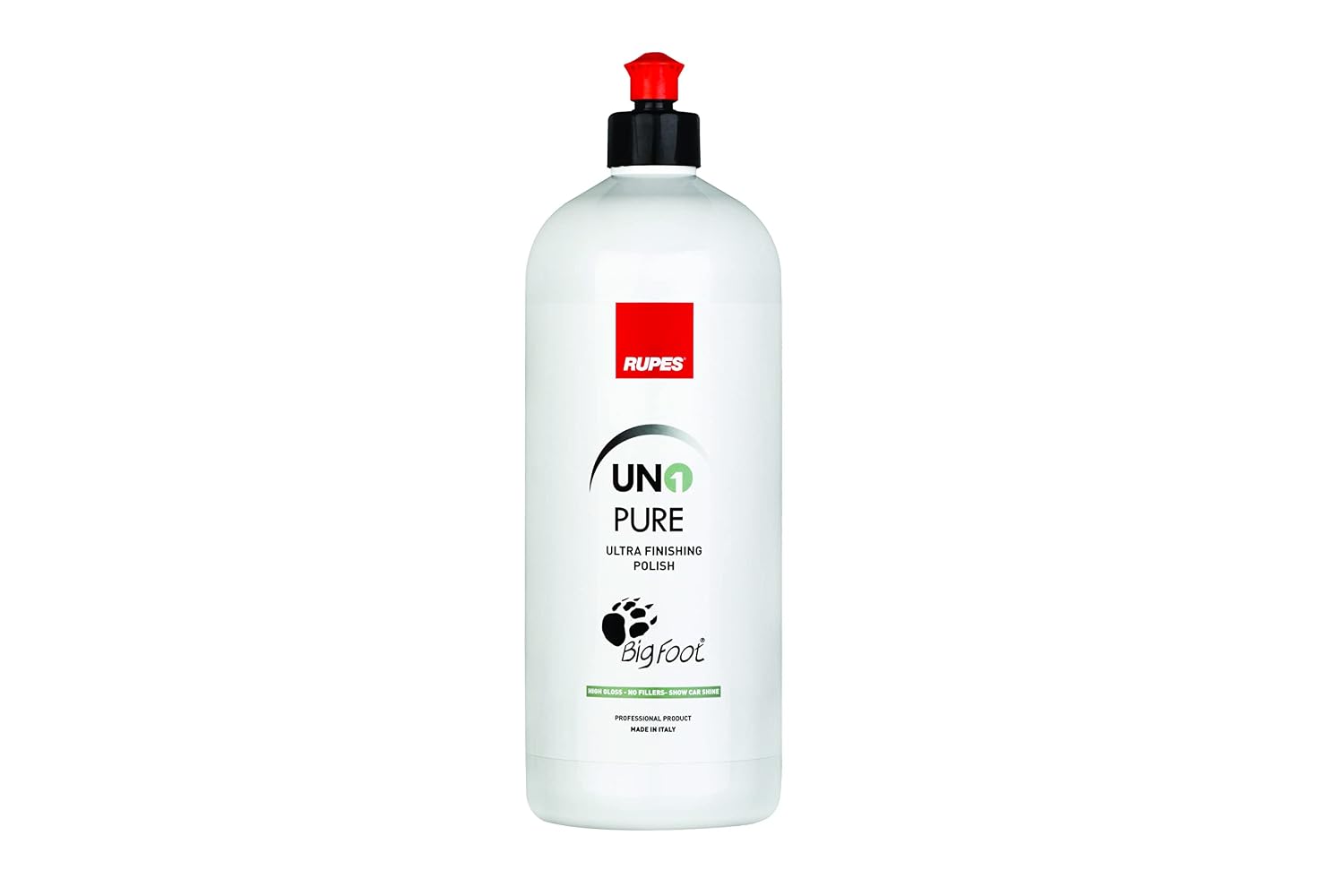
RUPES UNO Pure Ultrafine Polish
The Full Ranking
Why each pick earned its spot
Best Overall: Meguiar's M205 Mirror Glaze Ultra Finishing Polish
Meguiar's M205 Ultra Finishing Polish is the de facto reference finishing polish in professional paint correction, with a diminishing alumina abrasive that clears buffer haze and rotary holograms to a hologram-free, mirror finish ready for wax or sealant.
Best Cutting Compound: Meguiar's Ultimate Compound
Meguiar's Ultimate Compound is the pick for removing deep scratches, swirls, and oxidation, a water-based aluminum-oxide formula with medium cut and a clean wipe-off that works by hand or on a DA polisher.
Best One-Step / All-in-One: SONAX PROFILINE Perfect Finish 4|6
SONAX Perfect Finish is a Cut 4 / Gloss 6 one-step machine polish that takes paint from P2000 sanding marks to a ready finish in a single pass, silicone-free and body-shop-safe, and highly rated by owners.
Best by Hand: Mothers California Gold Scratch Remover
Mothers California Gold Scratch Remover is a forgiving, hand-applied light-cut compound with diminishing abrasives, the easy choice for tackling surface scratches and swirls on all paints without a machine, and it carries one of the cleaner health profiles here.
Best Glaze for Show Gloss: Meguiar's M07 Mirror Glaze Show Car Glaze
Meguiar's M07 Show Car Glaze is a petroleum-oil-carrier body glaze that fills fine swirls and adds a warm, oily wet-look depth show cars are built on, with strong owner support; it fills rather than corrects, and its SDS carries a Prop 65 warning.
Best Value: Chemical Guys V4 All-in-One Polish + Sealant
Chemical Guys All-in-One Polish + Sealant removes light swirls and water spots and leaves a synthetic sealant in a single pass, by hand or DA, a do-it-all bottle with the cleanest health score in this guide at 9.5.
Full ranked catalog — including picks 11+, out-of-stock options, and the ones we couldn’t crown.
How we rank
Every car polishin our catalog runs through the same scoring rubric: scored effectiveness, ingredient-safety data translated from each product’s SDS, and environmental impact. We don’t take placement fees, and affiliate links never move a product up the list.
Car polish is one product name covering a whole spectrum of how hard a product cuts your paint, and picking the wrong end of that spectrum is the most common mistake owners make. At the aggressive end sits the cutting compound, sometimes sold as rubbing compound or scratch remover, which levels a thin layer of clear coat to erase deep scratches, sanding marks, and heavy oxidation. A finishing polish is gentler, the swirl remover that refines the surface and clears buffer haze to a mirror gloss without much cut. One thing it will not fix, though, is a foggy headlight: those polycarbonate lenses need multi-grit wet sanding and a fresh UV seal, which is the job of a purpose-built headlight restoration kit rather than any paint polish. In the middle, a one-step or all-in-one polish trades a little of each for convenience, doing real paint correction and leaving gloss in a single pass, which makes it the friendliest place for a beginner to start. At the soft end, a glaze has no meaningful abrasive at all: it fills micro-marring with oils for a warm, wet-look shine, so it hides swirls temporarily rather than correcting them. You can polish by hand for light work, but a dual-action machine does it faster and more evenly. Whatever you use, finish the job: polish first, then protect with a wax or sealant, because bare corrected clear coat needs a layer over it. How we score: CCT grades each car polish on real-world cut and finish AND on health translated straight from its SDS, never marketing copy.
Related guides
Frequently Asked Questions
What is the best car polish?
The best car polish overall is Meguiar's M205 Ultra Finishing Polish, the reference finishing polish in professional paint correction, because its diminishing alumina abrasive clears buffer haze and holograms to a true mirror finish and it posts the top score on our card. For removing deeper scratches and oxidation you want a cutting compound, where Meguiar's Ultimate Compound is our pick, and if you want cut and gloss in one pass the one-step SONAX Perfect Finish is the answer. The right polish depends on how much defect you need to remove versus how much you just want to refine the shine.
What's the difference between compound, polish, and glaze?
They sit on a spectrum of how aggressively they cut the paint. A compound (also called rubbing compound or cutting compound) is the most abrasive and removes deep scratches, sanding marks, and heavy oxidation by leveling a thin layer of clear coat. A finishing polish is finer and refines the surface, clearing buffer haze and light swirls to a high gloss without much cutting. A glaze has no real abrasive at all: it fills micro-marring with oils and leaves a warm, wet-look shine, so it hides swirls cosmetically rather than removing them. Most full corrections go compound first, then finishing polish, then a glaze or wax on top.
What's the difference between polish and wax?
Polish corrects the paint; wax protects it. A polish contains abrasives that level the clear coat to remove scratches, swirls, and oxidation, which is paint correction. A wax has no abrasives at all, so it cannot remove a defect; it adds gloss and a protective layer that lasts weeks. The correct order is to polish first to fix the paint, then protect that corrected finish with a [wax](/best/car-wax) or sealant. Polishing without protecting afterward leaves bare, unprotected clear coat exposed.
Do I need a polisher, or can I polish by hand?
You can polish by hand, but a dual-action machine polisher does it faster, more evenly, and with far less effort, which is why most corrections use one. For light work, hand polishing with a forgiving product like Mothers California Gold Scratch Remover handles surface scratches and swirls just fine. Heavier defects and large panels are where a machine earns its keep, since hand pressure struggles to break down a strong compound evenly. If you are a beginner, a one-step polish on a DA is the most forgiving way to start.
Does car polish remove scratches?
Yes, but only the kind that sit in the clear coat. A compound or finishing polish contains abrasives that level a thin layer of clear coat, which removes light to moderate scratches, swirl marks, and oxidation. A scratch you can catch with a fingernail has gone through the clear into the color or primer, and no polish will fix that; it needs touch-up paint or a body shop. A glaze does not remove scratches at all, it only fills and hides them until it wears off.
What is the best car polish for beginners?
Beginners are best served by a one-step or all-in-one polish, because it forgives mistakes and does correction and gloss in a single product. SONAX Perfect Finish is our top one-step, and Chemical Guys All-in-One Polish + Sealant adds protection in the same pass, which removes a whole step. Start with the least aggressive product that does the job and test on a small section first, since you can always step up to a stronger compound but you cannot un-cut clear coat. Pair a one-step with a dual-action polisher and you have a low-risk setup.
What is the best car polish for swirl marks?
Swirl marks are fine circular scratches in the clear coat, usually from improper washing or drying, and removing them is exactly what a polish does. For most swirls a medium-cut polish like SONAX Perfect Finish clears them in one or two passes; deeper swirls need a compound first, then a finishing polish to restore gloss. A dual-action polisher makes the job far easier and more even than working by hand, though a one-step polish by hand will knock back light swirling. The key is to correct the swirls before you wax or coat, because any protection you apply on top will simply lock the swirls in underneath it.
Can you polish a car by hand without a machine?
Yes for light work. Hand polishing with a forgiving, diminishing-abrasive product knocks back surface scratches, light swirls, and oxidation, it just takes more passes and more elbow grease and evens out less than a machine. Heavier defects and large panels are where a dual-action polisher earns its keep, since hand pressure struggles to break a strong compound down evenly.
How often can you polish your car?
Sparingly, because abrasive polishing removes a thin layer of clear coat, and clear coat is finite. Once or twice a year is plenty for most cars, and many owners correct only when defects actually warrant it, then protect and maintain in between. A true non-abrasive finishing glaze removes little to nothing, so it is real cutting and compounding you want to ration. Over-polishing thins the clear coat until it can no longer be safely corrected, so treat correction as occasional, not routine.
#1 · UNO Pure Ultrafine Polish
7.5/10 CCT
As an Amazon Associate I earn from qualifying purchases.