CarCareTruth Score
Recommended.
Opens Amazon in a new tab. No account needed to look.
Saved to your guest loadout. Sign up to also save to your Cabinet (consumables) or Kit (tools you own).
As an Amazon Associate I earn from qualifying purchases. Full disclosure
Prices may varyHealth score is for adult use as intended, per the manufacturer's SDS. It does not model child ingestion, accidental spill cleanup, or off-label use. See the safety panel below for full hazard classification, and /disclaimer for the full editorial scope.
GHS hazard codes are quoted from the manufacturer’s Safety Data Sheet. PPE tiers below translate those codes and the listed ingredient chemistry; they are not CarCareTruth recommendations.
Show details for all categories ▾Hide details ▴
Translated from the manufacturer’s Safety Data Sheet, Section 2
H319 (serious eye irritation) in SDS §2 at working solution persists at 10:1 dilution. SDS §8 specifies eye protection generically. Safety glasses or goggles are appropriate for working-solution handling and spraying.
U.S. regulatory standard
29 CFR 1910.133(a)(1)
“The employer shall ensure that each affected employee uses appropriate eye or face protection when exposed to eye or face hazards from… liquid chemicals…”
ANSI Z87.1 (incorporated via §1910.6)
OSHA standards apply to workplaces. Cited here as the U.S. reference threshold for the underlying hazard class.
CarCareTruth publishes the cited sources verbatim and does not advise what action a user should take. Consult the full SDS before use.
Only when: prolonged use
Translated from the manufacturer’s Safety Data Sheet, Section 2
H315 (skin irritation) in SDS §2 at working solution. SDS §8 specifies gloves for handling. The tier is situational at working-solution dilution; nitrile gloves are appropriate for prolonged or repeated contact per SDS §8. Concentrate handling warrants gloves at every use.
U.S. regulatory standard
29 CFR 1910.138(a)
“appropriate hand protection when employees' hands are exposed to hazards such as those from… chemicals which produce an adverse effect on the skin or eyes…”
OSHA standards apply to workplaces. Cited here as the U.S. reference threshold for the underlying hazard class.
CarCareTruth publishes the cited sources verbatim and does not advise what action a user should take. Consult the full SDS before use.
Only when: when spraying · handling concentrate
Beyond SDS: translated from the ingredient chemistry
No H334/H335 at SDS §2 working-solution mixture level (2-propoxyethanol is 1-5% of concentrate, diluted to roughly 0.1-0.5% at 10:1 working solution). This session could not independently re-verify SDS §8 language · the meguiars.com D101 SDS host timed out on repeated fetch attempts (Akamai-blocked for automated access). The concentrate is pH 13 (strongly alkaline per SDS §9) and the product is spray-applied at working dilution per the label's 4:1/10:1/20:1 chart; situational respiratory caution during spray misting and concentrate dilution/pouring reflects the alkaline builder chemistry, not a mixture-level inhalation hazard code.
CarCareTruth publishes the cited sources verbatim and does not advise what action a user should take. Consult the full SDS before use.
No PPE specified in published sources for ventilation. Absence does not imply “not needed” — consult the full Safety Data Sheet.
PPE tiers translate the manufacturer’s SDS and U.S. regulatory standards. Not professional safety advice. How we report safety.
California Prop 65 warning
This product's Amazon listing carries a California Prop 65 warning. The manufacturer's Safety Data Sheet (§15) does not list a Prop 65 substance for this product — we show the warning for transparency and flag the discrepancy rather than silently picking a side.
Scope of these PPE tiers. The tiers on this page translate the product's Safety Data Sheet where one is published, plus its ingredient chemistry, into a comparable rating. They describe a formulation, not a situation: a tier is not a safety determination for any specific user, task, quantity, or environment. The manufacturer's label and use instructions govern how the product is handled. Where the product is used at work, the employer's PPE program and hazard assessment under 29 CFR 1910.132 decide what protection is selected, not this page.
No warranties. CarCareTruth makes no warranties, express or implied, and expressly disclaims the implied warranties of merchantability and fitness for a particular purpose.
This product ranks #4 of 14 in All-Purpose Cleaner (APC).Three above it ↓
Last reviewed June 9, 2026
TL;DR Professional-line concentrate that dilutes 4:1 for engine grease, 10:1 for general cleaning, and 20:1 for fabric. Community confirms effective on greasy interiors and safe on paint, rubber, and trim at proper dilution. The SDS signal word is WARNING with skin and eye irritation classifications at working solution; gloves are warranted for prolonged or repeated contact. Prop 65 warning on the product listing.
D101 is a concentrate, not ready-to-use. At 10:1 it tackles dashboard film, door-panel grime, and light engine-bay buildup in one pass; at 4:1 it handles stubborn stains; at 20:1 it is gentle enough for carpet extraction pre-treatment. The alkaline builder system gives it real degreasing power, more aggressive than pH-neutral APCs, but with trade-offs: approach wax, some sealants, and unprotected leather at 10:1 or weaker, and always condition leather afterward. Dilution economy is the payoff: one gallon replaces dozens of small RTU bottles for the best per-use cost in the category.
Buy it if you care for multiple vehicles, run a shop, or want one product covering the full range of cleaning tasks through dilution; cost per diluted gallon lands well below most retail APCs. Skip it if you want a pour-and-spray option safe on every surface without checking dilution, where a pH-neutral RTU APC is less hassle.
The SDS signal word is WARNING. H315 (skin irritation) and H319 (eye irritation) apply at 10:1 working dilution, from the alkaline buffer system. SDS §8 directs eye protection during handling, so safety glasses or goggles suit spraying the working solution. SDS §8 also directs gloves; the tier is situational, meaning gloves are warranted for prolonged or repeated contact. The pH 13 concentrate needs extra care: pour concentrate into water, not the reverse, to avoid splashing. No PFAS, no asthmagen, no inhalation hazard at normal spray use. The formula carries a low-tier aquatic-toxicity ingredient, so rinse tools and microfibers into a wastewater drain, not a storm drain.
D101 is a concentrate, not ready to use. Meguiar's chart lists three working ratios: 4:1 (four parts water to one part D101) for heavy-duty cleaning, 10:1 for general interior and trim cleaning, and 20:1 for fabric and carpet. Always pour the concentrate into the water rather than the reverse to control splashing, since the concentrate carries H315 and H319 at full strength.
Meguiar's recommends 10:1 (10 parts water to 1 part D101) for medium-strength general interior cleaning: dashboards, door panels, vinyl, plastic trim. Use 4:1 for heavy soiling, stubborn stains, and wheel wells. Dilute to 20:1 for fabric seats and carpet where residue after extraction matters. These ratios appear on the product label and are confirmed by r/AutoDetailing and Autogeek dilution threads.
At 10:1 or weaker dilution, the community broadly confirms D101 is safe on leather for cleaning. Follow with a leather conditioner after cleaning, since the alkaline formula can dry leather. At stronger dilutions (4:1 or full strength), community reports on Autogeek note dehydration risk on unprotected leather. D101 is not a leather conditioner; use the appropriate dilution and always condition afterward.
At 10:1 working dilution, community threads confirm D101 does not aggressively strip wax or sealant from exterior paint. At 4:1 or undiluted, the alkaline pH can degrade some wax layers. For ceramic-coated paint, dilute to 10:1 or weaker; multiple r/AutoDetailing threads recommend this as a safe ratio for maintaining coating hydrophobics.
The DANGER warning on the concentrate label comes from the silicate builder system at 1-5%, which is corrosive at concentrate strength due to the pH 13 chemistry. The SDS classifies this product at working dilution (10:1), where pH drops to approximately 11-11.5 and the classification steps down to H315 (skin irritation) and H319 (eye irritation). The rubric for this site scores health at working-solution chemistry per the concentrate-handling rule.
D101 is a concentrate with substantially better dilution economy; one gallon at 10:1 yields over 10 gallons of working solution. It is more aggressive than RTU pH-neutral APCs (like Nonsense) on heavy soiling but carries more surface-safety caveats on wax, some sealants, and leather at stronger dilutions. For weekly light maintenance cleaning, pH-neutral RTU APCs are more convenient; for deep cleaning before paint correction or detail prep, D101 at 10:1 is the more practical choice.
Marketing copy from Meguiar's, via Amazon. Not editorial.
Weekly pick
One product, one safety verdict, every week. No spam.
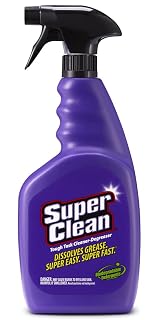
Superclean
Super Clean Multi-Surface All Purpose Cleaner Degreaser
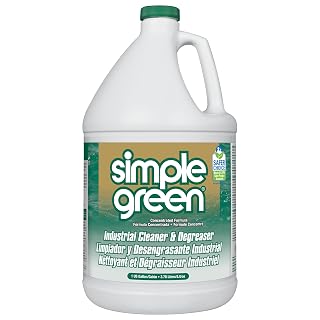
Simple Green
Industrial Cleaner & Degreaser
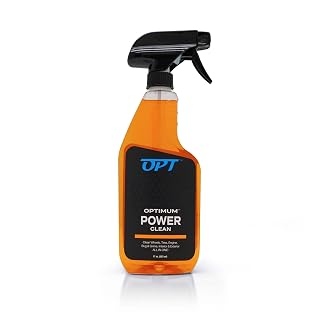
Optimum
Power Clean
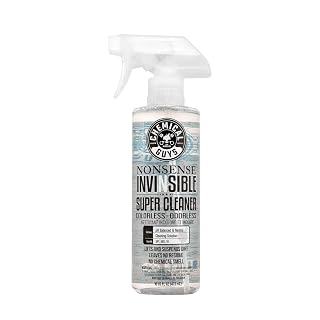
Chemical Guys
Nonsense Colorless & Odorless All Surface Cleaner
As an Amazon Associate I earn from qualifying purchases. Full disclosure


Community
0 postsShare how you use this product
Drop a quick comment or post a full review with photos and a star rating.
Sign in to postNew here? Create a free account.