CarCareTruth Score
Decent.
Opens Amazon in a new tab. No account needed to look.
Saved to your guest loadout. Sign up to also save to your Cabinet (consumables) or Kit (tools you own).
As an Amazon Associate I earn from qualifying purchases. Full disclosure
Prices may varyHealth score is for adult use as intended, per the manufacturer's SDS. It does not model child ingestion, accidental spill cleanup, or off-label use. See the safety panel below for full hazard classification, and /disclaimer for the full editorial scope.
GHS hazard codes are quoted from the manufacturer’s Safety Data Sheet. PPE tiers below translate those codes and the listed ingredient chemistry; they are not CarCareTruth recommendations.
Show details for all categories ▾Hide details ▴
Only when: splash risk · handling concentrate
Translated from the manufacturer’s Safety Data Sheet, Section 8
No eye-irritation or eye-damage H-code (H318/H319/H320) is classified at the mixture level. SDS §8 specifies chemical safety goggles meeting ANSI Z87.1 whenever there is a possibility of splashing, which applies to this concentrate during measuring and mixing with distilled water.
CarCareTruth publishes the cited sources verbatim and does not advise what action a user should take. Consult the full SDS before use.
Especially relevant: handling concentrate · splash risk
Translated from the manufacturer’s Safety Data Sheet, Section 8
H316 (mild skin irritation, Cat 3) and H317 (skin sensitizer, Cat 1) are both classification-table-confirmed at the mixture level, not label-only language. SDS §8 directs protective gloves impervious to the product for the duration of exposure. The sensitizer classification means repeated or prolonged skin contact with the concentrate carries a real risk of an allergic skin reaction developing over time, beyond simple irritation.
U.S. regulatory standard
29 CFR 1910.138(a); 1910.132(d)
“appropriate hand protection when employees' hands are exposed to hazards such as those from skin absorption of harmful substances.”
OSHA standards apply to workplaces. Cited here as the U.S. reference threshold for the underlying hazard class.
CarCareTruth publishes the cited sources verbatim and does not advise what action a user should take. Consult the full SDS before use.
Only when: in enclosed space
Translated from the ingredient chemistry
No inhalation H-code (H330/H331/H332/H334/H335) is classified at the mixture level. Ethylene glycol and diethylene glycol vapor pressure are both negligible at ambient temperature. Situational risk is limited to enclosed engine bays or garages where steam from hot coolant may accumulate, not standard outdoor or ventilated-garage pour-fill work.
U.S. regulatory standard
29 CFR 1910.134; 1910.138; 1910.1000
“the primary objective shall be to prevent atmospheric contamination…”
OSHA standards apply to workplaces. Cited here as the U.S. reference threshold for the underlying hazard class.
UN GHS hazard statement
H373“May cause damage to organs through prolonged or repeated exposure”
UN GHS Rev. 9 (2021)
CarCareTruth publishes the cited sources verbatim and does not advise what action a user should take. Consult the full SDS before use.
No PPE specified in published sources for ventilation. Absence does not imply “not needed” — consult the full Safety Data Sheet.
PPE tiers translate the manufacturer’s SDS and U.S. regulatory standards. Not professional safety advice. How we report safety.
Scope of these PPE tiers. The tiers on this page translate the product's Safety Data Sheet where one is published, plus its ingredient chemistry, into a comparable rating. They describe a formulation, not a situation: a tier is not a safety determination for any specific user, task, quantity, or environment. The manufacturer's label and use instructions govern how the product is handled. Where the product is used at work, the employer's PPE program and hazard assessment under 29 CFR 1910.132 decide what protection is selected, not this page.
No warranties. CarCareTruth makes no warranties, express or implied, and expressly disclaims the implied warranties of merchantability and fitness for a particular purpose.
This product ranks #19 of 21 in Coolant / Antifreeze.Three above it ↓
Last reviewed August 18, 2026
TL;DR Hyundai's own genuine factory-fill fluid for the Hyundai/Kia MS 591-08 phosphate long-life spec used across many current Hyundai, Kia, and Genesis models. Phosphate Hybrid Organic Acid Technology (P-HOAT), silicate-free and borate-free. This is a full-strength concentrate, mix 50/50 with distilled water; it is not sold pre-diluted. Ethylene glycol base; keep secured from pets and children.
This is Hyundai's genuine OEM long-life coolant, part 00232-19010, built to the Hyundai/Kia MS 591-08 spec that many current Hyundai, Kia, and Genesis models call for. The phosphate Hybrid Organic Acid Technology inhibitor package is silicate-free, borate-free, and amine-free, matched to aluminum cooling-system components. Hyundai's published maintenance schedule indicates a 10-year or 120,000-mile initial-fill interval. It ships as a full-strength green concentrate you mix 50/50 with distilled water; it does not come pre-diluted.
Best for Hyundai, Kia, or Genesis owners whose manual calls for the phosphate-based Long Life Coolant spec, matching the factory fill rather than an aftermarket blend. Skip it if your manual specifies a different chemistry, or if you want pre-diluted; no genuine Hyundai or Kia pre-diluted 50/50 option was found on Amazon.
WARNING signal word: harmful if swallowed, and per the SDS for the related Kia-branded part, can cause mild skin irritation and an allergic reaction with repeated contact. Goggles and gloves are the relevant PPE when mixing. Ethylene glycol carries a Proposition 65 warning for developmental toxicity and is a real ingestion hazard to pets and children despite the bittering agent. Collect spent coolant for recycling; do not drain it.
This is Hyundai's genuine factory-fill fluid (part 00232-19010) for vehicles specifying the Hyundai/Kia MS 591-08 phosphate long-life coolant spec, a formula used across many current Hyundai, Kia, and Genesis models. Genesis coverage is documented through a shared Hyundai/Kia/Mobis parts lineage rather than a separate Genesis-branded part number. Not every Hyundai or Kia model uses this exact chemistry; some newer platforms specify a different, phosphate-free coolant. Always confirm the exact coolant spec named in your own vehicle's owner's manual before buying.
This is a full-strength concentrate, not a pre-diluted mix. Mix it 50/50 with distilled water before adding it to your cooling system; do not pour it in undiluted. A genuine Hyundai or Kia pre-diluted 50/50 version was not found for sale on Amazon at the time this page was built.
It uses a phosphate Hybrid Organic Acid Technology (P-HOAT) inhibitor package: an organic acid salt combined with a hydrated inorganic phosphate salt, explicitly free of silicates, borates, and amines. Hyundai's published maintenance schedule indicates a 10-year or 120,000-mile interval for the initial fill on vehicles using this spec, with 2-year or 30,000-mile intervals after that (based on general research into Hyundai's published schedule, not independently verified against a single primary Hyundai document). No independent used-coolant analysis at the full claimed interval is publicly available.
Yes. The product label states 'With Bittering Agent,' and the manufacturer's SDS independently confirms the product contains a bittering agent. A bittering agent is added specifically to deter accidental ingestion by pets and children, who can otherwise be drawn to ethylene glycol's naturally sweet taste.
The SDS classifies this product as H302 (harmful if swallowed) and lists ethylene glycol under California's Proposition 65 for developmental toxicity. Ethylene glycol is well documented as attractive to pets due to its sweet taste and can be harmful even in modest ingested amounts. The bittering agent is a real deterrent, not a safety guarantee. Store it secured from pets and children, and clean up any spills immediately.
Collect spent coolant in a sealed container. Do not pour it down a drain, storm sewer, or onto the ground. Most auto parts stores, including AutoZone, O'Reilly, and Advance Auto Parts, accept used coolant for recycling at no charge. Ethylene glycol's sweet smell attracts animals, so prompt cleanup of any spill matters as much as proper disposal.
The listing for Hyundai Genuine Long Life Coolant/Antifreeze Concentrate (Green), 1 Gallon carries a California Prop 65 warning. Hyundai Genuine Long Life Coolant/Antifreeze Concentrate (Green), 1 Gallon is a working automotive fluid rather than a passive part, so the warning points at the formulation itself. The manufacturer's Safety Data Sheet is the primary source for what is in it: the hazard classification and the PPE tiers on this page are translated from that sheet, and the full SDS is linked from the safety panel. California requires the warning whenever exposure to any of roughly 900 listed substances is possible. It does not name which substance applies to a given product, and it states no dose or risk level, so it is not on its own a measure of how hazardous this fluid is in normal use.
Marketing copy from Hyundai, via Amazon. Not editorial.
Weekly pick
One product, one safety verdict, every week. No spam.
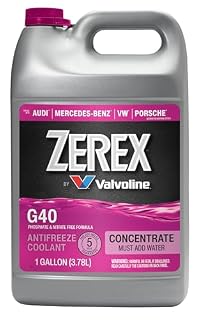
Zerex
G-40 Concentrate Antifreeze/Coolant
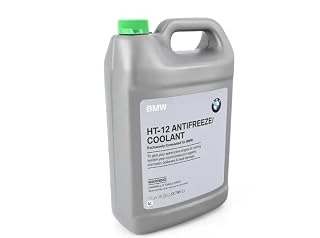
BMW
HT-12 Antifreeze/Coolant Concentrate, Green Si-OAT
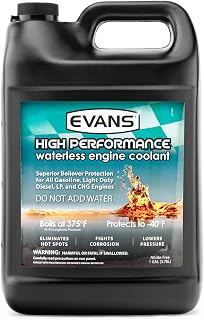
Evans Cooling Systems
Evans High Performance Waterless Engine Coolant
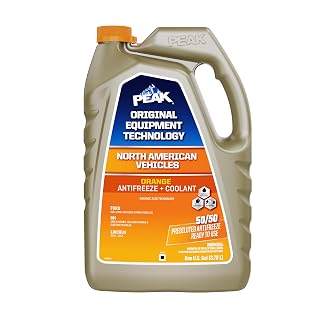
PEAK
OET Extended Life Orange 50/50 Prediluted Antifreeze/Coolant
As an Amazon Associate I earn from qualifying purchases. Full disclosure

Community
0 postsShare how you use this product
Drop a quick comment or post a full review with photos and a star rating.
Sign in to postNew here? Create a free account.