CarCareTruth Score
Decent, but wear gloves and ventilate.
Opens Amazon in a new tab. No account needed to look.
Saved to your guest loadout. Sign up to also save to your Cabinet (consumables) or Kit (tools you own).
As an Amazon Associate I earn from qualifying purchases. Full disclosure
Prices may varyAbout this product's hazards. This product's Safety Data Sheet uses signal word danger. Read the manufacturer's SDS and follow all safety instructions before use. CarCareTruth ratings translate the manufacturer's safety sheet. They do not replace the SDS or substitute for a hazard assessment specific to your task.
Health score is for adult use as intended, per the manufacturer's SDS. It does not model child ingestion, accidental spill cleanup, or off-label use. See the safety panel below for full hazard classification, and /disclaimer for the full editorial scope.
GHS hazard codes are quoted from the manufacturer’s Safety Data Sheet. PPE tiers below translate those codes and the listed ingredient chemistry; they are not CarCareTruth recommendations.
Show details for all categories ▾Hide details ▴
Only when: splash risk
Translated from the manufacturer’s Safety Data Sheet, Section 8
No H318 or H319 in SDS §2. No classified eye-hazard pathway at mixture level. Situational tier applied for wheel-height crouching posture where applicator splashing toward face is realistic during wipe-on application.
CarCareTruth publishes the cited sources verbatim and does not advise what action a user should take. Consult the full SDS before use.
Translated from the manufacturer’s Safety Data Sheet, Section 2
H315 (skin irritation Cat 2) confirmed in SDS §2. Petroleum naphtha and stoddard solvent carrier can irritate skin on direct contact during wipe-on application. Nitrile gloves recommended per SDS §8 and H315 classification.
U.S. regulatory standard
29 CFR 1910.138(a)
“appropriate hand protection when employees' hands are exposed to hazards such as those from… chemicals which produce an adverse effect on the skin or eyes…”
OSHA standards apply to workplaces. Cited here as the U.S. reference threshold for the underlying hazard class.
CarCareTruth publishes the cited sources verbatim and does not advise what action a user should take. Consult the full SDS before use.
Only when: prolonged use
Beyond SDS: translated from the ingredient chemistry
H372 (STOT RE Cat 1) from stoddard solvent indicates organ damage through prolonged or repeated occupational exposure. This is a chronic hazard code, not an acute inhalation sensitizer. SDS §8 explicitly states: 'With correct and proper use, and under normal conditions, breathing protection is not required.' Situational tier reflects the chronic nature of H372 rather than acute inhalation risk for a one-time home-detailer application.
U.S. regulatory standard
29 CFR 1910.134; 1910.138; 1910.1000
“Each employer shall assure that no employee is exposed [in excess of the PEL]…”
OSHA standards apply to workplaces. Cited here as the U.S. reference threshold for the underlying hazard class.
UN GHS hazard statement
H372“Causes damage to organs through prolonged or repeated exposure”
UN GHS Rev. 9 (2021)
CarCareTruth publishes the cited sources verbatim and does not advise what action a user should take. Consult the full SDS before use.
No PPE specified in published sources for ventilation. Absence does not imply “not needed” — consult the full Safety Data Sheet.
PPE tiers translate the manufacturer’s SDS and U.S. regulatory standards. Not professional safety advice. How we report safety.
This product ranks #4 of 5 in Wheel Coating & Sealant.Three above it ↓
Last reviewed June 14, 2026
TL;DR Gyeon Q2 Rim EVO delivers community-confirmed 12-month brake-dust release and water beading on daily drivers, with the suede applicator kit making it one of the more forgiving ceramic wheel coatings to apply at home. DANGER signal word from petroleum solvent chemistry: includes H372 (organ toxicity through prolonged or repeated exposure) and H361 (suspected reproductive toxin); toluene is a California Prop 65-listed ingredient. Apply outdoors or with the garage door fully open; flash point 12°C means flammable vapor risk in enclosed spaces. Wear nitrile gloves.
Rim EVO lays down an aminosiloxane ceramic barrier on wheel surfaces that sheds brake dust, repels water, and stays bonded through repeated heat cycling from daily street braking. The 30 mL kit includes a suede applicator and buffing cloths. Prep the wheels with a thorough decontamination and an IPA or panel-prep wipe, apply a thin layer to the suede pad, and work one wheel at a time, wiping off excess immediately. Community owners confirm the process works well on complex multi-spoke designs, with one bottle covering a full set of four wheels and leaving material for calipers. Independent owners on daily drivers consistently report active beading and easy brake-dust rinse-off at 12 months; some extend to "a year or two." The manufacturer's 1400°F heat claim has no independent community thermal test backing, so heat resistance is scored conservatively for now.
Best for daily-driver owners who want a meaningful reduction in brake-dust bonding and easier wheel cleaning without the prep demands of a professional-grade polysilazane coating. The included applicator kit lowers the barrier for first-time ceramic wheel coating users, and the broad finish compatibility covers most real-world wheel types. Skip it if you do regular track days or documented spirited-driving heat cycling; the 1400°F heat claim is unconfirmed by community evidence, and a coating with documented track-heat performance would be a safer spec for that use case. The DANGER-rated chemistry also makes this a poor fit for anyone applying in an enclosed or poorly ventilated workspace.
DANGER signal word from H372 (stoddard solvent, organ toxicity through prolonged or repeated exposure, STOT RE Cat 1) and H361 (toluene and dimethoxydimethylsilane, suspected reproductive toxin). H315 (skin irritation) from the petroleum carrier; wear nitrile gloves. Toluene at 0.5-1.5% of the formula is California Prop 65-listed for developmental toxicity. Flash point 12°C: flammable vapor accumulates in enclosed spaces at room temperature; apply outdoors or with the garage door fully open and ignition sources absent. SDS §8 explicitly states breathing protection is not required under normal use conditions; the H372 code reflects chronic occupational exposure, not acute inhalation risk for a single-session home application. No PFAS detected: SDS §3 lists no fluorinated ingredients. No aquatic toxicity classified at mixture level; SDS §14 confirms no marine pollutant designation.
Community data from independent owners on daily drivers consistently puts effective protection in the 12-month range, with some owners reporting results into the second year. This aligns with the manufacturer's 12-month claim. Most reviews in the 2025-2026 period confirm active brake-dust release and water beading at or past the 12-month mark.
No. SDS §3 lists no fluorinated ingredients. The ceramic active is aminoalkoxydimethylpolysiloxane (CAS 69430-37-1), an aminofunctional siloxane, not a fluorinated silane or fluoropolymer. SDS §3 is the primary PFAS-free confirmation.
The health score reflects the SDS chemistry, not the product's performance reputation. The SDS contains H372 (organ damage through prolonged or repeated exposure, Cat 1), H361 (suspected reproductive toxin), H315 (skin irritation), and toluene as a California Prop 65-listed ingredient. Together these trigger a DANGER signal word, a Step 3a Cat-1 cap, and multiple deductions that floor the score at 1.0. For a one-time home application outdoors, the practical risk is much lower than the chemistry score suggests; the score reflects worst-case chemistry classification per the SDS standard.
The flash point is 12°C, below typical room temperature. The petroleum naphtha carrier reaches flammable concentration in an enclosed space at ambient conditions. Apply outdoors or with the garage door fully open; keep ignition sources away. SDS §7 requires adequate ventilation and removal of ignition sources.
The SDS §8 explicitly states that under correct use and normal conditions, breathing protection is not required. The H372 (STOT RE Cat 1) code reflects chronic occupational exposure risk, not a one-time home application. The lungs PPE tier is situational. Apply outdoors with good air movement; the ventilation requirement is for flash-point fire safety, not respirator use.
The manufacturer states it is safe on all finishes. Community and Amazon gallery evidence confirms use on clear-coated painted alloy, matte black powder coat, matte gray, polished aluminum, and chrome. Isolated community reports mention spotting on brushed aluminum clear-coated sections; thorough surface prep and proper application technique eliminate most compatibility edge cases.
Marketing copy from Gyeon, via Amazon. Not editorial.
Weekly pick
One product, one safety verdict, every week. No spam.


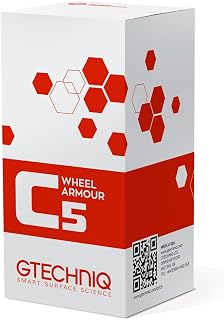
Gtechniq
C5 Wheel Armour
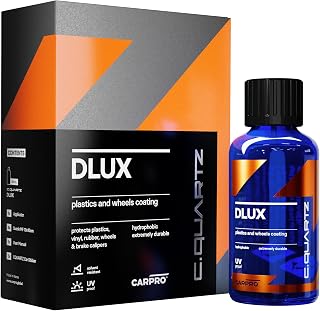
CarPro
DLUX Wheel and Trim Coating 30mL
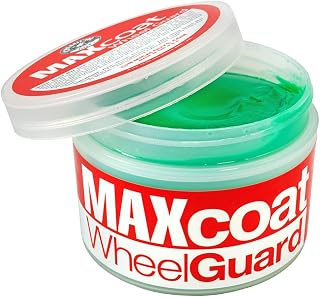
Chemical Guys
Wheel Guard Max Coat Rim & Wheel Sealant
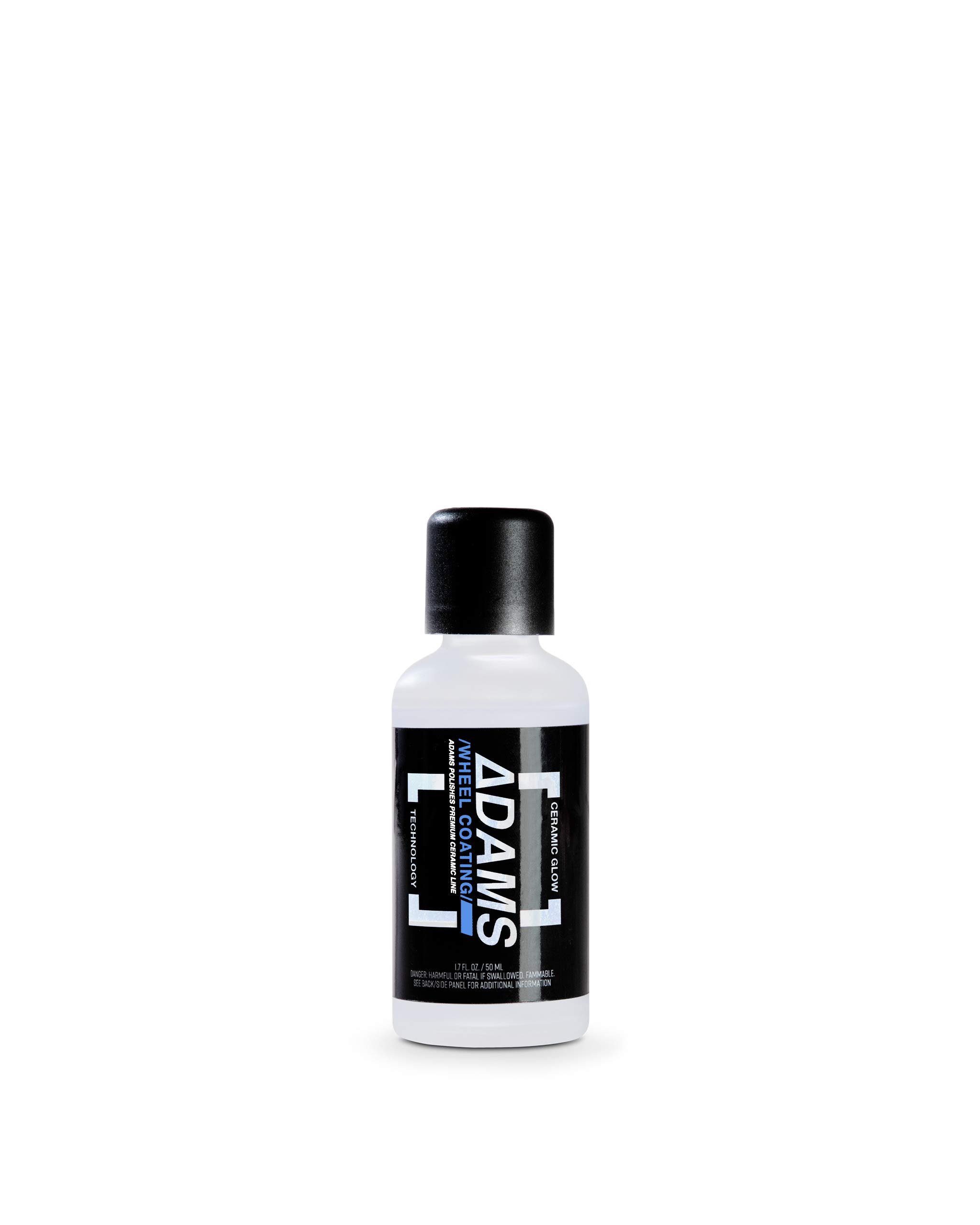
Adam's Polishes
UV Tracer Ceramic Wheel Coating (50ml)
As an Amazon Associate I earn from qualifying purchases. Full disclosure

Community
0 postsShare how you use this product
Drop a quick comment or post a full review with photos and a star rating.
Sign in to postNew here? Create a free account.