CarCareTruth Score
Decent.
Opens Amazon in a new tab. No account needed to look.
Saved to your guest loadout. Sign up to also save to your Cabinet (consumables) or Kit (tools you own).
As an Amazon Associate I earn from qualifying purchases. Full disclosure
Prices may varyHealth score is for adult use as intended, per the manufacturer's SDS. It does not model child ingestion, accidental spill cleanup, or off-label use. See the safety panel below for full hazard classification, and /disclaimer for the full editorial scope.
GHS hazard codes are quoted from the manufacturer’s Safety Data Sheet. PPE tiers below translate those codes and the listed ingredient chemistry; they are not CarCareTruth recommendations.
Show details for all categories ▾Hide details ▴
Only when: when spraying
Beyond SDS: translated from the ingredient chemistry
SDS §2 classifies product as non-hazardous; no H319 or H318 at mixture level. Pump-spray format creates incidental mist exposure risk inside the enclosed car cabin. SDS §8 eye-protection clause is generic boilerplate without a corresponding H-code; overridden per editorial PPE decision tree.
CarCareTruth publishes the cited sources verbatim and does not advise what action a user should take. Consult the full SDS before use.
Especially relevant: prolonged use
Beyond SDS: translated from the ingredient chemistry
Contains benzisothiazolinone (BIT, <1%), an isothiazolinone-family contact sensitizer. Isothiazolinones sensitize at sub-classification concentrations, so the named-ingredient rule sets skin to recommended even though H317 does not appear at the mixture level. Gloves are advisable for prolonged or repeated application sessions.
CarCareTruth publishes the cited sources verbatim and does not advise what action a user should take. Consult the full SDS before use.
Only when: in enclosed space
Beyond SDS: translated from the ingredient chemistry
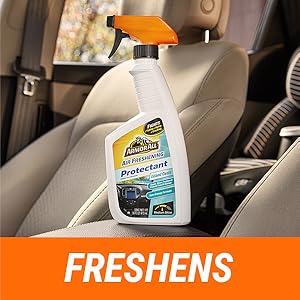
Pump-spray format used inside the enclosed car cabin. SDS §2 assigns no inhalation H-codes at the mixture level (HMIS Health 0). The confined cabin concentrates spray mist more than an outdoor setting even without formal H335 classification; situational tier applies per dashboard-protectant rubric for all pump-spray formats. Use with windows open during application.
CarCareTruth publishes the cited sources verbatim and does not advise what action a user should take. Consult the full SDS before use.
No PPE specified in published sources for ventilation. Absence does not imply “not needed” — consult the full Safety Data Sheet.
PPE tiers translate the manufacturer’s SDS and U.S. regulatory standards. Not professional safety advice. How we report safety.
This product ranks #11 of 12 in Dashboard Protectant.Three above it ↓
Last reviewed June 21, 2026
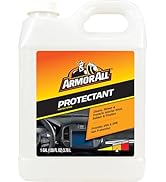
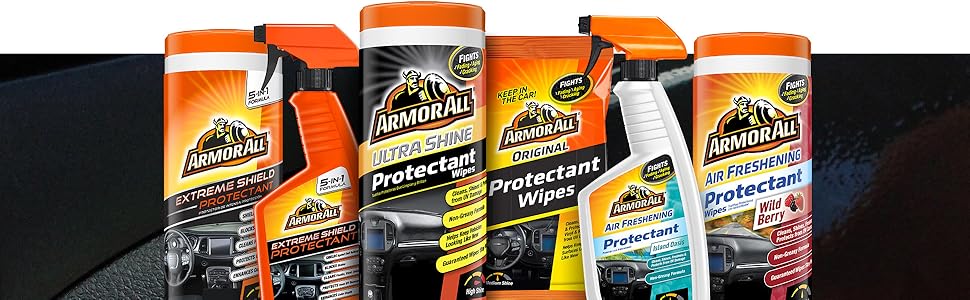
TL;DR Armor All Ultra Shine Protectant delivers the brand's highest-gloss finish on interior vinyl, rubber, and plastic, and the high-shine result on the dash top has been consistently noted in the detailing community as creating glare visible in the windshield during driving. UV protection is label-claimed but not backed by a named absorber in the SDS; no signal word is assigned at the mixture level, with a Prop 65 warning for trace processing byproducts.
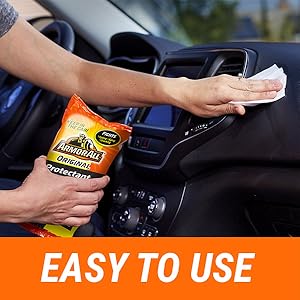
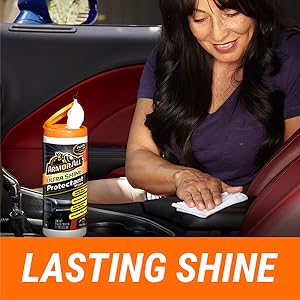
The Ultra Shine is Armor All's highest-gloss interior protectant, positioned above their Original Protectant by adding more of their proprietary gloss enhancers. Spray onto a microfiber cloth or directly onto vinyl, rubber, and plastic surfaces; buff out to reduce pooling in dash vents and speaker grilles. Owners confirm the finish is noticeably glossy and wet-looking rather than factory-fresh or satin; reflection from the dash top into the windshield is a commonly noted concern in detailing forums. Community-confirmed durability runs about 2-4 weeks, and the silicone-heavy formula attracts dust more readily than untreated surfaces.
Best for owners who specifically want a high-gloss, deeply shined look on interior plastics and actively prefer the dressed, wet appearance that Armor All is known for. Skip it if you want a factory-fresh satin or matte result, if windshield glare concerns you during driving, or if you dislike dusting the dash more frequently after treatment. Owners who want a subtler finish and less dust attraction should look at a satin-finish interior protectant such as 303 Aerospace Protectant.
The SDS classifies this formula as non-hazardous under OSHA HCS: no signal word, no GHS pictograms, no H-codes at the mixture level. Skin PPE is recommended because the formula contains benzisothiazolinone, an isothiazolinone-family sensitizer present below the mixture classification threshold. The Prop 65 warning covers trace processing byproducts (1,4-dioxane, diethanolamine), not the active protectant ingredients. The formula uses linear silicone rather than bioaccumulative cyclic variants, and SDS §12 confirms no aquatic hazard.
The high-gloss finish this product produces on the dash top and defroster vents has been noted by owners in detailing communities as reflecting into the windshield, particularly under direct sunlight. Applying product to a microfiber cloth first rather than spraying directly, and keeping product off the upper dash surface closest to the windshield, reduces the risk. Owners who find any windshield reflection objectionable should use a lower-gloss or satin-finish interior protectant instead.
The SDS classifies this formula as non-hazardous under OSHA HCS: no signal word and no GHS health codes at the product level. The Prop 65 warning is for trace processing byproducts (1,4-dioxane and diethanolamine) at very low concentrations, not the active protectant ingredients. The formula carries no inhalation H-codes, though using it with windows open in the enclosed car cabin is a reasonable practice given the spray format.
Owner feedback consistently confirms about 2-4 weeks of maintained finish on daily-driver interiors under normal conditions. Reapplication is needed after wiping down surfaces with an interior cleaner. The silicone-based formula is also documented as attracting dust faster than untreated surfaces, so cleaned surfaces may require more frequent attention.
Yes. The SDS §15 CA-RTK ingredient list discloses polydimethylsiloxane (linear PDMS) as the primary film-forming agent. The formula uses linear PDMS rather than the cyclic siloxane variants (D4/D5) that raise bioaccumulation concerns. No cyclic siloxanes appear in the ingredient list.
Armor All positions Ultra Shine as their highest-shine product, with more of their proprietary gloss enhancers than the Original Protectant. The underlying formula family is similar (water-based silicone and polymer), but Ultra Shine delivers a more pronounced high-gloss wet finish. Both carry the same Prop 65 warning and the same SDS non-hazardous classification. Owners who want a more restrained, satin result typically prefer the Original or a competing satin-finish protectant.
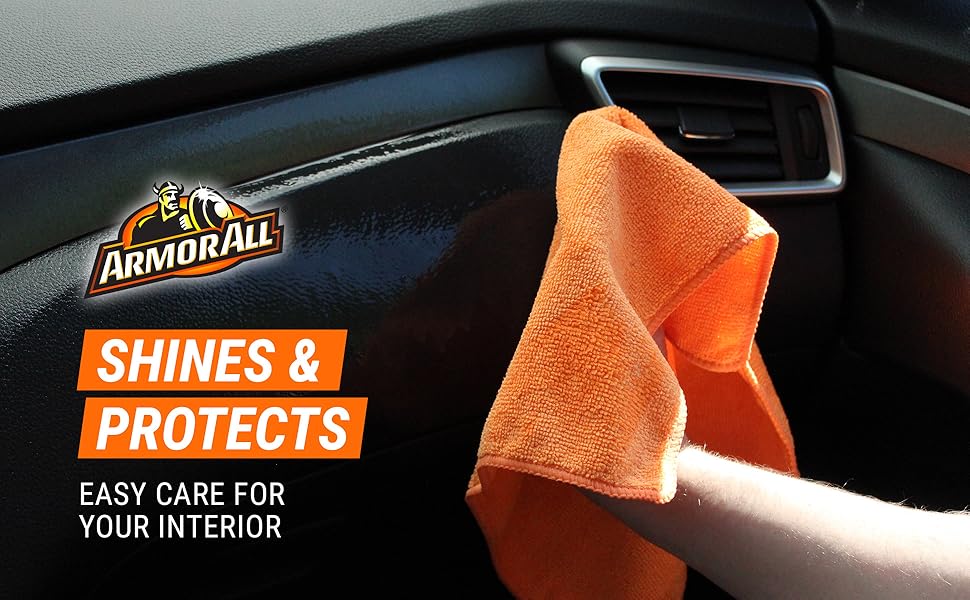
Marketing copy from Armor All, via Amazon. Not editorial.
Weekly pick
One product, one safety verdict, every week. No spam.





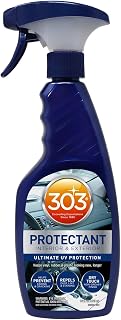
303 Products
303 Automotive Protectant (16 oz)
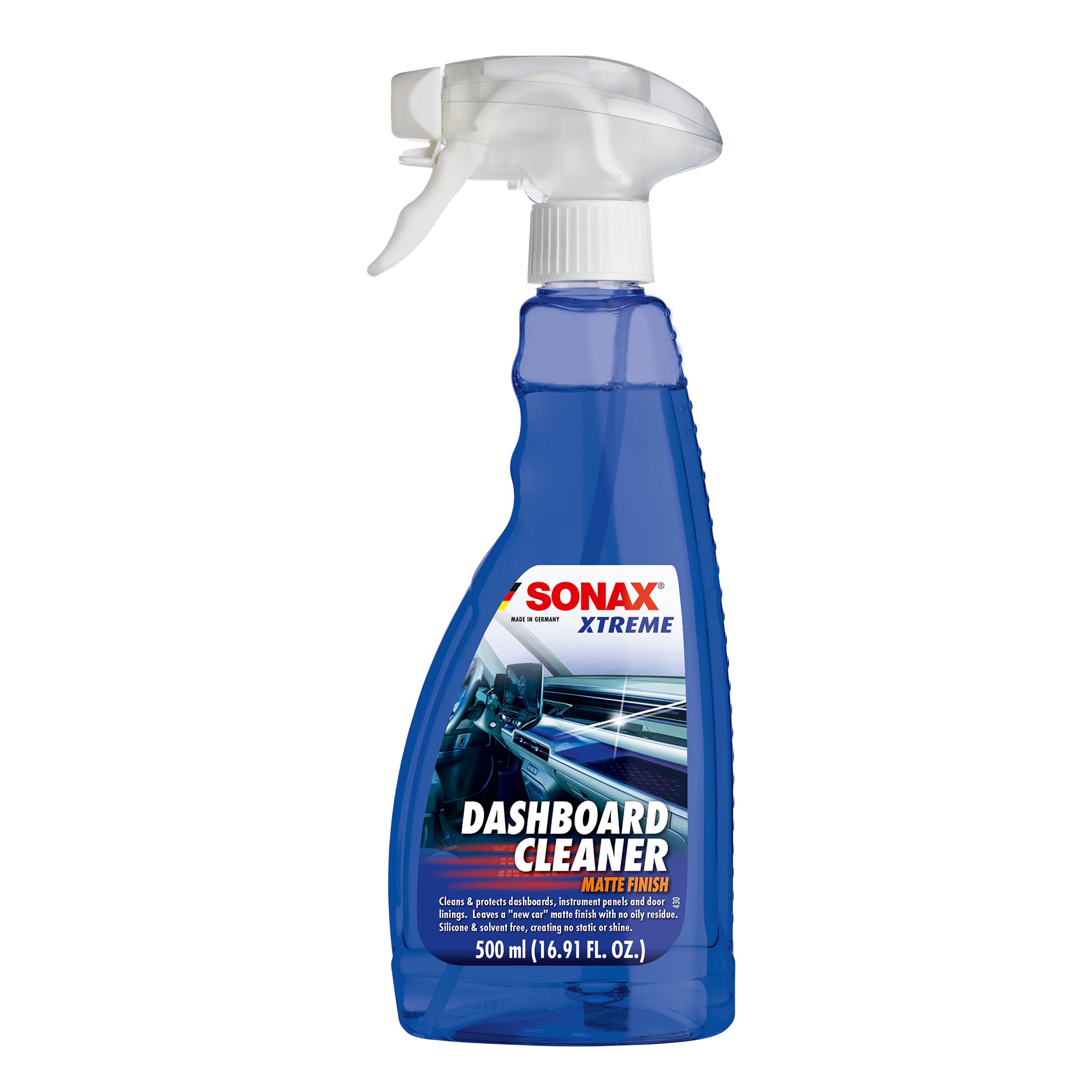
SONAX
Dashboard Cleaner 283241 (500ml)
Meguiar's
M40 Mirror Glaze Vinyl & Rubber Cleaner/Conditioner
Adam's Polishes
Total Interior Cleaner & Protectant
As an Amazon Associate I earn from qualifying purchases. Full disclosure

Community
0 postsShare how you use this product
Drop a quick comment or post a full review with photos and a star rating.
Sign in to postNew here? Create a free account.