CarCareTruth Score
Mediocre, but wear gloves and ventilate.
Opens Amazon in a new tab. No account needed to look.
Saved to your guest loadout. Sign up to also save to your Cabinet (consumables) or Kit (tools you own).
As an Amazon Associate I earn from qualifying purchases. Full disclosure
Prices may varyAbout this product's hazards. This product's Safety Data Sheet uses signal word DANGER.Read the manufacturer's SDS and follow all safety instructions before use. CarCareTruth ratings translate the manufacturer's safety sheet. They do not replace the SDS or substitute for a hazard assessment specific to your task.
Health score is for adult use as intended, per the manufacturer's SDS. It does not model child ingestion, accidental spill cleanup, or off-label use. See the safety panel below for full hazard classification, and /disclaimer for the full editorial scope.
GHS hazard codes are quoted from the manufacturer’s Safety Data Sheet. PPE tiers below translate those codes and the listed ingredient chemistry; they are not CarCareTruth recommendations.
Show details for all categories ▾Hide details ▴
Translated from the manufacturer’s Safety Data Sheet, Section 2
H319 (eye irritation Cat 2A) confirmed in SDS §2; DANGER signal word driven by health H-codes (H319, H336, H351) · DANGER with health H-codes present puts eyes at recommended tier per rubric. Splash risk during pouring and cross-hatched application. Safety glasses appropriate.
U.S. regulatory standard
29 CFR 1910.133(a)(1)
“The employer shall ensure that each affected employee uses appropriate eye or face protection when exposed to eye or face hazards from… liquid chemicals…”
ANSI Z87.1 (incorporated via §1910.6)
OSHA standards apply to workplaces. Cited here as the U.S. reference threshold for the underlying hazard class.
CarCareTruth publishes the cited sources verbatim and does not advise what action a user should take. Consult the full SDS before use.
Only when: prolonged use
Translated from the manufacturer’s Safety Data Sheet, Section 8
High-alcohol carrier (IPA 60-80%, H225 + H336 in §2) with no mixture-level H315 classification. D5 siloxane co-solvent adds defatting potential. Prolonged or repeated applicator-pad hand contact during a multi-window session is the documented exposure trigger. Single brief contact in normal use is low risk.
CarCareTruth publishes the cited sources verbatim and does not advise what action a user should take. Consult the full SDS before use.
Only when: in enclosed space · prolonged use
Translated from the manufacturer’s Safety Data Sheet, Section 2
H336 (CNS drowsiness/dizziness) and H225 (highly flammable, flash point < 23°C) from high IPA + siloxane vapor. SDS §8 ventilation language is boilerplate without H334 or H335 forcing a higher tier. The flash point below 23°C (H225) also makes ventilation a hard use-case requirement · apply outdoors or with garage door open regardless of PPE tier. The H351 suspected carcinogen from PCBTF is a chronic-exposure classification; single-application exposure at 0.1-1% PCBTF does not warrant a required lung tier.
U.S. regulatory standard
29 CFR 1910.1000; 1910.1200
“Each employer shall assure that no employee is exposed [in excess of the PEL]…”
OSHA standards apply to workplaces. Cited here as the U.S. reference threshold for the underlying hazard class.
CarCareTruth publishes the cited sources verbatim and does not advise what action a user should take. Consult the full SDS before use.
The published Safety Data Sheet for this product does not specify ventilation protection for consumer use.
Workplace context
29 CFR 1910.134(a); 1910.1000
“the primary objective shall be to prevent atmospheric contamination [via] accepted engineering control measures (for example, enclosure or confinement of the operation, general and local ventilation…).”
Triggered by GHS H336 on the SDS.
OSHA standards apply to workplaces. Cited here as the U.S. reference threshold for the underlying hazard class.
PPE tiers translate the manufacturer’s SDS and U.S. regulatory standards. Not professional safety advice. How we report safety.
Scope of these PPE tiers. The tiers on this page translate the product's Safety Data Sheet where one is published, plus its ingredient chemistry, into a comparable rating. They describe a formulation, not a situation: a tier is not a safety determination for any specific user, task, quantity, or environment. The manufacturer's label and use instructions govern how the product is handled. Where the product is used at work, the employer's PPE program and hazard assessment under 29 CFR 1910.132 decide what protection is selected, not this page.
No warranties. CarCareTruth makes no warranties, express or implied, and expressly disclaims the implied warranties of merchantability and fitness for a particular purpose.
This product ranks #8 of 8 in Glass Coating.Three above it ↓
Last reviewed June 14, 2026
TL;DR Community tracking puts durability at 6-12 months on a daily driver · closer to 6-9 months under regular washing, with Adam's 9-12 month claim more achievable on garaged vehicles. Highway beading is strong. The 60-120 second cure window is moderately forgiving, but this is still a careful installation. The 2024 SDS carries DANGER · a high-alcohol carrier with a flash point below room temperature requires open-garage or outdoor application. Alternatives with milder chemistry (Cerakote, Griot's water-based SiO₂) deliver similar real-world durability.
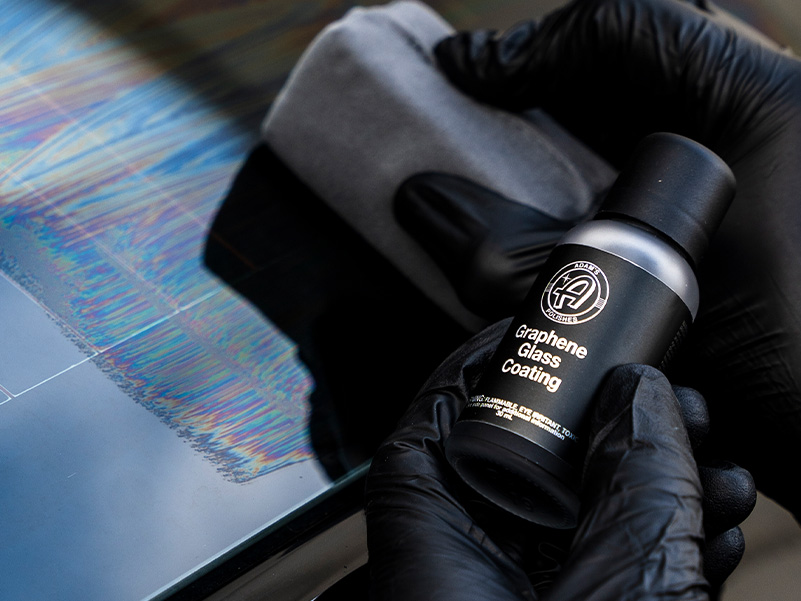
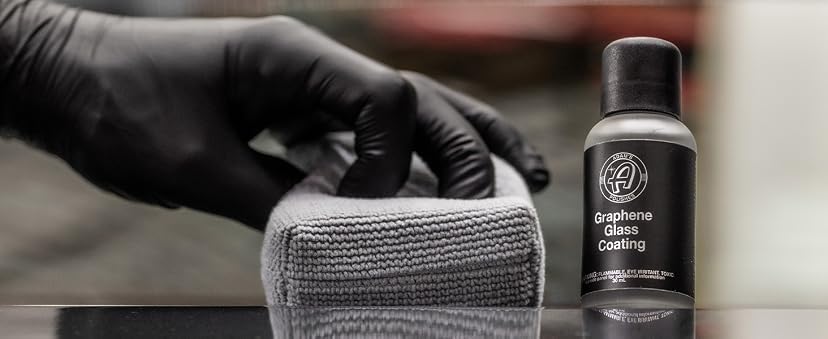
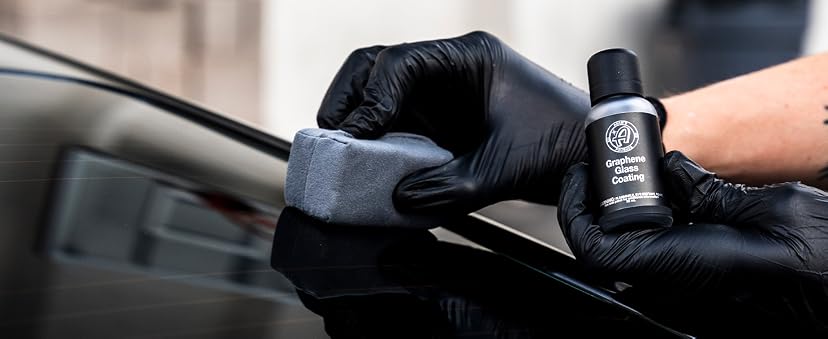
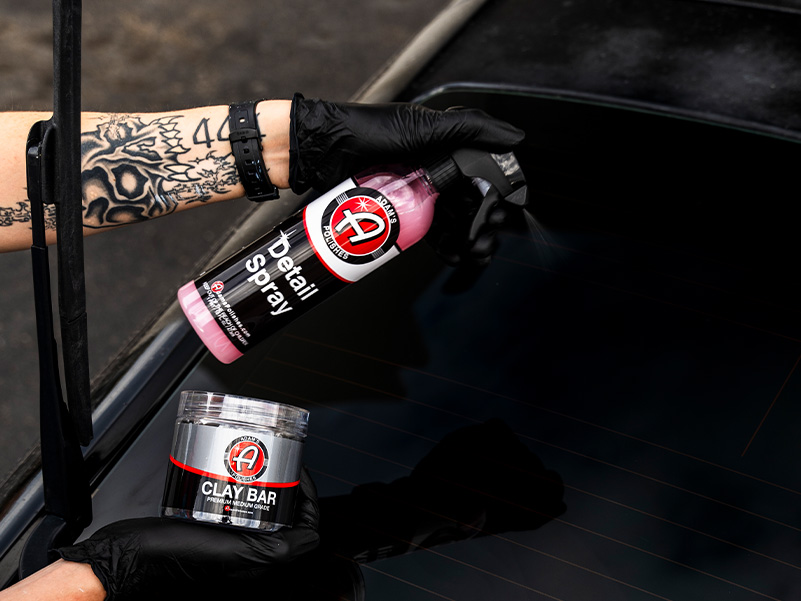
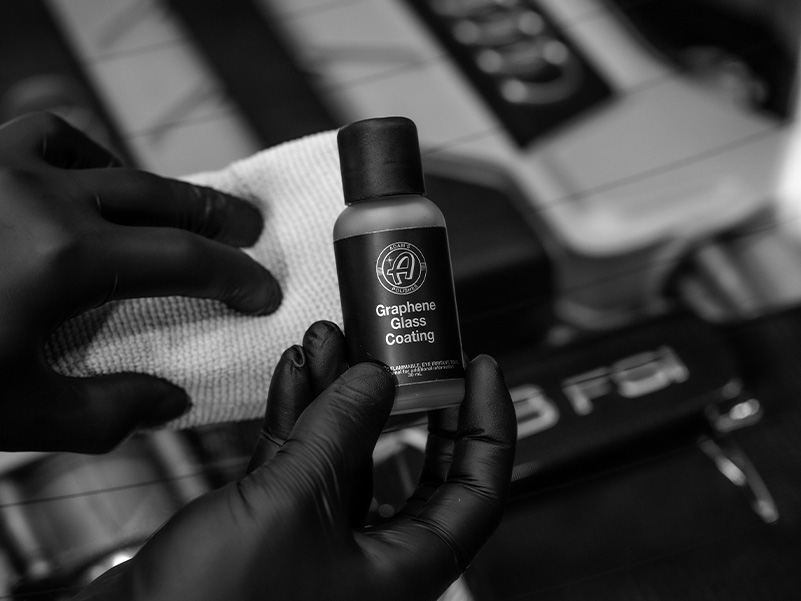
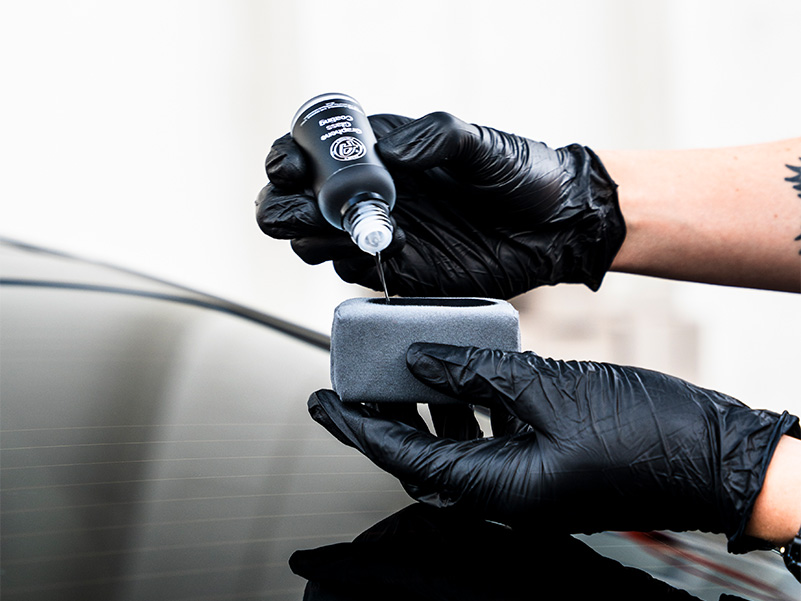
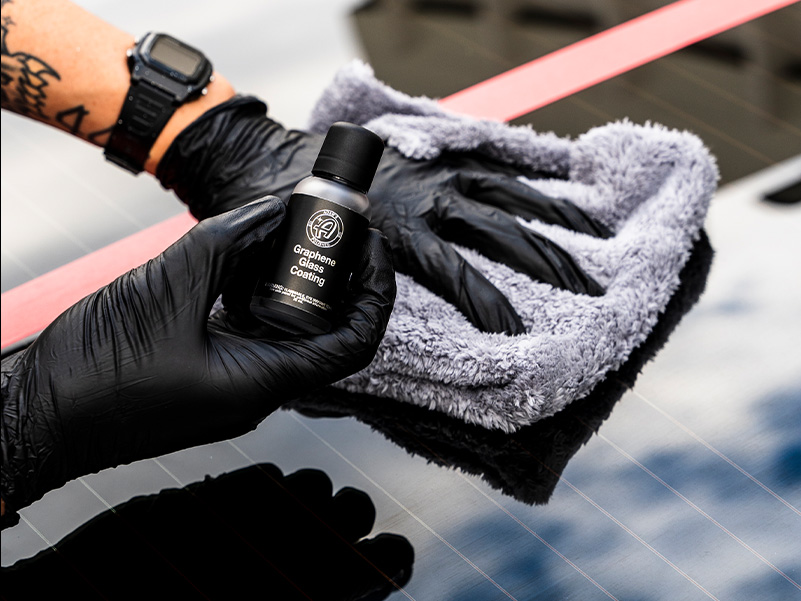
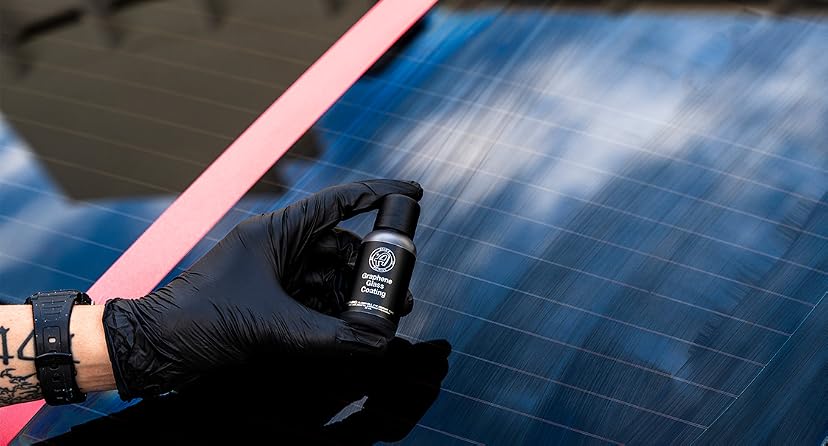
Start with a clean, IPA-wiped windshield · the coating bonds to bare glass, and any residual oil or prior protectant will cause early failure. Apply a few drops to the included suede applicator, work it across the glass in cross-hatched 12-inch sections, wait 60-120 seconds for the slight haze to form, then buff completely with a clean microfiber. A full windshield takes 15-25 minutes. Once cured, water beads tightly and sheets off at highway speed in moderate rain. Community data across r/AutoDetailing puts real-world durability at 6-12 months on a daily driver washed regularly · Adam's labels the product at 9-12 months, which reflects what garaged or lightly-driven vehicles see more than the daily-wash scenario. The flash point below 23°C means this must be applied outdoors or with the garage door open · not an optional precaution.
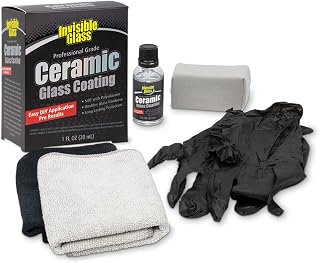
Best for Adam's brand loyalists who already use the matched paint coating products and want consistent performance across surfaces. Skip it if you want the cleanest chemistry profile in the category · Cerakote Rapid Ceramic, Griot's Garage Ceramic Glass Coating, and Invisible Glass Pro Ceramic all deliver 6-12 month durability with water-based SiO₂ chemistry that avoids the DANGER signal word, the suspected carcinogen flag, and the bioaccumulation-classified co-solvent. Also skip it if you're price-sensitive: Adam's DTC pricing puts this at a meaningful premium over the water-based alternatives with similar community-confirmed durability.
The 2024-11-22 SDS carries signal word DANGER, driven by the highly flammable IPA carrier (H225, flash point below 23°C, 60-80% of formula) combined with H319 (eye irritation), H336 (CNS drowsiness from vapor at high IPA concentration), and H351 (suspected carcinogen from parachlorobenzotrifluoride at 0.1-1%). H351 is a chronic-exposure regulatory classification · not an acute single-application risk · but it is present and worth knowing. Apply outdoors or with the garage door open: the flash point below room temperature makes open ventilation a hard use-case requirement, not a preference. Safety glasses are appropriate during application given the H319 classification. The product does not contain PFAS · graphene-oxide is carbon-based, D5 is silicone, and the trace PCBTF is classified as a VOC-exempt aromatic solvent rather than PFAS in this SDS. The dominant environmental concern is the PBT/vPvB classification: decamethylcyclopentasiloxane (D5) at 10-30% is classified persistent, bioaccumulative, and toxic to aquatic life under EU REACH · combined with high estimated VOC from the IPA carrier, the environment score lands at 3 (Notable Concerns).
H351 ('suspected of causing cancer') is driven by parachlorobenzotrifluoride (PCBTF) at 0.1-1% of the formula. This is a regulatory classification based on chronic occupational exposure · not acute single-application risk. A single windshield treatment session with proper ventilation does not create meaningful cancer exposure. The classification is real and worth knowing about, but it is a chronic-exposure concern. Apply outdoors or with the garage door open and the exposure approaches zero.
PBT means 'persistent, bioaccumulative, and toxic to aquatic life'; vPvB means 'very persistent, very bioaccumulative.' The classification is driven by decamethylcyclopentasiloxane (D5) at 10-30% of the formula. D5 is a cyclic silicone that doesn't biodegrade and accumulates in aquatic sediments · the EU restricts it in wash-off cosmetics above 0.1%. For a leave-on glass coating, direct drain entry is limited (the product cures to the glass), but the classification is the reason the environment score is low.
Community data across r/AutoDetailing puts effective beading at 6-12 months on a daily driver under regular washing conditions. Adam's labels it 9-12 months · slightly optimistic against community-confirmed median data, but within range for garaged or lightly-driven vehicles. Pair with proper preparation (IPA wipe-down on clean glass) and avoid alkaline touchless car washes during the first week of cure for best longevity.
D5 (decamethylcyclopentasiloxane) is a volatile silicone fluid used as a thin-film delivery carrier · it spreads the active ingredient evenly across the glass surface, then evaporates quickly leaving the active behind. The chemistry has been standard in the industry for decades. The PBT/vPvB classification under EU REACH has prompted some brands to reformulate away from D5; Adam's had not done so as of the 2024-11-22 SDS.
No, not by Adam's SDS §3. The active is graphene-oxide (carbon chemistry, not fluorinated), the carriers are IPA and D5 silicone (not fluorinated), and the trace PCBTF (single CF3 group on a benzene ring) is classified as a VOC-exempt aromatic solvent rather than PFAS in this product's regulatory filing. PCBTF's status under the broader OECD PFAS structural definition is debated; CarCareTruth follows the SDS-level classification for product flagging.
Marketing copy from Adam's Polishes, via Amazon. Not editorial.
Weekly pick
One product, one safety verdict, every week. No spam.



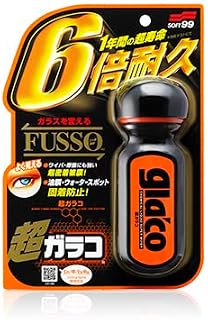
Soft99
Ultra Glaco
Gtechniq
G1 ClearVision Smart Glass
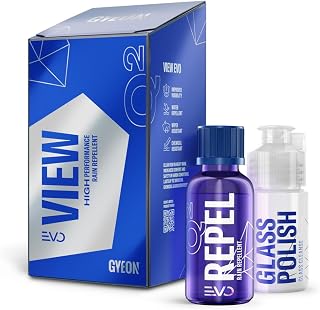
Gyeon
Q² View EVO
Stoner
Pro Ceramic Glass Coating Kit (95151)
As an Amazon Associate I earn from qualifying purchases. Full disclosure

Community
0 postsShare how you use this product
Drop a quick comment or post a full review with photos and a star rating.
Sign in to postNew here? Create a free account.