
Best Dual Action Polisher of 2026: Car Polishers Scored and Ranked
We score every dual action polisher we can verify, for performance and ingredient safety. These are the 10 best of 16 in our catalog.
CarCareTruth scored the DA polisher category for 2026, and the Milwaukee M18 FUEL 15mm (2684-20) ranks first: a cordless, brushless random-orbital machine with a 15 mm throw, an 8-position dial across 2,650 to 5,100 OPM, and cULus Listed certification confirmed in Milwaukee's own operator manual, with owners reporting real swirl removal on daily-driver paint. Want a corded machine with a lifetime tool guarantee instead? The Griot's Garage G9 is the pick. New to correction work entirely? The Porter-Cable 7424XP is the machine a huge share of the detailing community learned on. The fact most 'best polisher' roundups skip: a random-orbital, dual-action (DA) polisher is forgiving of uneven technique because the pad's spin is driven by friction against the paint rather than geared to the motor, so it stalls the moment you tilt it or lean on it, and heat never sits in one place. A true rotary polisher spins on a single fixed axis instead, and an uneven dwell on a rotary can burn straight through clear coat in a way a DA will not. Every machine on this page is a DA, ranked on correction power, build quality, ergonomics, and speed control, plus each machine's own third-party safety certification, never marketing copy. We cover rotary polishers honestly further down the page for buyers who already have DA technique under their belt.
Affiliate disclosure: CarCareTruth is reader-supported. As an Amazon Associate I earn from qualifying purchases. We may also earn commissions from other retailers linked on this page, at no extra cost to you. Affiliate revenue never influences our scores or rankings. Full disclosure
Best of Dual Action Polisher
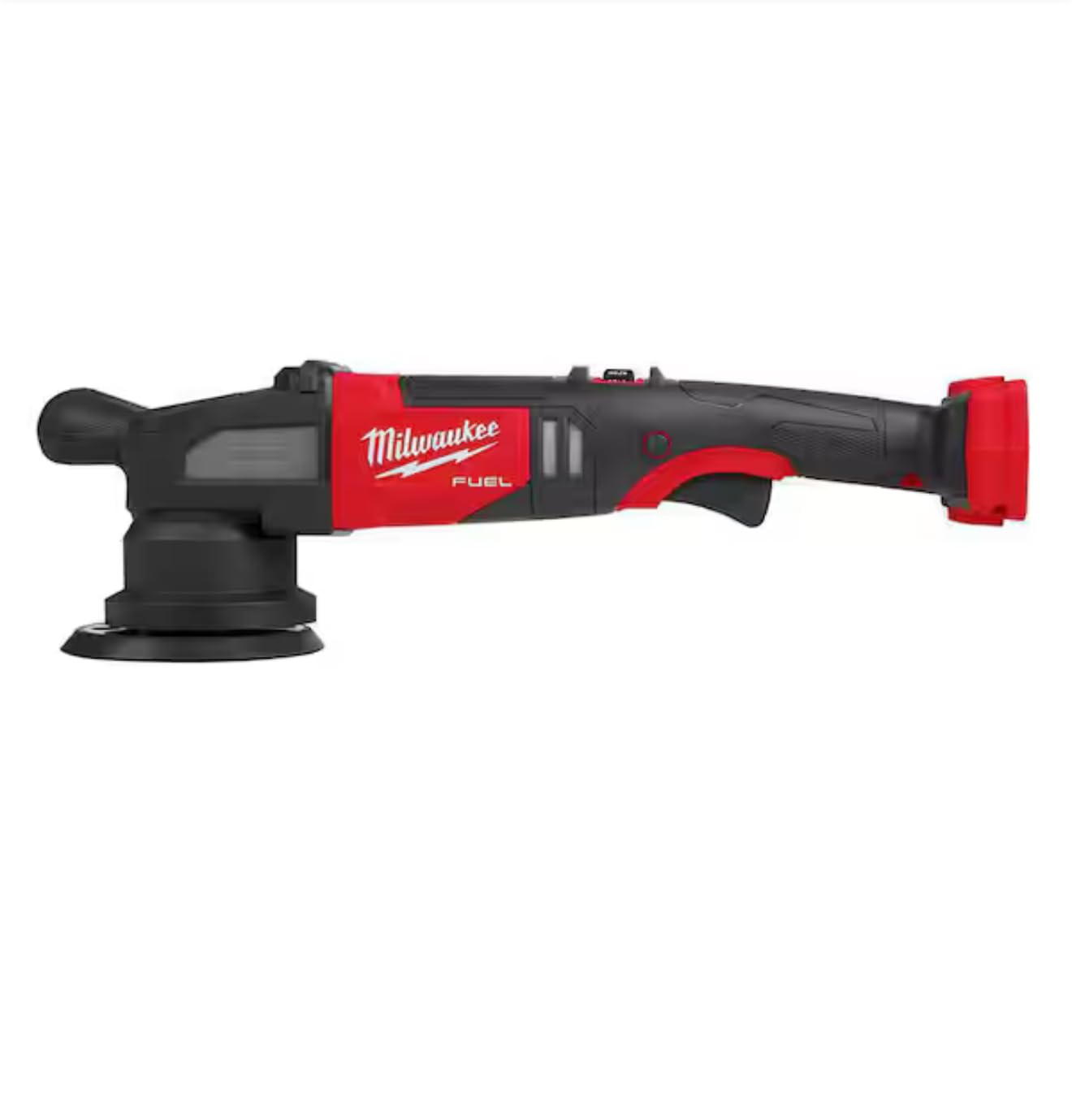
Milwaukee M18 FUEL 15mm Random Orbital Polisher (2684-20)
no safety data sheet on file
The Full Ranking
Why each pick earned its spot
Best Overall: Milwaukee M18 FUEL 15mm Random Orbital Polisher (2684-20)
The Milwaukee M18 FUEL 15mm (2684-20) is the highest-scored DA polisher in our catalog: a cordless, brushless random-orbital machine with a 15 mm throw, an 8-position dial across 2,650 to 5,100 OPM, and cULus Listed certification confirmed in Milwaukee's own operator manual. Owners report real swirl removal and light-to-medium correction on daily-driver paint without a hologram pattern left behind. What you give up is weight: at 5.16 lb bare and about 6 lb with a battery, it runs heavier than some corded rivals, and the M18 battery and charger are sold separately if you are new to the platform.
Best Corded, Lifetime Warranty: Griot's Garage G9 Random Orbital Polisher
The Griot's Garage G9 is a corded, 1,000-watt DA polisher with a 9 mm orbit, a 6-inch vented backing plate, and a six-position dial from 2,000 to 6,400 OPM, backed by Griot's lifetime tool guarantee, with no battery to buy or charge. It is the community-trusted middle ground between a beginner machine and a premium correction tool. The limit is throw: 9 mm sits below the 15 mm and 21 mm machines built for heavier single-stage correction, so it suits swirl removal and finishing better than deep scratch work.
Best for Beginners: PORTER-CABLE 7424XP 6-Inch Variable-Speed Polisher
The Porter-Cable 7424XP is the machine a huge share of the detailing community learned to polish on: a corded 6-inch DA with a 6 mm throw and a 2,500 to 6,800 OPM range that is genuinely forgiving on soft-to-medium daily-driver paint, built on full ball-and-roller bearing construction that owners report running reliably for years. Two things hold it back: the 6 mm orbit is a finishing and light-correction ceiling, not a deep-scratch tool, and at 5.75 lb it sits heavier in hand than newer competitors.
Best Long-Throw for Bigger Panels: Maxshine M21 Pro Dual Action Polisher
The Maxshine M21 Pro is the highest-scored long-throw machine we rank, at 7.15 against 6.28 for the Adam's Swirl Killer 21mm LT, and the whole gap is correction power and build. It is corded, with a 21 mm orbit, a 1,000-watt motor, a six-position dial across 2,200 to 5,000 OPM, a 6-inch backing plate and a 13-foot cord, and detailers running it commercially report it holding speed under compound load instead of bogging down. Two things to know before you buy: no independent US safety listing is on file for it, and the backing plate it ships with contacts the shroud, which the included washer fixes and which owners document widely.
Best Spot Tool for Tight Areas: Adam's Polishes SK Pro Micro Cordless Swirl Killer Polisher 2.0
The SK Pro Micro Cordless 2.0 is not a full-panel machine. It is a small cordless spot polisher built for badges, emblems, grilles, chrome trim, and interior consoles that a 5-inch DA cannot reach, with swappable rotary, 3 mm, and 12 mm heads and two included batteries. Owners run it alongside a full-size polisher rather than instead of one. Battery reliability is the weak point, and it is the most-cited one in owner reports, though Adam's has replaced affected units and batteries under its guarantee.
Best Low-Vibration Corded Premium: RUPES BigFoot LHR 12E Duetto Random Orbital Polisher
The RUPES BigFoot LHR 12E Duetto is a corded, Italian-made DA with a 12 mm throw and a 400-watt motor that owners single out for unusually low vibration and confident one-hand control on vertical body panels, with community threads documenting years of reliable use. Its ceiling is correction: community consensus is that the 12 mm throw is a light-to-medium finishing tool, not the machine to reach for on aggressive single-stage correction, and it carries CE certification only, no UL or ETL listing for US buyers.
Full ranked catalog — including picks 11+, out-of-stock options, and the ones we couldn’t crown.
How we rank
Every dual action polisherin our catalog runs through the same scoring rubric: measured effectiveness, ingredient-safety data translated from each product’s SDS, and environmental impact. We don’t take placement fees, and affiliate links never move a product up the list.
Most "best car polish machine" roundups skip the one fact that actually keeps your paint safe: not every polisher works the same way, and the wrong one in inexperienced hands can do real damage. A dual-action (DA) polisher spins the pad while also moving it in a small orbit on an offset axis, so an uneven pass mostly buffs itself back out. A rotary polisher spins the pad on a single fixed axis with no orbit, cuts more aggressively, and has no built-in forgiveness, dwell too long in one spot and it can burn straight through clear coat. Every machine ranked on this page is a DA for exactly that reason: it is the honest default recommendation for an owner correcting their own daily driver, and it is what our own build-a-kit guide pairs with polishing pads for the same reason.
Throw size (also called orbit) is the spec that actually decides what a DA can do. Roughly: 6 to 9 mm is a finishing and light-correction range, 12 mm moves into light-to-medium correction, 15 mm is a genuine correction machine for moderate swirls, and a 21 mm long-throw covers the most surface per pass on flatter panels like hoods and roofs. Buy to your paint condition, not to the biggest number on the box. Whatever throw you land on, the machine is only half the system: pair a foam cutting pad with a compound for deep scratches and oxidation, a polishing pad with a finishing polish to clear the haze back out, and a soft finishing pad with a light polish or glaze for final gloss. Our car polish guide ranks the actual compounds, one-step polishes, and glazes to run through whichever machine you buy here, and our step-by-step DA polisher walkthrough covers technique once the machine and pads are in hand.
Rotary polishers, covered honestly
A true rotary polisher is a real, useful tool, it is just not the beginner's tool, and it is not ranked alongside the DA machines above for that reason. Our top-scored rotary is the Flex PE 14-2 150, a German-made machine with a planetary-plus-angular gear-reduction system that holds torque under load, and community members report running the same unit for seven-plus years in professional use. It is showing out of stock as of August 2026, so treat it as a reference point rather than a shopping link. The risk is worth stating plainly: an uneven dwell on a rotary burns paint, while the same mistake on a DA polishes out. If you have already logged real hours correcting paint with a DA and want the extra cutting power for heavy single-stage work, a rotary is the next step. If you have not, start with one of the DA machines ranked above.
How we score: CCT grades each DA polisher on correction power, build quality, ergonomics, and speed control from owner evidence and manufacturer spec, plus the machine's own third-party electrical safety certification, never marketing copy. PPE and health guidance for the compound or polish you run through any of these machines lives on that product's own page, not here, the polisher itself carries no chemical hazard.
Related guides
Frequently Asked Questions
What is the difference between a DA polisher and a rotary polisher?
A dual-action (DA) polisher, also called a random-orbital polisher, spins the pad while also moving it in a small orbit around an offset axis, so the pad's path constantly changes. That randomness is what makes DA machines forgiving: if you dwell too long in one spot or tilt the pad slightly, the motion mostly self-corrects and buffs the mistake back out. A rotary polisher spins the pad on a single fixed axis with no orbit, which cuts faster and more aggressively but has no built-in forgiveness. Dwell too long on a rotary and it can generate enough friction heat to burn straight through clear coat. Every machine ranked on this page is a DA for exactly that reason; we cover the rotary category separately further down for buyers with DA experience already.
Is a DA polisher safe for a beginner to use?
Yes, with reasonable care. A DA polisher's random-orbital motion is specifically what makes it beginner-forgiving: uneven pressure or dwell time buffs out rather than burning through, which is not true of a rotary. Start on a foam finishing pad with a light polish, keep the machine moving, and use painter's tape on edges and trim before you touch a cutting compound. The Porter-Cable 7424XP and the Griot's Garage G9 are both machines the detailing community regularly recommends for a first-timer's learning curve.
What throw size do I need on a DA polisher?
Throw, also called orbit, is how far the pad moves per rotation, and it is the single biggest driver of how aggressively a DA corrects paint. A 6 mm to 9 mm throw is a finishing and light-correction range, good for maintaining a car and removing light swirls. A 12 mm throw moves into light-to-medium correction. A 15 mm throw is a genuine correction machine for moderate swirls and light oxidation. A 21 mm long-throw covers the most surface per pass and suits bigger, flatter panels like hoods and roofs. Match the throw to your paint condition rather than buying the biggest number available.
Do I need a polisher, or can I correct paint by hand?
A hand-applied compound or polish can remove light scratches and haze, and it is a real, lower-cost option, our car polish guide covers hand-friendly formulas. What a machine adds is consistent pressure and speed across the whole panel, which is what actually lifts deeper swirls and oxidation. If you are only maintaining an already-clean daily driver, hand application is enough. If you are correcting visible defects across multiple panels, a DA polisher does the job in a fraction of the time with more even results.
What pad and compound should I pair with a car polish machine?
Match the pad's aggressiveness to the job: a foam cutting pad paired with a compound tackles deeper scratches and oxidation, a foam polishing pad paired with a finishing polish refines the haze back out, and a soft finishing pad with a light polish or glaze adds final gloss. The Lake Country CCS White, for example, is built as a medium-density polishing-tier pad rather than a heavy cutting pad. Our car polish guide ranks the actual compounds, one-step polishes, and glazes to pair with whichever pad tier you are running.
Is a cordless or corded car polish machine better?
Neither is universally better, it is a tradeoff. Cordless machines like the Milwaukee M18 FUEL and the Adam's SK Pro Micro give you full mobility with no cord to manage around the car, but you are managing battery charge and, on the Milwaukee, buying the battery and charger separately if you are new to that tool platform. Corded machines like the Griot's Garage G9, the Porter-Cable 7424XP, and the RUPES LHR 12E Duetto run at consistent power for as long as you need with nothing to recharge, at the cost of managing a cord around the car. If you already own batteries on a tool platform, cordless is convenient; if not, a corded machine has no ongoing battery cost.
Can a DA polisher burn through clear coat?
It is far less likely than on a rotary, but not impossible. The random-orbital motion is what gives a DA its forgiveness, since an uneven dwell mostly buffs out instead of generating a hot spot. Genuine burn-through on a DA generally requires an aggressive cutting pad and compound run at high speed with a long dwell on thin or already-compromised paint, an edge or high point being the highest-risk area. Keep the machine moving, work in sections, and check your progress with a wipe-down between passes.
Is a rotary polisher worth buying for a home garage?
For most owners correcting their own daily driver, no, a DA covers the job with far less risk. A rotary earns its place for experienced hands doing heavy single-stage correction or high-volume detailing work: our top-scored rotary, the Flex PE 14-2 150, uses a planetary-plus-angular gear-reduction system that holds torque under load, and professional detailers in the community report running the same unit for seven-plus years. It is also showing out of stock as of August 2026. The physics is the reason to be careful either way: an uneven dwell on a rotary burns paint, while the same mistake on a DA polishes out. Learn on a DA first, and only reach for a rotary once you have logged real hours.
What speed or RPM should I run a car polish machine at?
On a DA, start at a lower speed position to spread compound or polish evenly across the panel, then move up two or three positions on the dial for the working pass, most of the machines on this page offer 6 to 8 speed positions for that reason. On a rotary, 900 to 1,500 RPM is the usual compounding range with a cutting pad, with the lowest setting used for spreading polish before working up. Whatever the machine, a slower speed while spreading product and a moderate working speed for the correction pass is the standard approach.
#1 · M18 FUEL 15mm Random Orbital Polisher (2684-20)
7.5/10 CCT