CarCareTruth Score
Decent.
Opens Amazon in a new tab. No account needed to look.
Saved to your guest loadout. Sign up to also save to your Cabinet (consumables) or Kit (tools you own).
As an Amazon Associate I earn from qualifying purchases. Full disclosure
Prices may varyThe manufacturer's Safety Data Sheet classifies this product with one or more GHS Category 1 health hazards — the most severe tier. The hazard statements in quotes below are the verbatim GHS language from the SDS, as required by OSHA's Hazard Communication Standard. The line under each statement translates the GHS classification into plain language.
GHS Category 1 reproductive toxicity — classified as suspected of damaging fertility or harming an unborn child.
If exposed or you feel unwell:
Call Poison Control immediately at 1-800-222-1222 (US, 24/7, free) and have the product container with you. Poison Control's standing guidance is to not induce vomiting after chemical exposure; they will direct first-aid steps based on the specific product.
About this product's hazards. This product's Safety Data Sheet uses signal word DANGER.Read the manufacturer's SDS and follow all safety instructions before use. CarCareTruth ratings translate the manufacturer's safety sheet. They do not replace the SDS or substitute for a hazard assessment specific to your task.
Health score is for adult use as intended, per the manufacturer's SDS. It does not model child ingestion, accidental spill cleanup, or off-label use. See the safety panel below for full hazard classification, and /disclaimer for the full editorial scope.
GHS hazard codes are quoted from the manufacturer’s Safety Data Sheet. PPE tiers below translate those codes and the listed ingredient chemistry; they are not CarCareTruth recommendations.
Show details for all categories ▾Hide details ▴
Translated from the manufacturer’s Safety Data Sheet, Section 8
SDS §8 specifies imperative eye and face protection: wear safety glasses with side shields, or goggles. The H360 reproductive toxicant and H302 oral hazard apply to the same ethylene glycol chemistry that can reach the eyes during a concentrate pour, and eye protection limits that splash exposure.
CarCareTruth publishes the cited sources verbatim and does not advise what action a user should take. Consult the full SDS before use.
Only when: splash risk
Translated from the manufacturer’s Safety Data Sheet, Section 8
SDS §8 specifies protective gloves (nitrile, PVC, or rubber) where hand contamination is possible during drain or fill work, conditioned on the potential for skin exposure rather than an imperative for all handling. The H302 and H360 classifications apply to this same ethylene glycol chemistry.
U.S. regulatory standard
29 CFR 1910.1000; 1910.1200
“Each employer shall assure that no employee is exposed [in excess of the PEL]…”
OSHA standards apply to workplaces. Cited here as the U.S. reference threshold for the underlying hazard class.
CarCareTruth publishes the cited sources verbatim and does not advise what action a user should take. Consult the full SDS before use.
Especially relevant: hot panels · in enclosed space
Translated from the manufacturer’s Safety Data Sheet, Section 2
H335 (respiratory irritation) at SDS §2 mixture level.
CarCareTruth publishes the cited sources verbatim and does not advise what action a user should take. Consult the full SDS before use.
The published Safety Data Sheet for this product does not specify ventilation protection for consumer use.
Workplace context
29 CFR 1910.134(a); 1910.1000
“the primary objective shall be to prevent atmospheric contamination [via] accepted engineering control measures (for example, enclosure or confinement of the operation, general and local ventilation, and substitution with less toxic materials).”
Triggered by GHS H335 on the SDS.
OSHA standards apply to workplaces. Cited here as the U.S. reference threshold for the underlying hazard class.
PPE tiers translate the manufacturer’s SDS and U.S. regulatory standards. Not professional safety advice. How we report safety.
Scope of these PPE tiers. The tiers on this page translate the product's Safety Data Sheet where one is published, plus its ingredient chemistry, into a comparable rating. They describe a formulation, not a situation: a tier is not a safety determination for any specific user, task, quantity, or environment. The manufacturer's label and use instructions govern how the product is handled. Where the product is used at work, the employer's PPE program and hazard assessment under 29 CFR 1910.132 decide what protection is selected, not this page.
No warranties. CarCareTruth makes no warranties, express or implied, and expressly disclaims the implied warranties of merchantability and fitness for a particular purpose.
This product ranks #21 of 21 in Coolant / Antifreeze.Three above it ↓
Last reviewed August 19, 2026
TL;DR Ford's traditional green IAT coolant for older Ford, Lincoln, and Mercury systems calling for spec ESE-M97B44-A, not a substitute for the newer Gold or Yellow Motorcraft lines. Ethylene glycol concentrate with a DANGER signal word driven by a reproductive-toxicity classification, plus the standard swallowing hazard. Keep it secured from pets and children; mix only with distilled water.
Motorcraft VC-5 is Ford's conventional IAT (Inorganic Additive Technology) green antifreeze, the traditional silicate-inhibited chemistry used before Ford's newer extended-life lines. It meets Ford specification ESE-M97B44-A and ASTM D 3306, the standard for older domestic cooling systems. Sold as full-strength concentrate, it mixes 50/50 with distilled water for roughly minus 34 Fahrenheit freeze protection and 265 Fahrenheit boil protection. IAT chemistry needs changing every 2-3 years, sooner than modern extended-life formulas.
Right for Ford, Lincoln, and Mercury owners whose manual or fill cap specifically calls for the green ESE-M97B44-A coolant, mostly older domestic-chemistry cooling systems. Skip it if your vehicle specifies the newer Motorcraft Gold or Yellow formulas; the label itself warns against mixing inhibitor systems, and this conventional IAT chemistry is not interchangeable with either extended-life line.
DANGER signal word, driven by a reproductive-toxicity classification tied to the ethylene glycol base, not by ingestion risk alone; the standard harmful-if-swallowed hazard and a respiratory-irritation classification are also present. This product carries a California Prop 65 warning. Wear safety glasses when pouring the concentrate. Collect spent coolant for recycling at an auto parts store; never drain it to the ground or a storm sewer.
This is the conventional green coolant meeting Ford specification ESE-M97B44-A, the older IAT (Inorganic Additive Technology) formula Ford used before its extended-life Gold and Yellow lines. It applies to Ford, Lincoln, and Mercury vehicles whose owner's manual or cooling system originally specified this exact spec, mostly older domestic-chemistry platforms. Check your owner's manual or the coolant fill cap before buying, since Ford has used several distinct coolant chemistries across model years.
No. Ford's own product literature says not to mix or top off a system originally filled with a different Motorcraft coolant line, since each uses a different corrosion-inhibitor chemistry. This conventional green IAT formula, the NOAT-based Gold line, and the newer Yellow line are three distinct fluids from the same factory brand, and mixing inhibitor systems can reduce corrosion protection rather than improve it. Use the coolant your specific vehicle was built to take.
Yes. This is a full-strength concentrate, not a ready-to-use product. Ford's label and SDS both describe it as requiring dilution with distilled water, typically 50/50, before it goes into the cooling system. Pouring it in neat gives a higher freeze point and worse heat transfer than a properly diluted mix, the opposite of what an antifreeze is for.
The DANGER signal word comes from a Category 1B reproductive-toxicity classification tied to the ethylene glycol base, on top of the standard harmful-if-swallowed classification most EG coolants carry and a respiratory-irritation classification from the concentrate. This is a real chemistry classification, not marketing language, and California's Proposition 65 warning for this product traces to the same ethylene glycol content.
Collect it in a sealed container and take it to an auto parts store that accepts used coolant for recycling; most major chains do this at no charge. Never drain spent coolant onto the ground or into a storm sewer. Ethylene glycol has a sweet taste that attracts pets and children, so keep both fresh and spent coolant secured and out of reach.
The listing for Motorcraft VC-5 Premium Antifreeze/Coolant, Green carries a California Prop 65 warning. Motorcraft VC-5 Premium Antifreeze/Coolant, Green is a working automotive fluid rather than a passive part, so the warning points at the formulation itself. The manufacturer's Safety Data Sheet is the primary source for what is in it: the hazard classification and the PPE tiers on this page are translated from that sheet, and the full SDS is linked from the safety panel. California requires the warning whenever exposure to any of roughly 900 listed substances is possible. It does not name which substance applies to a given product, and it states no dose or risk level, so it is not on its own a measure of how hazardous this fluid is in normal use.
Weekly pick
One product, one safety verdict, every week. No spam.
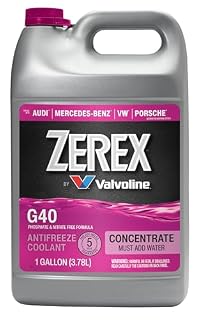
Zerex
G-40 Concentrate Antifreeze/Coolant
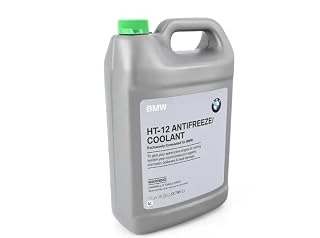
BMW
HT-12 Antifreeze/Coolant Concentrate, Green Si-OAT
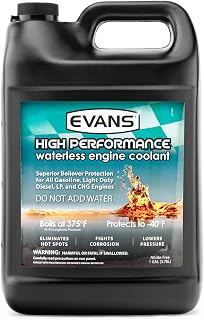
Evans Cooling Systems
Evans High Performance Waterless Engine Coolant
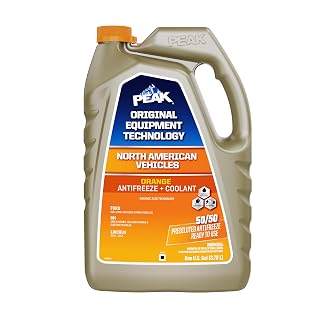
PEAK
OET Extended Life Orange 50/50 Prediluted Antifreeze/Coolant
As an Amazon Associate I earn from qualifying purchases. Full disclosure

Community
0 postsShare how you use this product
Drop a quick comment or post a full review with photos and a star rating.
Sign in to postNew here? Create a free account.