CarCareTruth Score
Decent.
Opens Amazon in a new tab. No account needed to look.
Saved to your guest loadout. Sign up to also save to your Cabinet (consumables) or Kit (tools you own).
As an Amazon Associate I earn from qualifying purchases. Full disclosure
Prices may varyHealth score is for adult use as intended, per the manufacturer's SDS. It does not model child ingestion, accidental spill cleanup, or off-label use. See the safety panel below for full hazard classification, and /disclaimer for the full editorial scope.
GHS hazard codes are quoted from the manufacturer’s Safety Data Sheet. PPE tiers below translate those codes and the listed ingredient chemistry; they are not CarCareTruth recommendations.
Show details for all categories ▾Hide details ▴
Only when: high-speed DA/rotary use
Beyond SDS: translated from the ingredient chemistry
Current SDS confirms eye protection is not required at product level. Pad-edge splatter during DA-polisher application is a realistic incidental-contact route independent of the SDS chemical classification, so eye protection applies when a machine is in use.
CarCareTruth publishes the cited sources verbatim and does not advise what action a user should take. Consult the full SDS before use.
Only when: prolonged use
Translated from the manufacturer’s Safety Data Sheet, Section 8
SDS Section 8 explicitly calls for gloves selected per an exposure assessment, naming polymer laminate as the recommended material and nitrile rubber as acceptable for incidental contact. Section 2 carries no skin-hazard classification for the mixture, so this is a routine hand-contact precaution named in the SDS itself, not a corrosive or sensitizer-level hazard.
CarCareTruth publishes the cited sources verbatim and does not advise what action a user should take. Consult the full SDS before use.
Only when: in enclosed space · high-speed DA/rotary use
Translated from the manufacturer’s Safety Data Sheet, Section 8
SDS Section 8 states an exposure assessment may be needed to decide if a respirator is required, and names an air-purifying respirator for organic vapors as the option if one is; Section 2 carries no inhalation-hazard classification for this product. Aluminum oxide, the abrasive ingredient, has its own inhalable and respirable dust exposure limits, and Section 11 flags chronic-inhalation data on pulmonary fibrosis that the SDS itself says is not sufficient for classification. Working dried residue by DA polisher or in an unventilated bay is the realistic dust-generating scenario this addresses, not a solvent-vapor hazard at the mixture level.
CarCareTruth publishes the cited sources verbatim and does not advise what action a user should take. Consult the full SDS before use.
No PPE specified in published sources for ventilation. Absence does not imply “not needed” — consult the full Safety Data Sheet.
PPE tiers translate the manufacturer’s SDS and U.S. regulatory standards. Not professional safety advice. How we report safety.
Scope of these PPE tiers. The tiers on this page translate the product's Safety Data Sheet where one is published, plus its ingredient chemistry, into a comparable rating. They describe a formulation, not a situation: a tier is not a safety determination for any specific user, task, quantity, or environment. The manufacturer's label and use instructions govern how the product is handled. Where the product is used at work, the employer's PPE program and hazard assessment under 29 CFR 1910.132 decide what protection is selected, not this page.
No warranties. CarCareTruth makes no warranties, express or implied, and expressly disclaims the implied warranties of merchantability and fitness for a particular purpose.
This product ranks #9 of 9 in Compound & One-Step.Three above it ↓
Last reviewed July 7, 2026
TL;DR A moderate-cut spot treatment for fine scratches, scuffs, and paint transfer, not a full-panel compound. Forum threads put it close to compound-level on isolated defects, but technique matters: aggressive hand application can leave haze needing a finishing-polish follow-up, while a DA polisher with a foam pad finishes cleaner.
A small dab on a foam pad, worked into a one-foot section until the product turns clear, is the whole process, by hand or machine. It sits between a light swirl remover and a full cutting compound; forum threads describe it as "almost compound aggressive" on isolated scratches and paint transfer, especially on softer clear coats. It will not fix a defect that reaches through the clear coat.
The right buyer has an isolated scuff, a door-handle scratch, or light paint transfer, not a full-panel job. Skip it for whole-car swirl correction (a dedicated compound or one-step polish covers more ground faster) or a defect deep enough to catch a fingernail, which needs wet-sanding or a body shop. First-timers should use a foam pad with gentle, even pressure rather than a fingertip, the most common source of reported haze.
The current SDS classifies this product as not hazardous under the Canadian Hazardous Products Regulation (mirroring US OSHA): no signal word, pictograms, or hazard codes at the product level. The Section 8 respirator language is conditional boilerplate, not a chemistry-driven requirement. A California Prop 65 warning appears on retail packaging, likely trace lead common across this brand's compound line. SDS Section 9 discloses 443.2 g/L VOC, a high-VOC carrier that lowers the health and environment scores. No PFAS, no aquatic-toxicity classification.
No. Community correction threads consistently describe it as a moderate-cut product for fine scratches, scuffs, and paint transfer, not a fix for defects that reach through the clear coat. Deep scratches typically need wet-sanding or body-shop touch-up before any polish or compound step can help.
Both are supported. Community application threads note that hand application can actually be more aggressive than machine application, and forum members caution that aggressive fingertip pressure by hand raises the risk of leaving marring that needs a follow-up polish. A DA polisher with a foam pad and moderate pressure is the more consistent, more forgiving route according to independent detailer reports.
It can, depending on technique. Multiple independent forum threads describe residual haze or micro-marring after hand application, especially with an aggressive or fingertip-driven technique, which then needs a finishing polish pass to clear. DA application with a foam pad and gentle, even pressure is reported to finish cleaner.
Community forum discussion places ScratchX 2.0 as fairly aggressive within Meguiar's own lineup, close to compound-level correction for isolated defects, while Ultimate Compound is the step up for broader swirl and oxidation correction across a full panel. ScratchX is generally positioned for spot repairs; Ultimate Compound is the better choice for a full-panel or full-car correction pass.
The product label states it is safe on all glossy paints and clear coats, and no forum reports of clear-coat burn-through were found in the community sources reviewed. That said, several detailers caution that aggressive hand technique chasing a deep scratch can polish through a clear coat on any product in this category, so technique and patience matter more than the product itself.
Marketing copy from Meguiar's, via Amazon. Not editorial.
Weekly pick
One product, one safety verdict, every week. No spam.







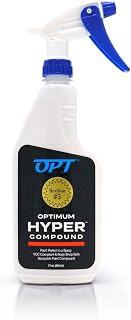
Optimum
Hyper Compound
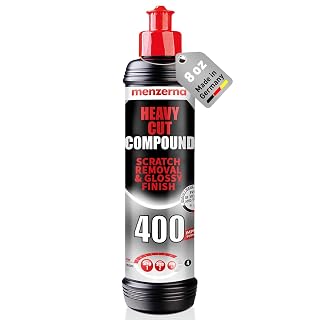
Menzerna
Heavy Cut Compound 400
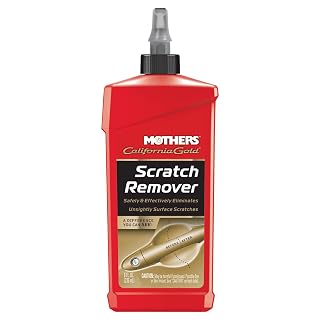
Mothers
California Gold Scratch Remover

Adam's Polishes
Paint Correcting Polish
As an Amazon Associate I earn from qualifying purchases. Full disclosure

Community
0 postsShare how you use this product
Drop a quick comment or post a full review with photos and a star rating.
Sign in to postNew here? Create a free account.