CarCareTruth Score
Decent, but it's tough on the environment.
Opens Amazon in a new tab. No account needed to look.
Saved to your guest loadout. Sign up to also save to your Cabinet (consumables) or Kit (tools you own).
As an Amazon Associate I earn from qualifying purchases. Full disclosure
Prices may varyHealth score is for adult use as intended, per the manufacturer's SDS. It does not model child ingestion, accidental spill cleanup, or off-label use. See the safety panel below for full hazard classification, and /disclaimer for the full editorial scope.
GHS hazard codes are quoted from the manufacturer’s Safety Data Sheet. PPE tiers below translate those codes and the listed ingredient chemistry; they are not CarCareTruth recommendations.
Show details for all categories ▾Hide details ▴
Only when: splash risk
Translated from the manufacturer’s Safety Data Sheet, Section 8
SDS Section 8 calls for safety glasses with side-shields if a risk assessment indicates the need · standard risk-assessment boilerplate, not a specific hazard trigger. Section 2 carries no eye-hazard H-code (no H318/H319) at the mixture level, so this is a splash precaution for handling the concentrate during the pour, not a mixture-level eye hazard.
CarCareTruth publishes the cited sources verbatim and does not advise what action a user should take. Consult the full SDS before use.
Only when: handling concentrate
Translated from the manufacturer’s Safety Data Sheet, Section 8
SDS Section 8 calls for chemical-resistant gloves if a risk assessment indicates the need. Section 2 carries no skin H-code (no H315) at the mixture level, so this is a standard concentrate-handling precaution rather than a mixture-level skin hazard.
CarCareTruth publishes the cited sources verbatim and does not advise what action a user should take. Consult the full SDS before use.
Only when: in enclosed space
Translated from the manufacturer’s Safety Data Sheet, Section 8
SDS Section 8 calls for a properly fitted air-purifying or supplied-air respirator if a risk assessment indicates the need. Flash point is 218°C with negligible vapor pressure at ambient temperature, and Section 2 carries no inhalation H-code at the mixture level, so this is an enclosed-space precaution rather than a mixture-level inhalation hazard.
CarCareTruth publishes the cited sources verbatim and does not advise what action a user should take. Consult the full SDS before use.
No PPE specified in published sources for ventilation. Absence does not imply “not needed” — consult the full Safety Data Sheet.
PPE tiers translate the manufacturer’s SDS and U.S. regulatory standards. Not professional safety advice. How we report safety.
California Prop 65 warning
This product's Amazon listing carries a California Prop 65 warning. The manufacturer's Safety Data Sheet (§15) does not list a Prop 65 substance for this product — we show the warning for transparency and flag the discrepancy rather than silently picking a side.
Scope of these PPE tiers. The tiers on this page translate the product's Safety Data Sheet where one is published, plus its ingredient chemistry, into a comparable rating. They describe a formulation, not a situation: a tier is not a safety determination for any specific user, task, quantity, or environment. The manufacturer's label and use instructions govern how the product is handled. Where the product is used at work, the employer's PPE program and hazard assessment under 29 CFR 1910.132 decide what protection is selected, not this page.
No warranties. CarCareTruth makes no warranties, express or implied, and expressly disclaims the implied warranties of merchantability and fitness for a particular purpose.
This product ranks #5 of 6 in Oil Additive.Three above it ↓
Last reviewed July 25, 2026
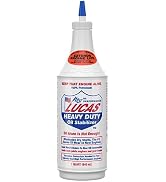
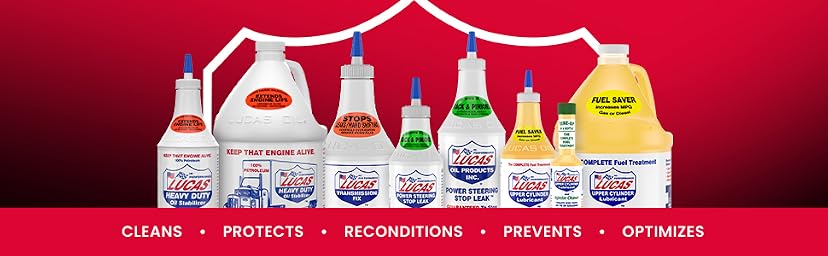
TL;DR Lucas Heavy Duty Oil Stabilizer is a petroleum bright stock concentrate that thickens oil when blended in, not a ZDDP, ester, or moly additive; no independent tribology data confirms wear reduction. Owners broadly report reduced oil consumption in worn engines and rate it well on Amazon, while the BITOG community stays skeptical that thickening equals real anti-wear protection.
The product is a high-viscosity petroleum bright stock, blended in at a 20% treat rate to raise oil viscosity above the base oil's own spec. Thickening can narrow bearing clearances and ring gaps enough to cut consumption in a worn, high-mileage engine, but it is physical thickening, not the tribochemical film ZDDP or ester additives form on metal. No SAE paper, Four-Ball test, or dyno data exists for this product; BITOG discussion is mixed, without wear-metal confirmation. The brand's no-warranty-void claim has no OEM backing.
Best suited to a high-mileage engine with documented consumption where maintenance is current and the owner wants a palliative, not a repair. The 20% treat rate pushes viscosity well above a typical 5W-30 spec, which matters for turbocharged or direct-injection engines, and the label excludes Ford Powerstrokes. Skip it on a modern API SP engine running its own additive package, and skip it for real anti-wear supplementation on a flat-tappet classic, where a ZDDP-based additive has stronger evidence.
The SDS classifies the mixture as Not Classified, with no signal word and no H-codes for skin, eye, or inhalation exposure. Flash point of 218°C means negligible vapor at shop temperatures. The Amazon listing carries a Prop 65 warning, but the SDS affirmatively states no California Prop 65 chemicals were found, clearing the posted warning; the disclosed chemistry carries no listed Prop 65 ingredient either. Drain used oil to a used oil collection facility, not a household drain; the bright stock base is not readily biodegradable.
The active ingredient is a high-viscosity petroleum bright stock that thickens the oil blend, not a ZDDP, ester, or moly compound that forms a protective film on metal. No SAE paper, ASTM D4172 Four-Ball test, or independent dyno data exists confirming wear reduction for this product. BITOG oil-analysis discussion is mixed: some owners report less oil consumption in high-mileage engines, but no long-term oil analysis has confirmed lower wear metals from using it.
The label directs using 20 percent of system capacity in engines, which works out to roughly 1 quart added to a 4 quart oil fill. For transmissions the label recommends 25 percent in light duty manual gearboxes and 25 to 50 percent in heavy duty units, with 50 to 100 percent in differentials and transfer cases and 10 to 25 percent in motorcycles.
No. Lucas states directly on its marketing materials that the product is not for use in Ford Powerstrokes. Neither the label nor the SDS explains the specific mechanism behind the exclusion, but the product's very high viscosity at 100°C is a plausible factor given how tightly modern diesel oil specifications are controlled.
Lucas states the product will not void new car warranties when used as directed, but no OEM technical service bulletin or warranty documentation was found to independently confirm that claim. Major automakers generally discourage aftermarket oil additives in factory fill engine oil, so treat the brand's warranty language as a manufacturer claim rather than a verified fact.
The Amazon listing for this product shows a Proposition 65 flag, but the manufacturer's safety data sheet states no California Proposition 65 chemicals were found in the formulation, an explicit statement that clears the posted warning under CarCareTruth's chemistry-first resolution process. No disclosed ingredient in the formula matches the state's Proposition 65 chemical list either.
Marketing copy from Lucas Oil, via Amazon. Not editorial.
Weekly pick
One product, one safety verdict, every week. No spam.

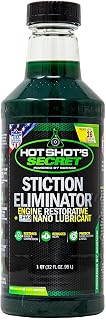
Hot Shot's Secret
Original Stiction Eliminator
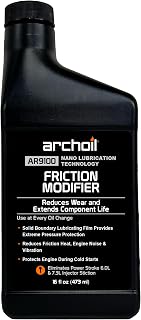
Archoil
AR9100 Oil Treatment
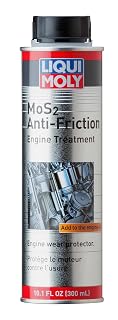
Liqui Moly
MoS2 Anti-Friction Engine Treatment
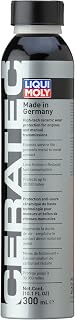
Liqui Moly
Cera Tec Friction Modifier
As an Amazon Associate I earn from qualifying purchases. Full disclosure

Community
0 postsShare how you use this product
Drop a quick comment or post a full review with photos and a star rating.
Sign in to postNew here? Create a free account.