CarCareTruth Score
Decent.
Opens Amazon in a new tab. No account needed to look.
Saved to your guest loadout. Sign up to also save to your Cabinet (consumables) or Kit (tools you own).
As an Amazon Associate I earn from qualifying purchases. Full disclosure
Prices may varyThe manufacturer's Safety Data Sheet classifies this product with one or more GHS Category 1 health hazards — the most severe tier. The hazard statements in quotes below are the verbatim GHS language from the SDS, as required by OSHA's Hazard Communication Standard. The line under each statement translates the GHS classification into plain language.
GHS Category 1 aspiration toxicity — thin, oily liquids can slip into the lungs if swallowed, causing chemical pneumonia.
If swallowed:
The aspiration hazard (H304) is about the liquid being swallowed and reaching the airway, not about breathing fumes during normal use.
Call Poison Control immediately at 1-800-222-1222 (US, 24/7, free) and have the product container with you. Poison Control's standing guidance is to not induce vomiting after chemical exposure; they will direct first-aid steps based on the specific product.
About this product's hazards. This product's Safety Data Sheet uses signal word DANGER.Read the manufacturer's SDS and follow all safety instructions before use. CarCareTruth ratings translate the manufacturer's safety sheet. They do not replace the SDS or substitute for a hazard assessment specific to your task.
Health score is for adult use as intended, per the manufacturer's SDS. It does not model child ingestion, accidental spill cleanup, or off-label use. See the safety panel below for full hazard classification, and /disclaimer for the full editorial scope.
GHS hazard codes are quoted from the manufacturer’s Safety Data Sheet. PPE tiers below translate those codes and the listed ingredient chemistry; they are not CarCareTruth recommendations.
Show details for all categories ▾Hide details ▴
Translated from the manufacturer’s Safety Data Sheet, Section 2
SDS §2 classifies Eye Irritation Category 2A (H319) at the mixture level. Aerosol mist is the primary exposure pathway.
U.S. regulatory standard
29 CFR 1910.133(a)(1)
“The employer shall ensure that each affected employee uses appropriate eye or face protection when exposed to eye or face hazards from… liquid chemicals…”
ANSI Z87.1 (incorporated via §1910.6)
OSHA standards apply to workplaces. Cited here as the U.S. reference threshold for the underlying hazard class.
CarCareTruth publishes the cited sources verbatim and does not advise what action a user should take. Consult the full SDS before use.
Translated from the manufacturer’s Safety Data Sheet, Section 2
SDS §2 classifies Skin Sensitizer Category 1B (H317) at the mixture level. Regular contact with the petroleum-distillate carrier is the exposure driver.
U.S. regulatory standard
29 CFR 1910.138(a)
“appropriate hand protection when employees' hands are exposed to hazards such as those from… chemicals which produce an adverse effect on the skin or eyes…”
OSHA standards apply to workplaces. Cited here as the U.S. reference threshold for the underlying hazard class.
CarCareTruth publishes the cited sources verbatim and does not advise what action a user should take. Consult the full SDS before use.
Only when: when spraying · in enclosed space
Translated from the manufacturer’s Safety Data Sheet, Section 2
Aerosol form factor creates fine mist near face level. H335 (respiratory irritation) is absent from §2 mixture classification. Aerosol mist in an enclosed space is the primary inhalation exposure scenario.
U.S. regulatory standard
29 CFR 1910.1200(f); 1910.132(d)
“The employer shall assess the workplace to determine if hazards are present, or are likely to be present, which necessitate the use of personal protective equipment.”
OSHA standards apply to workplaces. Cited here as the U.S. reference threshold for the underlying hazard class.
CarCareTruth publishes the cited sources verbatim and does not advise what action a user should take. Consult the full SDS before use.
The published Safety Data Sheet for this product does not specify ventilation protection for consumer use.
Workplace context
29 CFR 1910.134(a); 1910.1000
“the primary objective shall be to prevent atmospheric contamination [via] accepted engineering control measures (for example, enclosure or confinement of the operation, general and local ventilation…).”
Triggered by GHS H336 on the SDS.
OSHA standards apply to workplaces. Cited here as the U.S. reference threshold for the underlying hazard class.
PPE tiers translate the manufacturer’s SDS and U.S. regulatory standards. Not professional safety advice. How we report safety.
Scope of these PPE tiers. The tiers on this page translate the product's Safety Data Sheet where one is published, plus its ingredient chemistry, into a comparable rating. They describe a formulation, not a situation: a tier is not a safety determination for any specific user, task, quantity, or environment. The manufacturer's label and use instructions govern how the product is handled. Where the product is used at work, the employer's PPE program and hazard assessment under 29 CFR 1910.132 decide what protection is selected, not this page.
No warranties. CarCareTruth makes no warranties, express or implied, and expressly disclaims the implied warranties of merchantability and fitness for a particular purpose.
This product ranks #15 of 24 in Penetrating Oil / Multi-Purpose Lubricant.Three above it ↓
Last reviewed July 31, 2026
TL;DR DANGER-rated aerosol with a confirmed Prop 65 warning. The carrier is an aspiration hazard if swallowed; do not induce vomiting, seek medical attention. Works reliably on light-to-moderate rust in 10-20 minutes, with PTFE/Cerflon residue that prevents re-seizure at the next service.
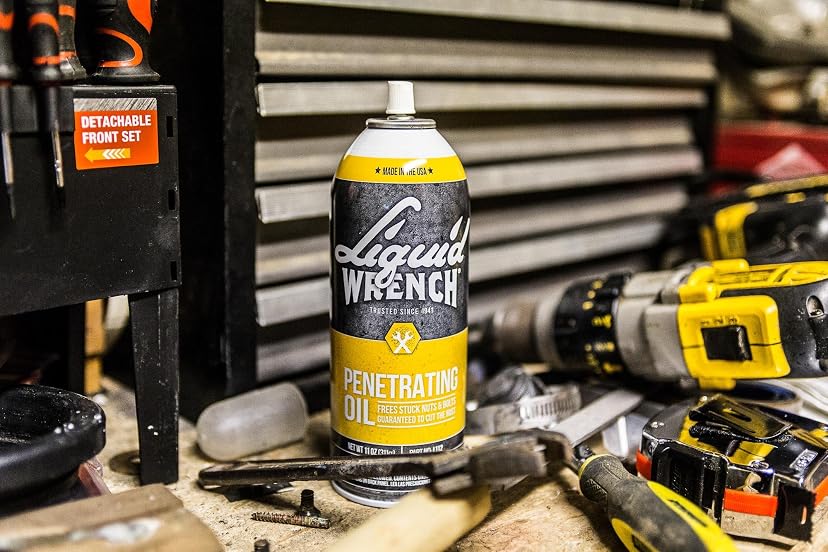
Liquid Wrench Penetrating Oil breaks the rust's grip on seized fasteners. Spray on, direct the straw into tight threads, wait 10-20 minutes, and try to turn. The PTFE/Cerflon residue means treated fasteners turn freely at next service, a feature owners (well-reviewed on Amazon) consistently single out as a genuine differentiator at the budget tier. The heavier, slower-wicking carrier limits capillary reach into deep blind bores; performance on accessible threads is at the category median.
Weekend mechanics and homeowners who need reliable anti-seize protection in the same penetrating step will find this solid. Anyone applying penetrating oil frequently in an enclosed workspace has lower-VOC alternatives with a WARNING-only signal word in the same category; the cumulative inhalation chemistry trade-off from the DANGER classification and Prop 65 warning is documented in the SDS.
DANGER signal word is driven by an aspiration hazard at the mixture level; do not induce vomiting if ingested, seek medical attention. Prop 65 warning is on the current label (the 2018 SDS contradicts this; label takes precedence). Eye irritation and skin sensitization are classified at the mixture level. Fine mist from aerosol application in an enclosed space is the primary inhalation scenario; no respiratory-irritant classification at the mixture level. The carrier is not readily biodegradable, one ingredient is confirmed bioaccumulative, and the product carries aquatic toxicity codes at the mixture level.
The product listing states the formula is safe on metals, painted surfaces, plastic, and rubber. The SDS does not list specific material-compatibility restrictions beyond standard solvent-contact cautions. The petroleum-distillate carrier is the primary chemical in the formula; verify compatibility on a small hidden area of any sensitive plastic or rubber trim before broad application, as heavy petroleum solvents can soften certain materials with repeated use.
Yes. The formula includes PTFE/Cerflon (a ceramically reinforced PTFE additive) that leaves a dry residue on the fastener after the carrier solvent evaporates. Owners consistently note that treated fasteners turn freely at the next service interval. This re-seizure protection is above average for the budget tier of penetrating oils, where most products rely on a plain oil film that dissipates within days.
The DANGER signal word is driven by the aspiration hazard classification in SDS §2 (Asp. Tox. Category 1, H304): if swallowed, the petroleum-distillate carrier can be aspirated into the lungs, which is a serious medical risk. The Prop 65 warning indicates the current product label discloses a California-listed cancer or reproductive-harm chemical in the formula. The 2018 SDS contradicts this, but current product label and retailer listings confirm the warning is active. Neither concern applies to normal external fastener use, but both are documented SDS-level hazards.
Owners consistently report that 10-20 minutes is adequate for light-to-moderate surface rust. Severely rusted fasteners benefit from longer dwell times of up to several hours, and some users apply a second coat after the first has soaked in. The aerosol straw allows targeted application into tight threads. The heavier petroleum-distillate carrier has lower capillary action than lighter solvent competitors, so accessible threads respond better than deeply packed blind bores.
Marketing copy from Liquid Wrench, via Amazon. Not editorial.
Weekly pick
One product, one safety verdict, every week. No spam.


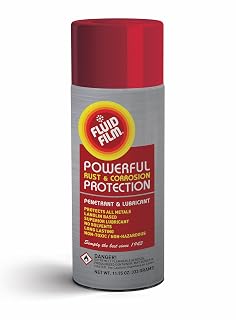
Fluid Film
NAS Aerosol Penetrant & Lubricant
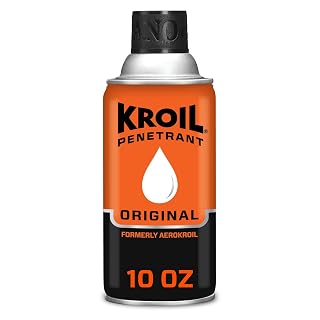
Kroil
Penetrant Original Aerosol
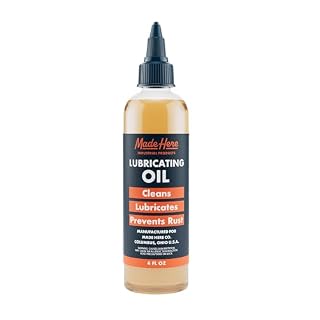
Made Here Co.
Multi-use Lubricating Penetrant Oil
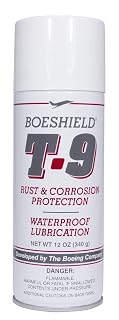
Boeshield
T-9 Rust & Corrosion Protection
As an Amazon Associate I earn from qualifying purchases. Full disclosure

Community
0 postsShare how you use this product
Drop a quick comment or post a full review with photos and a star rating.
Sign in to postNew here? Create a free account.