CarCareTruth Score
Mediocre, but it's tough on the environment.
Saved to your guest loadout. Sign up to also save to your Cabinet (consumables) or Kit (tools you own).
As an Amazon Associate I earn from qualifying purchases. Full disclosure
The manufacturer's Safety Data Sheet classifies this product with one or more GHS Category 1 health hazards — the most severe tier. The hazard statements in quotes below are the verbatim GHS language from the SDS, as required by OSHA's Hazard Communication Standard. The line under each statement translates the GHS classification into plain language.
GHS Category 1 aspiration toxicity — thin, oily liquids can slip into the lungs if swallowed, causing chemical pneumonia.
If swallowed:
The aspiration hazard (H304) is about the liquid being swallowed and reaching the airway, not about breathing fumes during normal use.
Call Poison Control immediately at 1-800-222-1222 (US, 24/7, free) and have the product container with you. Poison Control's standing guidance is to not induce vomiting after chemical exposure; they will direct first-aid steps based on the specific product.
About this product's hazards. This product's Safety Data Sheet uses signal word DANGER.Read the manufacturer's SDS and follow all safety instructions before use. CarCareTruth ratings translate the manufacturer's safety sheet. They do not replace the SDS or substitute for a hazard assessment specific to your task.
Health score is for adult use as intended, per the manufacturer's SDS. It does not model child ingestion, accidental spill cleanup, or off-label use. See the safety panel below for full hazard classification, and /disclaimer for the full editorial scope.
GHS hazard codes are quoted from the manufacturer’s Safety Data Sheet. PPE tiers below translate those codes and the listed ingredient chemistry; they are not CarCareTruth recommendations.
Show details for all categories ▾Hide details ▴
Translated from the manufacturer’s Safety Data Sheet, Section 8
SDS Section 8 calls for safety glasses with side shields or chemical goggles. Section 11's narrative notes 'some evidence to suggest that this material can cause eye irritation and damage in some persons,' and the per-component toxicity data shows eye-irritation results that vary by carrier component (irritating to mild for some, no effect for others). Section 2 carries no eye-damage GHS code (no H318/H319), so this reflects documented irritation potential rather than a mixture-level eye hazard.
CarCareTruth publishes the cited sources verbatim and does not advise what action a user should take. Consult the full SDS before use.
Translated from the manufacturer’s Safety Data Sheet, Section 8
SDS Section 8 calls for chemical-resistant gloves (PVC or polyethylene), overalls, a PVC apron, and barrier cream. Section 11 states the material 'can cause inflammation of the skin on contact in some persons' and warns against exposure on open cuts or abraded skin, and the per-component toxicity data reports skin irritation for every tested carrier component. Section 2 carries no skin-corrosion GHS code (no H314/H315), so this reflects documented contact irritation rather than a mixture-level corrosive hazard.
CarCareTruth publishes the cited sources verbatim and does not advise what action a user should take. Consult the full SDS before use.
Beyond SDS: translated from the ingredient chemistry
H336 (narcotic vapour effects) appears in SDS §2 at mixture level, and SDS §3 individually names heavy aromatic solvent naphtha and naphthalene as carrier components. H336 with a named aromatic carrier supports editorial escalation of lungs to `recommended` (Beyond SDS) · the ceiling for H336 without H331 in §2 is `recommended`, not `required`.
U.S. regulatory standard
29 CFR 1910.1000; 1910.1200
“Each employer shall assure that no employee is exposed [in excess of the PEL]…”
OSHA standards apply to workplaces. Cited here as the U.S. reference threshold for the underlying hazard class.
CarCareTruth publishes the cited sources verbatim and does not advise what action a user should take. Consult the full SDS before use.
The published Safety Data Sheet for this product does not specify ventilation protection for consumer use.
Workplace context
29 CFR 1910.134(a); 1910.1000
“the primary objective shall be to prevent atmospheric contamination [via] accepted engineering control measures (for example, enclosure or confinement of the operation, general and local ventilation…).”
Triggered by GHS H336 on the SDS.
OSHA standards apply to workplaces. Cited here as the U.S. reference threshold for the underlying hazard class.
PPE tiers translate the manufacturer’s SDS and U.S. regulatory standards. Not professional safety advice. How we report safety.
Scope of these PPE tiers. The tiers on this page translate the product's Safety Data Sheet where one is published, plus its ingredient chemistry, into a comparable rating. They describe a formulation, not a situation: a tier is not a safety determination for any specific user, task, quantity, or environment. The manufacturer's label and use instructions govern how the product is handled. Where the product is used at work, the employer's PPE program and hazard assessment under 29 CFR 1910.132 decide what protection is selected, not this page.
No warranties. CarCareTruth makes no warranties, express or implied, and expressly disclaims the implied warranties of merchantability and fitness for a particular purpose.
Last reviewed July 31, 2026
TL;DR Active ingredient is not disclosed in any US-jurisdiction SDS or brand document · the community attributes the chemistry to PEA, but with no confirmation, the cleaning claim has no independent basis. Health score 5.0: DANGER from H351 carcinogen, H304 aspiration, and H336 narcotic effects, with a Prop 65 warning for a trace solvent component and a high-VOC naphtha carrier. Do not induce vomiting if ingested.
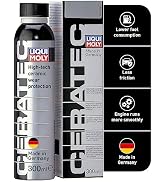
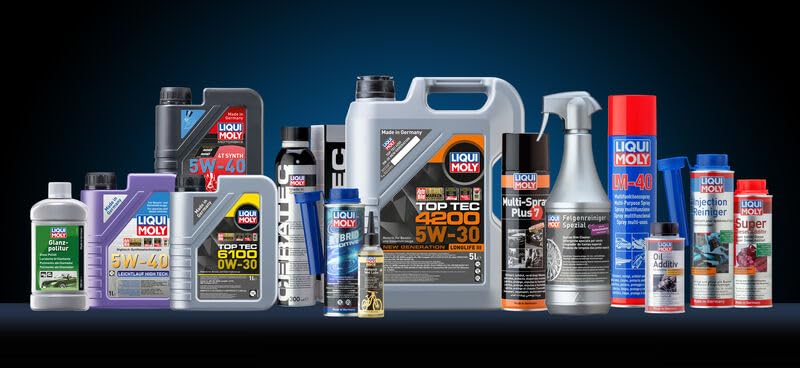
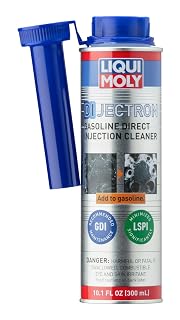
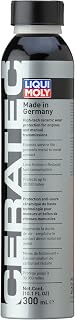
The active detergent in Jectron is not disclosed on the label, SDS, or any US Liqui Moly technical document · BITOG community discussion attributes the chemistry to PEA based on cross-regional parts-counter sources, but the brand does not confirm it in North America. Without that confirmation, the cleaning claim cannot be evaluated against a known chemistry class. Community evidence is positive: broadly trusted by a large, well-rated owner base and corroborated by multiple BITOG threads with 3,000-mile follow-up reports. The brand's protocol is one 300 mL bottle per 25-75 L (7-20 gal) tank, repeated every 1,200 miles. Liqui Moly markets DIJectron as a separate product for direct-injection intake-valve carbon.
Best fit for port-injection gasoline owners running non-Top-Tier fuel who want a brand-trust pick with a long European enthusiast track record. Skip it if you always run Top Tier certified gasoline (the OEM detergent package already covers maintenance dosing). Skip it for direct-injection engines with intake-valve carbon symptoms · Liqui Moly itself positions DIJectron, not Jectron, for that case. Skip it for severe rough idle or stalling; professional ultrasonic cleaning is the right call there.
SDS §2 is DANGER · H351 (suspected carcinogen Cat 2, naphthalene driver), H304 (aspiration hazard), H336 (narcotic vapour effects), H226 (flammable liquid), and H412 (chronic aquatic toxicity). The product listing carries a Prop 65 warning for a trace solvent component named in SDS §3. SDS §8 calls for safety glasses/chemical goggles and chemical-resistant gloves with an apron and barrier cream, and §11 reports real eye- and skin-irritation data for the carrier components, so eyes and skin are recommended. Lungs is also recommended (Beyond SDS) based on the named aromatic carrier and H336. Do not induce vomiting if ingested · seek medical attention. The product combusts in the engine; exhaust byproducts are the environmental endpoint.
The listing for Liqui Moly Jectron Fuel Injection Cleaner carries a California Prop 65 warning. Liqui Moly Jectron Fuel Injection Cleaner is a working automotive fluid rather than a passive part, so the warning points at the formulation itself. The manufacturer's Safety Data Sheet is the primary source for what is in it: the hazard classification and the PPE tiers on this page are translated from that sheet, and the full SDS is linked from the safety panel. California requires the warning whenever exposure to any of roughly 900 listed substances is possible. It does not name which substance applies to a given product, and it states no dose or risk level, so it is not on its own a measure of how hazardous this fluid is in normal use.
Marketing copy from Liqui Moly, via Amazon. Not editorial.
Weekly pick
One product, one safety verdict, every week. No spam.
Chevron
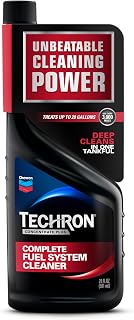
Techron Concentrate Plus Complete Fuel System Cleaner
Gumout
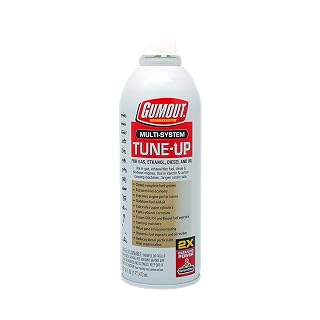
Multi-System Tune-Up
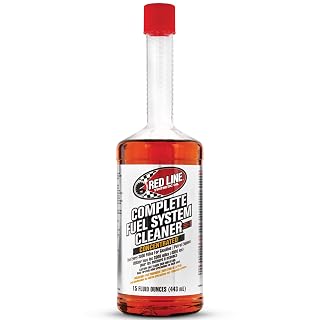
Red Line
SI-1 Complete Fuel System Cleaner
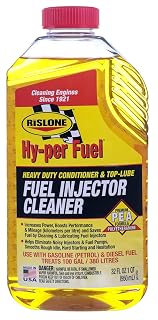
Rislone
Hy-per Fuel Heavy Duty Injector Cleaner
As an Amazon Associate I earn from qualifying purchases. Full disclosure

Community
0 postsShare how you use this product
Drop a quick comment or post a full review with photos and a star rating.
Sign in to postNew here? Create a free account.