CarCareTruth Score
Decent, but it's tough on the environment.
Opens Amazon in a new tab. No account needed to look.
Saved to your guest loadout. Sign up to also save to your Cabinet (consumables) or Kit (tools you own).
As an Amazon Associate I earn from qualifying purchases. Full disclosure
Prices may varyThe manufacturer's Safety Data Sheet classifies this product with one or more GHS Category 1 health hazards — the most severe tier. The hazard statements in quotes below are the verbatim GHS language from the SDS, as required by OSHA's Hazard Communication Standard. The line under each statement translates the GHS classification into plain language.
GHS Category 1 aspiration toxicity — thin, oily liquids can slip into the lungs if swallowed, causing chemical pneumonia.
If swallowed:
The aspiration hazard (H304) is about the liquid being swallowed and reaching the airway, not about breathing fumes during normal use.
Call Poison Control immediately at 1-800-222-1222 (US, 24/7, free) and have the product container with you. Poison Control's standing guidance is to not induce vomiting after chemical exposure; they will direct first-aid steps based on the specific product.
About this product's hazards. This product's Safety Data Sheet uses signal word DANGER.Read the manufacturer's SDS and follow all safety instructions before use. CarCareTruth ratings translate the manufacturer's safety sheet. They do not replace the SDS or substitute for a hazard assessment specific to your task.
Health score is for adult use as intended, per the manufacturer's SDS. It does not model child ingestion, accidental spill cleanup, or off-label use. See the safety panel below for full hazard classification, and /disclaimer for the full editorial scope.
GHS hazard codes are quoted from the manufacturer’s Safety Data Sheet. PPE tiers below translate those codes and the listed ingredient chemistry; they are not CarCareTruth recommendations.
Show details for all categories ▾Hide details ▴
Translated from the manufacturer’s Safety Data Sheet, Section 2
H319 (serious eye irritation) in SDS §2. Consumer can poured into a narrow fuel-tank fill neck · drip-back and splash are realistic; safety glasses appropriate during the pour.
U.S. regulatory standard
29 CFR 1910.133(a)(1)
“The employer shall ensure that each affected employee uses appropriate eye or face protection when exposed to eye or face hazards from… liquid chemicals…”
ANSI Z87.1 (incorporated via §1910.6)
OSHA standards apply to workplaces. Cited here as the U.S. reference threshold for the underlying hazard class.
CarCareTruth publishes the cited sources verbatim and does not advise what action a user should take. Consult the full SDS before use.
Translated from the manufacturer’s Safety Data Sheet, Section 2
H315 (skin irritation) at SDS §2 mixture level. Accidental skin contact during pour is the exposure scenario; nitrile gloves recommended.
U.S. regulatory standard
29 CFR 1910.138(a)
“appropriate hand protection when employees' hands are exposed to hazards such as those from… chemicals which produce an adverse effect on the skin or eyes…”
OSHA standards apply to workplaces. Cited here as the U.S. reference threshold for the underlying hazard class.
CarCareTruth publishes the cited sources verbatim and does not advise what action a user should take. Consult the full SDS before use.
Only when: hot panels
Translated from the manufacturer’s Safety Data Sheet, Section 8
SDS §8.3 names an approved respirator for 'operations where exposure limits are exceeded or exposure levels are excessive.' SDS §11 additionally notes 'inhalation of mists or vapors at elevated temperatures may cause respiratory irritation.' No H335, H330, H331, or H334 in SDS §2 mixture classification · DANGER is driven by H304 (aspiration) and H351 (suspected carcinogen), not an inhalation-irritant code. The named respirator control is a cautious precaution for pouring the concentrate near a warm engine bay, not a mixture-level inhalation hazard.
U.S. regulatory standard
29 CFR 1910.1000; 1910.1200
“Each employer shall assure that no employee is exposed [in excess of the PEL]…”
OSHA standards apply to workplaces. Cited here as the U.S. reference threshold for the underlying hazard class.
CarCareTruth publishes the cited sources verbatim and does not advise what action a user should take. Consult the full SDS before use.
No PPE specified in published sources for ventilation. Absence does not imply “not needed” — consult the full Safety Data Sheet.
PPE tiers translate the manufacturer’s SDS and U.S. regulatory standards. Not professional safety advice. How we report safety.
Scope of these PPE tiers. The tiers on this page translate the product's Safety Data Sheet where one is published, plus its ingredient chemistry, into a comparable rating. They describe a formulation, not a situation: a tier is not a safety determination for any specific user, task, quantity, or environment. The manufacturer's label and use instructions govern how the product is handled. Where the product is used at work, the employer's PPE program and hazard assessment under 29 CFR 1910.132 decide what protection is selected, not this page.
No warranties. CarCareTruth makes no warranties, express or implied, and expressly disclaims the implied warranties of merchantability and fitness for a particular purpose.
This product ranks #6 of 16 in Fuel Injector Cleaner.Three above it ↓
Last reviewed August 2, 2026
TL;DR PEA chemistry (the most independently studied injector detergent class) formulated specifically for gasoline direct injection engines. Highly rated on Amazon, where owners report idle smoothing and improved drivability on GDI-equipped vehicles. The concentrate scores at the Hazardous band · DANGER signal word and a suspected-carcinogen flag from trace naphthalene.
DIJectron uses PEA chemistry designed for ongoing GDI maintenance: one 300 ml bottle per tank every 2,400 miles. The treatment targets the injector tip and combustion chamber · the correct deposit location for direct injection engines. The brand states the formula significantly reduces Low Speed Pre-Ignition (LSPI) risk, a known failure mode in turbocharged GDI engines. No independent third-party test data has been located; the brand efficacy claim is the primary support.
Best fit for GDI-engine owners running non-Top Tier fuel who want a targeted maintenance additive. Skip it if you consistently run Top Tier certified gasoline · the OEM-level detergent package already handles deposit prevention. Skip it for severe symptoms (rough idle, stalling, confirmed flow failure) · professional ultrasonic cleaning is the right call. Port-injection engine owners should use Jectron (Art. 2007) instead.
DANGER signal word in SDS §2, driven by H304 (aspiration hazard · do not induce vomiting if ingested; seek medical attention) and H351 (suspected carcinogen from trace naphthalene, ≤0.26%). SDS §15 carries a California Prop 65 warning for naphthalene. H319 (eye irritation) and H315 (skin irritation) are also present at mixture level. The product combusts in the fuel system · exhaust byproducts are the environmental endpoint.
No · these are different products for different engine types. DIJectron (Art. 22076) is formulated specifically for gasoline direct injection (GDI) engines where injectors spray fuel directly into the combustion chamber. Jectron (Art. 2007) targets port-injected engines where fuel is sprayed upstream of the intake valve. Using the wrong product for your engine type does not harm anything, but the deposit-cleaning chemistry is optimized for a different injector location.
GDI intake valve carbon buildup is a separate problem from injector fouling · it happens because fuel does not wash the back of the intake valve in a direct-injection engine. Fuel additives like DIJectron enter through the fuel tank and travel only to the injector tip and combustion chamber; they cannot reach intake valve deposits on a GDI engine. Walnut blasting or chemical intake cleaning is the appropriate solution for GDI intake valve carbon.
The manufacturer recommends one 300 ml bottle per tank every 4,000 km (about 2,400 miles) as ongoing maintenance. One bottle treats a 40-70 liter (10.5-18 gallon) fuel tank.
Marketing copy from Liqui Moly, via Amazon. Not editorial.
Weekly pick
One product, one safety verdict, every week. No spam.
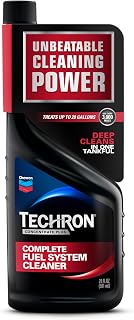
Chevron
Techron Concentrate Plus Complete Fuel System Cleaner
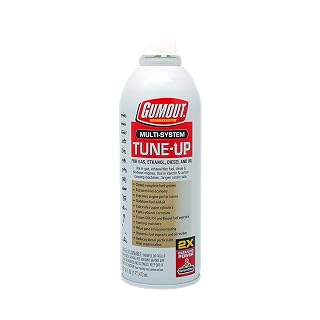
Gumout
Multi-System Tune-Up
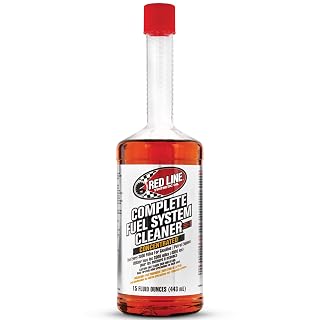
Red Line
SI-1 Complete Fuel System Cleaner
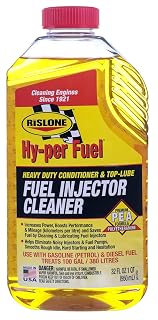
Rislone
Hy-per Fuel Heavy Duty Injector Cleaner
As an Amazon Associate I earn from qualifying purchases. Full disclosure

Community
0 postsShare how you use this product
Drop a quick comment or post a full review with photos and a star rating.
Sign in to postNew here? Create a free account.