CarCareTruth Score
Decent.
Opens Amazon in a new tab. No account needed to look.
Saved to your guest loadout. Sign up to also save to your Cabinet (consumables) or Kit (tools you own).
As an Amazon Associate I earn from qualifying purchases. Full disclosure
Prices may varyHealth score is for adult use as intended, per the manufacturer's SDS. It does not model child ingestion, accidental spill cleanup, or off-label use. See the safety panel below for full hazard classification, and /disclaimer for the full editorial scope.
GHS hazard codes are quoted from the manufacturer’s Safety Data Sheet. PPE tiers below translate those codes and the listed ingredient chemistry; they are not CarCareTruth recommendations.
Show details for all categories ▾Hide details ▴
Only when: handling concentrate
Translated from the manufacturer’s Safety Data Sheet, Section 2
SDS Section 8 directs tight-fitting protective goggles with side protection (EN 166) during handling. No H318 or H319 eye-hazard classification appears at the mixture level (SDS Section 2 carries only H317 and H412), so situational is the chemistry-consistent tier: splash risk during concentrate pouring and measuring into the bucket, not a confirmed eye-damage hazard. The diluted 1:256 working solution itself is not an eye-splash concern at arm's length during the dip-wring-wipe routine.
CarCareTruth publishes the cited sources verbatim and does not advise what action a user should take. Consult the full SDS before use.
Especially relevant: prolonged use
Translated from the manufacturer’s Safety Data Sheet, Section 2
H317 (skin sensitizer) is classified at the mixture level in SDS Section 2, driven by the OIT preservative's low specific concentration limit for Skin Sens. 1A. A confirmed mixture-level H317 sets skin to recommended: sensitization risk builds with repeated contact even at low dose. SDS Section 8 separately recommends chemical-resistant gloves (butyl rubber, neoprene/polychloroprene, or nitrile, 0.5 mm minimum, 480-minute breakthrough time) and a protective hand cream, consistent with the recommended tier during concentrate handling and the repeated dilute-solution hand contact of the dip-wring-wipe cycle.
U.S. regulatory standard
29 CFR 1910.138(a); 1910.132(d)
“appropriate hand protection when employees' hands are exposed to hazards such as those from skin absorption of harmful substances.”
OSHA standards apply to workplaces. Cited here as the U.S. reference threshold for the underlying hazard class.
CarCareTruth publishes the cited sources verbatim and does not advise what action a user should take. Consult the full SDS before use.
Only when: in enclosed space
Translated from the manufacturer’s Safety Data Sheet, Section 2
SDS Section 8 explicitly states respiratory protection is 'Normally not necessary,' and no H331, H334, or H335 appears at the mixture level. Per the rubric's schema rule, lungs:not_needed is invalid for any chemical product, so situational with the enclosed_space trigger is the correct floor tier: standard outdoor or ventilated-garage use needs no lung protection, and there is no spray mist in the bucket dip-wring-wipe method regardless.
CarCareTruth publishes the cited sources verbatim and does not advise what action a user should take. Consult the full SDS before use.
No PPE specified in published sources for ventilation. Absence does not imply “not needed” — consult the full Safety Data Sheet.
PPE tiers translate the manufacturer’s SDS and U.S. regulatory standards. Not professional safety advice. How we report safety.
Scope of these PPE tiers. The tiers on this page translate the product's Safety Data Sheet where one is published, plus its ingredient chemistry, into a comparable rating. They describe a formulation, not a situation: a tier is not a safety determination for any specific user, task, quantity, or environment. The manufacturer's label and use instructions govern how the product is handled. Where the product is used at work, the employer's PPE program and hazard assessment under 29 CFR 1910.132 decide what protection is selected, not this page.
No warranties. CarCareTruth makes no warranties, express or implied, and expressly disclaims the implied warranties of merchantability and fitness for a particular purpose.
This product ranks #6 of 8 in Rinseless Wash.Three above it ↓
Last reviewed July 16, 2026
TL;DR Strong cleaning power for a rinseless wash, with good lubrication that owners report as scratch-safe on light dust and dirt. The 256:1 concentrate stretches one liter into dozens of washes, though it can streak in direct sun or heat.
This concentrate dilutes at roughly 256 to 1, typically measured into a bucket for the classic dip, wring, and wipe method, or mixed richer as a spray-and-wipe quick detailer. Owners describe it as one of the stronger cleaners in the category on dust, pollen, and fingerprints, with a slick feel that matches its clean, no-marring track record. The one documented complaint: working it in direct sun or heat can leave streaks, so shade and a quick towel pass help.
It's a good fit for owners doing frequent, low-water washes, especially apartment dwellers without hose access or anyone keeping a daily driver dust-free between full details. Skip it if your car regularly collects heavy road film, mud, or thick pollen; that level of contamination calls for a pre-rinse or a full hose-and-bucket wash instead.
It carries a Warning signal word: repeated skin contact can cause an allergic reaction, so gloves are worth wearing through a full wash cycle. A California Proposition 65 warning appears on the retail label, and it's rated harmful to aquatic life with long-lasting effects, so pour bucket water down a drain, not a storm gutter. The rinseless format itself is the bigger plus: a two-gallon bucket replaces the 60 to 100 gallons a hose-and-bucket wash typically uses.
There is no confirmed ceramic-coating compatibility data specific to this product in its Safety Data Sheet or from independent testing, so treat it the way you would any rinseless wash on a coated car: work in small sections, use a clean, well-wrung applicator, and refresh your bucket water often so you are not dragging grit across the surface. The mild working-solution pH and the slick feel owners describe line up with what coating owners generally look for, but no source found here specifically tracked it on a ceramic-coated vehicle over time.
The label calls for roughly 256 to 1, worked out to about 40 mL per 10 liters of water, which is tuned for the classic bucket dip, wring, and wipe method. Owner reviews on detailing-retailer sites note that a richer mix, closer to 32 to 1, performs better if you are using it as a straight spray-and-wipe quick detailer rather than a full bucket wash, since the lighter ratio on the label is meant for dilution in a full bucket, not a spray bottle.
Its Safety Data Sheet classifies the mixture with a Warning signal word for a skin sensitization risk, meaning repeated or prolonged contact can trigger an allergic skin reaction in some people, so chemical-resistant gloves are worth wearing through a full wash. Eye protection is a reasonable precaution mainly while pouring or measuring the concentrate, since splash risk is higher there than during the diluted bucket-and-towel steps. No respirator is called for in normal outdoor or garage-ventilated use.
Yes, the retail label carries a California Proposition 65 warning, the standard disclosure required in California when a product may expose users to a chemical the state has listed as a cancer or reproductive-harm risk. It is a legal labeling requirement rather than a claim that normal use is unsafe, but it is worth knowing about before you buy the retail-label version sold in the US.
Independent detailing-forum reports on this product describe a notably slick feel with no marring or swirl complaints found under correct technique, which is a genuinely strong result. It does not yet have the years of dark-paint-specific, long-term community tracking that Optimum No Rinse has built up as the category's reference point, so treat this as a strong, well-corroborated performer rather than a product with the same depth of scratch-safety history.
Marketing copy from Koch-Chemie, via Amazon. Not editorial.
Weekly pick
One product, one safety verdict, every week. No spam.
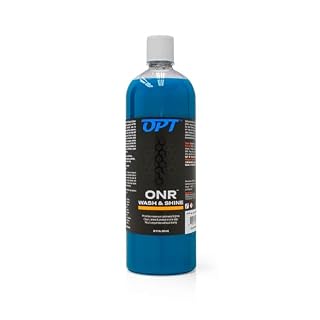
Optimum
No Rinse Wash & Shine (ONR Version 5)
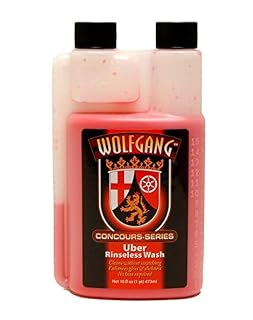
Wolfgang Concours-Series
Concours Series Uber Rinseless Wash
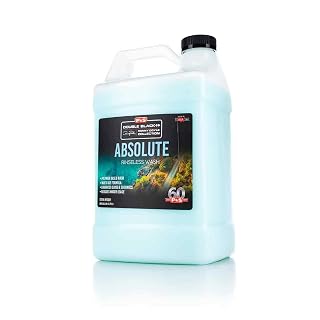
P&S Detail Products
Absolute Rinseless Wash
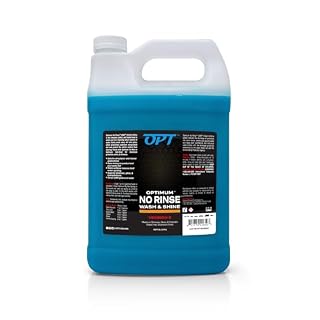
Optimum
No Rinse Wash & Shine (ONR Version 6)
As an Amazon Associate I earn from qualifying purchases. Full disclosure

Community
0 postsShare how you use this product
Drop a quick comment or post a full review with photos and a star rating.
Sign in to postNew here? Create a free account.