CarCareTruth Score
Decent.
Opens Amazon in a new tab. No account needed to look.
Saved to your guest loadout. Sign up to also save to your Cabinet (consumables) or Kit (tools you own).
As an Amazon Associate I earn from qualifying purchases. Full disclosure
Prices may varyAbout this product's hazards. This product's Safety Data Sheet uses signal word DANGER.Read the manufacturer's SDS and follow all safety instructions before use. CarCareTruth ratings translate the manufacturer's safety sheet. They do not replace the SDS or substitute for a hazard assessment specific to your task.
Health score is for adult use as intended, per the manufacturer's SDS. It does not model child ingestion, accidental spill cleanup, or off-label use. See the safety panel below for full hazard classification, and /disclaimer for the full editorial scope.
GHS hazard codes are quoted from the manufacturer’s Safety Data Sheet. PPE tiers below translate those codes and the listed ingredient chemistry; they are not CarCareTruth recommendations.
Show details for all categories ▾Hide details ▴
Only when: when spraying
Beyond SDS: translated from the ingredient chemistry
No H319 or H318 in SDS §2 mixture classification. Aerosol mist at face level during engine-bay work is the trigger; fine droplets can cause temporary irritation on direct contact.
CarCareTruth publishes the cited sources verbatim and does not advise what action a user should take. Consult the full SDS before use.
Only when: prolonged use
Translated from the manufacturer’s Safety Data Sheet, Section 2
No H315 or H317 in SDS §2 mixture classification. Brief incidental contact during typical MAF cleaning is the realistic scenario; the solvent load warrants care with repeated or extended skin contact.
U.S. regulatory standard
29 CFR 1910.1000; 1910.1200
“Each employer shall assure that no employee is exposed [in excess of the PEL]…”
OSHA standards apply to workplaces. Cited here as the U.S. reference threshold for the underlying hazard class.
UN GHS hazard statement
H361“Suspected of damaging fertility or the unborn child”
UN GHS Rev. 9 (2021)
CarCareTruth publishes the cited sources verbatim and does not advise what action a user should take. Consult the full SDS before use.
Translated from the manufacturer’s Safety Data Sheet, Section 2
DANGER signal word driven by H370 (organ damage, STOT SE 1) and H373 (STOT-RE Cat 2) at the SDS §2 mixture level; petroleum distillate aerosol with genuine health-tier H-codes, not a flammability-only DANGER. Use outdoors or with the garage door fully open.
U.S. regulatory standard
29 CFR 1910.134; 1910.138; 1910.1000
“the primary objective shall be to prevent atmospheric contamination… When effective engineering controls are not feasible… appropriate respirators shall be used.”
OSHA standards apply to workplaces. Cited here as the U.S. reference threshold for the underlying hazard class.
CarCareTruth publishes the cited sources verbatim and does not advise what action a user should take. Consult the full SDS before use.
No PPE specified in published sources for ventilation. Absence does not imply “not needed” — consult the full Safety Data Sheet.
PPE tiers translate the manufacturer’s SDS and U.S. regulatory standards. Not professional safety advice. How we report safety.
Scope of these PPE tiers. The tiers on this page translate the product's Safety Data Sheet where one is published, plus its ingredient chemistry, into a comparable rating. They describe a formulation, not a situation: a tier is not a safety determination for any specific user, task, quantity, or environment. The manufacturer's label and use instructions govern how the product is handled. Where the product is used at work, the employer's PPE program and hazard assessment under 29 CFR 1910.132 decide what protection is selected, not this page.
No warranties. CarCareTruth makes no warranties, express or implied, and expressly disclaims the implied warranties of merchantability and fitness for a particular purpose.
This product ranks #5 of 5 in MAF Sensor Cleaner.Three above it ↓
Last reviewed July 25, 2026
TL;DR Clears typical oil-mist MAF fouling, and owners report codes stayed cleared, with several noting it matches the category's dominant brand for less money. The DANGER signal word here is driven by genuine health hazards (organ damage and repeated-exposure organ risk), not flammability alone. Use it outdoors or with the garage door open, and air-dry 3-5 minutes before reinstalling the sensor.
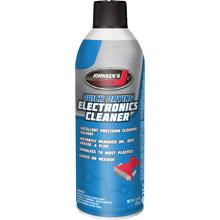
Remove the MAF sensor, insert the straw, spray two to four short bursts, and air-dry 3-5 minutes before reinstalling. Owners report the formula evaporates quickly and leaves no visible residue, which is what makes it appropriate for the delicate hot-wire or hot-film sensing element. The high solvent load means one 10 oz can covers many cleaning sessions. The available evidence covers light-to-moderate oil-mist fouling from PCV blow-by; no before-and-after MAF voltage data from enthusiast forums turned up, so heavier buildup from a long-oiled intake filter is outside what owners have documented.
This is a practical choice for a home mechanic chasing a P0101 or P0102 code caused by typical oil-mist fouling, and owners report it clears those codes as well as the pricier category leader. Look elsewhere if a lower hazard profile is the priority: the DANGER signal word reflects genuine health-tier chemistry rather than flammability alone, and the SDS identifies a Prop 65 developmental toxicant. Alcohol-based MAF cleaners in the same category carry a lighter health profile if that trade-off matters more to you than price.
The DANGER signal word here is driven by health hazards, not just flammability: the mixture is classified for organ damage (STOT SE 1) and for organ damage through repeated exposure (STOT-RE Cat 2), and it carries a suspected reproductive-toxicity classification. The SDS identifies methanol as a Prop 65 developmental toxicant, even though the retail listing does not post a Prop 65 warning. Because this is a high-VOC petroleum-distillate aerosol (roughly 634 g/L), respiratory protection is the chemistry-based minimum for spray use in an enclosed space; use it outdoors or with the garage door fully open. Eye and skin irritation are not classified at the mixture level, so goggles and gloves are situational, for aerosol mist at face level and for prolonged or repeated contact. Air-dry 3-5 minutes before reconnecting the wiring harness. CARB compliance is not stated, the naphtha carrier is not biodegradable, and the SDS lists no aquatic-toxicity hazard at the mixture level.
The dominant alternative in the category is CRC Mass Air Flow Sensor Cleaner, and owners report Johnsen's performs the same for less money. Both are petroleum-distillate or IPA-based aerosols designed to flash off without residue. IPA-based formulas tend to score higher on health because the DANGER signal word on the Johnsen's formula is driven by genuine health H-codes (organ damage, suspected reproductive toxicity), not flammability alone. Never substitute brake cleaner, carb cleaner, or contact cleaner: those can leave residue or attack the delicate sensor wire.
It is formulated to evaporate quickly and leave no residue, which is what makes it appropriate for the fragile hot-wire or hot-plate element. Spray two to four short bursts onto the sensor without touching the wire, then air-dry 3 to 5 minutes before reinstalling and reconnecting the harness. Multiple owner reviews report codes cleared with no sensor damage, but never wipe or brush the element itself.
Give it 3 to 5 minutes of air-drying before you reinstall the sensor, and do not reconnect the wiring harness until the element is fully dry. This is a fast-evaporating, extremely flammable aerosol, so letting it flash off completely protects both the delicate sensing element and guards against igniting solvent vapor when the engine restarts. If the sensor still looks or smells wet, wait longer before powering the vehicle back up.
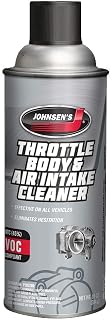
Marketing copy from Johnsen's, via Amazon. Not editorial.
Weekly pick
One product, one safety verdict, every week. No spam.
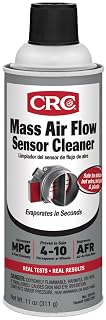
CRC
Mass Air Flow Sensor Cleaner (11 oz aerosol)
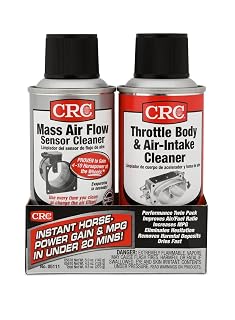
CRC
MAF Sensor & Throttle Body Cleaner Twin Pack, Case of 6
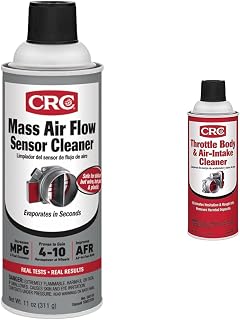
CRC
MAF Sensor & Throttle Body Cleaner Bundle (11 oz + 12 oz)
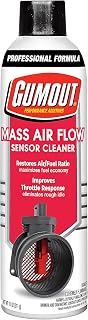
Gumout
Professional Formula Mass Air Flow Sensor Cleaner
As an Amazon Associate I earn from qualifying purchases. Full disclosure

Community
0 postsShare how you use this product
Drop a quick comment or post a full review with photos and a star rating.
Sign in to postNew here? Create a free account.