CarCareTruth Score
Decent, but it's tough on the environment.
Opens Amazon in a new tab. No account needed to look.
Saved to your guest loadout. Sign up to also save to your Cabinet (consumables) or Kit (tools you own).
As an Amazon Associate I earn from qualifying purchases. Full disclosure
Prices may varyThe manufacturer's Safety Data Sheet classifies this product with one or more GHS Category 1 health hazards — the most severe tier. The hazard statements in quotes below are the verbatim GHS language from the SDS, as required by OSHA's Hazard Communication Standard. The line under each statement translates the GHS classification into plain language.
GHS Category 1 aspiration toxicity — thin, oily liquids can slip into the lungs if swallowed, causing chemical pneumonia.
If swallowed:
The aspiration hazard (H304) is about the liquid being swallowed and reaching the airway, not about breathing fumes during normal use.
Call Poison Control immediately at 1-800-222-1222 (US, 24/7, free) and have the product container with you. Poison Control's standing guidance is to not induce vomiting after chemical exposure; they will direct first-aid steps based on the specific product.
About this product's hazards. This product's Safety Data Sheet uses signal word DANGER.Read the manufacturer's SDS and follow all safety instructions before use. CarCareTruth ratings translate the manufacturer's safety sheet. They do not replace the SDS or substitute for a hazard assessment specific to your task.
Health score is for adult use as intended, per the manufacturer's SDS. It does not model child ingestion, accidental spill cleanup, or off-label use. See the safety panel below for full hazard classification, and /disclaimer for the full editorial scope.
GHS hazard codes are quoted from the manufacturer’s Safety Data Sheet. PPE tiers below translate those codes and the listed ingredient chemistry; they are not CarCareTruth recommendations.
Show details for all categories ▾Hide details ▴
Translated from the manufacturer’s Safety Data Sheet, Section 2
SDS §8 directs eye protection for H319 (eye irritation Cat 2A). The aerosol form factor concentrates mist at face height during engine-bay overhead spraying · the same chemistry that classifies as a Cat 2A irritant in §2 is what reaches the eye in this exposure scenario. H319 is irritation (reversible) not serious damage (H318), so the SDS-translated tier is recommended.
U.S. regulatory standard
29 CFR 1910.133(a)(1)
“The employer shall ensure that each affected employee uses appropriate eye or face protection when exposed to eye or face hazards from… liquid chemicals…”
ANSI Z87.1 (incorporated via §1910.6)
OSHA standards apply to workplaces. Cited here as the U.S. reference threshold for the underlying hazard class.
CarCareTruth publishes the cited sources verbatim and does not advise what action a user should take. Consult the full SDS before use.
Translated from the manufacturer’s Safety Data Sheet, Section 8
SDS §8 directs gloves for H315 (skin irritation Cat 2). The petroleum-distillate solvent base also carries an ACGIH skin designation for aliphatic distillate, kerosene, heavy-aromatic naphtha, and naphthalene · meaning dermal absorption is a documented exposure pathway for this chemistry. H315 is irritation (reversible) not corrosion (H314), so the SDS-translated tier is recommended.
U.S. regulatory standard
29 CFR 1910.138(a)
“appropriate hand protection when employees' hands are exposed to hazards such as those from… chemicals which produce an adverse effect on the skin or eyes…”
OSHA standards apply to workplaces. Cited here as the U.S. reference threshold for the underlying hazard class.
CarCareTruth publishes the cited sources verbatim and does not advise what action a user should take. Consult the full SDS before use.
Translated from the manufacturer’s Safety Data Sheet, Section 8
SDS §8 directs an organic-vapor cartridge respirator when adequate ventilation cannot be achieved. The combination of H336 (narcotic-class CNS depression, Cat 3), H304 (aspiration hazard, Cat 1), 98% volatile content, and aerosol-mist droplet size puts respiratory exposure well above the threshold for required lung protection. Per the engine-degreaser rubric, a pressurized aerosol product with high-VOC solvent chemistry requires lung protection as a hard rule.
U.S. regulatory standard
29 CFR 1910.1000; 1910.1200
“Each employer shall assure that no employee is exposed [in excess of the PEL]…”
OSHA standards apply to workplaces. Cited here as the U.S. reference threshold for the underlying hazard class.
CarCareTruth publishes the cited sources verbatim and does not advise what action a user should take. Consult the full SDS before use.
The published Safety Data Sheet for this product does not specify ventilation protection for consumer use.
Workplace context
29 CFR 1910.134(a); 1910.1000
“the primary objective shall be to prevent atmospheric contamination [via] accepted engineering control measures (for example, enclosure or confinement of the operation, general and local ventilation…).”
Triggered by GHS H336 on the SDS.
OSHA standards apply to workplaces. Cited here as the U.S. reference threshold for the underlying hazard class.
PPE tiers translate the manufacturer’s SDS and U.S. regulatory standards. Not professional safety advice. How we report safety.
Scope of these PPE tiers. The tiers on this page translate the product's Safety Data Sheet where one is published, plus its ingredient chemistry, into a comparable rating. They describe a formulation, not a situation: a tier is not a safety determination for any specific user, task, quantity, or environment. The manufacturer's label and use instructions govern how the product is handled. Where the product is used at work, the employer's PPE program and hazard assessment under 29 CFR 1910.132 decide what protection is selected, not this page.
No warranties. CarCareTruth makes no warranties, express or implied, and expressly disclaims the implied warranties of merchantability and fitness for a particular purpose.
This product ranks #10 of 10 in Engine Degreaser.Three above it ↓
Last reviewed July 31, 2026
TL;DR A pressurized petroleum-solvent aerosol that strips baked-on grease in a single 5-15 minute dwell. DANGER chemistry (suspected carcinogen Cat 2, aspiration hazard, narcotic-class inhalation hazard) and a real California Prop 65 warning. Safety glasses, chemical-resistant gloves, and an organic-vapor cartridge respirator are what the SDS calls for.
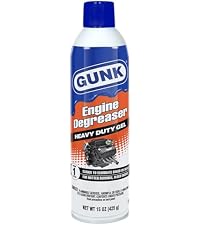
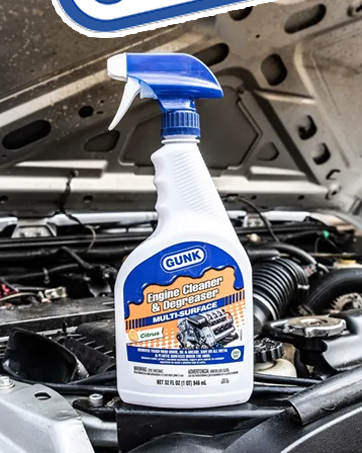
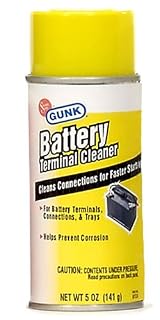
The classic mechanic-grade aerosol degreaser, recognized in the trade for roughly 75 years. Spray on a cool engine, dwell 5-15 minutes, brush-agitate worst deposits, rinse with a garden hose. Community evidence across r/AutoDetailing, r/MechanicAdvice, ChevyTalk, and FordTrucksDotCom confirms strong performance on neglected engine bays. Trade-offs: solvent residue often needs a towel wipe after rinse; heavy-aromatic content flags caution on modern composite engine covers and exposed rubber. Older bare-metal bays handle it fine. Not CARB-compliant · Gunk sells a California-reformulated EB1CA variant.
Right for a neglected older engine bay with mostly metal under the hood and an owner willing to gear up outdoors. Skip it for modern bays with plastic intake covers or exposed rubber. California buyers should choose EB1CA.
DANGER signal word. The Prop 65 warning is driven by naphthalene (a trace impurity below 1%) in the heavy-aromatic naphtha cut. Do not pierce or burn the pressurized can; do not spray near open flame. Rinse runoff carries petroleum-distillate solvent toward storm drains · ingredient-level aquatic toxicity is real and the formula is not biodegradable.
For the full SDS breakdown of this category, solvent aerosols versus water-based and caustic cleaners, see Is Engine Degreaser Toxic?.
No · the EB1 formula does not meet California CARB consumer-product VOC limits. The Prop 65 warning on the can names naphthalene as the listed-cancer chemical, and the SDS confirms the formula's roughly 700 g/L absolute VOC exceeds CARB caps. Gunk sells a separate California-reformulated SKU (EB1CA, ASIN B0057HXI6Y) with a lower-VOC formula for California buyers.
Two chemistry factors stack: H336 (narcotic-class CNS depression from heavy-aromatic naphtha) and H304 (aspiration hazard from petroleum-distillate aliphatic). The SDS §9 percent-volatile figure is 98%, meaning almost everything in the can leaves the surface as vapor or mist. Pressurized-aerosol droplet size is finer than pump-spray, which carries vapor deeper into the airway. SDS §8 directs an organic-vapor cartridge respirator when adequate ventilation cannot be achieved · required, not boilerplate.
Community evidence flags caution on modern composite engine covers, decorative plastic shrouds, and exposed rubber hoses. The heavy-aromatic naphtha fraction (3-<5% in SDS §3) is the specific solvent class that aggressively attacks rubber and softens some plastics. Older bare-metal engine bays handle the chemistry without issue. For a modern engine bay with a plastic intake manifold cover and decorative shrouds, a milder alkaline degreaser is the lower-risk choice.
It is real chemistry. SDS §15 explicitly names naphthalene (CAS 91-20-3) as the Prop 65 listed substance present in the formula. Naphthalene was added to the Prop 65 list in 2002 as a cancer-endpoint chemical and is documented in SDS §3 at <1% as a trace impurity from the heavy-aromatic naphtha cut. The warning is not generic California-label coverage · it points to a specific substance in the can.
Yes · and it should be. The label and SDS §7 direct application to a cool engine. Spraying on a hot engine accelerates solvent evaporation, increases inhalation exposure, and introduces ignition risk against hot exhaust components · the flash point is 57.8 °C (136 °F), low enough that hot engine surfaces become an ignition source for the mist.
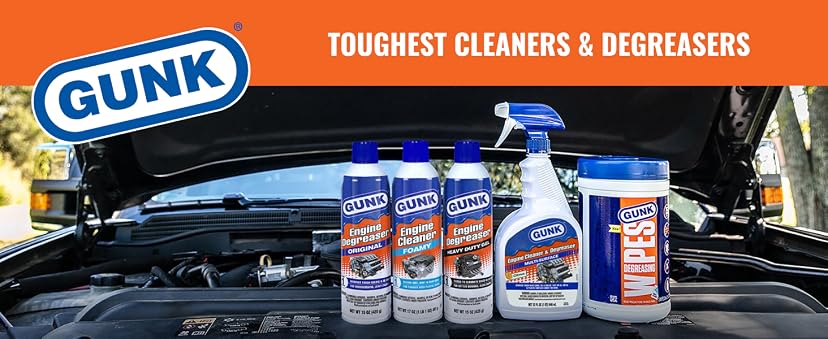
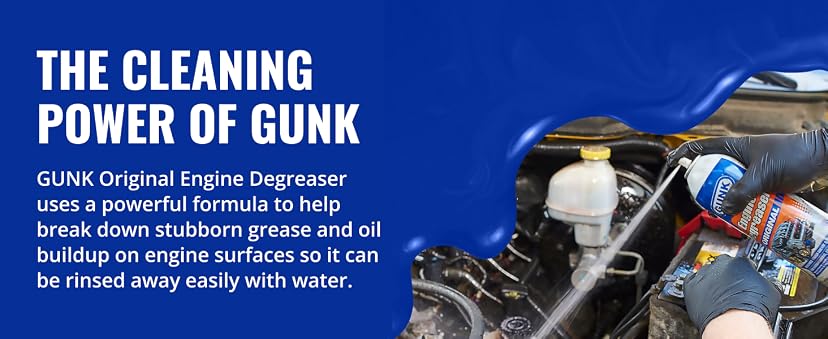
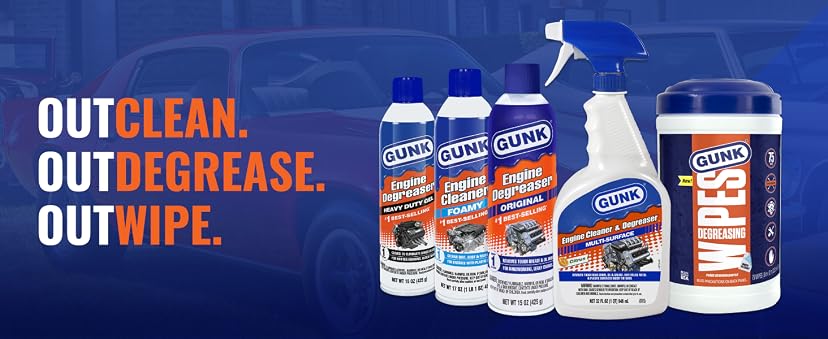
Marketing copy from Gunk, via Amazon. Not editorial.
Weekly pick
One product, one safety verdict, every week. No spam.

WD-40
Specialist Industrial-Strength Cleaner & Degreaser
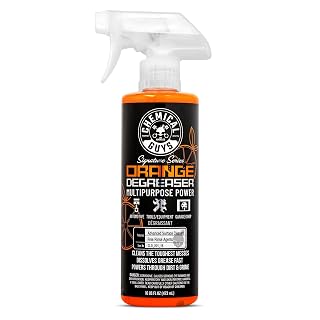
Chemical Guys
Signature Series Orange Degreaser
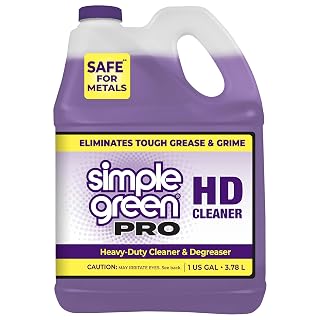
Simple Green
Pro HD Heavy-Duty Cleaner & Degreaser
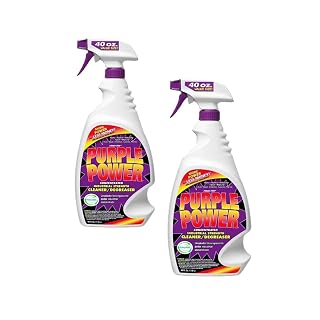
Purple Power
Industrial Strength Cleaner/Degreaser
As an Amazon Associate I earn from qualifying purchases. Full disclosure

Community
0 postsShare how you use this product
Drop a quick comment or post a full review with photos and a star rating.
Sign in to postNew here? Create a free account.