CarCareTruth Score
Decent.
Opens Amazon in a new tab. No account needed to look.
Saved to your guest loadout. Sign up to also save to your Cabinet (consumables) or Kit (tools you own).
As an Amazon Associate I earn from qualifying purchases. Full disclosure
Prices may varyHealth score is for adult use as intended, per the manufacturer's SDS. It does not model child ingestion, accidental spill cleanup, or off-label use. See the safety panel below for full hazard classification, and /disclaimer for the full editorial scope.
GHS hazard codes are quoted from the manufacturer’s Safety Data Sheet. PPE tiers below translate those codes and the listed ingredient chemistry; they are not CarCareTruth recommendations.
Show details for all categories ▾Hide details ▴
Translated from the manufacturer’s Safety Data Sheet, Section 2
H319 (causes serious eye irritation, Cat 2A) is the formal GHS classification from SDS §2. The overhead-spray engine-bay scenario places mist at face height. SDS §8 specifies safety glasses or goggles.
U.S. regulatory standard
29 CFR 1910.133(a)(1)
“The employer shall ensure that each affected employee uses appropriate eye or face protection when exposed to eye or face hazards from… liquid chemicals…”
ANSI Z87.1 (incorporated via §1910.6)
OSHA standards apply to workplaces. Cited here as the U.S. reference threshold for the underlying hazard class.
CarCareTruth publishes the cited sources verbatim and does not advise what action a user should take. Consult the full SDS before use.
Only when: prolonged use · handling concentrate
Translated from the manufacturer’s Safety Data Sheet, Section 8
H313 (Acute Toxicity Category 5, Dermal, lowest acute toxicity category). SDS §8 states impervious gloves recommended for prolonged or repeated contact. At working dilution, casual skin contact during engine-bay spraying is low-risk; prolonged contact or concentrate handling warrants nitrile gloves.
CarCareTruth publishes the cited sources verbatim and does not advise what action a user should take. Consult the full SDS before use.
Only when: in enclosed space
Beyond SDS: translated from the ingredient chemistry
No inhalation H-codes (no H335, H331, H334). SDS §8 respiratory section states good general ventilation should be adequate under normal conditions. Water-based formula with no volatile solvents at significant concentration. Situational for spraying in a closed garage where alkaline mist could accumulate.
CarCareTruth publishes the cited sources verbatim and does not advise what action a user should take. Consult the full SDS before use.
No PPE specified in published sources for ventilation. Absence does not imply “not needed” — consult the full Safety Data Sheet.
PPE tiers translate the manufacturer’s SDS and U.S. regulatory standards. Not professional safety advice. How we report safety.
California Prop 65 warning
This product's Amazon listing carries a California Prop 65 warning. The manufacturer's Safety Data Sheet (§15) does not list a Prop 65 substance for this product — we show the warning for transparency and flag the discrepancy rather than silently picking a side.
Scope of these PPE tiers. The tiers on this page translate the product's Safety Data Sheet where one is published, plus its ingredient chemistry, into a comparable rating. They describe a formulation, not a situation: a tier is not a safety determination for any specific user, task, quantity, or environment. The manufacturer's label and use instructions govern how the product is handled. Where the product is used at work, the employer's PPE program and hazard assessment under 29 CFR 1910.132 decide what protection is selected, not this page.
No warranties. CarCareTruth makes no warranties, express or implied, and expressly disclaims the implied warranties of merchantability and fitness for a particular purpose.
This product ranks #2 of 10 in Engine Degreaser.
Last reviewed June 27, 2026
TL;DR Effective alkaline concentrate for moderate engine-bay grime at 4:1 dilution with agitation, with a versatile dilution range from 32:1 light duty to full strength. The GHS classification is WARNING with H319 eye irritation; wear safety glasses for the overhead spray scenario.
An alkaline concentrate with a citrus scent from fragrance, not citrus solvents. At the standard 4:1 ratio, it cuts through moderate oil and grease buildup in a single dwell with brush agitation; heavy deposits need a more concentrated mix or a second pass. Community testing on r/AutoDetailing and Autogeek confirms reliable results on neglected engine bays. Surface compatibility is solid at recommended dilutions, with no documented damage to rubber, plastic, or powder-coated covers. Bare aluminum warrants caution at prolonged dwell. The concentrate dilutes from 32:1 all the way to full strength, making per-ounce value strong.
The right call for someone who wants an effective general-purpose degreaser with milder chemistry than the typical DANGER-labeled engine degreasers. Dilution versatility makes it a good single-product purchase for owners who clean engine bays, wheels, and shop equipment. Skip it if you need one-pass removal of extreme grease without agitation; a stronger alkaline or solvent-based degreaser handles that faster at the cost of harsher chemistry.
The SDS classifies this as WARNING with H319 (eye irritation), H303 (low oral toxicity), and H313 (low dermal toxicity); no corrosive codes, no respiratory hazard codes. The front label says "DANGER: CORROSIVE" under CPSC labeling, which uses different thresholds than GHS; the health score reflects the GHS classification. Safety glasses are what the H319 classification and overhead spray scenario require; nitrile gloves are situational for prolonged contact or concentrate handling. The water-based formula with no aquatic toxicity codes gives it a better environmental profile than most degreasers in the category.
Owners on r/AutoDetailing and in verified long-term reviews report the product is safe on painted and powder-coated engine covers at recommended dilution ratios (4:1 for moderate grime up to 32:1 for light cleaning). The SDS lists no corrosive GHS classification at product level despite the label saying 'corrosive'; the alkaline chemistry (pH ~10) is mild enough that short-contact dwell times do not damage automotive paints. Prolonged undiluted contact on bare aluminum should be avoided.
For moderate engine bay grime, a 4:1 dilution (water to product) is the common starting point and provides strong degreasing without excessive alkalinity. For light maintenance cleaning, owners go much weaker, up to roughly 32:1. Full strength can be used on heavily caked-on grease deposits with brush agitation. Owner threads on Autogeek report effective results across this dilution range.
The front label uses Consumer Product Safety Commission (CPSC) labeling under the Federal Hazardous Substances Act, which has different classification thresholds than the GHS system used in the SDS. Under GHS, this product is classified WARNING with H319 (eye irritation), not DANGER with H314 (corrosion). Both labeling systems are legally valid; the GHS classification in the SDS reflects the product-level hazard assessment used for workplace safety.
Despite the orange branding and citrus scent, the SDS composition table does not list citrus-derived cleaning solvents as a disclosed ingredient. The primary cleaning actives are an alkaline builder and an anionic surfactant. The orange scent comes from a fragrance component at trace concentration. The degreasing power comes from its alkaline chemistry, not citrus solvents.
Yes; the product is water-soluble and rinses cleanly with a garden hose or pressure washer, confirmed by SDS §9 (complete water solubility). Community consensus confirms no residue issues at recommended dilutions. Full-strength application in deep crevices may require a second rinse pass. The non-flammable, water-based formula creates no additional hazard when combined with pressure washing.
Marketing copy from Chemical Guys, via Amazon. Not editorial.
Weekly pick
One product, one safety verdict, every week. No spam.




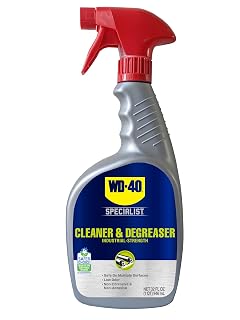
WD-40
Specialist Industrial-Strength Cleaner & Degreaser
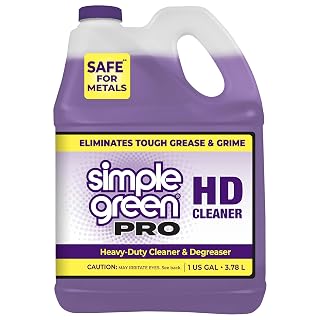
Simple Green
Pro HD Heavy-Duty Cleaner & Degreaser
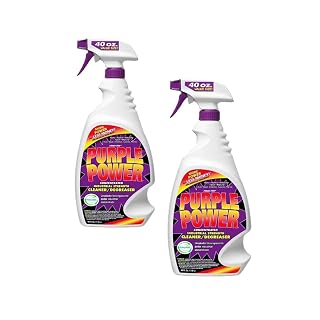
Purple Power
Industrial Strength Cleaner/Degreaser
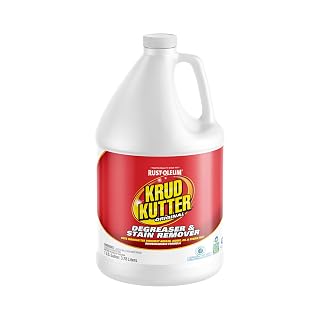
Krud Kutter
Original Concentrated Cleaner/Degreaser
As an Amazon Associate I earn from qualifying purchases. Full disclosure


Community
0 postsShare how you use this product
Drop a quick comment or post a full review with photos and a star rating.
Sign in to postNew here? Create a free account.