CarCareTruth Score
Decent.
Opens Amazon in a new tab. No account needed to look.
Saved to your guest loadout. Sign up to also save to your Cabinet (consumables) or Kit (tools you own).
As an Amazon Associate I earn from qualifying purchases. Full disclosure
Prices may varyHealth score is for adult use as intended, per the manufacturer's SDS. It does not model child ingestion, accidental spill cleanup, or off-label use. See the safety panel below for full hazard classification, and /disclaimer for the full editorial scope.
GHS hazard codes are quoted from the manufacturer’s Safety Data Sheet. PPE tiers below translate those codes and the listed ingredient chemistry; they are not CarCareTruth recommendations.
Show details for all categories ▾Hide details ▴
Translated from the manufacturer’s Safety Data Sheet, Section 2
H319 (eye irritation Cat 2A) in SDS §2. Overhead spray into an engine bay creates face-height mist exposure. Safety glasses or splash goggles address the H319 classification.
U.S. regulatory standard
29 CFR 1910.133(a)(1)
“The employer shall ensure that each affected employee uses appropriate eye or face protection when exposed to eye or face hazards from… liquid chemicals…”
ANSI Z87.1 (incorporated via §1910.6)
OSHA standards apply to workplaces. Cited here as the U.S. reference threshold for the underlying hazard class.
CarCareTruth publishes the cited sources verbatim and does not advise what action a user should take. Consult the full SDS before use.
Translated from the manufacturer’s Safety Data Sheet, Section 2
H315 (skin irritation Cat 2) in SDS §2. Alkaline concentrate at pH 11.68 causes skin irritation on prolonged contact. Nitrile gloves address the H315 classification.
U.S. regulatory standard
29 CFR 1910.138(a)
“appropriate hand protection when employees' hands are exposed to hazards such as those from… chemicals which produce an adverse effect on the skin or eyes…”
OSHA standards apply to workplaces. Cited here as the U.S. reference threshold for the underlying hazard class.
CarCareTruth publishes the cited sources verbatim and does not advise what action a user should take. Consult the full SDS before use.
Only when: in enclosed space
Beyond SDS: translated from the ingredient chemistry
No inhalation H-codes (H334/H335/H331) in SDS §2. Water-based formula with estimated VOC below 5 g/L. The enclosed_space trigger captures engine-bay spray in a closed garage where trigger-spray mist concentrates at face height.
CarCareTruth publishes the cited sources verbatim and does not advise what action a user should take. Consult the full SDS before use.
No PPE specified in published sources for ventilation. Absence does not imply “not needed” — consult the full Safety Data Sheet.
PPE tiers translate the manufacturer’s SDS and U.S. regulatory standards. Not professional safety advice. How we report safety.
Scope of these PPE tiers. The tiers on this page translate the product's Safety Data Sheet where one is published, plus its ingredient chemistry, into a comparable rating. They describe a formulation, not a situation: a tier is not a safety determination for any specific user, task, quantity, or environment. The manufacturer's label and use instructions govern how the product is handled. Where the product is used at work, the employer's PPE program and hazard assessment under 29 CFR 1910.132 decide what protection is selected, not this page.
No warranties. CarCareTruth makes no warranties, express or implied, and expressly disclaims the implied warranties of merchantability and fitness for a particular purpose.
This product ranks #4 of 10 in Engine Degreaser.Three above it ↓
Last reviewed June 10, 2026
TL;DR Handles typical engine-bay grease in a single pass at 10:1 dilution with brush agitation, and the milder chemistry is a real advantage: WARNING signal word with H315 and H319 (eye and skin irritation) only, no corrosion codes. Wear safety glasses and nitrile gloves per the H315/H319 classification.
Mix it 10:1 for standard engine-bay degreasing, 4:1 for heavily soiled parts with baked-on oil, and 15:1 for lighter duty on wheel wells and door jambs. Spray onto a cool engine, let it dwell 3-10 minutes, agitate with a detailing brush on stubborn deposits, and rinse with a garden hose or pressure washer. Community broadly confirms single-pass effectiveness on moderate engine grease at 10:1 with agitation, comparable to other budget alkaline degreasers in the category. Multiple size options from 40 oz single bottles through gallon jugs and bulk cases make it easy to stock. The trade-off for the milder chemistry: it may need a second pass or stronger dilution on severely neglected engine bays that a more aggressive concentrate would handle in one shot.
Home detailers cleaning up a typical owner-maintained engine bay who want a budget alkaline degreaser without the DANGER-rated chemistry of heavier alternatives. The milder classification is a genuine step down in exposure risk for a product that still handles typical grease at 10:1. Skip it if you need maximum single-pass cutting power on a severely neglected engine bay with years of baked-on oil; a stronger DANGER-classified concentrate will handle that faster. Also not suited for interior, leather, or coated-paint surfaces at any dilution.
The SDS carries a WARNING signal word with H315 (skin irritation) and H319 (eye irritation), both Category 2, no corrosive codes. Concentrate pH of 11.68 is moderately alkaline, dropping to approximately 10.3-11.0 at the 10:1 working dilution. Safety glasses and nitrile gloves address the H315/H319 classification from the SDS. Water-based formula with estimated VOC below 5 g/L; no aquatic toxicity codes in the mixture-level SDS and no 2-butoxyethanol in this specific variant. Product rinses to drain after engine-bay use; biodegradability is claimed on the product listing but has not been confirmed with quantitative data in SDS §12 and is not reflected in the environment score.
At the 10:1 working dilution it handles engine bays, wheel wells, door jambs, rubber, and plastic. Avoid it on interior, leather, and ceramic-coated surfaces, and keep strong dilutions off coated paint since it can strip wax and sealant.
Purple Power recommends 10:1 (water:concentrate) for general automotive degreasing, 4:1 for heavily soiled engine parts and baked-on grease, and 15:1 for lighter soil on wheel wells and door jambs. Start at 10:1 for typical engine bays and only go stronger if the first pass leaves heavy deposits.
At the 10:1 working dilution, community evidence confirms it is safe on rubber and plastic engine-bay components. At full concentration or strong dilutions (4:1 and below), it can strip wax and sealant. Avoid prolonged contact on coated paint surfaces at any dilution. Not recommended for interior, leather, or ceramic-coated surfaces.
This specific variant (Industrial Strength Cleaner/Degreaser) does not. The SDS §3 lists only water, sodium silicate, and a proprietary surfactant blend. Some other Purple Power product variants do contain 2-butoxyethanol. Always check the SDS for the specific product you have.
Both are budget alkaline degreasers positioned similarly in the market, but they have different formulations. Purple Power Industrial Strength uses sodium silicate as the primary alkaline builder (WARNING signal word, H315/H319 only). Super Clean may use different alkaline agents with a stronger hazard classification. Check each product's SDS for the specific chemistry.
Per the SDS, the concentrate is alkaline at pH 11.68. At the 10:1 working dilution recommended for general automotive degreasing, the pH drops to roughly 10.3 to 11.0. That moderately alkaline chemistry is what lets it cut engine-bay grease, and it is also why owners should keep strong dilutions off coated paint and avoid interior, leather, and ceramic-coated surfaces.
Marketing copy from Purple Power, via Amazon. Not editorial.
Weekly pick
One product, one safety verdict, every week. No spam.
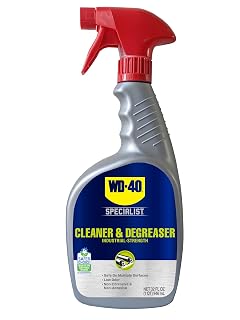
WD-40
Specialist Industrial-Strength Cleaner & Degreaser
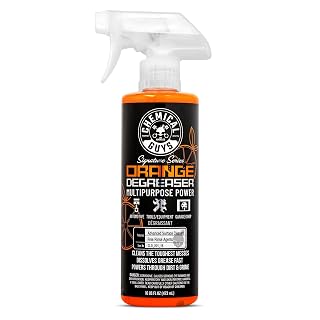
Chemical Guys
Signature Series Orange Degreaser
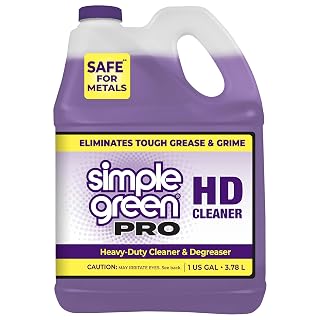
Simple Green
Pro HD Heavy-Duty Cleaner & Degreaser
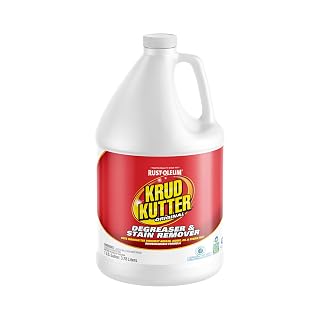
Krud Kutter
Original Concentrated Cleaner/Degreaser
As an Amazon Associate I earn from qualifying purchases. Full disclosure

Community
0 postsShare how you use this product
Drop a quick comment or post a full review with photos and a star rating.
Sign in to postNew here? Create a free account.