CarCareTruth Score
Decent.
Opens Amazon in a new tab. No account needed to look.
Saved to your guest loadout. Sign up to also save to your Cabinet (consumables) or Kit (tools you own).
As an Amazon Associate I earn from qualifying purchases. Full disclosure
Prices may varyHealth score is for adult use as intended, per the manufacturer's SDS. It does not model child ingestion, accidental spill cleanup, or off-label use. See the safety panel below for full hazard classification, and /disclaimer for the full editorial scope.
GHS hazard codes are quoted from the manufacturer’s Safety Data Sheet. PPE tiers below translate those codes and the listed ingredient chemistry; they are not CarCareTruth recommendations.
Show details for all categories ▾Hide details ▴
Only when: splash risk
Beyond SDS: translated from the ingredient chemistry
SDS §8 specifies 'Wear eye/face protection' as generic boilerplate. SDS §2 explicitly does not classify the mixture as eye-damaging or eye-irritating, and §11 confirms 'Shall not be classified as seriously damaging to the eye or eye irritant.' The chemistry-grounded scenario for eye protection here is splash risk during a pour or top-off, not a GHS eye-irritation hazard.
CarCareTruth publishes the cited sources verbatim and does not advise what action a user should take. Consult the full SDS before use.
Only when: handling concentrate · splash risk
Beyond SDS: translated from the ingredient chemistry
SDS §8 specifies chemical-resistant gloves as generic boilerplate. SDS §2 does not classify the mixture as a skin irritant or sensitizer, and §11 confirms 'Shall not be classified as corrosive/irritant to skin' and 'Shall not be classified as sensitizing.' Gloves during a coolant top-off or drain are reasonable for splash containment, not for a GHS-classified skin hazard.
CarCareTruth publishes the cited sources verbatim and does not advise what action a user should take. Consult the full SDS before use.
No PPE specified in published sources for lungs. Absence does not imply “not needed” — consult the full Safety Data Sheet.
No PPE specified in published sources for ventilation. Absence does not imply “not needed” — consult the full Safety Data Sheet.
PPE tiers translate the manufacturer’s SDS and U.S. regulatory standards. Not professional safety advice. How we report safety.
Scope of these PPE tiers. The tiers on this page translate the product's Safety Data Sheet where one is published, plus its ingredient chemistry, into a comparable rating. They describe a formulation, not a situation: a tier is not a safety determination for any specific user, task, quantity, or environment. The manufacturer's label and use instructions govern how the product is handled. Where the product is used at work, the employer's PPE program and hazard assessment under 29 CFR 1910.132 decide what protection is selected, not this page.
No warranties. CarCareTruth makes no warranties, express or implied, and expressly disclaims the implied warranties of merchantability and fitness for a particular purpose.
This product ranks #12 of 21 in Coolant / Antifreeze.Three above it ↓
Last reviewed June 14, 2026
TL;DR Propylene glycol pre-mixed coolant tuned for powersport heat dissipation · motorcycles, ATVs, snowmobiles, watercraft. No ASTM D3306/D6210 certification or named OEM approvals; freeze protection only down to -7°F, far narrower than the -34°F passenger-car baseline. The PG base is the real safety story: the SDS classifies the mixture as not hazardous, with no signal word or H-codes · materially less acutely toxic than standard ethylene glycol coolant.
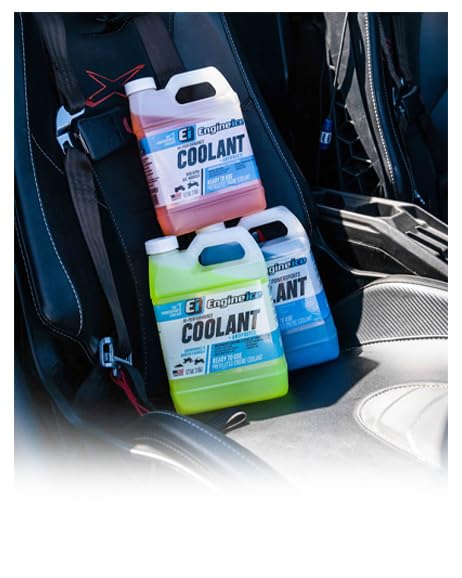
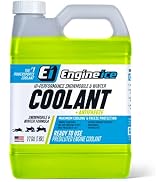
Engine Ice TYDS008 is a propylene-glycol-based, phosphate-free OAT coolant pre-mixed with deionized water and packaged for direct-from-the-bottle use. Manufactured by KOST USA (Cincinnati OH) and marketed for motorcycles, ATVs, snowmobiles, watercraft, and other powersport vehicles. The label and feature bullets emphasize heat-dissipation performance under track and powersport use rather than freeze protection · the SDS-stated freezing point is below -4°F, narrower than a standard 50/50 ethylene glycol coolant. No ASTM D3306 or D6210 certification is stated; no named OEM approvals. Propylene glycol base · materially less acutely toxic than standard ethylene-glycol coolant.
Best for motorcycle, ATV, snowmobile, watercraft, and UTV owners who want a propylene-glycol coolant tuned for heat dissipation under powersport use, particularly track and high-load scenarios where lowered operating temperatures matter more than cold-soak protection. Also a reasonable choice for garage environments with pets or children where the lower-toxicity PG base meaningfully reduces incidental-ingestion risk vs. ethylene glycol. Skip this if you're looking for a year-round passenger-car coolant in any climate that sees temperatures below 0°F · the -7°F freeze range is too narrow. Also skip if your vehicle manufacturer requires a specific OEM coolant approval (DEXOS, WSS-M97B44-D, MS-9769, VW TL 774-G, BMW GS 94000-02, etc.) · Engine Ice carries none of these.
The SDS (KOST USA, GHS 3.0, rev. 2025-03-26) classifies the mixture as not hazardous under OSHA HCS 29 CFR 1910.1200 · no signal word, no GHS pictograms, no H-codes at the mixture level. SDS §11 explicitly states the product is not classified as acutely toxic, not a skin or eye irritant, not a sensitizer, not carcinogenic, not a reproductive toxicant, not an STOT or aspiration hazard. The propylene glycol base is the central safety advantage over ethylene glycol coolants. The Prop 65 warning on the bottle reflects three trace process-byproduct ingredients (ethylene oxide, 1,4-dioxane, propylene oxide) at parts-per-billion concentrations disclosed in SDS §15 · not the bulk PG chemistry. Spent coolant is drain-destined and should be collected for recycling at auto parts store collection programs (AutoZone, O'Reilly, Advance Auto Parts); SDS §13 directs "Do not empty into drains. Avoid release to the environment." PG coolant carries an environmental hard ceiling of 5 in this scoring system reflecting the drain-destined glycol pathway, even though the SDS classifies no aquatic toxicity.
Engine Ice TYDS008 is positioned and tuned for powersport applications · motorcycles, ATVs, snowmobiles, watercraft, and UTVs. It carries no ASTM D3306 or D6210 certification and no named OEM approvals for passenger cars. The freeze protection of -7°F (label) / below -4°F (SDS §9) is materially narrower than the standard ASTM D6210 baseline of -34°F at 50/50, which makes this product unsuitable as a year-round coolant in passenger cars exposed to northern-climate winters. For a passenger car, use a coolant that meets your vehicle manufacturer's OEM spec.
Engine Ice is propylene glycol-based, not ethylene glycol · the SDS classifies the mixture as not hazardous under OSHA HCS, with no signal word, no GHS pictograms, and no H-codes at the mixture level. SDS §11 explicitly states the product is not classified as acutely toxic. This is materially safer than standard ethylene glycol coolants, which carry H302 (harmful if swallowed) at minimum and H300 (fatal if swallowed) at the upper end. The Prop 65 warning on the bottle relates to three trace process-byproduct ingredients (ethylene oxide, 1,4-dioxane, propylene oxide) at parts-per-billion concentrations disclosed in SDS §15 · not to the bulk PG chemistry.
Engine Ice TYDS008 is pre-mixed at the factory with deionized water and is ready to pour directly into the cooling system without further dilution. The product listing confirms 'Premixed with deionized water for out-of-the-bottle use.' Do not dilute further · adding tap water would change the protection range and could introduce minerals that compromise the corrosion inhibitor package.
Engine Ice is propylene glycol-based · materially less acutely toxic than standard ethylene glycol coolant per the SDS classification. The OAT inhibitor package is phosphate-free. The trade-off is freeze protection: Engine Ice covers down to about -7°F (label) / -4°F (SDS §9), while a standard 50/50 ethylene glycol coolant covers down to -34°F. This makes Engine Ice well-suited to powersport applications (motorcycles, ATVs, watercraft, track use) where heat dissipation matters more than cold-soak protection, and unsuitable as a year-round passenger-car coolant in cold climates.
Spent coolant · including propylene glycol-based coolants like Engine Ice · should be collected and recycled at end-of-service. Auto parts stores including AutoZone, O'Reilly Auto Parts, and Advance Auto Parts operate used-fluid collection programs that accept coolant at no charge. Do not pour into storm drains, on the ground, or into household trash. SDS §13: 'Do not empty into drains. Avoid release to the environment.'
The Prop 65 warning is triggered by three trace process-byproduct ingredients disclosed in SDS §15: ethylene oxide (CAS 75-21-8), 1,4-dioxane (CAS 123-91-1), and propylene oxide (CAS 75-56-9). Each is present at 0.000007242 weight percent · extreme parts-per-billion levels typical of process byproducts in ethoxylated or polyether intermediates. California's Prop 65 disclosure threshold is conservative enough that these trace levels require the warning, even though the bulk product (propylene glycol pre-mix) is not classified as hazardous at the mixture level under OSHA HCS.
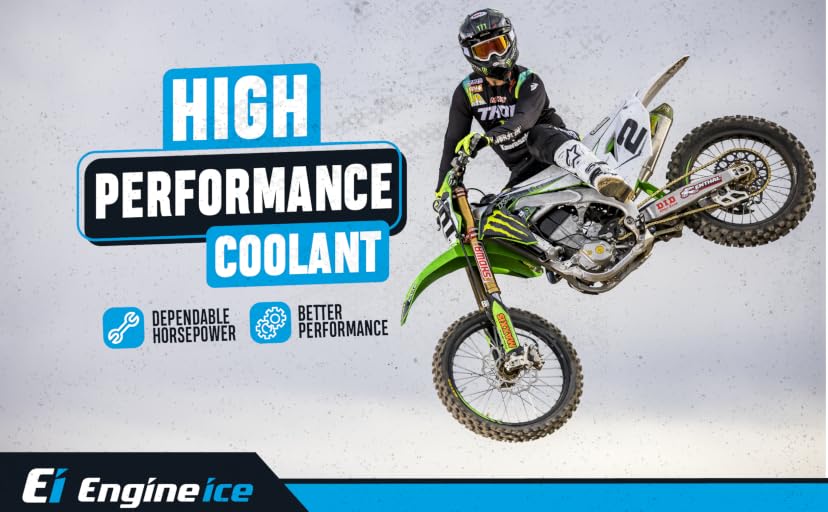
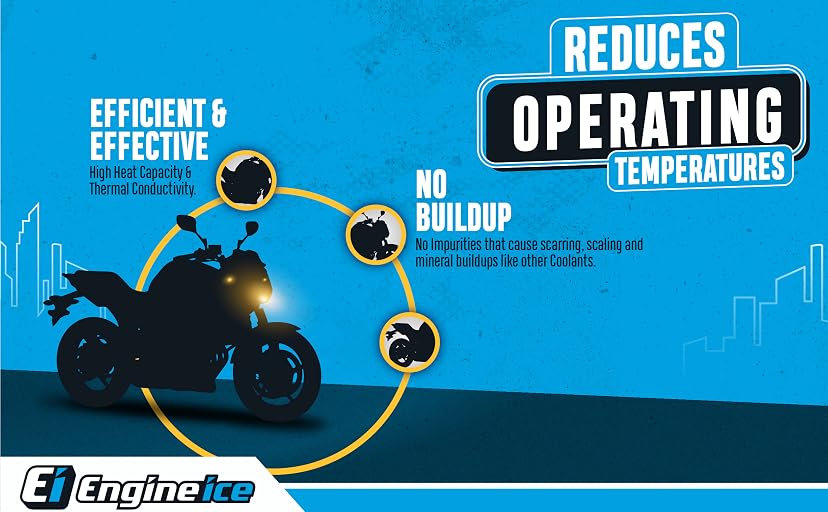
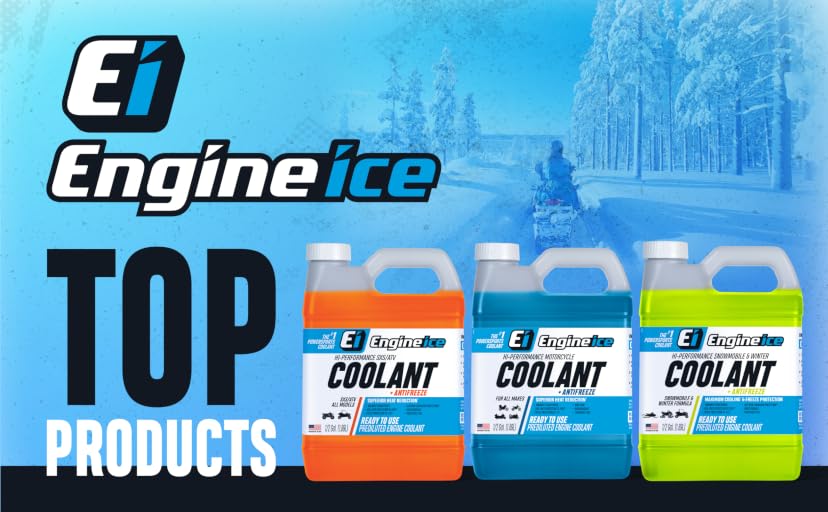
Marketing copy from Engine Ice, via Amazon. Not editorial.
Weekly pick
One product, one safety verdict, every week. No spam.



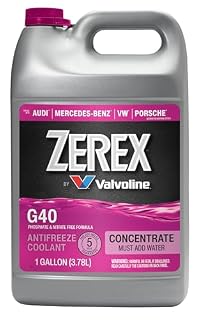
Zerex
G-40 Concentrate Antifreeze/Coolant
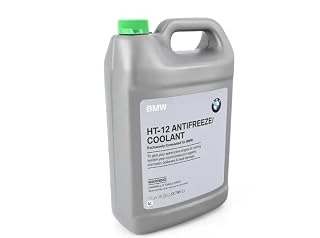
BMW
HT-12 Antifreeze/Coolant Concentrate, Green Si-OAT
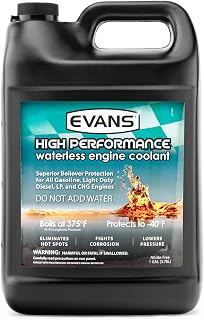
Evans Cooling Systems
Evans High Performance Waterless Engine Coolant
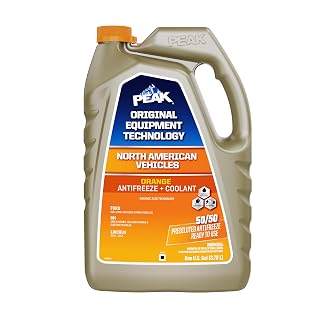
PEAK
OET Extended Life Orange 50/50 Prediluted Antifreeze/Coolant
As an Amazon Associate I earn from qualifying purchases. Full disclosure

Community
0 postsShare how you use this product
Drop a quick comment or post a full review with photos and a star rating.
Sign in to postNew here? Create a free account.