CarCareTruth Score
Decent, but wear gloves and ventilate.
Opens Amazon in a new tab. No account needed to look.
Saved to your guest loadout. Sign up to also save to your Cabinet (consumables) or Kit (tools you own).
As an Amazon Associate I earn from qualifying purchases. Full disclosure
Prices may varyThe manufacturer's Safety Data Sheet classifies this product with one or more GHS Category 1 health hazards — the most severe tier. The hazard statements in quotes below are the verbatim GHS language from the SDS, as required by OSHA's Hazard Communication Standard. The line under each statement translates the GHS classification into plain language.
GHS Category 2 acute oral toxicity — classified as toxic if swallowed.
GHS Category 2 acute dermal toxicity — classified as toxic in contact with skin.
GHS Category 2 acute inhalation toxicity — classified as toxic if inhaled.
If swallowed, inhaled or on skin:
Call Poison Control immediately at 1-800-222-1222 (US, 24/7, free) and have the product container with you. Poison Control's standing guidance is to not induce vomiting after chemical exposure; they will direct first-aid steps based on the specific product.
About this product's hazards. This product's Safety Data Sheet uses signal word DANGER.Read the manufacturer's SDS and follow all safety instructions before use. CarCareTruth ratings translate the manufacturer's safety sheet. They do not replace the SDS or substitute for a hazard assessment specific to your task.
Health score is for adult use as intended, per the manufacturer's SDS. It does not model child ingestion, accidental spill cleanup, or off-label use. See the safety panel below for full hazard classification, and /disclaimer for the full editorial scope.
GHS hazard codes are quoted from the manufacturer’s Safety Data Sheet. PPE tiers below translate those codes and the listed ingredient chemistry; they are not CarCareTruth recommendations.
Show details for all categories ▾Hide details ▴
Translated from the manufacturer’s Safety Data Sheet, Section 2
H370 STOT SE Cat 1 targets CNS and eyes · methanol metabolizes to formic acid causing optic nerve destruction. SDS §8 specifies chemical splash goggles. GHS06 + GHS08 pictograms corroborate the systemic eye-damage pathway. Required given H370 targets eyes directly.
CarCareTruth publishes the cited sources verbatim and does not advise what action a user should take. Consult the full SDS before use.
Translated from the manufacturer’s Safety Data Sheet, Section 2
H311 Acute Tox dermal Cat 3 · methanol absorbs through skin causing systemic poisoning (CNS depression, metabolic acidosis). SDS §8 specifies impervious gloves (butyl rubber recommended). GHS06 skull-and-crossbones pictogram present. Required given the H311 dermal toxicity classification.
U.S. regulatory standard
29 CFR 1910.132(d); 1910.138(a)
“appropriate hand protection when employees' hands are exposed to hazards such as those from skin absorption of harmful substances.”
OSHA standards apply to workplaces. Cited here as the U.S. reference threshold for the underlying hazard class.
CarCareTruth publishes the cited sources verbatim and does not advise what action a user should take. Consult the full SDS before use.
Translated from the manufacturer’s Safety Data Sheet, Section 2
H331 Acute Tox inhalation Cat 3 · methanol vapor is toxic. SDS §8 specifies NIOSH-approved organic vapor respirator when ventilation is inadequate. Aerosol application generates methanol mist at face level. Required given the H331 inhalation toxicity classification.
U.S. regulatory standard
29 CFR 1910.134(a)(1)–(2)
“When effective engineering controls are not feasible… appropriate respirators shall be used.”
OSHA standards apply to workplaces. Cited here as the U.S. reference threshold for the underlying hazard class.
CarCareTruth publishes the cited sources verbatim and does not advise what action a user should take. Consult the full SDS before use.
No PPE specified in published sources for ventilation. Absence does not imply “not needed” — consult the full Safety Data Sheet.
PPE tiers translate the manufacturer’s SDS and U.S. regulatory standards. Not professional safety advice. How we report safety.
Scope of these PPE tiers. The tiers on this page translate the product's Safety Data Sheet where one is published, plus its ingredient chemistry, into a comparable rating. They describe a formulation, not a situation: a tier is not a safety determination for any specific user, task, quantity, or environment. The manufacturer's label and use instructions govern how the product is handled. Where the product is used at work, the employer's PPE program and hazard assessment under 29 CFR 1910.132 decide what protection is selected, not this page.
No warranties. CarCareTruth makes no warranties, express or implied, and expressly disclaims the implied warranties of merchantability and fitness for a particular purpose.
This product ranks #7 of 9 in Deicer / Frost Spray.Three above it ↓
Last reviewed June 14, 2026
TL;DR Label claims "effective to sub-zero temperatures" but no independent cold-climate community evidence confirms extreme-low-temp performance · conservative scoring applied. Methanol-based formula at 80-90% concentration · safe for paint and rubber seals (no salt or chloride), but carries a genuine DANGER classification from acute health toxicity, not just flammability. Health score 1.2/10 reflects real methanol hazard: toxic by ingestion, skin contact, and inhalation, with specific organ damage to eyes and CNS. All PPE categories are at the "required" tier per SDS hazard codes.
CRC Ice-Off is a methanol-based aerosol deicer (80-90% methanol) that dissolves ice, frost, and thaws frozen locks on contact. The formula is surface-safe · no salt or chloride content means no risk to paint, rubber seals, or plastic trim, with no surface-damage reports from owners. The dual-spray PowerJet nozzle offers wide coverage for windshields and a precision straw for lock cylinders. The DANGER label is a genuine health warning from methanol's acute toxicity · not just an aerosol flammability notice. Cold-performance data from harsh-climate buyers is limited; the methanol chemistry should perform well at extreme cold, but independent community verification is absent.
Best for buyers who need a quick-acting aerosol deicer that doubles as a lock thawer and is confirmed safe for automotive surfaces. The dual-spray format and small 12 oz can suit glove-box storage for emergency use. Skip it if the methanol health profile concerns you · IPA-based alternatives score dramatically higher on health (6.5-9.3 vs. 1.2) while offering similar deicing performance for typical winter conditions. Households with children or pets should store this product with extra caution given the acute ingestion hazard.
The SDS carries DANGER driven by health H-codes: H301 (toxic if swallowed), H311 (toxic in contact with skin), H331 (toxic if inhaled), and H370 (causes damage to CNS and eyes). Methanol at 80-90% is acutely toxic via all three exposure routes · this is a fundamentally different hazard profile from IPA-based deicers in the same category. The GHS06 skull-and-crossbones and GHS08 health-hazard pictograms are present. All three PPE categories translate to "required" from the SDS hazard classification: splash-proof goggles (H370 optic nerve pathway), chemical-resistant gloves (H311 dermal absorption), and respiratory protection in enclosed spaces (H331 inhalation). Outdoors, natural ventilation reduces but does not eliminate the inhalation concern at this concentration. Proposition 65 applies (methanol as developmental toxicant; diethanolamine as carcinogen). Environment impact is moderate: high VOC content (755 g/L) but methanol is readily biodegradable and the runoff pathway is diffuse road melt with no aquatic toxicity classification.
Yes. The SDS lists methanol (CAS 67-56-1) at 80-90% by weight as the primary active ingredient. This is significantly higher than typical windshield washer fluids (20-35% methanol). The DANGER signal word and all acute toxicity H-codes stem from the methanol concentration.
Yes. Methanol-based formulas are non-corrosive to automotive surfaces · no salt or chloride content. The product is marketed as 'Harmless to car finish' and 'Plastic safe,' and no paint or seal damage is reported by owners.
CRC claims 'effective to sub-zero temperatures' without a specific numeric floor. Methanol freezes at −144°F, so the product itself will not freeze. However, cold-climate community evidence for this specific product is limited · independent verification of performance at extreme low temperatures (below −20°F) is not established.
The DANGER label is driven by health H-codes · specifically H301 (toxic if swallowed), H311 (toxic in contact with skin), H331 (toxic if inhaled), and H370 (causes damage to the central nervous system and eyes). This is a health hazard warning, not just a flammability warning. Methanol is acutely toxic via ingestion · as little as a tablespoon can cause permanent blindness.
Yes · the product is explicitly marketed for thawing frozen locks and the aerosol format includes a precision straw for targeted application. The methanol rapidly melts ice in the lock mechanism. Use briefly and avoid prolonged skin contact with residual spray.
Marketing copy from CRC, via Amazon. Not editorial.
Weekly pick
One product, one safety verdict, every week. No spam.




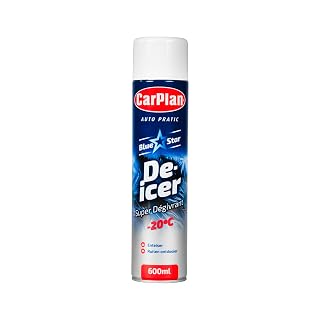
CarPlan
Blue Star De-Icer Spray
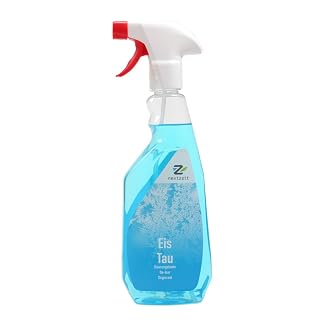
nextzett
Eistau De-Icer Spray
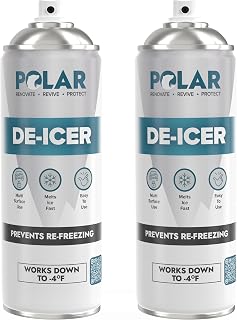
Polar Specialist Coatings
Polar De-Icer Spray
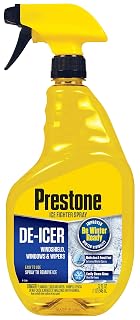
Prestone
AS247 Trigger Spray Windshield De-Icer
As an Amazon Associate I earn from qualifying purchases. Full disclosure

Community
0 postsShare how you use this product
Drop a quick comment or post a full review with photos and a star rating.
Sign in to postNew here? Create a free account.