CarCareTruth Score
Decent.
Saved to your guest loadout. Sign up to also save to your Cabinet (consumables) or Kit (tools you own).
As an Amazon Associate I earn from qualifying purchases. Full disclosure
The manufacturer's Safety Data Sheet classifies this product with one or more GHS Category 1 health hazards — the most severe tier. The hazard statements in quotes below are the verbatim GHS language from the SDS, as required by OSHA's Hazard Communication Standard. The line under each statement translates the GHS classification into plain language.
GHS Category 1 aspiration toxicity — thin, oily liquids can slip into the lungs if swallowed, causing chemical pneumonia.
If swallowed:
The aspiration hazard (H304) is about the liquid being swallowed and reaching the airway, not about breathing fumes during normal use.
Call Poison Control immediately at 1-800-222-1222 (US, 24/7, free) and have the product container with you. Poison Control's standing guidance is to not induce vomiting after chemical exposure; they will direct first-aid steps based on the specific product.
About this product's hazards. This product's Safety Data Sheet uses signal word DANGER.Read the manufacturer's SDS and follow all safety instructions before use. CarCareTruth ratings translate the manufacturer's safety sheet. They do not replace the SDS or substitute for a hazard assessment specific to your task.
Health score is for adult use as intended, per the manufacturer's SDS. It does not model child ingestion, accidental spill cleanup, or off-label use. See the safety panel below for full hazard classification, and /disclaimer for the full editorial scope.
GHS hazard codes are quoted from the manufacturer’s Safety Data Sheet. PPE tiers below translate those codes and the listed ingredient chemistry; they are not CarCareTruth recommendations.
Show details for all categories ▾Hide details ▴
Only when: when spraying
Translated from the ingredient chemistry
No H318 or H319 at §2 mixture level · aerosol spray creates fine mist near face level; eye protection warranted during spray application.
CarCareTruth publishes the cited sources verbatim and does not advise what action a user should take. Consult the full SDS before use.
Translated from the manufacturer’s Safety Data Sheet, Section 2
H317 (skin sensitizer, Cat 1) at §2 mixture level · nitrile gloves recommended to limit skin contact with the paraffinic petroleum carrier and butyl stearate.
U.S. regulatory standard
29 CFR 1910.138(a); 1910.132(d)
“appropriate hand protection when employees' hands are exposed to hazards such as those from skin absorption of harmful substances.”
OSHA standards apply to workplaces. Cited here as the U.S. reference threshold for the underlying hazard class.
CarCareTruth publishes the cited sources verbatim and does not advise what action a user should take. Consult the full SDS before use.
Only when: in enclosed space · when spraying
Translated from the ingredient chemistry
Aerosol format creates the primary inhalation exposure. No H335 at §2 mixture level · lung protection is situational for enclosed-space use. H304 is an aspiration (ingestion/swallowing) hazard, not an inhalation vapor route.
U.S. regulatory standard
29 CFR 1910.1200(f); 1910.132(d)
“The employer shall assess the workplace to determine if hazards are present, or are likely to be present, which necessitate the use of personal protective equipment.”
OSHA standards apply to workplaces. Cited here as the U.S. reference threshold for the underlying hazard class.
CarCareTruth publishes the cited sources verbatim and does not advise what action a user should take. Consult the full SDS before use.
No PPE specified in published sources for ventilation. Absence does not imply “not needed” — consult the full Safety Data Sheet.
PPE tiers translate the manufacturer’s SDS and U.S. regulatory standards. Not professional safety advice. How we report safety.
Scope of these PPE tiers. The tiers on this page translate the product's Safety Data Sheet where one is published, plus its ingredient chemistry, into a comparable rating. They describe a formulation, not a situation: a tier is not a safety determination for any specific user, task, quantity, or environment. The manufacturer's label and use instructions govern how the product is handled. Where the product is used at work, the employer's PPE program and hazard assessment under 29 CFR 1910.132 decide what protection is selected, not this page.
No warranties. CarCareTruth makes no warranties, express or implied, and expressly disclaims the implied warranties of merchantability and fitness for a particular purpose.
Last reviewed June 12, 2026
TL;DR DANGER-rated aerosol (H304 aspiration hazard, H317 skin sensitizer) · no Prop 65 warning. Nitrile gloves are warranted on repeated contact. The heavier paraffinic carrier leaves a more durable corrosion-inhibiting film than WD-40-class sprays. NSF H1 food-equipment certified. Use in ventilated areas.
CRC 3-36 lubricates hinges, cables, tracks, and automotive mechanisms while leaving a corrosion-inhibiting film. The heavier paraffinic oil carrier stays on the surface longer than light petroleum sprays, protecting metal from moisture between applications. NSF H1 certified for incidental food contact. The low-viscosity formula flows into tight clearances, and the oil residue will attract some grit over time · standard for oil-carrier lubricants without a dry-film additive. The review base is still thin, so quality confidence is provisional.
Good for homeowners and tradespeople who want corrosion-inhibiting protection on tools, hinges, and marine hardware. The NSF H1 rating suits food-processing or agricultural equipment. Skip it for high-cycle mechanisms like bicycle chains where grit attraction is a concern · a dry-film lubricant will outperform. Open a window or door before applying in enclosed spaces.
DANGER signal word (SDS §2). H304 (Aspiration Hazard Cat 1) at mixture level · do not induce vomiting if ingested; seek medical attention. H317 (skin sensitizer, Cat 1) at §2 mixture level · nitrile gloves limit repeated skin contact with the paraffinic carrier. No Prop 65 ingredients (SDS §15 confirmed negative). Fine mist from aerosol application creates the primary inhalation exposure. No H335 at mixture level; caution is for mist build-up in enclosed spaces, not acute inhalation toxicity. CARB compliant (Multi-Purpose Lubricant regulatory exemption). Non-biodegradable petroleum carrier; no aquatic toxicity classification at mixture level.
Not exactly. Both are aerosol petroleum-distillate lubricants, but CRC 3-36 uses a heavier paraffinic mineral oil carrier · higher flash point (89°C vs. WD-40's ~49°C), higher viscosity · that leaves a more persistent protective film. WD-40 original is widely understood by the community as a short-duration lubricant and water displacer; CRC 3-36 is positioned more as a durable corrosion-inhibiting lubricant. The CRC 3-36 formula also carries an NSF H1 food-equipment safety certification, which WD-40 original does not. Both products carry aerosol inhalation and skin-contact precautions.
No. SDS Section 15 (revision 2021-07-02) explicitly states this product is not known to contain any chemicals currently listed as California Prop 65 carcinogens or reproductive toxins. The DANGER signal word on the label reflects the H304 aspiration hazard and aerosol flammability ratings · not a carcinogen classification.
The manufacturer lists compatibility with most plastics and metals (the product listing). The petroleum-distillate carrier is hydrotreated and paraffinic · lighter in aromatic content than solvent-aggressive formulas. No documented rubber or plastic damage appears in owner reviews. Check manufacturer documentation for specific rubber types (EPDM, Buna-N) before applying to sealed assemblies · petroleum-based lubricants vary in rubber compatibility.
DANGER is the highest GHS signal word (above WARNING). For CRC 3-36, it is driven by H304 (Aspiration Hazard Cat 1) and H222 (Extremely Flammable Aerosol). The aspiration hazard means: if the liquid is swallowed and enters the lungs · particularly if someone vomits after swallowing · it can cause serious lung injury. The practical take: do not induce vomiting if ingested; seek medical attention. H317 (skin sensitizer) is a WARNING-level code by itself and contributes to the health score but does not drive the DANGER signal word.
No. SDS Section 3 lists only petroleum distillates, paraffin oils, butyl stearate, dipropylene glycol methyl ether acetate, carbon dioxide propellant, and petrolatum · no fluoropolymers or PTFE. The corrosion inhibitor package is withheld as a trade secret, but NSF H1 certification provides confidence that the formula meets food-equipment safety standards, which are incompatible with unregulated PFAS use.
Marketing copy from CRC, via Amazon. Not editorial.
Weekly pick
One product, one safety verdict, every week. No spam.
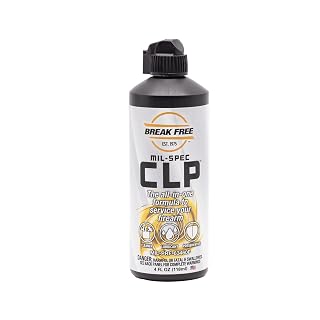
Break-Free
CLP Cleaner Lubricant Preservative
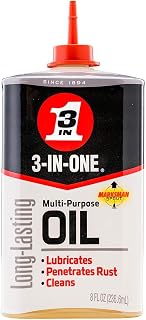
3-IN-ONE
Multi-Purpose Oil (8 oz drip bottle with Marksman Twist Spout)
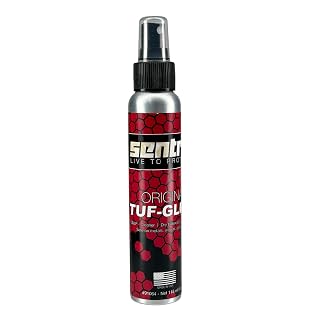
Sentry Solutions
TUF-GLIDE Dry Lube Pump Spray
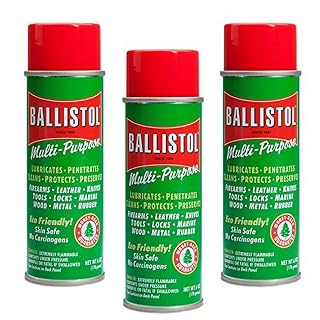
Ballistol
Multi-Purpose Oil Aerosol
As an Amazon Associate I earn from qualifying purchases. Full disclosure

Community
0 postsShare how you use this product
Drop a quick comment or post a full review with photos and a star rating.
Sign in to postNew here? Create a free account.