CarCareTruth Score
Decent, but it's tough on the environment.
Saved to your guest loadout. Sign up to also save to your Cabinet (consumables) or Kit (tools you own).
As an Amazon Associate I earn from qualifying purchases. Full disclosure
Health score is for adult use as intended, per the manufacturer's SDS. It does not model child ingestion, accidental spill cleanup, or off-label use. See the safety panel below for full hazard classification, and /disclaimer for the full editorial scope.
GHS hazard codes are quoted from the manufacturer’s Safety Data Sheet. PPE tiers below translate those codes and the listed ingredient chemistry; they are not CarCareTruth recommendations.
Show details for all categories ▾Hide details ▴
Only when: splash risk
Translated from the manufacturer’s Safety Data Sheet, Section 8
SDS §11 reports the petroleum distillates as non-irritating to rabbit eyes (OECD 405) and §2 does not include H318 or H319 at mixture level. SDS §8 specifies safety glasses with side shields as standard hygiene; situational tier reflects splash risk during overhead drain work or pour-fill, not a GHS eye-hazard classification.
CarCareTruth publishes the cited sources verbatim and does not advise what action a user should take. Consult the full SDS before use.
Only when: splash risk · prolonged use
Translated from the manufacturer’s Safety Data Sheet, Section 8
SDS §2 does not classify the mixture as a skin hazard (no H314/H315/H317). SDS §8 calls for nitrile or chemically resistant gloves during prolonged or repeated contact; petroleum base stock contact is realistic during pan removal and pour. Situational tier covers the drain and pour steps.
U.S. regulatory standard
29 CFR 1910.1000; 1910.1200
“Each employer shall assure that no employee is exposed [in excess of the PEL]…”
OSHA standards apply to workplaces. Cited here as the U.S. reference threshold for the underlying hazard class.
UN GHS hazard statement
H361“Suspected of damaging fertility or the unborn child”
UN GHS Rev. 9 (2021)
CarCareTruth publishes the cited sources verbatim and does not advise what action a user should take. Consult the full SDS before use.
Only when: in enclosed space · prolonged use
Translated from the manufacturer’s Safety Data Sheet, Section 8
SDS §8 states 'in case of insufficient ventilation, wear suitable respiratory equipment,' a ventilation-contingent instruction rather than a standing requirement. SDS §2 carries no H330, H331, or H335 at mixture level, and §11 reports no known significant inhalation effects under normal use (the only inhalation warning covers decomposition products from a fire). Given the fluid's very low vapor pressure (<0.01 kPa at 20°C per SDS §9) and that it is not aerosolized in normal service, this is a situational precaution for enclosed or prolonged garage servicing, not a normal-use respiratory hazard.
CarCareTruth publishes the cited sources verbatim and does not advise what action a user should take. Consult the full SDS before use.
No PPE specified in published sources for ventilation. Absence does not imply “not needed” — consult the full Safety Data Sheet.
PPE tiers translate the manufacturer’s SDS and U.S. regulatory standards. Not professional safety advice. How we report safety.
Scope of these PPE tiers. The tiers on this page translate the product's Safety Data Sheet where one is published, plus its ingredient chemistry, into a comparable rating. They describe a formulation, not a situation: a tier is not a safety determination for any specific user, task, quantity, or environment. The manufacturer's label and use instructions govern how the product is handled. Where the product is used at work, the employer's PPE program and hazard assessment under 29 CFR 1910.132 decide what protection is selected, not this page.
No warranties. CarCareTruth makes no warranties, express or implied, and expressly disclaims the implied warranties of merchantability and fitness for a particular purpose.
Last reviewed June 14, 2026
TL;DR Genuinely licensed by GM for Dexron VI (J-60172) and Ford for Mercon LV (MLV-120901) · both printed on the bottle, not marketing claims. No ZF Lifeguard or Toyota WS license. SDS classifies the mixture as Toxic to Reproduction Cat 2 (H361, WARNING); bottle carries a California Prop 65 warning.
Two real OEM licenses cover the dominant US passenger-vehicle automatics · GM Dexron VI (J-60172) and Ford Mercon LV (MLV-120901), both printed on the bottle back label. Backward-compatible with the older Dexron III/IIIH/IIE/II family because Dexron VI supersedes those specs. "Suitable for all Toyota" and "Exceeds JASO 1-A" appear on the label but are compatibility statements, not licensed approvals. No ZF Lifeguard license. No independent VOA data located to corroborate a service-interval claim.
The clearest fit is owners of GM and Ford vehicles whose owner's manual specifies Dexron VI or Mercon LV · the licensed approvals are real and verifiable on the bottle. Skip if your vehicle requires ZF LifeguardFluid 6/8/9 (most 2012+ BMW, Audi, Land Rover 8-speeds), Toyota WS, Honda DW-1, or Chrysler ATF+4 · those specs need a separately licensed fluid.
SDS §2 signal word is WARNING. H361 ("Suspected of damaging fertility or the unborn child") at mixture level, driven by the bis(nonylphenyl)amine antioxidant in §3. SDS §7: "Avoid exposure during pregnancy." Bottle carries the California Prop 65 warning. Spent ATF goes to a used-oil collection facility, not storm drains.
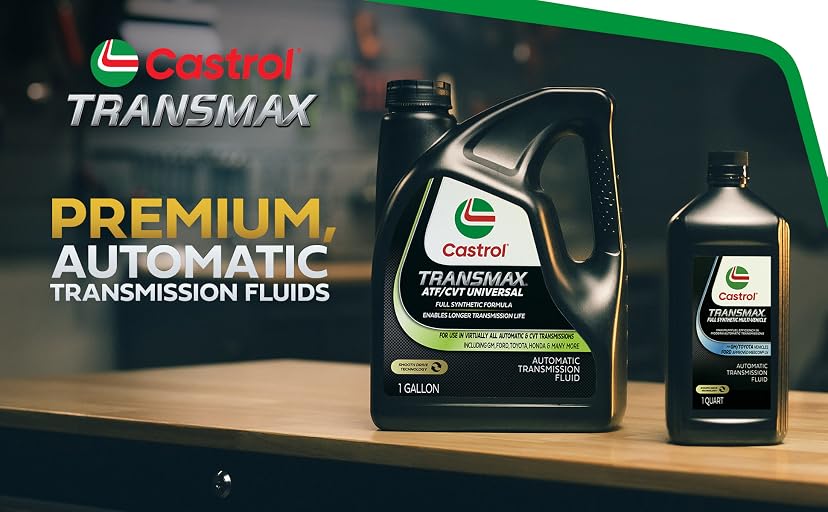
It is genuinely licensed. The bottle back label shows the GM Dexron VI license number J-60172 and the Ford Mercon LV license MLV(120901). These are real OEM-issued license numbers · not 'meets spec' or 'equivalent to' wording. That makes this product appropriate for vehicles where the owner's manual calls for Dexron VI or Mercon LV.
SDS §15 lists multiple Prop 65 substances that can be present at trace levels in the petroleum base stocks (including Ethylene oxide, Benzene, Naphthalene, and Ethylbenzene) plus reproductive-toxin substances (Ethylene Glycol, Methanol, Toluene). The bottle back label carries the explicit warning 'Cancer and Reproductive Harm · www.P65Warnings.ca.gov.' The Prop 65 disclosure is independent of the H361 reproductive-toxin classification in SDS §2.
No. This product does not hold a ZF LifeguardFluid 8 or LifeguardFluid 9 license. BMW, Audi, and Land Rover vehicles with ZF 8-speed transmissions require a fluid carrying the specific ZF approval. Use a ZF-licensed fluid for those applications and verify on ZF's approved-fluids list at zf.com.
The bottle and listing claim suitability for Toyota automatic transmissions, but this product does not hold a Toyota WS license. Toyota WS is Toyota's own published specification with an approved-fluids list; this product is not on that list. The conservative choice for a Toyota WS application is a Toyota WS-licensed fluid or genuine Toyota ATF WS. Confirm against your owner manual and Toyota's published fluid list before substituting.
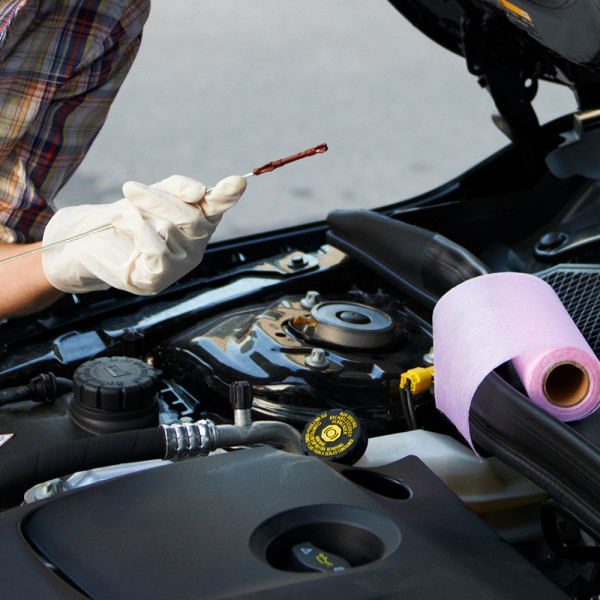
SDS §2 classifies the mixture as Toxic to Reproduction Category 2 · 'Suspected of damaging fertility or the unborn child.' SDS §7 specifically calls out 'Avoid exposure during pregnancy.' The classification is driven by the bis(nonylphenyl)amine antioxidant in §3. For a routine drain-and-fill service performed by someone not pregnant, dermal contact during the pan-removal and pour steps is the relevant exposure pathway · nitrile gloves and skin washing after handling are the standard mitigation per SDS §8.
Marketing copy from Castrol, via Amazon. Not editorial.
Weekly pick
One product, one safety verdict, every week. No spam.
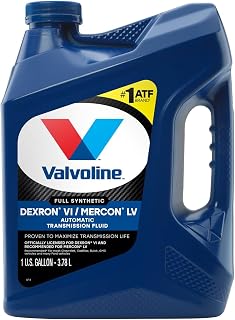
Valvoline
DEXRON VI / MERCON LV Full Synthetic ATF
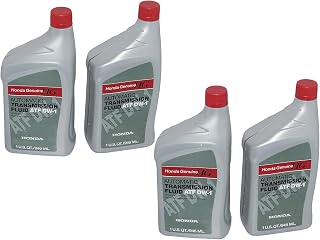
Honda
Genuine ATF DW-1 Automatic Transmission Fluid (4-Pack)
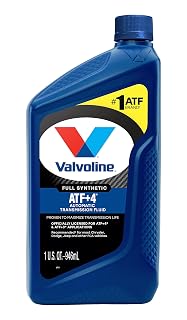
Valvoline
ATF+4 Full Synthetic Automatic Transmission Fluid
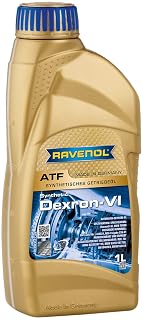
Ravenol
ATF Dexron VI
As an Amazon Associate I earn from qualifying purchases. Full disclosure

Community
0 postsShare how you use this product
Drop a quick comment or post a full review with photos and a star rating.
Sign in to postNew here? Create a free account.