CarCareTruth Score
Decent, but wear gloves and ventilate.
Opens Amazon in a new tab. No account needed to look.
Saved to your guest loadout. Sign up to also save to your Cabinet (consumables) or Kit (tools you own).
As an Amazon Associate I earn from qualifying purchases. Full disclosure
Prices may varyAbout this product's hazards. This product's Safety Data Sheet uses signal word DANGER.Read the manufacturer's SDS and follow all safety instructions before use. CarCareTruth ratings translate the manufacturer's safety sheet. They do not replace the SDS or substitute for a hazard assessment specific to your task.
Health score is for adult use as intended, per the manufacturer's SDS. It does not model child ingestion, accidental spill cleanup, or off-label use. See the safety panel below for full hazard classification, and /disclaimer for the full editorial scope.
GHS hazard codes are quoted from the manufacturer’s Safety Data Sheet. PPE tiers below translate those codes and the listed ingredient chemistry; they are not CarCareTruth recommendations.
Show details for all categories ▾Hide details ▴
Only when: when spraying
Beyond SDS: translated from the ingredient chemistry
Neither SDS locale carries H318 or H319. Pump-spray application creates a coarse mist at arm's length, the realistic hazard scenario is incidental eye contact. Wear safety glasses if spraying near eye level or in close quarters.
CarCareTruth publishes the cited sources verbatim and does not advise what action a user should take. Consult the full SDS before use.
Translated from the manufacturer’s Safety Data Sheet, Section 2
The CDN-en SDS classifies the product with H317 (may cause an allergic skin reaction), driven by citral as a skin sensitizer. The IRL-en SDS treats citral at 0.1-<0.2% as EUH208 (sub-1% threshold). Under the rubric's locale-disagreement policy the conservative H317 classification governs, and nitrile gloves are recommended for routine application, not just situational. Sensitization is cumulative; a single exposure can prime an allergic response that manifests on the next use.
U.S. regulatory standard
29 CFR 1910.138(a); 1910.132(d)
“appropriate hand protection when employees' hands are exposed to hazards such as those from skin absorption of harmful substances.”
OSHA standards apply to workplaces. Cited here as the U.S. reference threshold for the underlying hazard class.
CarCareTruth publishes the cited sources verbatim and does not advise what action a user should take. Consult the full SDS before use.
Only when: in enclosed space · prolonged use
Translated from the manufacturer’s Safety Data Sheet, Section 2
The conservative classification carries H372 (STOT RE 1, causes damage to organs through prolonged or repeated exposure), a chronic, repeat-use concern for the petroleum-naphtha and aromatic-hydrocarbon carrier fraction. A single 10-15 minute outdoor wash session is not an acute respiratory hazard, but enclosed-garage use at length or weekly application over years warrants ventilation. Spray outdoors or with the garage door open; consider a half-face organic-vapor respirator if applying in a confined space for an extended session.
U.S. regulatory standard
29 CFR 1910.134; 1910.138; 1910.1000
“Each employer shall assure that no employee is exposed [in excess of the PEL]…”
OSHA standards apply to workplaces. Cited here as the U.S. reference threshold for the underlying hazard class.
UN GHS hazard statement
H372“Causes damage to organs through prolonged or repeated exposure”
UN GHS Rev. 9 (2021)
CarCareTruth publishes the cited sources verbatim and does not advise what action a user should take. Consult the full SDS before use.
No PPE specified in published sources for ventilation. Absence does not imply “not needed” — consult the full Safety Data Sheet.
PPE tiers translate the manufacturer’s SDS and U.S. regulatory standards. Not professional safety advice. How we report safety.
Scope of these PPE tiers. The tiers on this page translate the product's Safety Data Sheet where one is published, plus its ingredient chemistry, into a comparable rating. They describe a formulation, not a situation: a tier is not a safety determination for any specific user, task, quantity, or environment. The manufacturer's label and use instructions govern how the product is handled. Where the product is used at work, the employer's PPE program and hazard assessment under 29 CFR 1910.132 decide what protection is selected, not this page.
No warranties. CarCareTruth makes no warranties, express or implied, and expressly disclaims the implied warranties of merchantability and fitness for a particular purpose.
This product ranks #10 of 10 in Ceramic Booster / Topper.Three above it ↓
Last reviewed July 5, 2026
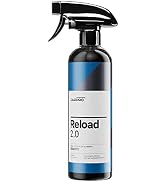
TL;DR Tightens water beading on ceramic-coated and sealed paint, with community testing reporting 4-8 weeks on daily drivers, and applies cleanly as a spray-and-rinse drying aid. The chemistry is a serious outlier for the category: a petroleum-derived solvent carrier instead of the usual alcohol base, carrying a DANGER signal word and a chronic organ-damage classification under the conservative SDS locale.
Spray onto a rinsed wet panel, rinse off, and dry, the SiO2 layer refreshes the hydrophobic performance of the protection underneath. Community owners note tighter beading on ceramic-coated surfaces through several weekly washes; the 2.0 reformulation is credited for improved gloss depth over its predecessor. No high-spot risk under normal conditions. Best on already-protected paint, on bare clear coat the effect washes off quickly.
For ceramic coating and sealant owners refreshing beading at the wash stage who accept a more hazardous chemistry than the category norm in exchange for CQuartz-native compatibility. Skip it on bare paint, the booster needs a base layer. Skip it if the DANGER classification is a dealbreaker; the category includes boosters with benign water-and-alcohol chemistry that score far better on health and perform just as well.
Two official SDS locales disagree: Canadian WHMIS classifies the product DANGER with H372 (chronic organ damage) and H317 (skin sensitizer); European REACH/CLP classifies it WARNING with the milder H373. CarCareTruth applies the more conservative classification when locales disagree. The chronic concern traces to a petroleum-naphtha and aromatic-hydrocarbon carrier, unusual for this category. Nitrile gloves are recommended, sensitization is cumulative, and ventilation matters for extended or enclosed use. All four hazardous ingredients carry aquatic toxicity; wash runoff should not enter storm drains.
Reload 2.0 is the native maintenance booster for the CQuartz coating ecosystem. After washing, mist it onto the rinsed wet panel, rinse it off, and dry, the SiO2 layer refreshes the hydrophobics of the CQuartz underneath. The spray-and-rinse drying-aid method is forgiving, with no high-spot risk under normal conditions. Nitrile gloves are recommended for routine use because the conservative SDS locale flags citral as a skin sensitizer.
Community evidence from r/AutoDetailing and Detailing World threads (2022-2025) confirms clean application on Gyeon Mohs and Gtechniq Crystal Serum without high-spots under normal conditions. CarPro's own CQuartz ecosystem is the best-documented use case, but independent forum threads report no bonding or smearing issues on other major coating brands when applied as a spray-and-rinse drying aid. No named third-party coating manufacturer has published a formal compatibility endorsement.
The manufacturer claims up to 3 months. Community testing on daily drivers with weekly washes consistently reports 4-8 weeks of meaningfully tightened beading. Reports past 12 weeks appear on garaged or lightly used vehicles. The 3-month figure represents the high end of reality and is best understood as a maximum-conditions estimate, not a typical real-world result.
CarPro markets Reload 2.0 as a standalone sealant with up to 3 months protection, but the product's design and primary community use case is as a maintenance booster over an existing ceramic coating or sealant. On bare unprotected paint it will produce some hydrophobicity, but with noticeably shorter duration than on a coated surface. Owners reporting the weakest results consistently describe applying to unprotected or degraded paint, the booster performs best when it has a protection layer to refresh.
Two official SDS locales exist for Reload 2.0 with different classifications. The IRL-en REACH/CLP SDS (hosted on this page) classifies the product as WARNING with H373 (STOT RE 2, chronic organ damage concern for the petroleum-naphtha carrier). The Canadian WHMIS SDS for the same product classifies it as DANGER with H372 (STOT RE 1, the more severe Cat-1 chronic organ damage code) plus H317 (skin sensitizer). Both documents are official. CarCareTruth scoring policy is: when two official SDS locales disagree, the more conservative classification governs the score and the surfaced safety badges. The DANGER classification reflects the conservative reading of the same chemistry. The hosted SDS file remains the chemistry-defensible IRL-en locale so readers can see CarPro Global Limited as the named supplier.
Reload 2.0 launched in late 2022 to early 2023 as a reformulated successor to Reload 1.0. Community consensus on r/AutoDetailing and AutoGeek identifies improved gloss depth, longer-lasting beading, and maintained CQuartz compatibility as the notable changes. The 1.0 formula has been discontinued. Owner reviews dated before 2022 reference the original Reload 1.0 chemistry and are not applicable to the 2.0 formula.
Marketing copy from CarPro, via Amazon. Not editorial.
Weekly pick
One product, one safety verdict, every week. No spam.

P&S Detail Products
Bead Maker Paint Protectant
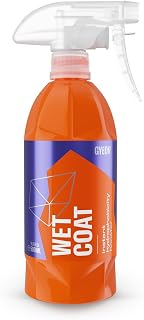
Gyeon
Q²M WetCoat
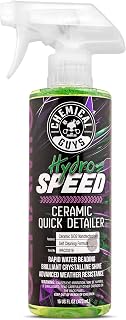
Chemical Guys
HydroSpeed Ceramic Quick Detailer
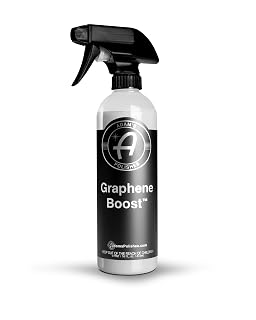
Adam's Polishes
Graphene Boost
As an Amazon Associate I earn from qualifying purchases. Full disclosure

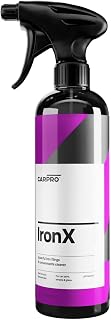
Community
0 postsShare how you use this product
Drop a quick comment or post a full review with photos and a star rating.
Sign in to postNew here? Create a free account.