
K&N
VF2049 Premium Washable Cabin Air Filter#1 in Cabin Air Filter· 85 days
CCT Score7.7*
Health9.0Env8.6Price
Editorial score, not a lab test
By CarCareTruth Editorial. Last updated May 2026.
K&N is the brand that pioneered the washable air filter, and decades later it is still the name enthusiasts reach for when they want a filter they can clean instead of throw away. The catalog below covers the lineup we grade most: the 33-series drop-in air filters that fit straight into your factory air box, the HP-1008 oil filter with its wrench-off hex nut, and the washable cabin air filters that clean up the air inside the cabin. This is the guide to which ones earn their place in your garage, and how to keep a K&N filter performing for the life of the vehicle.
Affiliate disclosure: CarCareTruth is reader-supported. As an Amazon Associate I earn from qualifying purchases. We may also earn commissions from other retailers linked on this page, at no extra cost to you. Affiliate revenue never influences our scores or rankings. Full disclosure
K&N
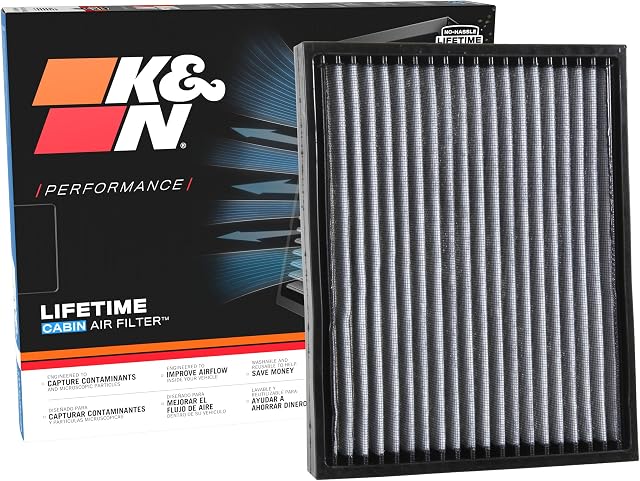
VF2049 Premium Washable Cabin Air Filter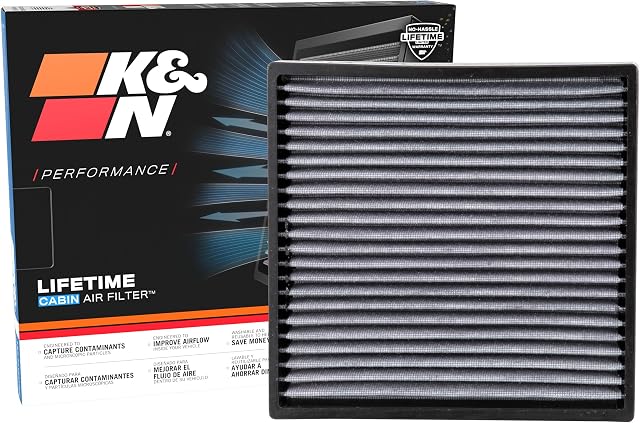
K&N
VF2001 Premium Washable Cabin Air Filter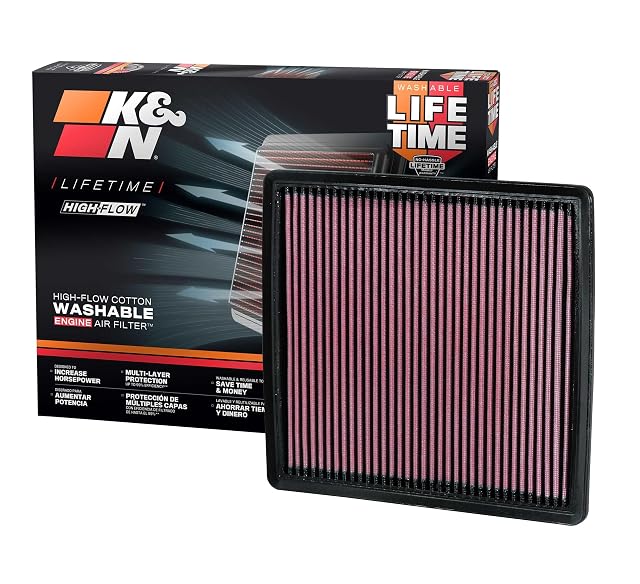
K&N
33-2385 High-Flow Washable Engine Air Filter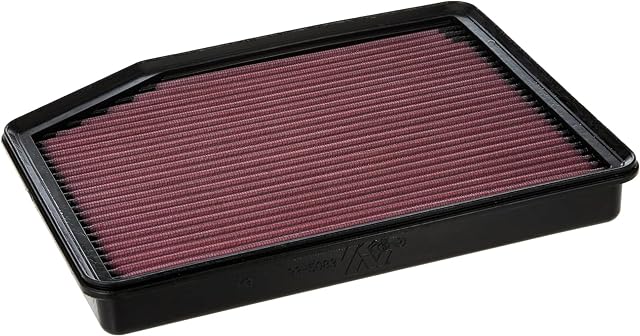
K&N
33-5083 High-Flow Washable Engine Air Filter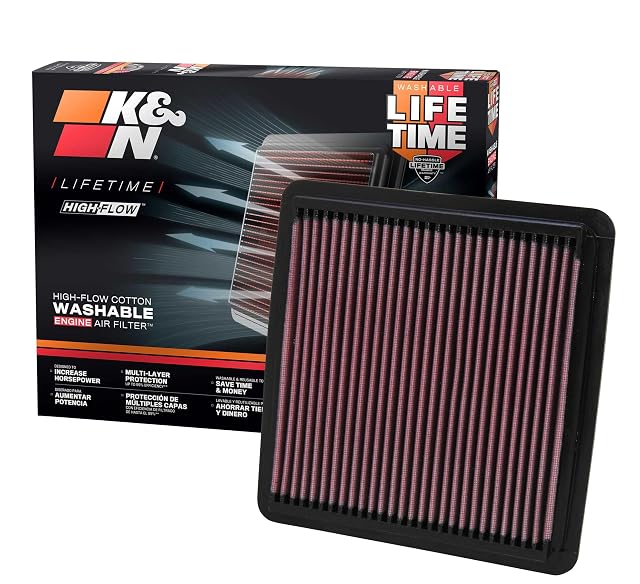
K&N
33-2129 High-Flow Washable Engine Air Filter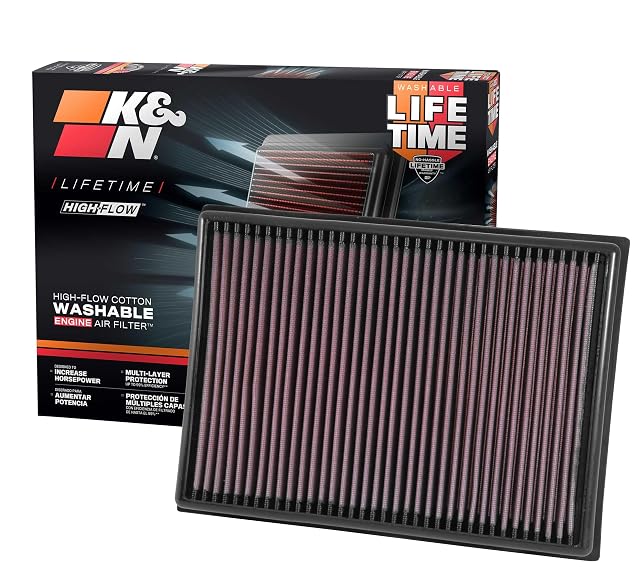
As an Amazon Associate I earn from qualifying purchases. Full disclosure
K&N was founded in 1969 in Riverside, California by two motorcycle racers, Ken Johnson and Norm McDonald, whose initials gave the company its name. Racing in dusty off-road conditions, they needed a filter that could survive the abuse and keep flowing, so they built one from oiled cotton gauze that could be washed out and reused instead of replaced. That original High-Flow Air Filter is still the heart of the brand.
The design is what sets K&N apart. Layers of cotton gauze sit between epoxy-coated wire mesh and get treated with K&N filter oil, which acts as a tacky coating so dust sticks to the fibers on contact. Because it captures dirt throughout the depth of the media rather than just on the surface, it keeps flowing air freely as it loads up. And because it is washable, one filter can serve for the life of the car: clean it, re-oil it, reinstall it, and repeat.
That reusability is backed by the 10-Year/Million Mile Limited Warranty, which covers K&N's washable air filters, washable cabin filters, and performance intakes against defects in materials or workmanship for a million miles or ten years, whichever comes first. In practice that is a buy-once guarantee, which is a big part of why the brand has such a loyal following.
K&N products are designed and manufactured in the USA, and they are easy to find anywhere. You will see them on the shelf at AutoZone, O'Reilly, Advance, Walmart, NAPA, and Summit Racing, as well as on Amazon, so picking the right fit for your vehicle is rarely a hunt.
For the owner who keeps a car a while and likes hands-on maintenance, K&N air filters are absolutely worth it. The whole pitch starts with one idea: you buy the filter once and keep it for the life of the vehicle. Where a paper element gets thrown away every service, a K&N cotton-gauze filter is designed to be washed, re-oiled, and dropped right back in. Under normal highway driving it goes roughly 50,000 miles between cleanings, so the upkeep is a quick ritual, not a chore. (When that mileage comes up, our how-to-clean-and-re-oil walkthrough takes about 15 minutes.)
Then there's the backing. Every K&N air filter is covered by the 10-Year/Million Mile Limited Warranty, which covers defects in materials and workmanship for ten years or a million miles, whichever comes first. That is a level of confidence no disposable paper filter offers.
The money follows the math. Because a single reusable filter replaces stacks of throwaway elements over the years, owners who hold onto a vehicle recoup the higher up-front cost and keep a pile of paper out of the landfill. Add the high-flow design, the more pronounced induction note, and the simple enthusiast appeal of a part you maintain rather than replace, and a drop-in like the K&N 33-2385 earns its spot. It pays off best for owners who keep their cars and don't mind a short maintenance ritual every ~50k miles.
Yes. K&N engineers its filters and intakes for increased airflow, and more air moving freely into the engine is the foundation of the throttle-response, sound, and power story. A high-flow cotton-gauze element like the K&N 33-2385 flows more air than a restrictive paper filter, which sharpens that crisp induction note enthusiasts chase.
The biggest, most consistent gains live on K&N's cold-air-intake systems. K&N guarantees its cold-air intakes will increase horsepower, and each one ships with estimated, SAE-corrected numbers pulled from real dynamometer testing for that vehicle. The published examples back it up: a 2004–2008 Ford F-150 5.4L with the 57-2556 intake gained +15.47 hp at 3,829 rpm, and a Honda Accord 3.0L V6 gained +10.4 hp at 5,522 rpm. Those numbers are measured on wheel-based dynos and reported as an average across multiple runs, not a single lucky pull.
Think of it as an upgrade ladder. A drop-in K&N filter is the entry point: more airflow, sharper throttle response, and a better sound for minimal effort. When you're ready to chase the real, dyno-verified gains, the cold-air-intake system is the next rung up.
The whole point of a K&N is that you clean it and put it back in, year after year, instead of buying paper replacements. Under normal highway driving you only need to do this about every 50,000 miles, or sooner if you can see the filter is visibly dirty or driving in dusty conditions. The clean-and-oil ritual takes about 15 minutes plus drying time, and once you've done it once it's easy.
The cleanest way to do it is with the K&N Recharger kit, which pairs the cleaner spray with a measured re-oiling bottle so you don't overdo the oil. Here's the routine:
No kit on hand? You can clean without the branded kit, but the rule that matters is the oil: use only K&N filter oil, apply it lightly, and let it absorb before reinstalling. Less is more. Add a touch more only where you see dry spots. That patience on the oiling step is what keeps everything downstream happy.
Prefer to see it done? K&N's official step-by-step video for cleaning oiled cotton panel filters walks through the exact routine, and the full written instructions live on knfilters.com.
Short answer: in normal use, no. K&N has investigated this concern directly and found its filter oil does not damage mass-airflow sensors, calling the failure claim an urban myth. The rare cases where oil migrates downstream trace back to over-oiling a filter after cleaning, which is simple user error and completely avoidable. Stick to the light, let-it-soak re-oiling method above and there's nothing to worry about. Better still, most K&N cotton filters ship factory pre-oiled and ready to install, so for many owners there's no oiling step at all on day one. And if you would rather not deal with oil at all, K&N's DRYFLOW filters use a washable synthetic media that needs no filter oil, which sidesteps the over-oiling question entirely while keeping the same wash-and-reuse convenience. The whole product line is backed by K&N's 10-Year/Million Mile Limited Warranty.
Here's the positive takeaway: any reusable oiled filter rewards a tidy intake. Wiping down the mass-airflow sensor whenever you do a re-oil service is good routine maintenance that keeps your airflow readings accurate and your engine running its best. A dedicated sensor cleaner like Johnsen's 4721 Mass Air Flow Sensor Cleaner or the CRC Mass Air Flow Sensor Cleaner is the right tool for that quick step. Pair either with your next filter clean and your intake stays in top shape.
K&N's washable cotton-gauze air filters get the attention, but the brand's oil and cabin filters carry the same buy-once, build-it-right philosophy.
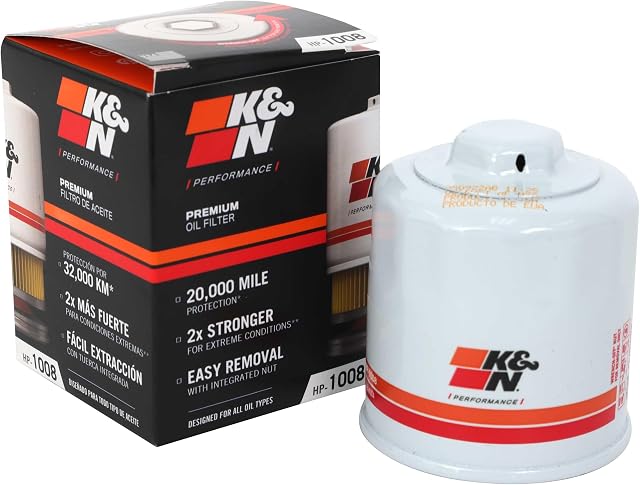
The K&N HP-1008 Premium Oil Filter is the standout for anyone who changes their own oil. It uses a welded 1-inch hex nut on top, so a wrench grabs it cleanly and the filter spins off without the usual knuckle-busting struggle. A heavy-gauge canister stands up to road abuse, and a built-in anti-drain-back valve keeps oil in the engine at shutdown so the next cold start has lubrication ready instead of a dry crank. The pleated high-flow media works with synthetic, conventional, or blended oil, and the HP-1008 fits a wide range of M20x1.5 applications including Subaru 2.5L engines. If you want the full breakdown, the K&N oil filter review page scores it on filtration and value.
K&N also makes washable VF-series cabin air filters, so the air you breathe gets the same reusable treatment. The VF2001 drops into a long list of Honda and Acura models, and the VF2049 fits 2015-2022 Ford F-150, Super Duty, Expedition, and Lincoln Navigator trucks and SUVs. Both rinse clean with low-pressure water and reinstall in minutes. A fresh cabin filter is one of the highest-value moves for a musty HVAC smell or an interior deep clean. Our K&N cabin air filter review coverage grades particle capture and fit.
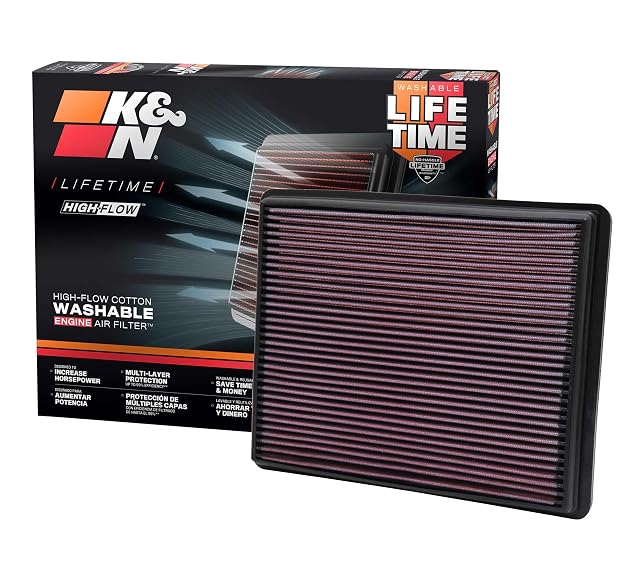
On the engine side, the drop-in lineup covers the most popular platforms: the 33-2129 for Chevy, GMC, and Cadillac full-size trucks and SUVs, the 33-2304 for the Subaru boxer family, the 33-2385 for the Ford F-150 and Raptor, and the 33-2438 for the Toyota 4Runner and Lexus GX.
The core advantage K&N holds over a factory or store-brand paper filter is simple: you buy it once. A disposable filter goes in the trash at every service interval, and you pay again. A K&N panel filter cleans, re-oils, and goes back in for the life of the car, backed by the brand's 10-Year/Million Mile Limited Warranty. Over years of ownership that is a stack of paper filters you never have to buy.
The oiled cotton-gauze media also moves more air than dense paper, which gives the intake a freer breath and the lightly throatier induction note enthusiasts chase. On the oil side, comparisons like wix vs k&n oil filter come down to convenience and build: the HP-1008's welded hex nut and heavy-gauge canister make it the easy pick for DIY oil changes. Whether it is air, oil, or cabin air, the K&N answer is the same upgrade story: one filter, cleaned and reused, instead of a throwaway every year.
Are K&N air filters worth it? For an owner who keeps a car a while and likes hands-on maintenance, yes. A K&N cotton-gauze filter is washable and reusable, so you buy it once, clean it about every 50,000 miles, and reinstall it for the life of the vehicle. It is backed by the 10-Year/Million Mile Limited Warranty, and one reusable filter takes the place of years of disposable paper elements.
Do K&N air filters add horsepower or make a difference? K&N's cotton-gauze media is engineered to flow more air than a restrictive paper element, which supports throttle response and a richer induction note. The largest, most consistent gains come from a full K&N cold-air intake system, which is guaranteed to increase horsepower and ships with SAE-corrected gain estimates from actual dyno testing. Think of the drop-in filter as the entry point and the cold-air intake as the next step on the upgrade path.
Are K&N filters reusable and washable? Yes. The signature feature is that you clean and re-oil the filter rather than throw it away. The oiled cotton-gauze design is built to be washed, re-oiled, and reinstalled over and over for the life of the car, which is the heart of the buy-once value story and the reason the filter qualifies for the 10-Year/Million Mile Limited Warranty.
How do you clean and re-oil a K&N air filter? Spray on K&N Power Kleen cleaner, let it soak, then rinse from the clean side with low-pressure water and let the filter air-dry completely. Once dry, apply K&N filter oil sparingly along each pleat, wait until the oil wicks in, and touch up any dry spots. The branded Recharger Kit pairs the cleaner and oil so the dose is controlled. Full step-by-step instructions are in the how to clean and re-oil a K&N air filter section above.
How often should you clean a K&N air filter? Under normal highway driving, a K&N air filter typically goes about 50,000 miles between cleanings. Dusty, off-road, or heavy-duty conditions shorten that interval, so inspect the filter periodically and clean it sooner if it looks loaded with dirt. There is no fixed mileage you must hit; you clean it when it needs it.
Can you clean a K&N air filter without the kit? You can clean the filter with just K&N air filter cleaner and K&N air filter oil bought separately, since the all-in-one Recharger Kit simply bundles those two products together. The one part you should not improvise is the oil: use genuine K&N filter oil rather than a generic substitute so the media re-oils correctly and the dose stays controlled.
Will a K&N filter harm my MAF sensor? No. K&N has investigated this directly and found its filter oil does not cause mass-airflow-sensor damage, calling the concern an urban myth. On the rare occasion an issue appears, the cause is over-oiling after a cleaning, which is easy to avoid by applying the oil sparingly and following K&N's instructions. Most K&N filters also ship pre-oiled and ready to install, so there is nothing to get wrong on day one. Keeping the intake clean with a routine mass air flow sensor cleaner helps the sensor keep reading accurately as normal maintenance.
Do K&N filters come pre-oiled? Most K&N cotton-gauze filters ship factory pre-oiled and ready to install, identifiable by the red tint of the media. K&N's DRYFLOW synthetic filters use no oil at all. Either way, for the majority of buyers there is no oiling step at installation; you just drop the filter into the factory air box.
Are K&N oil filters good? Yes. The K&N HP-1008 Performance Gold oil filter features a welded one-inch hex nut on top for fast wrench-off removal, a heavy-gauge canister built for durability, and an anti-drain-back valve that keeps oil in the engine to help prevent dry starts. It runs high-flow pleated media and works with synthetic, conventional, and blended oils, making it a strong upgrade over a basic disposable filter.
Are K&N cabin air filters worth it? For owners who like a reusable upgrade, yes. K&N's VF-series cabin filters use electrostatically charged synthetic media to capture dust, pollen, and spores, and they wash clean with low-pressure water instead of being thrown out, backed by the 10-Year/Million Mile Limited Warranty. Installation is tool-free and takes only a few minutes, and a fresh cabin filter is a simple win toward cleaner airflow when you deep-clean your car interior.
How do you clean a K&N cabin air filter? Remove the filter, vacuum off loose debris, then wash it with K&N cabin filter cleaner and rinse from the clean side with low-pressure water. Let it air-dry fully before reinstalling; unlike the air filter, the washable cabin filter does not get re-oiled. It drops straight back into the factory housing once dry, and pairing it with fresh cabin airflow helps get rid of lingering car odor.
Is WIX or K&N the better oil filter? They take different approaches. WIX is a strong conventional disposable filter, while the K&N HP-1008 is built as a performance upgrade with its welded wrench-off hex nut, heavy-gauge canister, and anti-drain-back valve. If you want easy tool-free removal and a rugged, high-flow filter for a performance build, the K&N is the enthusiast pick.