CarCareTruth Score
Decent.
Opens Amazon in a new tab. No account needed to look.
Saved to your guest loadout. Sign up to also save to your Cabinet (consumables) or Kit (tools you own).
As an Amazon Associate I earn from qualifying purchases. Full disclosure
Prices may varyAbout this product's hazards. This product's Safety Data Sheet uses signal word DANGER.Read the manufacturer's SDS and follow all safety instructions before use. CarCareTruth ratings translate the manufacturer's safety sheet. They do not replace the SDS or substitute for a hazard assessment specific to your task.
Health score is for adult use as intended, per the manufacturer's SDS. It does not model child ingestion, accidental spill cleanup, or off-label use. See the safety panel below for full hazard classification, and /disclaimer for the full editorial scope.
GHS hazard codes are quoted from the manufacturer’s Safety Data Sheet. PPE tiers below translate those codes and the listed ingredient chemistry; they are not CarCareTruth recommendations.
Show details for all categories ▾Hide details ▴
Translated from the manufacturer’s Safety Data Sheet, Section 8
H319 eye irritation classification · aerosol mist during overhead underbody application plausibly creates splash or mist contact.
U.S. regulatory standard
29 CFR 1910.133(a)(1)
“The employer shall ensure that each affected employee uses appropriate eye or face protection when exposed to eye or face hazards from… liquid chemicals…”
ANSI Z87.1 (incorporated via §1910.6)
OSHA standards apply to workplaces. Cited here as the U.S. reference threshold for the underlying hazard class.
CarCareTruth publishes the cited sources verbatim and does not advise what action a user should take. Consult the full SDS before use.
Translated from the manufacturer’s Safety Data Sheet, Section 8
H317 skin sensitizer Cat 1 · direct contact during application triggers the sensitizer classification; nitrile or chemical-resistant gloves indicated.
U.S. regulatory standard
29 CFR 1910.138(a); 1910.132(d)
“appropriate hand protection when employees' hands are exposed to hazards such as those from skin absorption of harmful substances.”
OSHA standards apply to workplaces. Cited here as the U.S. reference threshold for the underlying hazard class.
CarCareTruth publishes the cited sources verbatim and does not advise what action a user should take. Consult the full SDS before use.
Only when: in enclosed space
Beyond SDS: translated from the ingredient chemistry
No inhalation H-codes (H330, H331, H335) at any classification level · DANGER signal word is driven by H222 (flammable aerosol) and H229 (pressurized container), not by inhalation toxicity or respiratory irritation. Aerosol overhead application in a closed garage is the situational trigger; SDS §8 recommends respiratory protection in inadequate ventilation. Open or well-ventilated space reduces the exposure scenario.
CarCareTruth publishes the cited sources verbatim and does not advise what action a user should take. Consult the full SDS before use.
No PPE specified in published sources for ventilation. Absence does not imply “not needed” — consult the full Safety Data Sheet.
PPE tiers translate the manufacturer’s SDS and U.S. regulatory standards. Not professional safety advice. How we report safety.
Scope of these PPE tiers. The tiers on this page translate the product's Safety Data Sheet where one is published, plus its ingredient chemistry, into a comparable rating. They describe a formulation, not a situation: a tier is not a safety determination for any specific user, task, quantity, or environment. The manufacturer's label and use instructions govern how the product is handled. Where the product is used at work, the employer's PPE program and hazard assessment under 29 CFR 1910.132 decide what protection is selected, not this page.
No warranties. CarCareTruth makes no warranties, express or implied, and expressly disclaims the implied warranties of merchantability and fitness for a particular purpose.
This product ranks #1 of 6 in Undercoating.
Last reviewed August 2, 2026
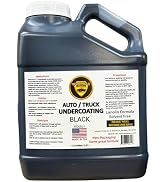
TL;DR Woolwax Black is a natural-wax corrosion inhibitor in aerosol form · zero VOC base formula, no Prop 65, with salt-belt owners in Michigan confirming annual-cycle protection on daily drivers. The DANGER signal word comes from the flammable aerosol propellant, not the chemistry; wear nitrile gloves during application since the SDS classifies a skin sensitizer, and ensure adequate ventilation when spraying overhead in an enclosed garage.
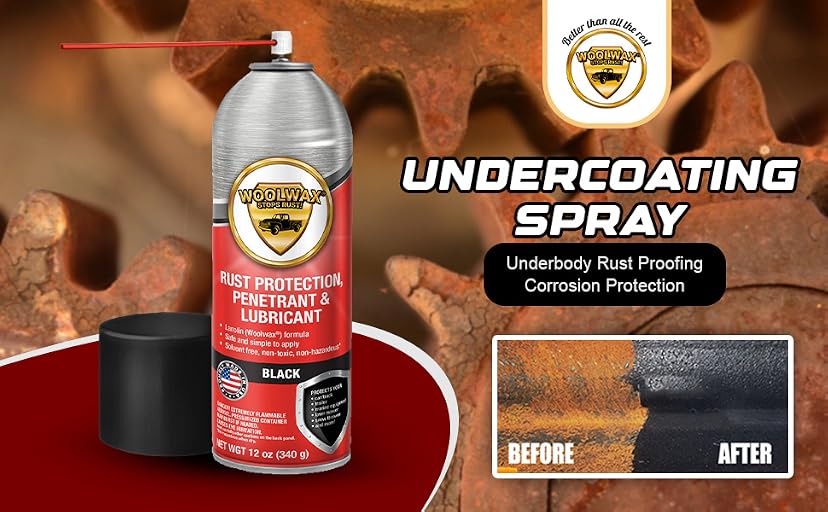
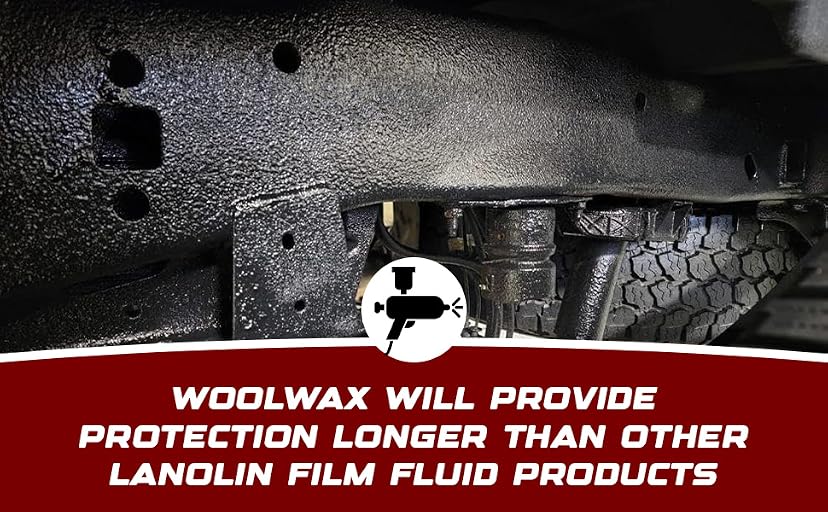
Woolwax Black uses a woolgrease (lanolin) base with a petroleum sulfonate corrosion inhibitor · a penetrating wet-film formula that creeps into frame seams and welds rather than forming a hard-set coating. The included extension wand reaches frame rails, door interiors, and underbody cavities. Owners in Michigan confirm annual-cycle protection on trucks and Jeeps; BITOG threads position Woolwax as longer-lasting than Fluid Film on exposed surfaces, with annual reapplication the established community expectation.
Right for salt-belt daily-driver owners treating frame rails and body seams before winter who want a no-Prop-65, zero-VOC-base alternative to solvent undercoatings. Skip it on vehicles with active rust perforation; a rust converter is the correct first step. Skip aerosol use in a sealed garage · the flammable propellant accumulates near ignition sources.
DANGER is driven by H222 (flammable aerosol) and H229 (pressurized container) from the propellant, a physical hazard; the base formula SDS signal word is WARNING. SDS §2 also lists H317 (skin sensitizer, wear nitrile gloves) and H319 (serious eye irritation, Category 2A; wear safety glasses) · no inhalation H-codes at any level. Ensure adequate ventilation when spraying overhead in a closed garage per SDS §8. SDS §15 confirms no Prop 65. VOC = 0 g/L per SDS §9, CARB compliant, and SDS §12 carries no aquatic toxicity classification.
Owners in Michigan describe buying 6-packs on a monthly cycle for daily-driver trucks · consistent with annual or more frequent reapplication in heavy salt-belt environments. Community consensus across BITOG rustproofing threads is that Woolwax is a thick lanolin-based formula suited to annual touch-up cycles; it performs at least as long as Fluid Film on exposed surfaces, and some BITOG members specifically prefer it for exposed undercarriage panels over Fluid Film for cavity injection. No multi-year skip-reapplication claims are backed by independent community evidence.
SDS §9 for the WOOLWAX HV base formula states VOC = 0 lb/gal and 0 g/L. The aerosol propellant is not disclosed (trade secret per SDS §3), so the total-can VOC figure including propellant is unconfirmed. The base formula itself · the woolgrease and petroleum sulfonate active · carries zero VOC per SDS.
SDS §2 carries no inhalation H-codes (no H335 respiratory irritation, no H330 or H331 inhalation toxicity). The DANGER signal word is from H222 (flammable aerosol) and H229 (pressurized container), not from respiratory hazards. SDS §8 specifies respiratory protection when ventilation is inadequate. For overhead underbody application in an open garage with the door up or outdoor application, the inhalation exposure pathway is low. In a sealed garage with no airflow, respiratory protection and ventilation are indicated per SDS §8.
The lanolin-based (woolgrease) formula is a penetrating, creeping product designed to work on surfaces with light-to-moderate existing rust · it absorbs into surface oxide, displaces moisture, and forms a barrier that slows continued corrosion. It does not chemically convert or neutralize iron oxide. For structurally compromised or heavily perforated metal, a rust converter or encapsulator followed by mechanical repair is the correct first step before any undercoating.
The base formula is the same woolgrease and petroleum sulfonate chemistry as the Woolwax HV brush-on product · the manufacturer publishes a single SDS covering both. The aerosol adds a flammable propellant (trade secret) that accounts for the DANGER signal word, the H222/H229 classification, and the pressurized-container warning. The aerosol form delivers a lighter film per pass; the brush-on HV is higher-viscosity for saturating cavities and seams.
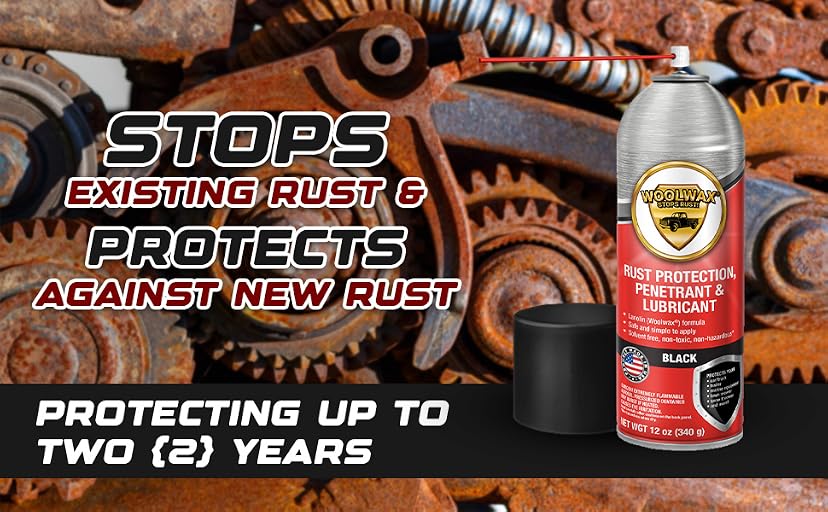
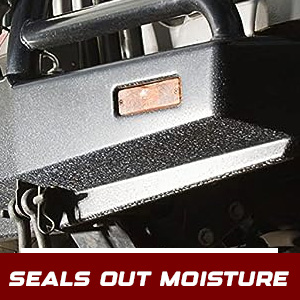
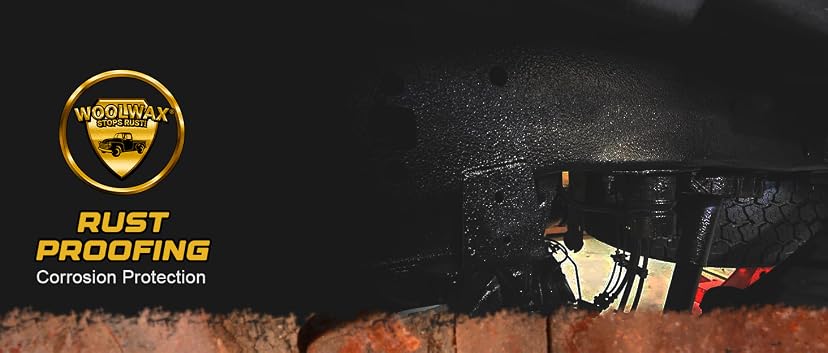
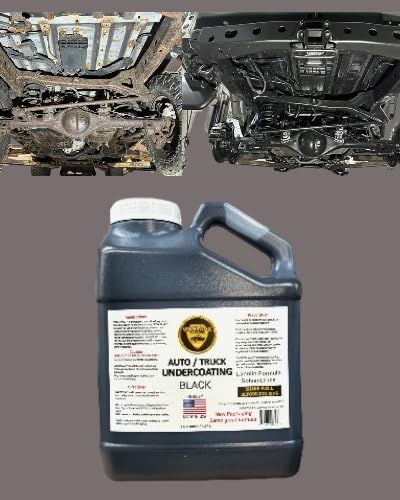
Marketing copy from Woolwax, via Amazon. Not editorial.
Weekly pick
One product, one safety verdict, every week. No spam.
Currently in the top 2 of its category — appears as a pick in:



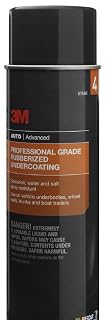
3M
Professional Grade Rubberized Undercoating (16 oz, Pack of 12)
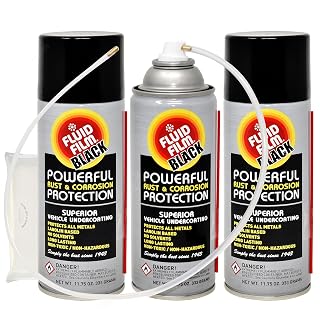
Fluid Film
Black Aerosol Undercoating (11.75 oz)
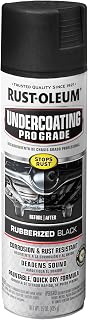
Rust-Oleum
248656 Professional Grade Rubberized Undercoating Spray (15 oz)
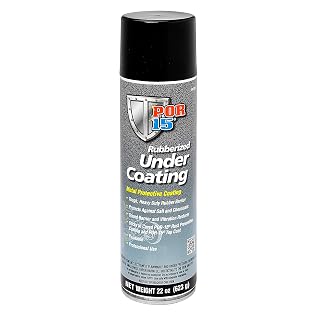
POR-15
Rubberized Undercoating
As an Amazon Associate I earn from qualifying purchases. Full disclosure

Community
0 postsShare how you use this product
Drop a quick comment or post a full review with photos and a star rating.
Sign in to postNew here? Create a free account.