CarCareTruth Score
Decent.
Opens Amazon in a new tab. No account needed to look.
Saved to your guest loadout. Sign up to also save to your Cabinet (consumables) or Kit (tools you own).
As an Amazon Associate I earn from qualifying purchases. Full disclosure
Prices may varyThe manufacturer's Safety Data Sheet classifies this product with one or more GHS Category 1 health hazards — the most severe tier. The hazard statements in quotes below are the verbatim GHS language from the SDS, as required by OSHA's Hazard Communication Standard. The line under each statement translates the GHS classification into plain language.
GHS Category 1 aspiration toxicity — thin, oily liquids can slip into the lungs if swallowed, causing chemical pneumonia.
If swallowed:
The aspiration hazard (H304) is about the liquid being swallowed and reaching the airway, not about breathing fumes during normal use.
Call Poison Control immediately at 1-800-222-1222 (US, 24/7, free) and have the product container with you. Poison Control's standing guidance is to not induce vomiting after chemical exposure; they will direct first-aid steps based on the specific product.
About this product's hazards. This product's Safety Data Sheet uses signal word DANGER.Read the manufacturer's SDS and follow all safety instructions before use. CarCareTruth ratings translate the manufacturer's safety sheet. They do not replace the SDS or substitute for a hazard assessment specific to your task.
Health score is for adult use as intended, per the manufacturer's SDS. It does not model child ingestion, accidental spill cleanup, or off-label use. See the safety panel below for full hazard classification, and /disclaimer for the full editorial scope.
GHS hazard codes are quoted from the manufacturer’s Safety Data Sheet. PPE tiers below translate those codes and the listed ingredient chemistry; they are not CarCareTruth recommendations.
Show details for all categories ▾Hide details ▴
Only when: when spraying
Translated from the manufacturer’s Safety Data Sheet, Section 8
SDS Section 2 carries no eye-irritation or eye-damage classification. Section 8 addresses eye protection directly, telling consumers to avoid eye contact and always spray away from the face, and recommending safety goggles where eye contact is possible in bulk or workplace use. Aerosol mist near the face during spray application is the specific trigger.
CarCareTruth publishes the cited sources verbatim and does not advise what action a user should take. Consult the full SDS before use.
Translated from the manufacturer’s Safety Data Sheet, Section 8
SDS Section 8 names chemical resistant gloves for operations where skin contact is likely and advises avoiding prolonged contact. No skin-irritation code appears at the Section 2 mixture level, so this is a named Section 8 control rather than a mixture-level hazard, but the control is specific enough to carry rather than being generic boilerplate.
CarCareTruth publishes the cited sources verbatim and does not advise what action a user should take. Consult the full SDS before use.
Only when: when spraying · in enclosed space
Translated from the manufacturer’s Safety Data Sheet, Section 8
SDS Section 8 states respiratory protection is not needed for normal consumer use with adequate ventilation, and Section 2 carries no respiratory-irritation classification. The aerosol form factor still generates fine mist, so enclosed-space use and spray application are the specific triggers where protection becomes relevant.
U.S. regulatory standard
29 CFR 1910.1200(f); 1910.132(d)
“The employer shall assess the workplace to determine if hazards are present, or are likely to be present, which necessitate the use of personal protective equipment.”
OSHA standards apply to workplaces. Cited here as the U.S. reference threshold for the underlying hazard class.
CarCareTruth publishes the cited sources verbatim and does not advise what action a user should take. Consult the full SDS before use.
The published Safety Data Sheet for this product does not specify ventilation protection for consumer use.
Workplace context
29 CFR 1910.134(a); 1910.1000
“the primary objective shall be to prevent atmospheric contamination [via] accepted engineering control measures (for example, enclosure or confinement of the operation, general and local ventilation…).”
Triggered by GHS H336 on the SDS.
OSHA standards apply to workplaces. Cited here as the U.S. reference threshold for the underlying hazard class.
PPE tiers translate the manufacturer’s SDS and U.S. regulatory standards. Not professional safety advice. How we report safety.
Scope of these PPE tiers. The tiers on this page translate the product's Safety Data Sheet where one is published, plus its ingredient chemistry, into a comparable rating. They describe a formulation, not a situation: a tier is not a safety determination for any specific user, task, quantity, or environment. The manufacturer's label and use instructions govern how the product is handled. Where the product is used at work, the employer's PPE program and hazard assessment under 29 CFR 1910.132 decide what protection is selected, not this page.
No warranties. CarCareTruth makes no warranties, express or implied, and expressly disclaims the implied warranties of merchantability and fitness for a particular purpose.
This product ranks #8 of 24 in Penetrating Oil / Multi-Purpose Lubricant.Three above it ↓
Last reviewed August 17, 2026
TL;DR Rated DANGER for two reasons worth understanding: it is an extremely flammable aerosol, and if it is ever swallowed the rule is do not induce vomiting, call a poison center. Neither is about breathing it while you spray a bolt. Otherwise this is a cheap, widely available penetrant, with the maker's own lab testing behind its speed claim.
Penetrating oil creeps into a corroded joint and breaks rust's grip so a seized fastener turns again. Spray it on, give it a few minutes, then try the wrench. The permanently attached straw flips between a narrow stream for a bolt you can barely reach and a wide spray for a rusted bracket, and the formula is low odor. A small non-volatile fraction stays behind as a light film against re-seizing, though no independent source documents how long that lasts. The at-least-50-percent-faster claim comes from the maker's own technical center using a timed nail-climb test: a named, repeatable method, but not a third party.
Best fit is the one specific stuck bolt: an exhaust clamp, a caliper bracket, a lock that will not turn. Rust inhibition scores below the category midpoint because the safety sheet names no dedicated corrosion-inhibitor package, so for long-term protection on exposed hardware a documented inhibitor residue is the better chemistry fit. Frequent users have lower-VOC, non-aerosol options in the category.
Two things drive the DANGER rating: aerosol flammability, so keep it away from heat, sparks, and open flame, and the swallowing risk, hence do not induce vomiting and seek medical attention. The same sheet puts the maker's own health rating at 1 of 4 against fire at 4 of 4. No respiratory-irritation classification applies, so mist in an enclosed space is the exposure to manage; Section 8 states no breathing protection is needed for normal use with adequate ventilation, but does name gloves where skin contact is likely. No California Prop 65 warning is required, and it is CARB compliant. Being leave-on, the residue stays on the part, and the sheet calls it expected to be harmful to aquatic life.
The DANGER signal word comes from two things that are not everyday-use toxicity. The first is flammability: it is an extremely flammable aerosol in a pressurized can. The second is what happens if someone swallows it, because the thin carrier can enter the airways rather than the stomach. Section 16 of the same SDS puts the manufacturer's own health rating at 1 out of 4, slight, against a fire rating of 4 out of 4. The serious risks here are fire and swallowing, not breathing it while you spray a bolt.
Do not induce vomiting. Call a poison center or a doctor immediately. This is the specific instruction in Section 4 of the SDS, and it is the reason the product carries its most serious classification.
No. Section 15 of the SDS states plainly that the product does not require a California Proposition 65 warning, the manufacturer repeats that on its own product page, and no Prop-65-listed substance appears in the disclosed ingredient list. The SDS also states the product meets the consumer-product VOC limits of CARB, the US EPA, and states following the OTC rules.
The manufacturer states it is safe on most common surfaces including most metals, plastics, and rubbers when used as directed, and recommends testing a small area first if you are unsure. The SDS lists no material incompatibility warnings. Test before using it near delicate trim.
It rests on the manufacturer's own testing, not independent testing. WD-40 names the lab, its technical center in Pine Brook, New Jersey, and the method, a nail-climb test timed to 1.75 cm, with test dates in March 2023 and July 2024. That is a specific, repeatable method rather than a bare marketing line, but no independent head-to-head penetration data against the category's benchmark products was found, which is why the performance score sits above the category median rather than near the top.
Yes, same part number 300004 and the same 11 oz Smart Straw can. WD-40 has refreshed the label: the current can is the blue and white "Penetrant, Fast-Acting" design, while the older black can carried "Rust Release Penetrant Spray" and a Blu Torch Technology badge. The manufacturer still uses the Rust Release name on its own product page. Both names point at one product and one safety data sheet.
Marketing copy from WD-40, via Amazon. Not editorial.
Weekly pick
One product, one safety verdict, every week. No spam.
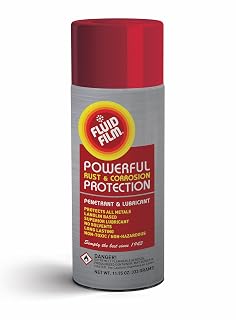
Fluid Film
NAS Aerosol Penetrant & Lubricant
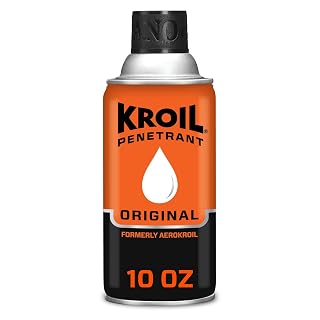
Kroil
Penetrant Original Aerosol
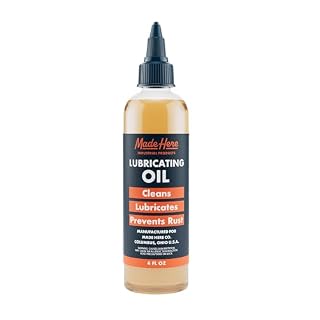
Made Here Co.
Multi-use Lubricating Penetrant Oil
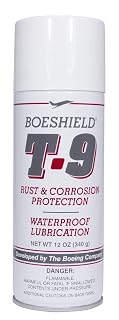
Boeshield
T-9 Rust & Corrosion Protection
As an Amazon Associate I earn from qualifying purchases. Full disclosure

Community
0 postsShare how you use this product
Drop a quick comment or post a full review with photos and a star rating.
Sign in to postNew here? Create a free account.