CarCareTruth Score
Decent, but wear gloves and ventilate.
Opens Amazon in a new tab. No account needed to look.
Saved to your guest loadout. Sign up to also save to your Cabinet (consumables) or Kit (tools you own).
As an Amazon Associate I earn from qualifying purchases. Full disclosure
Prices may varyThe manufacturer's Safety Data Sheet classifies this product with one or more GHS Category 1 health hazards — the most severe tier. The hazard statements in quotes below are the verbatim GHS language from the SDS, as required by OSHA's Hazard Communication Standard. The line under each statement translates the GHS classification into plain language.
GHS Category 1 eye damage — classified as causing irreversible eye damage on contact.
If splashed in eyes:
Call Poison Control immediately at 1-800-222-1222 (US, 24/7, free) and have the product container with you. Poison Control's standing guidance is to not induce vomiting after chemical exposure; they will direct first-aid steps based on the specific product.
About this product's hazards. This product's Safety Data Sheet uses signal word DANGER.Read the manufacturer's SDS and follow all safety instructions before use. CarCareTruth ratings translate the manufacturer's safety sheet. They do not replace the SDS or substitute for a hazard assessment specific to your task.
Health score is for adult use as intended, per the manufacturer's SDS. It does not model child ingestion, accidental spill cleanup, or off-label use. See the safety panel below for full hazard classification, and /disclaimer for the full editorial scope.
GHS hazard codes are quoted from the manufacturer’s Safety Data Sheet. PPE tiers below translate those codes and the listed ingredient chemistry; they are not CarCareTruth recommendations.
Show details for all categories ▾Hide details ▴
Translated from the manufacturer’s Safety Data Sheet, Section 2
H318 (serious eye damage Cat 1) in SDS §2 classifies this product as capable of causing irreversible eye damage. Safety glasses or goggles are required by the SDS chemistry.
U.S. regulatory standard
29 CFR 1910.133(a)(1); 1910.151(c)
“The employer shall ensure that each affected employee uses appropriate eye or face protection when exposed to eye or face hazards from… liquid chemicals, acids or caustic liquids…”
ANSI Z87.1 (chemical splash protection — incorporated via §1910.6)
OSHA standards apply to workplaces. Cited here as the U.S. reference threshold for the underlying hazard class.
CarCareTruth publishes the cited sources verbatim and does not advise what action a user should take. Consult the full SDS before use.
Especially relevant: prolonged use
Translated from the manufacturer’s Safety Data Sheet, Section 2
H315 (skin irritation Cat 2) at SDS §2 mixture level forces skin to at least recommended per the chemistry-forcing rule; H315 does not classify this as corrosive (H314 is absent). Gloves are appropriate for extended application sessions.
U.S. regulatory standard
29 CFR 1910.138(a)
“appropriate hand protection when employees' hands are exposed to hazards such as those from… chemicals which produce an adverse effect on the skin or eyes…”
OSHA standards apply to workplaces. Cited here as the U.S. reference threshold for the underlying hazard class.
CarCareTruth publishes the cited sources verbatim and does not advise what action a user should take. Consult the full SDS before use.
Only when: in enclosed space
Beyond SDS: translated from the ingredient chemistry
No H332, H335, H330, or H331 at mixture level. Citric-acid gel at 1.67 g/L VOC used outdoors has no meaningful inhalation pathway. SDS §8 respiratory language ('where risk assessment shows air contamination exceeds occupational exposure limits') is generic boilerplate, not triggered by the chemistry. The situational tier covers the enclosed-space edge case only.
CarCareTruth publishes the cited sources verbatim and does not advise what action a user should take. Consult the full SDS before use.
No PPE specified in published sources for ventilation. Absence does not imply “not needed” — consult the full Safety Data Sheet.
PPE tiers translate the manufacturer’s SDS and U.S. regulatory standards. Not professional safety advice. How we report safety.
Scope of these PPE tiers. The tiers on this page translate the product's Safety Data Sheet where one is published, plus its ingredient chemistry, into a comparable rating. They describe a formulation, not a situation: a tier is not a safety determination for any specific user, task, quantity, or environment. The manufacturer's label and use instructions govern how the product is handled. Where the product is used at work, the employer's PPE program and hazard assessment under 29 CFR 1910.132 decide what protection is selected, not this page.
No warranties. CarCareTruth makes no warranties, express or implied, and expressly disclaims the implied warranties of merchantability and fitness for a particular purpose.
This product ranks #5 of 8 in Glass Water Spot Remover.Three above it ↓
Last reviewed August 2, 2026
TL;DR Citric-acid gel for hard-water mineral scale on glass, metal, and paint. The chemistry is sound, but the owner review base is still thin and what's there skews lukewarm, so real-world efficacy is unconfirmed. The score reflects the ingredient profile, not a track record. DANGER signal word from H318 (serious eye damage): eye protection is required. Skin is H315 (irritation, not corrosion) · gentler than sulfuric-acid or ammonium-bifluoride formulas, but gloves are still a recommended precaution.
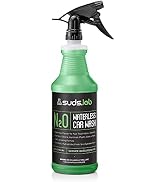
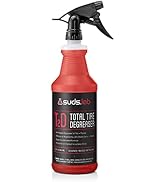
A citric-acid gel at 5-20% and pH 1.0-3.0, designed to dissolve calcium carbonate and mineral-salt deposits left by hard water. Suds Lab markets it for glass, metal, and painted surfaces · the product title and feature bullets include all three. Application follows the standard acid-gel workflow: pump on, brief dwell, agitate, rinse. Glass clarity after treatment is consistent with the chemistry but unconfirmed by independent review. The 32 oz pump bottle is well-suited for panel work; gel retains dwell time on vertical surfaces.
A gentler alternative to corrosive-acid formulas for owners who need paint-safe water spot removal. Pass if you're dealing with baked-on, long-standing mineral etch · there is no community evidence yet that this formula has enough cutting power for those cases. Tint safety is unconfirmed.
The SDS classifies this DANGER from H318 (serious eye damage Cat 1). Eye protection is required. Skin is H315 (irritation Cat 2); the chemistry supports gloves as a recommended precaution, especially for extended use. No respiratory hazard at mixture level: citric-acid gel at 1.67 g/L VOC outdoors creates no meaningful inhalation pathway; SDS §8 respirator language is generic boilerplate. SDS §12.2 confirms biodegradable; no Prop 65 per §15.
Suds Lab markets this product for glass, metal, and paint · the product title and feature bullets all include painted surfaces. The brand explicitly states 'Safe on Glass, Metal Paint' on the label. The citric-acid formula (5-20%) is a gentler acid choice than sulfuric-acid or ammonium-bifluoride formulas. Always work on a cool surface out of direct sun, keep dwell time short on painted panels, and rinse thoroughly.
The DANGER signal word comes from H318 · serious eye damage Cat 1 · driven by citric acid at 5-20% concentration. At that concentration range, citric acid can cause irreversible eye damage on direct contact. H318 is a Cat 1 classification, which automatically triggers DANGER regardless of whether other hazard codes are present. The skin classification is H315 (irritation, not corrosion), which is a milder hazard. The takeaway: the formula is gentler than corrosive-acid alternatives, but eye protection is still required.
The SDS H315 classification (skin irritation Cat 2) is milder than a corrosive-class hazard, but the chemistry still supports gloves as a recommended precaution, especially for a longer application session · working over multiple panels, repeated hand contact. The eye hazard (H318) is the primary concern; always use eye protection.
The SDS §12.2 confirms the product is biodegradable. SDS §12 notes that large spills may be harmful to aquatic organisms, but does not assign a mixture-level aquatic H-code. Normal residential dilution in a drain is a different exposure pathway than a direct spill into a waterway. Biodegradable formula with low VOC (1.67 g/L) is the relevant context for home-use drain disposal.
The Chemical Guys formula uses sulfuric acid + ammonium bifluoride · a more aggressive chemistry class than Suds Lab's citric acid base. The Chemical Guys SDS carries H314 (skin corrosion) alongside H318; Suds Lab only carries H315 (skin irritation) and H318. In practical terms, Suds Lab is the gentler formula and is less technique-sensitive for paint safety, while Chemical Guys may cut through more severely etched or aged mineral scale. Both require eye protection; only Chemical Guys requires gloves as a corrosive-class product.
Marketing copy from Suds Lab, via Amazon. Not editorial.
Weekly pick
One product, one safety verdict, every week. No spam.



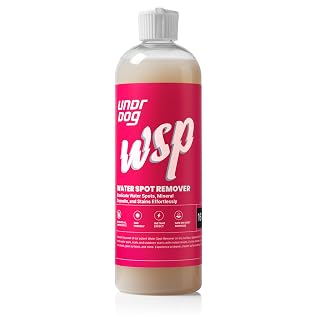
Undrdog
WSP Water Spot Remover
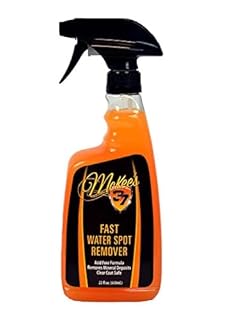
McKee's 37
FAST Water Spot Remover
Chemical Guys
Heavy Duty Water Spot Remover
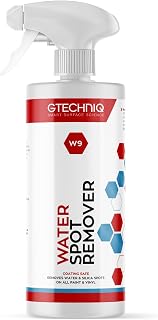
Gtechniq
W9 Water Spot Remover
As an Amazon Associate I earn from qualifying purchases. Full disclosure

Community
0 postsShare how you use this product
Drop a quick comment or post a full review with photos and a star rating.
Sign in to postNew here? Create a free account.