CarCareTruth Score
Decent.
Opens Amazon in a new tab. No account needed to look.
Saved to your guest loadout. Sign up to also save to your Cabinet (consumables) or Kit (tools you own).
As an Amazon Associate I earn from qualifying purchases. Full disclosure
Prices may varyHealth score is for adult use as intended, per the manufacturer's SDS. It does not model child ingestion, accidental spill cleanup, or off-label use. See the safety panel below for full hazard classification, and /disclaimer for the full editorial scope.
GHS hazard codes are quoted from the manufacturer’s Safety Data Sheet. PPE tiers below translate those codes and the listed ingredient chemistry; they are not CarCareTruth recommendations.
Show details for all categories ▾Hide details ▴
Translated from the manufacturer’s Safety Data Sheet, Section 2
H319 (eye irritation Cat 2) confirmed in SDS §2. Pump-spray at windshield height creates a credible eye-contact pathway; safety glasses match the SDS chemistry.
U.S. regulatory standard
29 CFR 1910.133(a)(1)
“The employer shall ensure that each affected employee uses appropriate eye or face protection when exposed to eye or face hazards from… liquid chemicals…”
ANSI Z87.1 (incorporated via §1910.6)
OSHA standards apply to workplaces. Cited here as the U.S. reference threshold for the underlying hazard class.
CarCareTruth publishes the cited sources verbatim and does not advise what action a user should take. Consult the full SDS before use.
Translated from the manufacturer’s Safety Data Sheet, Section 2
H315 (skin irritation) at SDS §2 mixture level.
U.S. regulatory standard
29 CFR 1910.138(a)
“appropriate hand protection when employees' hands are exposed to hazards such as those from… chemicals which produce an adverse effect on the skin or eyes…”
OSHA standards apply to workplaces. Cited here as the U.S. reference threshold for the underlying hazard class.
CarCareTruth publishes the cited sources verbatim and does not advise what action a user should take. Consult the full SDS before use.
Translated from the manufacturer’s Safety Data Sheet, Section 8
SDS Section 8 states respiratory protection is required where inhalation exposure may occur from handling or use, and this product is a pump spray, so airborne mist during application is the normal-use pathway, not an edge case. Section 11 lists respiratory irritation among the symptoms/effects. Section 2 carries no inhalation hazard code (no H330/H331/H334), so a basic dust/mist mask or working in ventilated air covers the SDS chemistry; a cartridge respirator is not indicated.
CarCareTruth publishes the cited sources verbatim and does not advise what action a user should take. Consult the full SDS before use.
No PPE specified in published sources for ventilation. Absence does not imply “not needed” — consult the full Safety Data Sheet.
PPE tiers translate the manufacturer’s SDS and U.S. regulatory standards. Not professional safety advice. How we report safety.
Scope of these PPE tiers. The tiers on this page translate the product's Safety Data Sheet where one is published, plus its ingredient chemistry, into a comparable rating. They describe a formulation, not a situation: a tier is not a safety determination for any specific user, task, quantity, or environment. The manufacturer's label and use instructions govern how the product is handled. Where the product is used at work, the employer's PPE program and hazard assessment under 29 CFR 1910.132 decide what protection is selected, not this page.
No warranties. CarCareTruth makes no warranties, express or implied, and expressly disclaims the implied warranties of merchantability and fitness for a particular purpose.
This product ranks #4 of 9 in Glass Water Spot Remover.Three above it ↓
Last reviewed July 23, 2026
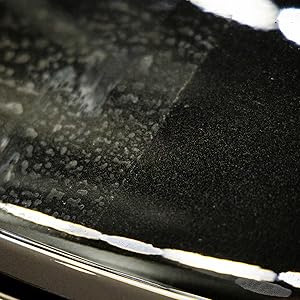
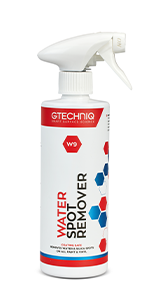
TL;DR A mild-acid spray with a WARNING signal word: the SDS lists eye and skin irritation codes, so wear safety glasses and nitrile gloves and work in ventilated air, since the pump spray makes mist. It clears fresh and moderate hard-water deposits from glass, paint, and vinyl; severely baked-on scale is its limit. Glass is optically clear after the immediate buff-off.
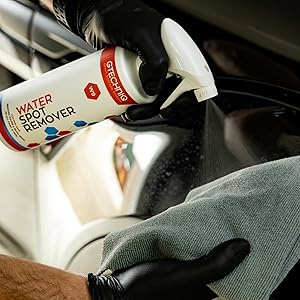
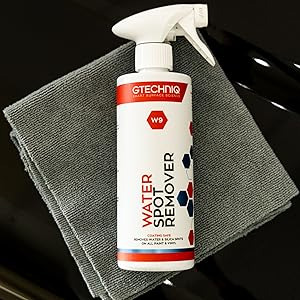
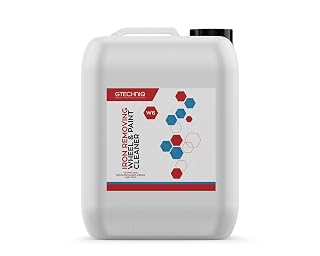
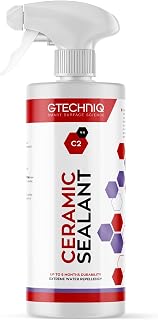
W9 dissolves the bonded mineral residue that washing leaves behind. Spray onto a microfiber towel, wipe a small section, and buff off immediately; no extended dwell, and the label says to keep it out of direct sunlight. Owners report solid results on fresh and moderate spotting; the consistent limit is severely baked-on, long-standing scale. The brand states it is safe on all paint types including matte, plus vinyl, and prints COATING SAFE on the bottle.
Right for owners with hard-water deposits on windshields, panels, or vinyl that survive normal washing; ceramic coating owners can use it per brand disclosure. Skip it for severely etched or months-old deposits, where a stronger acid formula will outperform it, and for fresh light spots that don't need a dedicated remover. Spot-test on paint-protection film or matte wraps first.
The WARNING signal word comes from acetic acid at 1-10%: skin irritation (H315) and eye irritation (H319) are the only Section 2 codes, no corrosion or inhalation classifications. The SDS lists no pH, but the disclosed concentration implies a moderate-acid solution around 2.4-3.5, so safety glasses and nitrile gloves line up with the chemistry. Section 8 requires respiratory protection where inhalation exposure may occur; mist from the pump spray is that pathway, so a dust or mist mask or a ventilated workspace matches the SDS. Section 12 is silent on aquatic toxicity and biodegradability; estimated VOC sits below 50 g/L.
Yes. Gtechniq prints 'COATING SAFE' on the bottle label, and the mild acetic acid chemistry (1-10%) is consistent with coating compatibility at normal dwell times. Do not allow the product to dry on coated surfaces; the directions say to buff off immediately.
Yes. The product title and feature bullets state it is safe for all paint types including matte finishes, plus vinyl. It is not glass-only; the formula was designed to be multi-surface. Spot-test first on aftermarket paint-protection film or matte wraps.
SDS Section 9 for W9 lists pH as 'No data available.' Based on the disclosed ingredient (acetic acid at 1-10%), the working solution pH is estimated at approximately 2.4-3.5, a moderate acid range typical for this concentration. That inferred acidity is why gloves and eye protection line up with the SDS chemistry.
SDS Section 8 calls for respiratory protection where inhalation exposure may occur, and because W9 is a pump spray, mist during application is the normal-use pathway. Section 2 carries no inhalation hazard code, so a basic dust or mist mask, or simply working in ventilated air, covers the SDS chemistry; a cartridge respirator is not indicated.
Community evidence shows W9 handles fresh and moderate hard-water deposits reliably. Multiple owners note limitations on severely etched or long-standing scale; that severity may require a product with a higher acid concentration or a different acid type.
Marketing copy from Gtechniq, via Amazon. Not editorial.
Weekly pick
One product, one safety verdict, every week. No spam.


Undrdog
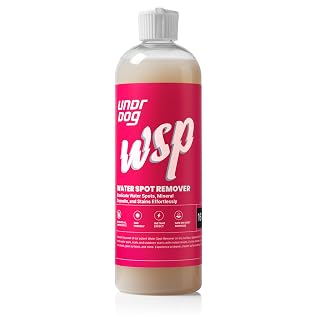
WSP Water Spot Remover
McKee's 37
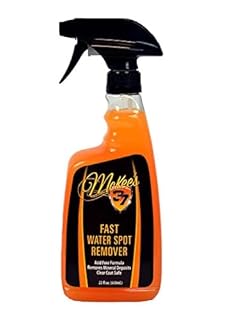
FAST Water Spot Remover
Chemical Guys
Heavy Duty Water Spot Remover
Suds Lab
WS Heavy Duty Water Spot Gel Remover
As an Amazon Associate I earn from qualifying purchases. Full disclosure

Community
0 postsShare how you use this product
Drop a quick comment or post a full review with photos and a star rating.
Sign in to postNew here? Create a free account.