CarCareTruth Score
Decent, but wear gloves and ventilate.
Opens Amazon in a new tab. No account needed to look.
Saved to your guest loadout. Sign up to also save to your Cabinet (consumables) or Kit (tools you own).
As an Amazon Associate I earn from qualifying purchases. Full disclosure
Prices may varyThe manufacturer's Safety Data Sheet classifies this product with one or more GHS Category 1 health hazards — the most severe tier. The hazard statements in quotes below are the verbatim GHS language from the SDS, as required by OSHA's Hazard Communication Standard. The line under each statement translates the GHS classification into plain language.
GHS Category 1 skin corrosion — classified as causing irreversible skin damage on contact.
GHS Category 1 eye damage — classified as causing irreversible eye damage on contact.
If on skin or splashed in eyes:
Call Poison Control immediately at 1-800-222-1222 (US, 24/7, free) and have the product container with you. Poison Control's standing guidance is to not induce vomiting after chemical exposure; they will direct first-aid steps based on the specific product.
About this product's hazards. This product's Safety Data Sheet uses signal word DANGER.Read the manufacturer's SDS and follow all safety instructions before use. CarCareTruth ratings translate the manufacturer's safety sheet. They do not replace the SDS or substitute for a hazard assessment specific to your task.
Health score is for adult use as intended, per the manufacturer's SDS. It does not model child ingestion, accidental spill cleanup, or off-label use. See the safety panel below for full hazard classification, and /disclaimer for the full editorial scope.
GHS hazard codes are quoted from the manufacturer’s Safety Data Sheet. PPE tiers below translate those codes and the listed ingredient chemistry; they are not CarCareTruth recommendations.
Show details for all categories ▾Hide details ▴
Translated from the manufacturer’s Safety Data Sheet, Section 2
SDS §2 carries H318 (Serious Eye Damage Cat 1) from the tallow amine surfactants at 8-11% combined. Cat-1 serious eye damage drives eyes: required regardless of application format.
U.S. regulatory standard
29 CFR 1910.133(a)(1); 1910.151(c)
“The employer shall ensure that each affected employee uses appropriate eye or face protection when exposed to eye or face hazards from… liquid chemicals, acids or caustic liquids…”
ANSI Z87.1 (chemical splash protection — incorporated via §1910.6)
OSHA standards apply to workplaces. Cited here as the U.S. reference threshold for the underlying hazard class.
CarCareTruth publishes the cited sources verbatim and does not advise what action a user should take. Consult the full SDS before use.
Translated from the manufacturer’s Safety Data Sheet, Section 2
SDS §2 carries H314 (Skin Corrosion Cat 1B) from phosphoric acid at 10-20% concentration. Corrosive chemistry drives skin: required.
U.S. regulatory standard
29 CFR 1910.132; 1910.133; 1910.138; 1910.151(c)
“Where the eyes or body of any person may be exposed to injurious corrosive materials, suitable facilities for quick drenching or flushing of the eyes and body shall be provided within the work area for immediate emergency use.”
ANSI Z87.1 (eye/face — incorporated via §1910.6)
OSHA standards apply to workplaces. Cited here as the U.S. reference threshold for the underlying hazard class.
CarCareTruth publishes the cited sources verbatim and does not advise what action a user should take. Consult the full SDS before use.
Only when: in enclosed space
Translated from the manufacturer’s Safety Data Sheet, Section 8
No H332, H335, H330, or H331 in SDS §2 mixture classification. Product applies via pour-onto-pad format · no pump-spray mist generation. Adequate ventilation removes the primary inhalation exposure pathway. Situational for enclosed-space use or poor ventilation per SDS §8 'ensure adequate ventilation' guidance, which references a named scenario (not generic boilerplate in the context of an acid formula in a closed garage).
CarCareTruth publishes the cited sources verbatim and does not advise what action a user should take. Consult the full SDS before use.
The published Safety Data Sheet for this product does not specify ventilation protection for consumer use.
Workplace context
29 CFR 1910.134(a); 1910.1000
“the primary objective shall be to prevent atmospheric contamination [via] accepted engineering control measures (for example, enclosure or confinement of the operation, general and local ventilation…).”
Triggered by GHS H336 on the SDS.
OSHA standards apply to workplaces. Cited here as the U.S. reference threshold for the underlying hazard class.
PPE tiers translate the manufacturer’s SDS and U.S. regulatory standards. Not professional safety advice. How we report safety.
Scope of these PPE tiers. The tiers on this page translate the product's Safety Data Sheet where one is published, plus its ingredient chemistry, into a comparable rating. They describe a formulation, not a situation: a tier is not a safety determination for any specific user, task, quantity, or environment. The manufacturer's label and use instructions govern how the product is handled. Where the product is used at work, the employer's PPE program and hazard assessment under 29 CFR 1910.132 decide what protection is selected, not this page.
No warranties. CarCareTruth makes no warranties, express or implied, and expressly disclaims the implied warranties of merchantability and fitness for a particular purpose.
This product ranks #8 of 9 in Glass Water Spot Remover.Three above it ↓
Last reviewed July 31, 2026
TL;DR Dissolves bonded mineral scale from glass, paint, and chrome without abrading · brand confirms paint safety, but owner reception runs lukewarm and the review base is still thin, so the evidence on tough deposits stays limited. Glass is optically clear after rinsing, with no follow-on glass cleaner needed on typical deposits. It carries the SDS's top-level DANGER warning: the acid can cause permanent skin burns and serious eye injury, so safety glasses and gloves are required, not optional.
MDR's acid formula dissolves bonded mineral scale without abrading. Pour onto a microfiber or applicator pad, apply, dwell, then rinse or wipe off. Brand markets it for hard-water deposits, calcium scale, and mineral stains on paint, glass, and chrome, and recommends it as a pre-treatment before Opti-Coat ceramic coatings. With a thin review base, lukewarm owner reception, and no independent forum data, performance on severe deposits is unconfirmed.
Right for anyone dealing with hard-water scale on paint, glass, or chrome that normal washing won't dissolve, brand confirms multi-surface paint safety. Skip it if deposits are fresh and light; a standard glass cleaner handles recent spotting without the DANGER-class chemistry. Not confirmed tint-safe, spot test on aftermarket film before use.
SDS signal word DANGER. H314 (skin corrosion Cat 1B from phosphoric acid at 10-20%) and H318 (serious eye damage Cat 1 from surfactant chemistry) are irreversible-injury classifications. Chemical splash goggles and nitrile gloves are the minimum per SDS §8. California Prop 65 warning per SDS §15 (Ethylene Oxide), absent from the product listing (confirmed false negative). Pad application reduces inhalation exposure vs. spray formats; no inhalation H-codes in the mixture SDS §2.
Yes · brand confirms paint safety in the Amazon feature bullets ('Car Paint Safe' and 'without affecting or removing paint'). The non-abrasive acid mechanism dissolves mineral deposits chemically rather than mechanically, which is how it avoids harming the paint surface. That said, the chemistry is still DANGER-class (phosphoric acid at 10-20%), so eye and skin protection are required and you should rinse promptly after the dwell period.
The brand has not made a tint-safe claim for MDR, and no independent community testing confirming tint safety was found during research. Until tint compatibility is confirmed by brand disclosure or community testing, avoid direct application to aftermarket tint film and test in an inconspicuous area first.
This is a known false-negative issue with the product listing. The Amazon Prop 65 flag is seller self-reported and Optimum did not flag it on the listing. However, the SDS Section 15 (regulatory information) explicitly lists a California Prop 65 warning for Ethylene Oxide (CAS 75-21-8). The SDS is the authoritative source; the product carries a Prop 65 warning.
Brand markets MDR for 'hard water deposits, mineral stains, and calcium deposits' and recommends it as a pre-treatment before Opti-Coat ceramic coatings. The community evidence base is still thin, and owner reception runs only lukewarm, which suggests some inconsistency on severe cases. The acid mechanism (phosphoric acid) is effective chemistry for mineral dissolution, but independent forum confirmation on severe hard-water etching has not been found.
Marketing copy from Optimum, via Amazon. Not editorial.
Weekly pick
One product, one safety verdict, every week. No spam.
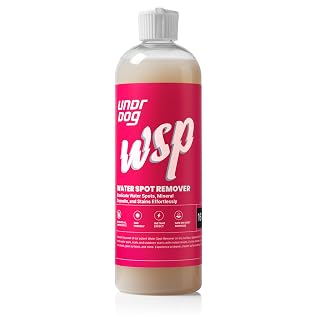
Undrdog
WSP Water Spot Remover
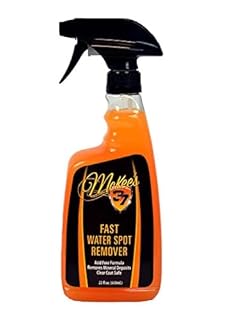
McKee's 37
FAST Water Spot Remover
Chemical Guys
Heavy Duty Water Spot Remover
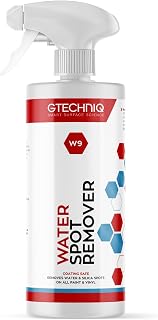
Gtechniq
W9 Water Spot Remover
As an Amazon Associate I earn from qualifying purchases. Full disclosure

Community
0 postsShare how you use this product
Drop a quick comment or post a full review with photos and a star rating.
Sign in to postNew here? Create a free account.