CarCareTruth Score
Recommended.
Opens Amazon in a new tab. No account needed to look.
Saved to your guest loadout. Sign up to also save to your Cabinet (consumables) or Kit (tools you own).
As an Amazon Associate I earn from qualifying purchases. Full disclosure
Prices may varyHealth score is for adult use as intended, per the manufacturer's SDS. It does not model child ingestion, accidental spill cleanup, or off-label use. See the safety panel below for full hazard classification, and /disclaimer for the full editorial scope.
GHS hazard codes are quoted from the manufacturer’s Safety Data Sheet. PPE tiers below translate those codes and the listed ingredient chemistry; they are not CarCareTruth recommendations.
Show details for all categories ▾Hide details ▴
Translated from the manufacturer’s Safety Data Sheet, Section 2
H319 (Eye Irritation Cat 2) is classified in SDS §2 at mixture level · brush-application at close range is the primary contact pathway.
U.S. regulatory standard
29 CFR 1910.133(a)(1)
“The employer shall ensure that each affected employee uses appropriate eye or face protection when exposed to eye or face hazards from… liquid chemicals…”
ANSI Z87.1 (incorporated via §1910.6)
OSHA standards apply to workplaces. Cited here as the U.S. reference threshold for the underlying hazard class.
CarCareTruth publishes the cited sources verbatim and does not advise what action a user should take. Consult the full SDS before use.
Only when: prolonged use
Translated from the manufacturer’s Safety Data Sheet, Section 8
No H315 or H317 at mixture level in SDS §2. Amide surfactant at 0.1-0.5% carries an ingredient-level Skin Irrit. 2 classification. Brush agitation with hands in extended contact with the solution is the primary skin-exposure pathway · translates to situational for prolonged use without gloves.
CarCareTruth publishes the cited sources verbatim and does not advise what action a user should take. Consult the full SDS before use.
Only when: in enclosed space
Beyond SDS: translated from the ingredient chemistry
No H335, H334, H331, or H330 at mixture level in SDS §2. Application method is pour-and-brush (not pump spray), outdoor, with a rinse-off step. SDS §4.2 mentions 'spray or mists may cause respiratory irritation' as a general precaution, but no H335 is carried at the mixture level and the form factor is brush application, not spray. Outdoor use mitigates inhalation risk; lungs PPE is situational for any enclosed-space application scenario.
CarCareTruth publishes the cited sources verbatim and does not advise what action a user should take. Consult the full SDS before use.
No PPE specified in published sources for ventilation. Absence does not imply “not needed” — consult the full Safety Data Sheet.
PPE tiers translate the manufacturer’s SDS and U.S. regulatory standards. Not professional safety advice. How we report safety.
This product ranks #1 of 6 in Convertible Top Cleaner.
Last reviewed July 25, 2026
TL;DR Removes mold, algae, and embedded road grime from fabric canvas tops reliably with a pour-and-brush workflow and up to an hour of dwell time · heavy established mold typically needs a second pass. No color shift on black canvas in multi-season owner data. Carries a mild eye-irritant warning; water-based with no harsh solvents.
Water-based surfactant formula · no mildewcide, no quat. Removes mold and algae via surfactant action and brush agitation, not biocidal chemistry. Pour into a container, apply with a 2-inch soft brush in sections, allow 10-20 minutes of dwell (up to an hour for heavily soiled tops), then agitate with warm water and rinse with a garden hose (no pressure washer). Owner reviews confirm results on black fabric canvas tops across the full Renovo system workflow · cleaner prepares the surface for Reviver and Ultra Proofer application.
Best fit for fabric canvas convertible top owners dealing with routine mold, algae, or embedded dirt · particularly those running the Renovo three-step care system. Heavy established mold may need a second pass or a dedicated mildewcide-formula cleaner for initial treatment. Community evidence focuses on canvas; vinyl-panel compatibility is less documented.
WARNING signal word. H319 (Eye Irritation Cat 2) at mixture level in SDS §2; ingredient-level Eye Dam. 1 classifications on both surfactants are not carried to the mixture level at working concentration. No H315, H335, or H317 at mixture level. Aquatic Chronic 3 (H412) in SDS §2 · rinse water should not enter storm drains. Biodegradability confirmed in SDS §12 per EU Detergents Regulations.
The manufacturer positions this cleaner for canvas, double duck, and mohair fabric tops. Community evidence is concentrated on black fabric canvas · vinyl-panel compatibility is not specifically documented one way or the other. If your top is vinyl rather than woven fabric, treat this as unconfirmed for that surface rather than assuming it carries over.
Pour it into a container and work it in with a soft 2-inch brush in sections, rather than spraying it on. Owner-documented dwell time runs 10 to 20 minutes for routine soiling, up to an hour for heavily established mold or algae. Agitate with warm water afterward, then rinse with a garden hose · the label explicitly says never use a pressure washer on a fabric top.
The cleaner is the first step, not a standalone finish. Renovo's own three-step system pairs this cleaner with Soft Top Reviver and then Ultra Proofer, and the manufacturer specifically requires this cleaning step to strip grease, dirt, and old coatings before either protectant is applied. Owner reports confirm the hand-off works: cleaner first, then Reviver or Ultra Proofer for the water-repelling finish.
No widespread color-shift or fabric-damage reports turned up in the community record, including on black canvas tops that saw repeated brush agitation. The formula is water-based surfactant chemistry with no chlorinated bleach or aggressive solvents. That said, tan and mohair tops have thinner multi-season data than black canvas, so watch a small test area first if your top is a lighter or less common material.
Best practice is no. The SDS carries an Aquatic Chronic 3 classification (H412, harmful to aquatic life), which is a mixture-level ecological hazard rather than a skin or inhalation concern. Direct rinse runoff toward a lawn or gravel area rather than a storm drain when possible. The formula is also confirmed biodegradable under EU Detergents Regulations, so it breaks down once diluted and dispersed rather than persisting.
Marketing copy from Renovo, via Amazon. Not editorial.
Weekly pick
One product, one safety verdict, every week. No spam.
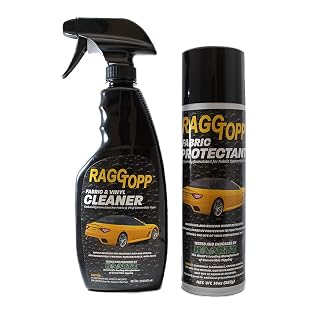
RaggTopp
Convertible Top Fabric Cleaner & Protectant Kit
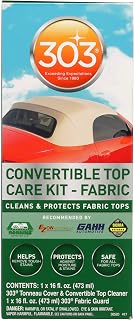
303 Products
303 Convertible Fabric Top Cleaning and Care Kit
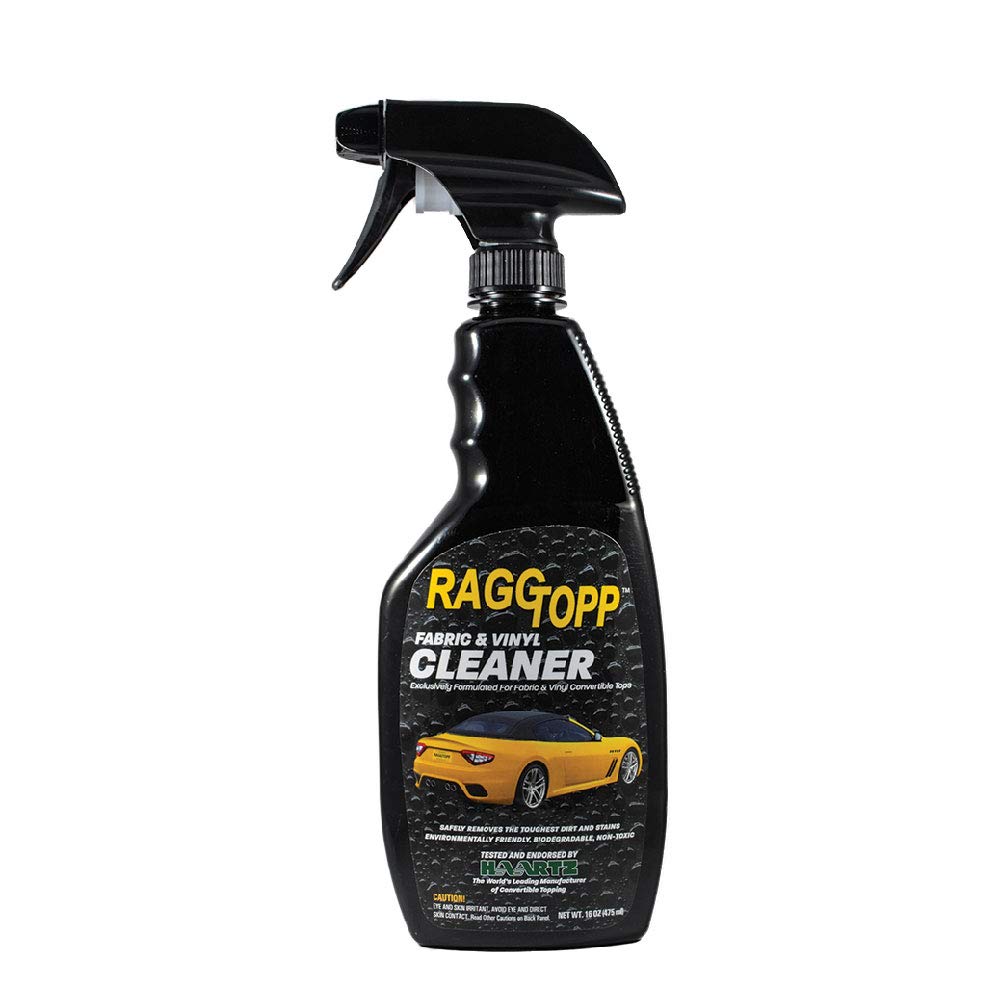
RaggTopp
Fabric & Vinyl Convertible Top Cleaner
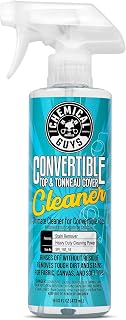
Chemical Guys
Convertible Top Cleaner
As an Amazon Associate I earn from qualifying purchases. Full disclosure

Community
0 postsShare how you use this product
Drop a quick comment or post a full review with photos and a star rating.
Sign in to postNew here? Create a free account.