CarCareTruth Score
Recommended, but it's tough on the environment.
Saved to your guest loadout. Sign up to also save to your Cabinet (consumables) or Kit (tools you own).
As an Amazon Associate I earn from qualifying purchases. Full disclosure
The manufacturer's Safety Data Sheet classifies this product with one or more GHS Category 1 health hazards — the most severe tier. The hazard statements in quotes below are the verbatim GHS language from the SDS, as required by OSHA's Hazard Communication Standard. The line under each statement translates the GHS classification into plain language.
GHS Category 1 aspiration toxicity — thin, oily liquids can slip into the lungs if swallowed, causing chemical pneumonia.
If swallowed:
The aspiration hazard (H304) is about the liquid being swallowed and reaching the airway, not about breathing fumes during normal use.
Call Poison Control immediately at 1-800-222-1222 (US, 24/7, free) and have the product container with you. Poison Control's standing guidance is to not induce vomiting after chemical exposure; they will direct first-aid steps based on the specific product.
About this product's hazards. This product's Safety Data Sheet uses signal word DANGER.Read the manufacturer's SDS and follow all safety instructions before use. CarCareTruth ratings translate the manufacturer's safety sheet. They do not replace the SDS or substitute for a hazard assessment specific to your task.
Health score is for adult use as intended, per the manufacturer's SDS. It does not model child ingestion, accidental spill cleanup, or off-label use. See the safety panel below for full hazard classification, and /disclaimer for the full editorial scope.
GHS hazard codes are quoted from the manufacturer’s Safety Data Sheet. PPE tiers below translate those codes and the listed ingredient chemistry; they are not CarCareTruth recommendations.
Show details for all categories ▾Hide details ▴
Only when: splash risk · handling concentrate
Translated from the manufacturer’s Safety Data Sheet, Section 8
SDS Section 8 specifically names chemical splash goggles (chemical monogoggles) for eye protection during handling. Section 3 also notes vapors may be irritating to the eye. Section 11 describes eye contact as essentially non-irritating, and Section 2 carries no eye-hazard GHS code (no H318/H319), so this reads as a splash-risk precaution during concentrate handling, not a mixture-level eye hazard.
CarCareTruth publishes the cited sources verbatim and does not advise what action a user should take. Consult the full SDS before use.
Only when: handling concentrate
Translated from the manufacturer’s Safety Data Sheet, Section 2
H315 (skin irritation Cat 2) derived from MSDS §11 'may cause moderate irritation to skin.' H317 (skin sensitizer) is absent · H315 alone does not meet the recommended threshold for this category (H317 required for recommended). Situational reflects the concentrate pour step.
U.S. regulatory standard
29 CFR 1910.138(a)
“appropriate hand protection when employees' hands are exposed to hazards such as those from… chemicals which produce an adverse effect on the skin or eyes…”
OSHA standards apply to workplaces. Cited here as the U.S. reference threshold for the underlying hazard class.
CarCareTruth publishes the cited sources verbatim and does not advise what action a user should take. Consult the full SDS before use.
Translated from the manufacturer’s Safety Data Sheet, Section 2
H335 (respiratory irritation STOT SE Cat 3) derived from MSDS §3 'vapors expected to be slightly irritating' and §11 drowsiness/dizziness signs, combined with a high-VOC estimate (~150-300 g/L from Shellsol D60 at 35-45%). H335 plus high VOC meets the recommended threshold for this category.
U.S. regulatory standard
29 CFR 1910.1000; 1910.1200
“Each employer shall assure that no employee is exposed [in excess of the PEL]…”
OSHA standards apply to workplaces. Cited here as the U.S. reference threshold for the underlying hazard class.
CarCareTruth publishes the cited sources verbatim and does not advise what action a user should take. Consult the full SDS before use.
The published Safety Data Sheet for this product does not specify ventilation protection for consumer use.
Workplace context
29 CFR 1910.134(a); 1910.1000
“the primary objective shall be to prevent atmospheric contamination [via] accepted engineering control measures (for example, enclosure or confinement of the operation, general and local ventilation, and substitution with less toxic materials).”
Triggered by GHS H335 on the SDS.
OSHA standards apply to workplaces. Cited here as the U.S. reference threshold for the underlying hazard class.
PPE tiers translate the manufacturer’s SDS and U.S. regulatory standards. Not professional safety advice. How we report safety.
Scope of these PPE tiers. The tiers on this page translate the product's Safety Data Sheet where one is published, plus its ingredient chemistry, into a comparable rating. They describe a formulation, not a situation: a tier is not a safety determination for any specific user, task, quantity, or environment. The manufacturer's label and use instructions govern how the product is handled. Where the product is used at work, the employer's PPE program and hazard assessment under 29 CFR 1910.132 decide what protection is selected, not this page.
No warranties. CarCareTruth makes no warranties, express or implied, and expressly disclaims the implied warranties of merchantability and fitness for a particular purpose.
Last reviewed July 31, 2026
TL;DR Community evidence going back 15+ years confirms multi-year fuel preservation · storage beyond 3 seasons is documented across collector cars, boats, generators, and small engines. The 1 oz per 16 gallon treatment ratio is the best in the category, making the 32 oz bottle practical for large fuel reserves. The SDS assigns a DANGER signal word from H304 (aspiration hazard); do not induce vomiting if ingested · seek medical attention.
PRI-G is a super-concentrated petroleum-based gasoline treatment from Power Research Inc. designed to preserve stored fuel in refinery-fresh condition. The manufacturer claims multi-year protection with annual re-treatment; independent community evidence backs this up. Owners report 3-year, 5-year, and 15-year consistent-use histories across seasonal small engines, classic vehicles, boats, and generators. The formula is labeled explicitly for E10 · the most common US pump grade · and community reviews confirm no phase separation or degradation failures in E10 use. At 1 oz per 16 gallons, a 32 oz bottle covers 512 gallons.
Best for seasonal small-engine owners, classic car and motorcycle collectors, boat owners, and anyone storing fuel for more than one season who needs documented multi-year performance. Also suited for large fuel reserves (55-gallon drums, generator stockpiles) where the exceptional treatment ratio keeps per-gallon cost low. Skip it if you are only storing fuel for a month or two · fresh fuel over short durations does not degrade enough to require stabilization.
The GHS hazard codes derived from the SDS assign a DANGER signal word driven by H304 (aspiration hazard Cat 1 · the petroleum distillate base can cause severe lung injury if swallowed and aspirated into the airways). H335 (respiratory irritation) and H351 (suspected carcinogen Cat 2 from experimental animal skin-tumor data) are also present at mixture level. PPE tiers translated from these codes: lungs recommended in enclosed or poorly ventilated spaces (H335 combined with petroleum distillate VOC), skin situational for the concentrate pour step (H315), and eyes situational for the same concentrate-handling step · the SDS names chemical splash goggles in Section 8 even though the mixture carries no eye-hazard GHS code. Do not induce vomiting if ingested; seek medical attention immediately. The product is burned with treated fuel · dispose of unused concentrate through a fuel or chemical recycling program.
Community evidence from small-engine owners, classic car enthusiasts, and preparedness communities consistently documents reliable protection for 12+ months with a single treatment, and multi-year protection when the fuel is re-treated annually. Owners report 3-year, 5-year, and 15-year consistent-use histories. The manufacturer claims refinery-fresh preservation for years with annual re-treatment · community evidence corroborates multi-year performance at a level unusual for this category.
The label explicitly states 'IDEAL FOR E-10 GASOLINE.' Community owners confirm reliable performance with standard E10 pump gas across multiple storage seasons, with owners reporting 6-month E10 storage with no degradation. The 2003 MSDS does not disclose a specific ethanol stabilizer active chemistry (the amine fraction CAS is not established), so E10 compatibility is confirmed by label language and community evidence.
The standard maintenance dose is 1 oz per 16 gallons. A 32 oz bottle treats up to 512 gallons; a 16 oz bottle treats up to 256 gallons. For restoring degraded fuel, a higher dose can be used · multiple owners report good results at 4x the standard rate with no engine harm.
Yes. The label explicitly states 'FOR ALL 2 & 4 STROKE ENGINES.' PRI-G is used in small 2-stroke engines (chainsaws, trimmers, outboard motors) as well as 4-stroke engines. It is formulated for gasoline only · PRI-D is the separate formula for diesel applications.
The 2003 MSDS §15 explicitly states the product does not require a Prop 65 warning, and the product listing confirms no Prop 65 warning. However, the MSDS is over 20 years old and California's Prop 65 list has expanded since then. A current GHS-format SDS from Power Research Inc. may reflect updated status · contact usa@priproducts.com for the latest documentation.
Marketing copy from PRI-G, via Amazon. Not editorial.
Weekly pick
One product, one safety verdict, every week. No spam.
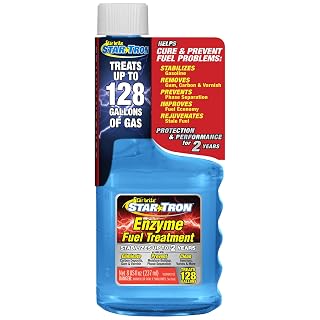
Star brite
Star Tron Enzyme Fuel Treatment
Yamaha
Yamalube Outboard Fuel Stabilizer & Conditioner Plus
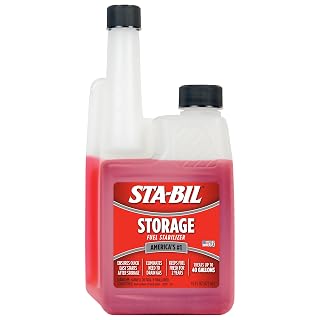
Gold Eagle Co.
STA-BIL Storage Fuel Stabilizer
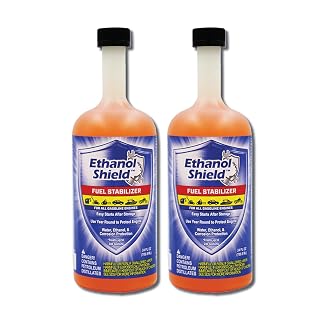
Ethanol Shield
Fuel Stabilizer
As an Amazon Associate I earn from qualifying purchases. Full disclosure

Community
0 postsShare how you use this product
Drop a quick comment or post a full review with photos and a star rating.
Sign in to postNew here? Create a free account.