CarCareTruth Score
Decent, but wear gloves and ventilate.
Opens Amazon in a new tab. No account needed to look.
Saved to your guest loadout. Sign up to also save to your Cabinet (consumables) or Kit (tools you own).
As an Amazon Associate I earn from qualifying purchases. Full disclosure
Prices may varyHealth score is for adult use as intended, per the manufacturer's SDS. It does not model child ingestion, accidental spill cleanup, or off-label use. See the safety panel below for full hazard classification, and /disclaimer for the full editorial scope.
GHS hazard codes are quoted from the manufacturer’s Safety Data Sheet. PPE tiers below translate those codes and the listed ingredient chemistry; they are not CarCareTruth recommendations.
Show details for all categories ▾Hide details ▴
Only when: splash risk · when spraying
Translated from the manufacturer’s Safety Data Sheet, Section 2
SDS §2 classifies as Eye Irritation Cat 2B (H320 · mild irritation) · below the GHS pictogram threshold. No eye protection mandate in SDS §8. Eye protection reasonable when spray application creates eye-level mist or when handling the concentrate at dilution.
U.S. regulatory standard
29 CFR 1910.133(a)(1)
“appropriate eye or face protection when exposed to eye or face hazards from… liquid chemicals…”
ANSI Z87.1 (incorporated via §1910.6)
OSHA standards apply to workplaces. Cited here as the U.S. reference threshold for the underlying hazard class.
CarCareTruth publishes the cited sources verbatim and does not advise what action a user should take. Consult the full SDS before use.
Translated from the manufacturer’s Safety Data Sheet, Section 2
SDS §2 classifies as Skin Irritation Cat 2 (H315). The active is ADBAC (alkyl dimethyl benzyl ammonium chloride), a documented occupational asthmagen and skin irritant. SDS §8 explicitly mandates protective gloves. H315 on a spray applied to surfaces by hand triggers the recommended tier.
U.S. regulatory standard
29 CFR 1910.138(a)
“appropriate hand protection when employees' hands are exposed to hazards such as those from… chemicals which produce an adverse effect on the skin or eyes…”
OSHA standards apply to workplaces. Cited here as the U.S. reference threshold for the underlying hazard class.
CarCareTruth publishes the cited sources verbatim and does not advise what action a user should take. Consult the full SDS before use.
Especially relevant: when spraying
Translated from the ingredient chemistry
No respiratory H-codes in SDS §2 at RTU concentration. However, ADBAC is a documented occupational asthmagen · chronic spray exposure in cleaning workers has been linked to occupational asthma in peer-reviewed literature. The asthmagen flag elevates the lung tier to recommended for spray application: ventilate the cabin during use and avoid direct inhalation of the mist. Sensitized individuals or asthmatics should treat with extra care.
CarCareTruth publishes the cited sources verbatim and does not advise what action a user should take. Consult the full SDS before use.
No PPE specified in published sources for ventilation. Absence does not imply “not needed” — consult the full Safety Data Sheet.
PPE tiers translate the manufacturer’s SDS and U.S. regulatory standards. Not professional safety advice. How we report safety.
Scope of these PPE tiers. The tiers on this page translate the product's Safety Data Sheet where one is published, plus its ingredient chemistry, into a comparable rating. They describe a formulation, not a situation: a tier is not a safety determination for any specific user, task, quantity, or environment. The manufacturer's label and use instructions govern how the product is handled. Where the product is used at work, the employer's PPE program and hazard assessment under 29 CFR 1910.132 decide what protection is selected, not this page.
No warranties. CarCareTruth makes no warranties, express or implied, and expressly disclaims the implied warranties of merchantability and fitness for a particular purpose.
This product ranks #4 of 12 in Odor Eliminator.Three above it ↓
Last reviewed May 30, 2026
TL;DR OdoBan uses a real EPA-registered antimicrobial to kill odor-producing bacteria · not fragrance masking · and it's broadly trusted by owners as a genuine favorite for pet and biological odors. The active ingredient is a documented occupational asthmagen, so asthmatic users should ventilate during application and wear gloves.
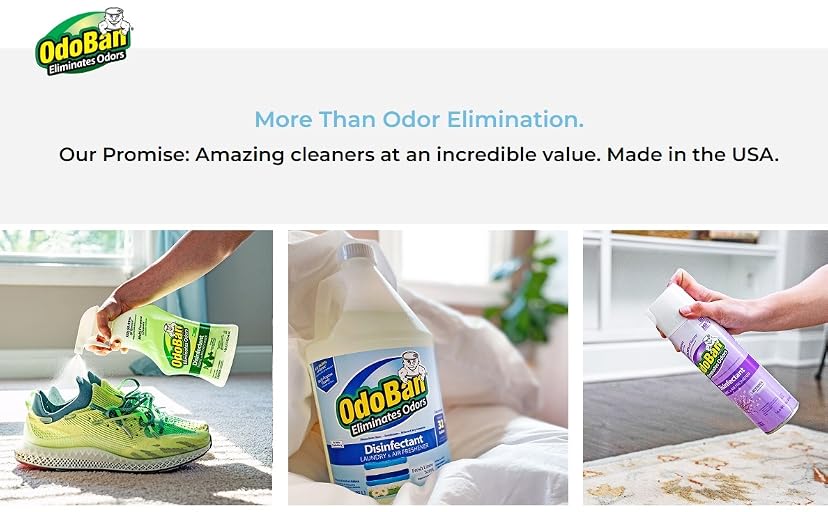
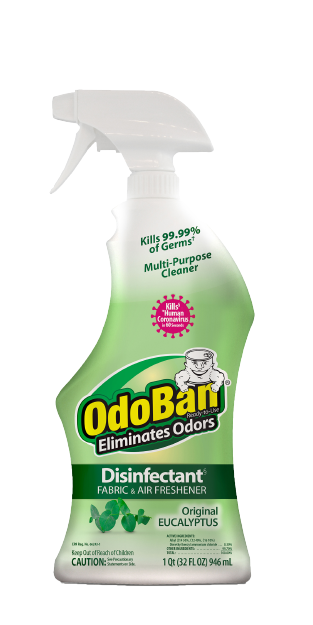
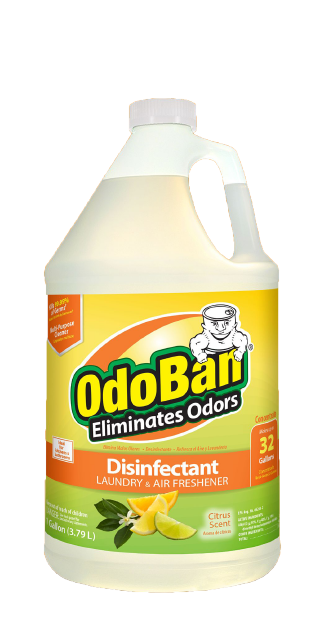
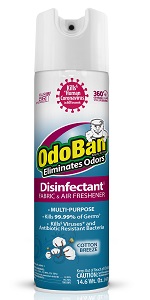
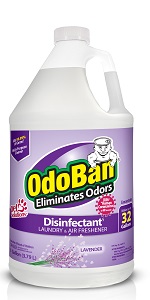
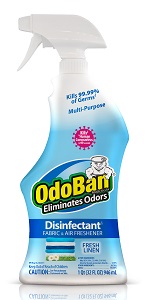
A 32 oz Ready-to-Use pump spray paired with a 1 gallon concentrate refill. The active ingredient kills the bacteria producing the odor at the source · it's an EPA-registered antimicrobial, not a fragrance cover. Community owner reviews confirm consistent effectiveness on biological odors: pet urine, gym bag smell, food spoilage, and mildew. Apply by spraying 6-8 inches from the surface; no wipe-off required on fabrics. For non-biological odors (cigarette smoke compounds embedded in headliner fabric), the antimicrobial mechanism is less applicable. The 1 gallon concentrate is for refilling at the standard RTU dilution · do not spray it directly without diluting.
Owners treating biological odor sources in cars · pet accidents, gym bags, food spills, mildew · will find this the most effective product in the category at this price, with a real mechanism rather than fragrance. The kit format (RTU + concentrate) is economical for ongoing use. Skip it if you have asthma or sensitivity to quaternary ammonium products: the active ingredient is a documented occupational asthmagen and spray exposure in a closed cabin is relevant to sensitized users. Skip it for non-biological odor sources (off-gassing, embedded smoke compounds in carpet backing) · an enzymatic cleaner is the better tool there.
The 2021 US GHS SDS classifies the RTU spray as WARNING with H315 (skin irritation Cat 2) and H320 (mild eye irritation Cat 2B). SDS §8 mandates protective gloves; ventilate the cabin during application. The active ADBAC is a documented occupational asthmagen based on peer-reviewed studies of chronic cleaning-worker exposure · consumer RTU use is a lower-exposure scenario, but the asthmagen flag is ingredient-chemistry driven and stands. Formulated at ~10 g/L VOC (very low), non-flammable (flash point above 200°F), no Prop 65, no PFAS. The 1-gallon concentrate in the kit is DANGER-classified at full strength · dilute per label.
Both · and the two are connected. OdoBan's mechanism is alkyl dimethyl benzyl ammonium chloride (ADBAC) at 0.3% in the RTU spray, an EPA-registered antimicrobial that kills the bacteria producing the odor at the source. By reducing bacterial counts on the treated surface, the underlying biological odor (pet urine, smoke, food spoilage, gym sweat) is genuinely reduced rather than masked. Community owner reviews consistently confirm long-term effectiveness on biological odors. For non-biological odors (cigarette smoke embedded in fabric, off-gassing from new materials), the antimicrobial mechanism is less applicable and an enzymatic spray or activated charcoal absorber is a better fit.
Yes for normal RTU use, with caveats. The 32 oz Ready-to-Use spray is WARNING-classified with H315 (skin irritation) and H320 (mild eye irritation) · wear gloves during application and ventilate the cabin. The bigger consideration is the ADBAC asthmagen profile: quaternary ammonium compounds are documented occupational asthmagens for chronic-exposure cleaning workers. Consumer use at RTU dilution for occasional cabin treatment is a different exposure pattern, but asthmatic users or those sensitive to fragrances should treat with extra care: ventilate well, wear gloves, avoid direct inhalation, and don't apply daily.
Different mechanisms targeting different problem types. OdoBan kills bacteria (antimicrobial mechanism) · best for active biological odors like pet urine, sweat, or food. Enzymatic eliminators (Biokleen Bac-Out, Nature's Miracle, Rocco & Roxie) digest the organic compound itself · best for embedded odors in fabric and carpet pad where the bacteria have already colonized and broken down the source compound. For a fresh pet accident in a car: spray OdoBan immediately to disinfect. For pet urine that has soaked into carpet padding: an enzymatic cleaner is the right tool.
The 32 oz RTU spray is at 0.3% ADBAC active concentration · the standard antimicrobial use dilution, ready to spray directly. The 1 gallon concentrate (item 11062) is approximately 5% ADBAC · five-times stronger and classified as DANGER under OSHA HCS with H318 (serious eye damage) and H315 (skin irritation). The concentrate is meant to be diluted before use (typically 5 oz per gallon of water for general disinfection, more for heavy odors). DO NOT spray the concentrate directly without dilution; the kit gives you the RTU bottle for ready-to-use spray and the concentrate for refilling.
The 2021 SDS §11 explicitly states the product does not contain known or anticipated carcinogens per NTP and OSHA criteria. Neither the SDS nor the retail packaging carries a California Prop 65 warning. ADBAC is not on the Prop 65 list. California buyers should still verify packaging at point of sale because Prop 65 disclosure can be added without an SDS revision.
Marketing copy from OdoBan, via Amazon. Not editorial.
Weekly pick
One product, one safety verdict, every week. No spam.
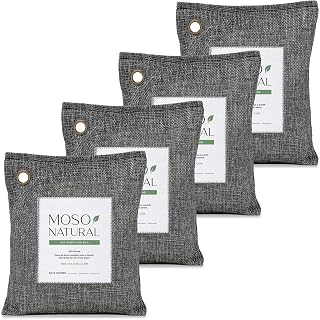
Moso Natural
Air Purifying Bag 200g (Bamboo Charcoal Odor Absorber)
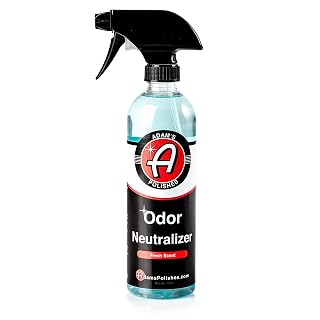
Adam's Polishes
Odor Neutralizer
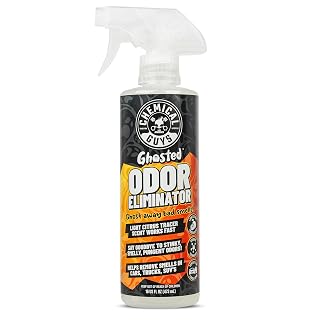
Chemical Guys
Ghosted Complete Interior Vehicle Odor Eliminator
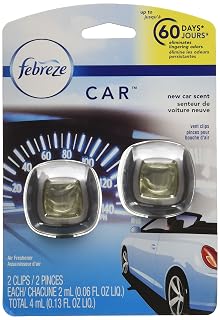
Febreze
Car Vent Clip New Car Scent (2-Pack)
As an Amazon Associate I earn from qualifying purchases. Full disclosure

Community
0 postsShare how you use this product
Drop a quick comment or post a full review with photos and a star rating.
Sign in to postNew here? Create a free account.