CarCareTruth Score
Decent.
Opens Amazon in a new tab. No account needed to look.
Saved to your guest loadout. Sign up to also save to your Cabinet (consumables) or Kit (tools you own).
As an Amazon Associate I earn from qualifying purchases. Full disclosure
Prices may varyHealth score is for adult use as intended, per the manufacturer's SDS. It does not model child ingestion, accidental spill cleanup, or off-label use. See the safety panel below for full hazard classification, and /disclaimer for the full editorial scope.
GHS hazard codes are quoted from the manufacturer’s Safety Data Sheet. PPE tiers below translate those codes and the listed ingredient chemistry; they are not CarCareTruth recommendations.
Show details for all categories ▾Hide details ▴
Translated from the manufacturer’s Safety Data Sheet, Section 2
H319 (serious eye irritation Cat 2) confirmed in SDS §2 at mixture level. Safety glasses are warranted during wipe and spray application of either step.
U.S. regulatory standard
29 CFR 1910.133(a)(1)
“The employer shall ensure that each affected employee uses appropriate eye or face protection when exposed to eye or face hazards from… liquid chemicals…”
ANSI Z87.1 (incorporated via §1910.6)
OSHA standards apply to workplaces. Cited here as the U.S. reference threshold for the underlying hazard class.
CarCareTruth publishes the cited sources verbatim and does not advise what action a user should take. Consult the full SDS before use.
Only when: prolonged use
Translated from the manufacturer’s Safety Data Sheet, Section 8
SDS §8 names hand protection directly: "Wear protective gloves." §2 carries no skin H-code (no H315, no H317), so this is a cautious §8 row rather than a mixture-level hazard, which is why it is situational and not recommended. Gloves are warranted for the repeated hand contact the two-step sand-and-wipe process involves.
CarCareTruth publishes the cited sources verbatim and does not advise what action a user should take. Consult the full SDS before use.
Only when: in enclosed space
Beyond SDS: translated from the ingredient chemistry
H332 (Acute Tox. Cat 4, harmful if inhaled) is confirmed at the SDS §2 mixture level, with H335/H331/H330/H334 all absent. Per the headlight-restoration rubric's explicit H332 rule, this combination always yields situational, never omit: a confirmed Acute Tox Cat 4 inhalation code is a real hazard, not SDS §8 boilerplate, so it cannot be filtered to nothing even though it falls short of the recommended/required bar. Set situational with an enclosed_space trigger to flag added care when the Step 2 spray is used in a closed garage with poor airflow.
U.S. regulatory standard
29 CFR 1910.134(a); 1910.1200(f)
“The employer shall assess the workplace to determine if hazards are present, or are likely to be present, which necessitate the use of personal protective equipment.”
OSHA standards apply to workplaces. Cited here as the U.S. reference threshold for the underlying hazard class.
CarCareTruth publishes the cited sources verbatim and does not advise what action a user should take. Consult the full SDS before use.
No PPE specified in published sources for ventilation. Absence does not imply “not needed” — consult the full Safety Data Sheet.
PPE tiers translate the manufacturer’s SDS and U.S. regulatory standards. Not professional safety advice. How we report safety.
Scope of these PPE tiers. The tiers on this page translate the product's Safety Data Sheet where one is published, plus its ingredient chemistry, into a comparable rating. They describe a formulation, not a situation: a tier is not a safety determination for any specific user, task, quantity, or environment. The manufacturer's label and use instructions govern how the product is handled. Where the product is used at work, the employer's PPE program and hazard assessment under 29 CFR 1910.132 decide what protection is selected, not this page.
No warranties. CarCareTruth makes no warranties, express or implied, and expressly disclaims the implied warranties of merchantability and fitness for a particular purpose.
This product ranks #7 of 11 in Headlight Restoration.Three above it ↓
Last reviewed July 7, 2026
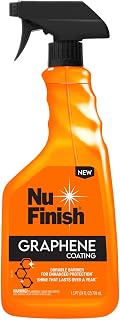
TL;DR Clears mild-to-moderate surface oxidation and yellowing in a hand-applied wipe-and-spray process, no tools needed, and leaves behind a self-leveling sealant layer (Nu Finish's own "ceramic" branding, not an SDS-confirmed chemistry) the manufacturer claims holds up to 18 months. As a brand-new kit with no independent long-term track record yet, treat the durability claim as unproven rather than confirmed.
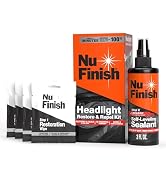
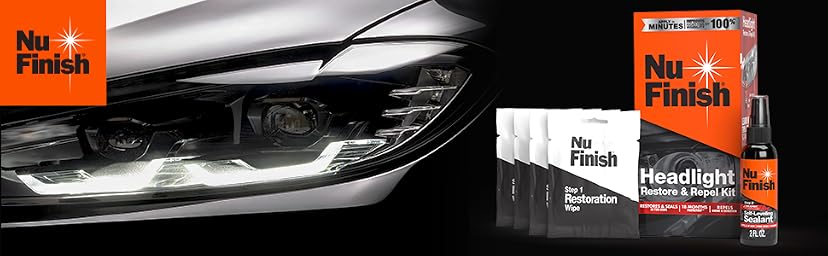
Four pre-moistened restoration wipes cut through surface haze and yellowing on oxidized polycarbonate lenses, then a self-leveling sealant spray goes on in a fine mist and cures over about three hours without wiping or buffing, only a few minutes of hands-on time per headlight. The safety data sheet does not disclose the underlying chemistry behind either step, so the formula itself is something of a black box.
Best for owners with mildly to moderately yellowed lenses who want a fast, hand-applicable, no-tools solution from a familiar mass-market car-care brand. Skip it if lenses are deeply pitted or severely hazed; a restoration kit with sanding stages will remove more material. Also skip it if you want multi-year UV protection backed by independent long-term data; a dedicated coating with an established track record is the safer bet for now.
The sealant spray carries a WARNING signal word from a serious eye irritation classification and a harmful-if-inhaled classification, so safety glasses and working in a ventilated space are sensible precautions during application. A combustible-liquid classification means keeping the product away from open flame while it cures, a handling note rather than a health concern. The safety data sheet does not disclose the ingredient chemistry behind either step, and it explicitly states the product is not classified as hazardous to aquatic life.
No. The kit is hand-applicable in two steps: wipe the lens with one of the four Step 1 restoration wipes to remove yellowing and haze, then apply the Step 2 self-leveling sealant spray and let it cure for about three hours without wiping or buffing. No sandpaper or drill attachment is included or required.
The safety data sheet classifies the product with a WARNING signal word driven by a serious eye irritation classification and a combustible-liquid classification. The eye irritation classification is a genuine chemistry finding, not boilerplate, so safety glasses are a sensible precaution during application. The combustible classification is a physical hazard about flammability, not a health hazard, and mainly means keeping the product away from open flame while it cures.
No. The safety data sheet contains no Proposition 65 statement, and none of the product's box panels carry Prop 65 warning language. The manufacturer's own listing data also shows no Prop 65 flag for this kit.
The manufacturer calls the Step 2 spray a ceramic sealant and claims up to 18 months of protection when used as directed. Both the naming and the duration are label claims, not independently confirmed measurements; the SDS discloses no ingredient chemistry to verify the mechanism. Because this kit only recently launched, no community long-term follow-up data exists yet, so the quality score treats the durability claim as unproven.
It is built for mild-to-moderate surface oxidation and yellowing, not severe pitting or deep etching. Lenses in that worse condition typically need a restoration kit with sanding stages to remove enough material to restore clarity.
Marketing copy from Nu Finish, via Amazon. Not editorial.
Weekly pick
One product, one safety verdict, every week. No spam.

Turtle Wax
2-in-1 Headlight Cleaner and Sealant
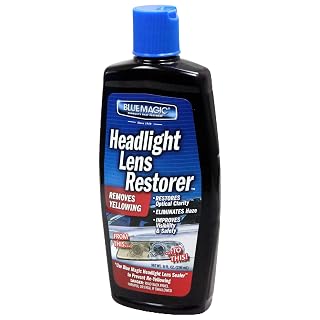
Blue Magic
Headlight Lens Restorer
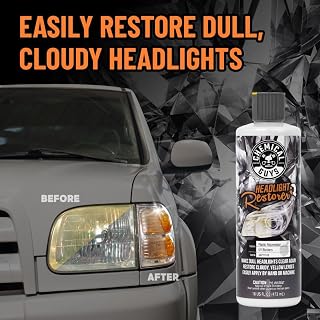
Chemical Guys
Headlight Restore and Protect
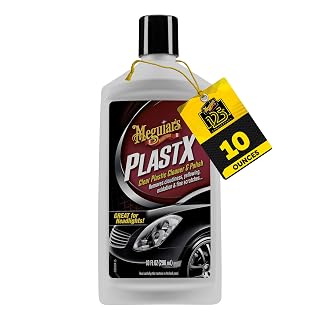
Meguiar's
PlastX Clear Plastic Cleaner & Polish
As an Amazon Associate I earn from qualifying purchases. Full disclosure

Community
0 postsShare how you use this product
Drop a quick comment or post a full review with photos and a star rating.
Sign in to postNew here? Create a free account.