CarCareTruth Score
Recommended.
Opens Amazon in a new tab. No account needed to look.
Saved to your guest loadout. Sign up to also save to your Cabinet (consumables) or Kit (tools you own).
As an Amazon Associate I earn from qualifying purchases. Full disclosure
Prices may varyHealth score is for adult use as intended, per the manufacturer's SDS. It does not model child ingestion, accidental spill cleanup, or off-label use. See the safety panel below for full hazard classification, and /disclaimer for the full editorial scope.
GHS hazard codes are quoted from the manufacturer’s Safety Data Sheet. PPE tiers below translate those codes and the listed ingredient chemistry; they are not CarCareTruth recommendations.
Show details for all categories ▾Hide details ▴
Translated from the manufacturer’s Safety Data Sheet, Section 2
SDS Section 8 names indirect vented goggles (EN 166) as the recommended eye protection. Section 2 classifies the product as Eye Irrit. 2, H319 (causes serious eye irritation) under the WARNING signal word, and Section 11 reports real eye-contact symptoms (redness, swelling, tearing, cloudy cornea). That classification is at full concentrate strength; the realistic exposure is splash while pouring or measuring the undiluted product, not the diluted bucket-wash solution.
U.S. regulatory standard
29 CFR 1910.133(a)(1)
“The employer shall ensure that each affected employee uses appropriate eye or face protection when exposed to eye or face hazards from… liquid chemicals…”
ANSI Z87.1 (incorporated via §1910.6)
OSHA standards apply to workplaces. Cited here as the U.S. reference threshold for the underlying hazard class.
CarCareTruth publishes the cited sources verbatim and does not advise what action a user should take. Consult the full SDS before use.
Translated from the manufacturer’s Safety Data Sheet, Section 2
SDS Section 8 names chemical-resistant gloves (polymer laminate, tested to EN 374) as the recommended hand protection. Section 2 classifies the product as Skin Irrit. 2, H315 (causes skin irritation) under the WARNING signal word, and Section 11 reports real skin-contact symptoms (redness, itching, dryness, cracking). Same concentrate-versus-dilution basis as eyes: the classification is for the product as packaged, and undiluted handling is the realistic exposure.
U.S. regulatory standard
29 CFR 1910.138(a)
“appropriate hand protection when employees' hands are exposed to hazards such as those from… chemicals which produce an adverse effect on the skin or eyes…”
OSHA standards apply to workplaces. Cited here as the U.S. reference threshold for the underlying hazard class.
CarCareTruth publishes the cited sources verbatim and does not advise what action a user should take. Consult the full SDS before use.
Only when: handling concentrate · when spraying
Translated from the manufacturer’s Safety Data Sheet, Section 8
SDS Section 8 frames respiratory protection as dependent on an exposure assessment, naming an organic-vapor/particulate air-purifying respirator only as a contingency ('if a respirator is needed'), not as a normal-use requirement. Section 2 carries no inhalation hazard code (no H331, no H335) for the product. The situational case is handling concentrate in a poorly ventilated space, or the fine mist produced when this shampoo is run through a foam cannon rather than a bucket wash.
CarCareTruth publishes the cited sources verbatim and does not advise what action a user should take. Consult the full SDS before use.
No PPE specified in published sources for ventilation. Absence does not imply “not needed” — consult the full Safety Data Sheet.
PPE tiers translate the manufacturer’s SDS and U.S. regulatory standards. Not professional safety advice. How we report safety.
Scope of these PPE tiers. The tiers on this page translate the product's Safety Data Sheet where one is published, plus its ingredient chemistry, into a comparable rating. They describe a formulation, not a situation: a tier is not a safety determination for any specific user, task, quantity, or environment. The manufacturer's label and use instructions govern how the product is handled. Where the product is used at work, the employer's PPE program and hazard assessment under 29 CFR 1910.132 decide what protection is selected, not this page.
No warranties. CarCareTruth makes no warranties, express or implied, and expressly disclaims the implied warranties of merchantability and fitness for a particular purpose.
This product ranks #6 of 20 in Car Shampoo.Three above it ↓
Last reviewed May 26, 2026
TL;DR Meguiar's Gold Class cleans road film reliably and lathers well at 1 oz per gallon · owners consistently confirm it does not strip wax or sealants at normal concentration. Note the California Prop 65 warning.
Gold Class is a shampoo-and-conditioner formula that lifts road film and light brake dust, then leaves a light conditioner to maintain surface shine. Use 1-2 oz per gallon in a two-bucket wash. Long-term owner feedback is positive: solid cleaning on weekly-driven cars, wax-safe and sealant-safe at normal dilution, with foam volume and slip rated above the category average.
Best for weekly-wash routines on coated or waxed vehicles where a foam-rich, surface-safe shampoo is the priority. The 1-gallon format gives strong value per wash. Skip it if you need a strip wash before reapplying protection · use a dedicated strip shampoo instead. Buyers in California should note the Prop 65 warning.
The SDS carries a WARNING signal word with H315 (skin irritation) and H319 (eye irritation) at concentrate strength; both codes drop below GHS thresholds at the recommended 1:128 bucket-wash dilution. The product carries a California Prop 65 warning. The SDS classifies the formula as H412 (Chronic Aquatic Toxicity Category 3) · runoff from driveway washing reaches storm drains untreated. SDS Section 12 provides no biodegradability data for the product mixture.
Meguiar's markets Gold Class as safe for clear coats and describes it as a shampoo-and-conditioner formula that maintains surface protection rather than stripping it. Owner long-term feedback is consistently positive on this point, with no pattern of wax or coating stripping at normal wash dilution. For maintenance washes on ceramic-coated vehicles, the working-dilution chemistry supports safe use. If you need a strip wash before reapplying protection, use a dedicated strip shampoo instead.
Meguiar's labels the product at 1-2 oz per gallon (1:64 to 1:128) for a standard bucket wash. Most detailers use 1 oz per gallon (1:128) as their baseline. For foam cannon use, the ratio is approximately 1:5 (product:water), though Gold Class is not specifically formulated as a snow foam · a dedicated snow-foam product will produce denser foam in a foam cannon.
Yes. Gold Class carries a California Prop 65 warning, confirmed on the product listing (ASIN B0009IQXFO). The SDS on file is a UK/EU CLP document that does not identify the specific listed substance. The warning is a label-level fact from the current the product listing and is reflected in this product's health score.
Both are mainstream enthusiast shampoos in the same price tier. Gold Class is a shampoo-and-conditioner hybrid that the brand markets as wax-safe and coating-safe; Mr. Pink is a straight cleaning shampoo with no conditioner component. Both products carry a California Prop 65 warning · Gold Class confirmed on ASIN B0009IQXFO, Mr. Pink confirmed on ASIN B00AFBXQNC. Gold Class carries H412 aquatic toxicity in its SDS, contributing to a slightly lower environment score; Mr. Pink's SDS has no aquatic H-codes. Neither holds EPA Safer Choice certification.
The SDS classifies the product as H412 (Chronic Aquatic Toxicity Category 3). This reflects the linear alkylbenzene sulfonate (LAS) surfactant fraction. The concern is greatest for direct discharge to storm drains or waterways rather than treated municipal wastewater. If possible, wash on a permeable surface that directs runoff to a treatment system rather than a direct stormwater inlet.
The 16 oz listing title includes 'Biodegradable Formula,' but neither the 1-gallon nor 64-oz listings repeat this claim, and SDS Section 12 does not confirm biodegradability for the product mixture. No biodegradability credit is applied · SDS Section 12 reports no data for the product mixture. The primary surfactant (LAS) is commonly described as biodegradable in the scientific literature, but a marketing label alone is not sufficient basis for the scoring credit.
Marketing copy from Meguiar's, via Amazon. Not editorial.
Guide
Car Wash Methods, Explained: Every Way to Wash a Car
Every wash method is one answer to the same question: how do you lift grit off the paint without dragging it across the clear coat. Match the method to your dirt level and water access, and when in doubt, pre-rinse.
Guide
How Often to Actually Wash Your Car (by Climate)
Every two weeks is wrong for most people. Salt-belt cars need a full wash plus undercarriage rinse every 7 to 14 days through the salt season. Coastal cars run 2 to 3 weeks year-round. Desert cars stretch to 3 to 4 weeks but need waterless or rinseless methods in between.
Guide
Detailing PPE: When You Actually Need Gloves or a Respirator
Most weekend car care needs zero PPE. A small list of chemistries (fluoride wheel acids, isocyanate spray, strong solvent aerosols) genuinely does need gloves, goggles, or a respirator. This guide names the H-codes that trigger each, and points to safer picks by category.
Guide
Two-Bucket vs Rinseless vs Waterless: When Each Makes Sense
Two-bucket is mandatory for heavy contamination like salt, mud, and post-neglect grime. Rinseless wins for apartments, winter, and weekly maintenance on protected paint. Waterless is dust-only on garage queens.
Weekly pick
One product, one safety verdict, every week. No spam.








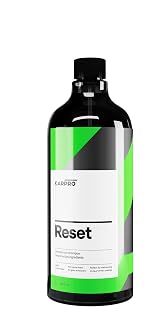
CarPro
Reset Intensive Car Wash Shampoo
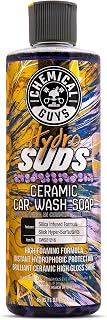
Chemical Guys
HydroSuds Ceramic Shine High Foaming Car Wash Soap
SONAX
Gloss Shampoo Concentrate
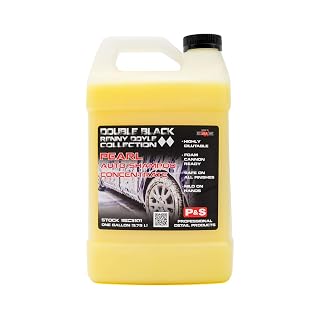
P&S Detail Products
Pearl Auto Shampoo
As an Amazon Associate I earn from qualifying purchases. Full disclosure


Community
0 postsShare how you use this product
Drop a quick comment or post a full review with photos and a star rating.
Sign in to postNew here? Create a free account.