CarCareTruth Score
Mediocre, but wear gloves and ventilate.
Opens Amazon in a new tab. No account needed to look.
Saved to your guest loadout. Sign up to also save to your Cabinet (consumables) or Kit (tools you own).
As an Amazon Associate I earn from qualifying purchases. Full disclosure
Prices may varyAbout this product's hazards. This product's Safety Data Sheet uses signal word danger. Read the manufacturer's SDS and follow all safety instructions before use. CarCareTruth ratings translate the manufacturer's safety sheet. They do not replace the SDS or substitute for a hazard assessment specific to your task.
Health score is for adult use as intended, per the manufacturer's SDS. It does not model child ingestion, accidental spill cleanup, or off-label use. See the safety panel below for full hazard classification, and /disclaimer for the full editorial scope.
GHS hazard codes are quoted from the manufacturer’s Safety Data Sheet. PPE tiers below translate those codes and the listed ingredient chemistry; they are not CarCareTruth recommendations.
Show details for all categories ▾Hide details ▴
Only when: splash risk
Translated from the manufacturer’s Safety Data Sheet, Section 2
No H319 or H318 in SDS §2 mixture classification. Slightly alkaline paste (pH 8-9). Eye splash risk exists at wheel-height application angle with an applicator pad; situational protection appropriate for that scenario.
CarCareTruth publishes the cited sources verbatim and does not advise what action a user should take. Consult the full SDS before use.
Only when: prolonged use
Translated from the manufacturer’s Safety Data Sheet, Section 8
No H315, H317, or H314 in SDS §2. Petroleum solvent carrier at 8-19% warrants gloves for repeated or prolonged applicator-pad contact; brief wipe-on contact with non-sensitized skin is low risk per mixture-level SDS §2 classification.
CarCareTruth publishes the cited sources verbatim and does not advise what action a user should take. Consult the full SDS before use.
Only when: prolonged use
Beyond SDS: translated from the ingredient chemistry
H372 (STOT RE Cat 1 in SDS §2) reflects organ damage risk from prolonged or repeated exposure to petroleum solvent vapors. At ambient temperature this paste has vapor pressure <1 mmHg; single-session outdoor application does not reach the chronic exposure threshold. Adequate outdoor or open-garage ventilation eliminates the relevant pathway.
U.S. regulatory standard
29 CFR 1910.134; 1910.138; 1910.1000
“Each employer shall assure that no employee is exposed [in excess of the PEL]…”
OSHA standards apply to workplaces. Cited here as the U.S. reference threshold for the underlying hazard class.
UN GHS hazard statement
H372“Causes damage to organs through prolonged or repeated exposure”
UN GHS Rev. 9 (2021)
CarCareTruth publishes the cited sources verbatim and does not advise what action a user should take. Consult the full SDS before use.
No PPE specified in published sources for ventilation. Absence does not imply “not needed” — consult the full Safety Data Sheet.
PPE tiers translate the manufacturer’s SDS and U.S. regulatory standards. Not professional safety advice. How we report safety.
This product ranks #5 of 5 in Wheel Coating & Sealant.Three above it ↓
Last reviewed June 7, 2026
TL;DR No community heat-cycling data found; better suited to street use than track. Brake-dust benefit fades within 2-4 weeks on a daily driver, not months. DANGER signal word from H372 (petroleum solvent chronic organ-toxicity); apply outdoors or with the garage door open and wear gloves for extended use.
This paste polishes wheels to a gloss and deposits a short-lived protective film. Despite the "SiO2 Ceramic" label, the SDS discloses only petroleum hydrocarbon ingredients; no silica or ceramic precursor chemistry is present. Wipe on with a foam applicator, buff off residue, and cure. The fluid paste consistency spreads across spoke geometries easily, and a 12 oz jar goes a long way. Community owners confirm cleaning is genuinely easier after application; brake-dust prevention runs 2-4 weeks, not the multi-month window a dedicated ceramic wheel coating provides.
Best for daily drivers who want faster weekly wheel cleaning and are comfortable with monthly reapplication. The paste is safe on all factory wheel finishes including chrome. Skip it for long-cycle protection or track use; the 2-4 week durability and absence of heat-cycling evidence put this firmly in wax-tier territory, not ceramic.
The DANGER signal word is driven by H372 (chronic organ toxicity from prolonged or repeated petroleum solvent inhalation); single-session outdoor use does not trigger this pathway. Flash point 140°F: keep away from flames. H304 at the ingredient level means do not induce vomiting if swallowed; seek medical attention. The cured coating stays on the wheel rather than washing into drains, moderating the aquatic footprint; solvent naphtha carries high ingredient-level aquatic toxicity per SDS data.
Community data places the active brake-dust protection window at roughly 2-4 weeks on a daily driver, with some owners seeing dust return to pre-coating levels in as little as one week. Cleaning ease tends to persist a bit longer. The manufacturer does not publish a specific durability claim on the listing. Plan for a monthly reapplication if consistent brake-dust reduction is the goal.
The marketing name says 'SiO2 Ceramic Series,' but the SDS (Section 3) discloses only petroleum hydrocarbon ingredients with no silica, siloxane, or alkoxysilane chemistry present. It performs as a petroleum-based paste sealant with polish abrasives, not as a chemically bonded ceramic coating. This is reflected in the short community-confirmed durability and the absence of heat-cycling performance data.
The SDS carries a DANGER signal word driven by H372 (STOT RE Cat 1), which is a chronic hazard from prolonged or repeated inhalation of petroleum solvent vapors, not from single-session use. Apply outdoors or in a well-ventilated garage. The paste has a flash point of 140°F; keep it away from open flames. If ingested, do not induce vomiting; seek medical attention (H304 aspiration hazard at the ingredient level).
The manufacturer states it is safe for all factory wheel finishes, polished aluminum, and chrome exhaust tips. No community reports of finish damage have been documented. Clear-coated, gloss powder-coated, polished, and chrome finishes are all claimed compatible.
Clean and dry the wheels first; an IPA wipe is recommended for best adhesion. Scoop a small amount of paste onto a foam or microfiber applicator pad and work it across the wheel surface. The fluid paste consistency spreads easily. Buff off residue with a clean microfiber towel. A 12 oz jar goes a long way and is enough for many wheel sets.
Marketing copy from McKee's 37, via Amazon. Not editorial.
Weekly pick
One product, one safety verdict, every week. No spam.


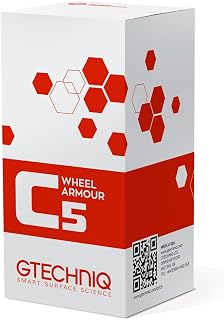
Gtechniq
C5 Wheel Armour
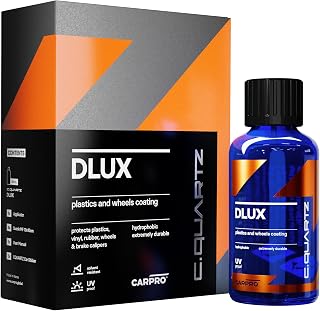
CarPro
DLUX Wheel and Trim Coating 30mL
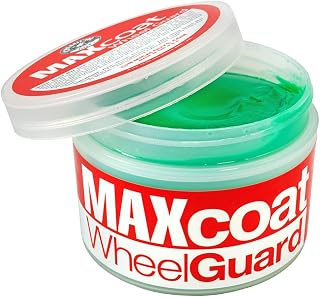
Chemical Guys
Wheel Guard Max Coat Rim & Wheel Sealant
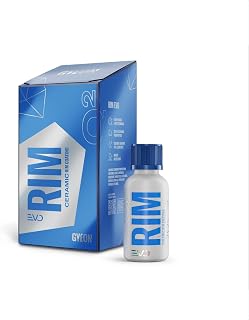
Gyeon
Q2 Rim EVO
As an Amazon Associate I earn from qualifying purchases. Full disclosure

Community
0 postsShare how you use this product
Drop a quick comment or post a full review with photos and a star rating.
Sign in to postNew here? Create a free account.