CarCareTruth Score
Mediocre, but it's tough on the environment.
Opens Amazon in a new tab. No account needed to look.
Saved to your guest loadout. Sign up to also save to your Cabinet (consumables) or Kit (tools you own).
As an Amazon Associate I earn from qualifying purchases. Full disclosure
Prices may varyThe manufacturer's Safety Data Sheet classifies this product with one or more GHS Category 1 health hazards — the most severe tier. The hazard statements in quotes below are the verbatim GHS language from the SDS, as required by OSHA's Hazard Communication Standard. The line under each statement translates the GHS classification into plain language.
GHS Category 2 acute oral toxicity — classified as toxic if swallowed.
GHS Category 1 skin corrosion — classified as causing irreversible skin damage on contact.
GHS Category 1 eye damage — classified as causing irreversible eye damage on contact.
GHS Category 2 acute inhalation toxicity — classified as toxic if inhaled.
GHS Category 1 carcinogenicity — classified as suspected of causing cancer with repeated or prolonged exposure.
If swallowed, inhaled, or splashed in eyes:
Call Poison Control immediately at 1-800-222-1222 (US, 24/7, free) and have the product container with you. Poison Control's standing guidance is to not induce vomiting after chemical exposure; they will direct first-aid steps based on the specific product.
About this product's hazards. This product's Safety Data Sheet uses signal word danger. Read the manufacturer's SDS and follow all safety instructions before use. CarCareTruth ratings translate the manufacturer's safety sheet. They do not replace the SDS or substitute for a hazard assessment specific to your task.
Health score is for adult use as intended, per the manufacturer's SDS. It does not model child ingestion, accidental spill cleanup, or off-label use. See the safety panel below for full hazard classification, and /disclaimer for the full editorial scope.
GHS hazard codes are quoted from the manufacturer’s Safety Data Sheet. PPE tiers below translate those codes and the listed ingredient chemistry; they are not CarCareTruth recommendations.
Show details for all categories ▾Hide details ▴
Translated from the manufacturer’s Safety Data Sheet, Section 2
H318 (serious eye damage) and H314 (Skin Corr. 1A, which also carries eye-damage risk) from SDS §2. At wheel height with pump/trigger application, face-level splash and mist are a direct exposure pathway for a fluoride/thioglycolate acid corrosive. Eye protection is required by the SDS chemistry, not optional.
U.S. regulatory standard
29 CFR 1910.133(a)(1); 1910.151(c)
“The employer shall ensure that each affected employee uses appropriate eye or face protection when exposed to eye or face hazards from… liquid chemicals, acids or caustic liquids…”
ANSI Z87.1 (chemical splash protection — incorporated via §1910.6)
OSHA standards apply to workplaces. Cited here as the U.S. reference threshold for the underlying hazard class.
CarCareTruth publishes the cited sources verbatim and does not advise what action a user should take. Consult the full SDS before use.
Translated from the manufacturer’s Safety Data Sheet, Section 2
H314 (Skin Corr. 1A, causes severe skin burns and eye damage) from SDS §2. The active fluoride agent, ammonium bifluoride, reacts with moisture on skin to generate hydrofluoric acid, a chemistry class known for delayed, initially painless burns. Acid-resistant gloves are required by the SDS chemistry.
U.S. regulatory standard
29 CFR 1910.132(d); 1910.138(a)
“appropriate hand protection when employees' hands are exposed to hazards such as those from skin absorption of harmful substances.”
OSHA standards apply to workplaces. Cited here as the U.S. reference threshold for the underlying hazard class.
CarCareTruth publishes the cited sources verbatim and does not advise what action a user should take. Consult the full SDS before use.
Especially relevant: in enclosed space
Translated from the manufacturer’s Safety Data Sheet, Section 2
SDS §2 classifies Acute Toxicity Category 3 (Inhalation), hazard statement 'Toxic if inhaled' (H331), at the mixture level, not a minor-component-only classification. Combined with wheel-height pump-spray application that puts the nozzle at face level, this is a confirmed, mixture-level inhalation hazard pathway. Lungs required by the SDS chemistry.
U.S. regulatory standard
29 CFR 1910.134(a)(1)–(2)
“When effective engineering controls are not feasible… appropriate respirators shall be used.”
OSHA standards apply to workplaces. Cited here as the U.S. reference threshold for the underlying hazard class.
CarCareTruth publishes the cited sources verbatim and does not advise what action a user should take. Consult the full SDS before use.
No PPE specified in published sources for ventilation. Absence does not imply “not needed” — consult the full Safety Data Sheet.
PPE tiers translate the manufacturer’s SDS and U.S. regulatory standards. Not professional safety advice. How we report safety.
This product ranks #20 of 20 in Wheel Cleaner.Three above it ↓
Last reviewed July 31, 2026
TL;DR DANGER signal word: this wheel cleaner is corrosive and can cause permanent skin and eye injury, so gloves and goggles are required by the SDS chemistry. It clears heavy brake dust, rust, and hard-water spots fast, but the label excludes raw aluminum, bare metal, matte, and alloy wheels.
Spray it on cool, dry wheels, dwell 15 to 20 seconds, then rinse before it can dry on the surface. That short window is the tradeoff for the strip: it clears heavy brake dust, rust, and hard-water deposits in one pass rather than the two-step process milder cleaners need. The label also warns against hot wheels or letting product sit past dwell time. One independent review confirms it works fast and aggressively; community verification is thinner here than for more established cleaners.
This fits owners with heavy brake dust, rust, or mineral buildup on chrome, clear-coat, or factory paint who will follow a short dwell window. Skip it if your wheels are raw aluminum, bare metal, matte, or aluminum-alloy; the manufacturer excludes those surfaces, and a pH-neutral iron-reactive cleaner is the safer starting point.
The SDS classifies this DANGER, with H314 (skin corrosion) and H318 (serious eye damage) making gloves and goggles required, and H331 (toxic if inhaled) making ventilation matter indoors. No Proposition 65 warning applies: Amazon posts none, the SDS's own Section 15 states none, and a cross-check of the disclosed ingredients against the official list agrees. It's aquatic-toxic, non-biodegradable, and drain-destined, with a moderate VOC estimate.
No. The manufacturer's own product page excludes raw aluminum, bare metal, and matte or aluminum-alloy finishes from this cleaner. It is an acid-based formula (SDS pH 3 to 4), and unprotected metal surfaces are the ones most likely to be etched or discolored at that strength. Reserve it for chrome, clear-coated, or factory-painted wheels, and test an inconspicuous spot first if you're unsure of your finish.
The SDS classifies this product DANGER, with H314 (skin corrosion) and H318 (serious eye damage), so acid-resistant gloves and splash-proof goggles are required by the chemistry. It also carries H331 (toxic if inhaled) at the mixture level, so use it outdoors or with the garage door open rather than in a closed space.
The manufacturer's directions call for a short 15 to 20 second dwell on cool, dry wheels, followed immediately by a thorough rinse or pressure-wash. Do not let it sit longer than that or let it dry on the wheel; the label warns against both, since an acid formula left too long raises the risk of surface damage.
No Proposition 65 warning applies here. Amazon's listing carries none, the manufacturer's SDS Section 15 states the product contains no listed substances, and an ingredient-by-ingredient cross-check against the official OEHHA list turned up no match. That has no bearing on the product's other hazards: it still carries a DANGER signal word from real corrosion and inhalation classifications, so the required PPE still applies.
A pH-neutral iron-reactive cleaner is gentler and works through a color-change reaction rather than acid action, making it the safer weekly-maintenance choice for coated or polished wheels. This product trades that safety margin for more aggressive one-pass stripping power on heavy brake dust, rust, and hard-water buildup, which is why it fits tougher contamination rather than routine washes.
Marketing copy from MAD Detailing, via Amazon. Not editorial.
Weekly pick
One product, one safety verdict, every week. No spam.
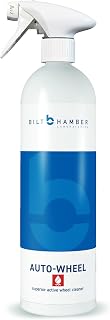
Bilt Hamber
Auto-Wheel Active Wheel Cleaner
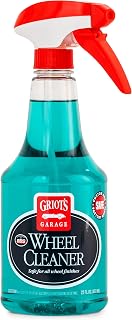
Griot's Garage
Wheel Cleaner
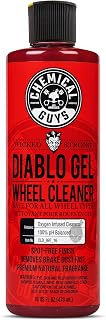
Chemical Guys
Diablo Gel Wheel & Rim Cleaner
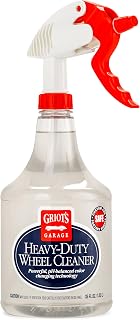
Griot's Garage
Heavy-Duty Wheel Cleaner
As an Amazon Associate I earn from qualifying purchases. Full disclosure

Community
0 postsShare how you use this product
Drop a quick comment or post a full review with photos and a star rating.
Sign in to postNew here? Create a free account.