CarCareTruth Score
Decent, but wear gloves and ventilate.
Opens Amazon in a new tab. No account needed to look.
Saved to your guest loadout. Sign up to also save to your Cabinet (consumables) or Kit (tools you own).
As an Amazon Associate I earn from qualifying purchases. Full disclosure
Prices may varyHealth score is for adult use as intended, per the manufacturer's SDS. It does not model child ingestion, accidental spill cleanup, or off-label use. See the safety panel below for full hazard classification, and /disclaimer for the full editorial scope.
GHS hazard codes are quoted from the manufacturer’s Safety Data Sheet. PPE tiers below translate those codes and the listed ingredient chemistry; they are not CarCareTruth recommendations.
Show details for all categories ▾Hide details ▴
Only when: when spraying · in enclosed space
Translated from the manufacturer’s Safety Data Sheet, Section 2
SDS §2 carries H319 (Eye Irritation Cat 2A) · spray mist in a confined car cabin at face height is the chemistry-based trigger for eye irritation risk.
U.S. regulatory standard
29 CFR 1910.133(a)(1)
“The employer shall ensure that each affected employee uses appropriate eye or face protection when exposed to eye or face hazards from… liquid chemicals…”
ANSI Z87.1 (incorporated via §1910.6)
OSHA standards apply to workplaces. Cited here as the U.S. reference threshold for the underlying hazard class.
CarCareTruth publishes the cited sources verbatim and does not advise what action a user should take. Consult the full SDS before use.
Translated from the manufacturer’s Safety Data Sheet, Section 2
SDS §2 carries H317 (Skin Sensitizer Cat 1) driven by d-limonene. Skin sensitization is a cumulative risk · gloves are the chemistry-based response, not a precautionary preference.
U.S. regulatory standard
29 CFR 1910.138(a); 1910.132(d)
“appropriate hand protection when employees' hands are exposed to hazards such as those from skin absorption of harmful substances.”
OSHA standards apply to workplaces. Cited here as the U.S. reference threshold for the underlying hazard class.
CarCareTruth publishes the cited sources verbatim and does not advise what action a user should take. Consult the full SDS before use.
Beyond SDS: translated from the ingredient chemistry
D-limonene (0.1-<1%) is classified as an asthmagen. No H335 or H336 in SDS §2 · the inhalation concern arises from the asthmagen ingredient classification, not a mixture-level respiratory irritation code. High VOC (~450 g/L estimated from ethanol) reinforces the basis for lung protection in a confined cabin.
CarCareTruth publishes the cited sources verbatim and does not advise what action a user should take. Consult the full SDS before use.
No PPE specified in published sources for ventilation. Absence does not imply “not needed” — consult the full Safety Data Sheet.
PPE tiers translate the manufacturer’s SDS and U.S. regulatory standards. Not professional safety advice. How we report safety.
Scope of these PPE tiers. The tiers on this page translate the product's Safety Data Sheet where one is published, plus its ingredient chemistry, into a comparable rating. They describe a formulation, not a situation: a tier is not a safety determination for any specific user, task, quantity, or environment. The manufacturer's label and use instructions govern how the product is handled. Where the product is used at work, the employer's PPE program and hazard assessment under 29 CFR 1910.132 decide what protection is selected, not this page.
No warranties. CarCareTruth makes no warranties, express or implied, and expressly disclaims the implied warranties of merchantability and fitness for a particular purpose.
This product ranks #6 of 8 in Interior Detailer.Three above it ↓
Last reviewed August 1, 2026
TL;DR Lifts fingerprints and surface grime from dashboard panels and door cards, evaporates to a dry matte finish · no greasy residue, no shiny cast. Community sources confirm clean, haze-free results on textured and smooth interior plastics. WARNING signal word (H319, H317), high estimated VOC (~450 g/L), and d-limonene asthmagen classification combine for a health score of 3.9 · see the Safety section.
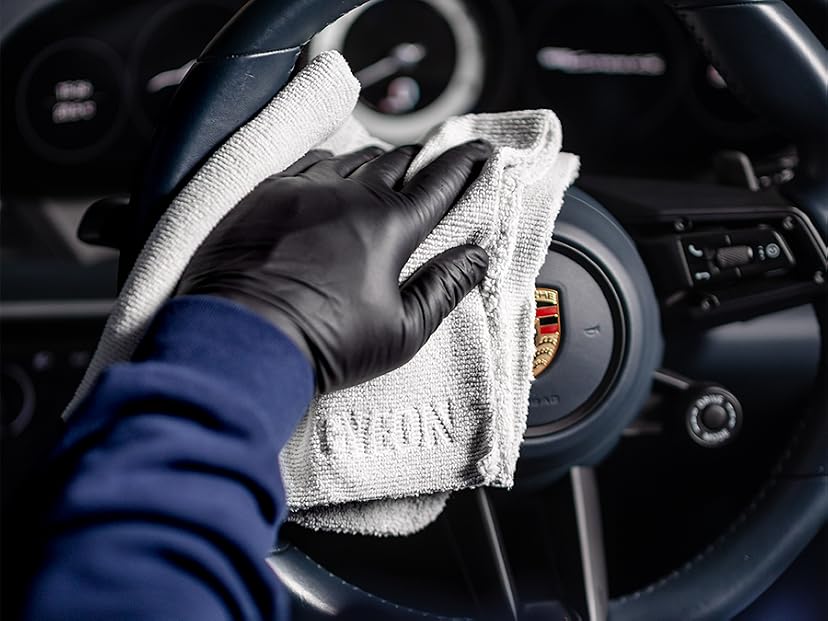
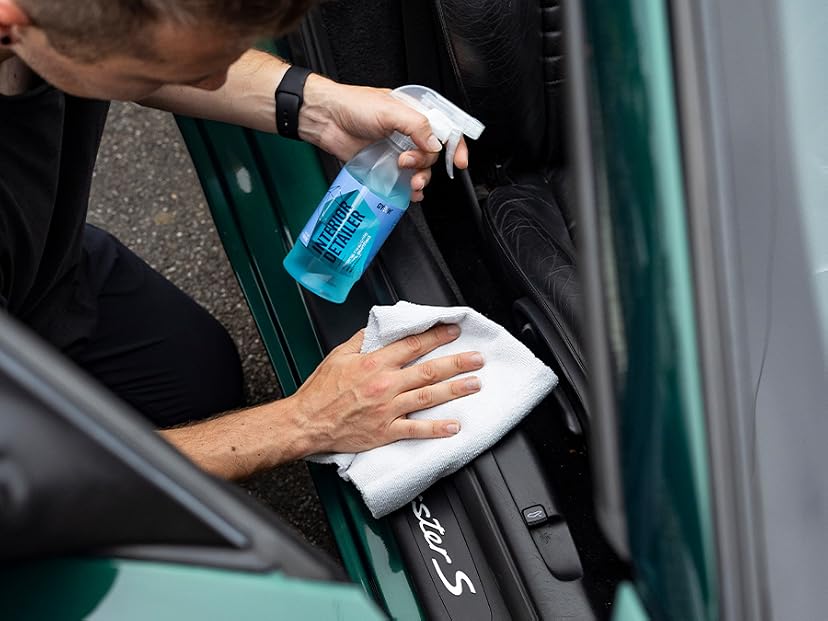
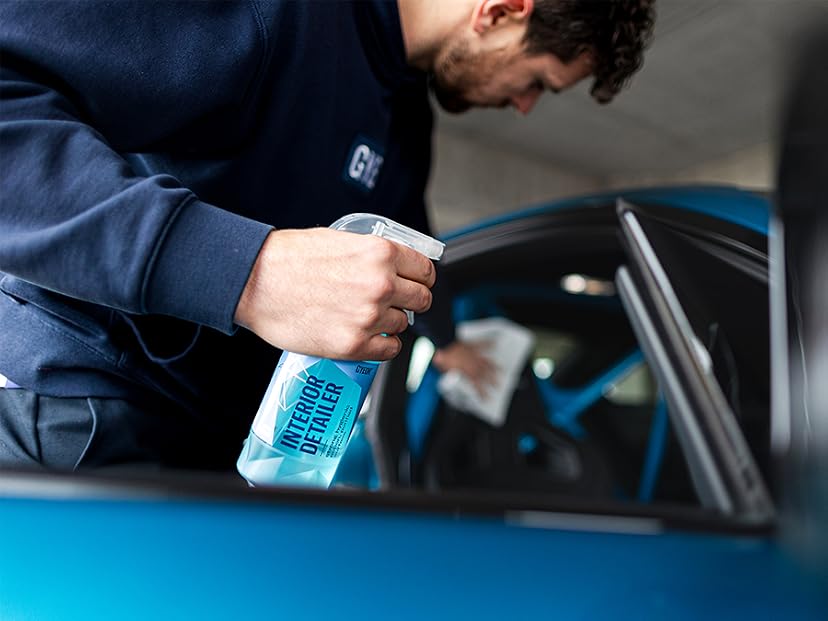
Spray onto a cloth and wipe · the ethanol-dominant formula clears fingerprints, dust deposits, and light product buildup in one pass, then evaporates to a dry matte finish. Forum sources and owner feedback consistently document no greasy film and an OEM factory look. Navigation screens and piano black trim are well-covered use cases. For heavier silicone buildup from prior dressings, a second pass is sometimes needed. The squash-scented formula has a noticeable odor during application.
Good fit for regular fingerprint and dust removal from factory hard plastic trim between full details. Not the right product if a dressed finish or UV protection is the goal · those need an interior detailer after cleaning. Anyone with respiratory sensitivities to asthmagen ingredients (d-limonene) or high-VOC formulas should consider water-based alternatives.
SDS §2 (Rev 3.0, 2024-05-06): WARNING · H226 (Flam. Liq. 3 · physical hazard only), H319 (Eye Irrit. 2A), H317 (Skin Sens. 1 driven by d-limonene). No H335, H336, or H334 at mixture level. Ethanol carrier 45-70% w/w; estimated VOC ~450 g/L; flash point 25°C. D-limonene (0.1-<1%) is classified as an asthmagen at ingredient level · no mixture-level H334. No D4/D5 silicones, no PFAS, no Prop 65 ingredients. SDS §12 has no ecotoxicity data; d-limonene ingredient-level aquatic toxicity is the primary environmental consideration.
No. The ethanol-dominant formula evaporates quickly to a dry matte finish. Community feedback confirms no greasy residue or shiny cast on dashboard plastics and navigation screens · it restores the OEM factory look, not a dressed or glossy one. Owners consistently report a clean, haze-free result after a single wipe.
No confirmed community reports of staining, softening, or texture change on soft-touch rubberized panels. The manufacturer markets this as safe on leather, plastic, textiles, and vinyl. The alcohol carrier is a theoretical risk for soft-touch coatings over time, but no documented failures appear in the community record. Conservative use · spray onto a cloth rather than directly onto soft-touch panels · is reasonable given the ethanol content.
The ethanol carrier is 45-70% by weight, putting the estimated VOC at roughly 450 g/L · well above the high-VOC threshold. The formula also carries H319 (eye irritation), H317 (skin sensitizer from d-limonene), and d-limonene's asthmagen classification. Each of these applies an independent health deduction. The product cleans effectively, but the chemistry is not equivalent to a water-based surfactant formula.
D-limonene (0.1-<1% per SDS §3) is classified as an asthmagen · an ingredient associated with occupational asthma at higher concentrations. At the mixture level, no H334 respiratory sensitizer code appears in SDS §2. The asthmagen flag reflects ingredient-level classification, not confirmed product-level respiratory sensitization. Community use reports no respiratory issues, but the classification warrants note for anyone with existing respiratory sensitivities.
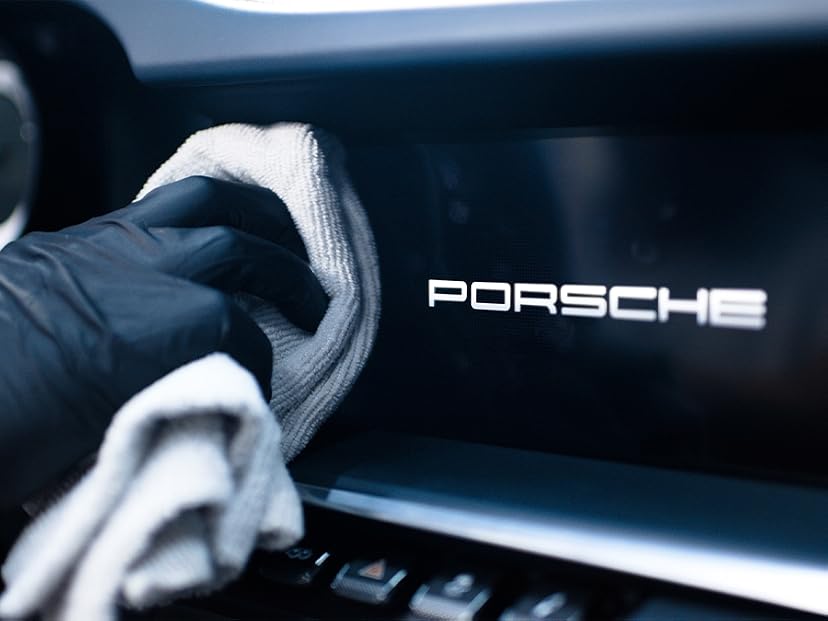
Owners consistently report clean, streak-free results on navigation screens and infotainment displays. Apply via microfiber cloth rather than spraying directly onto screen surfaces to avoid overspray on adjacent materials.
SDS §3 (Rev 3.0, 2024-05-06) discloses ethanol (CAS 64-17-5) at 45-70% and d-limonene (CAS 5989-27-5) at 0.1-<1%. Citral is likely present as a fragrance component below the §3 disclosure threshold (noted in §8 exposure limits). No D4/D5 silicones, no PFAS, no Prop 65 ingredients. Actual concentrations are withheld as trade secrets.
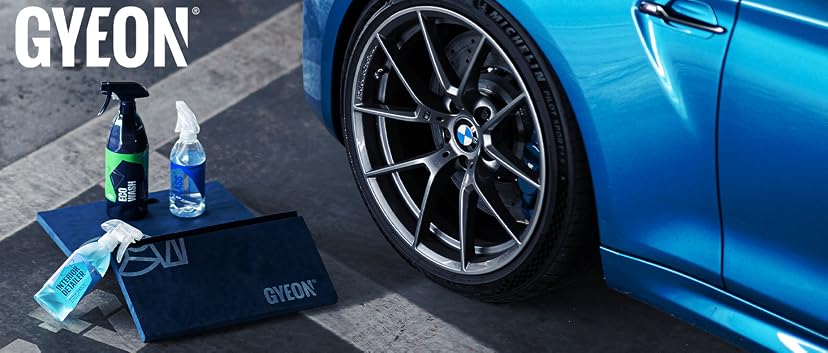
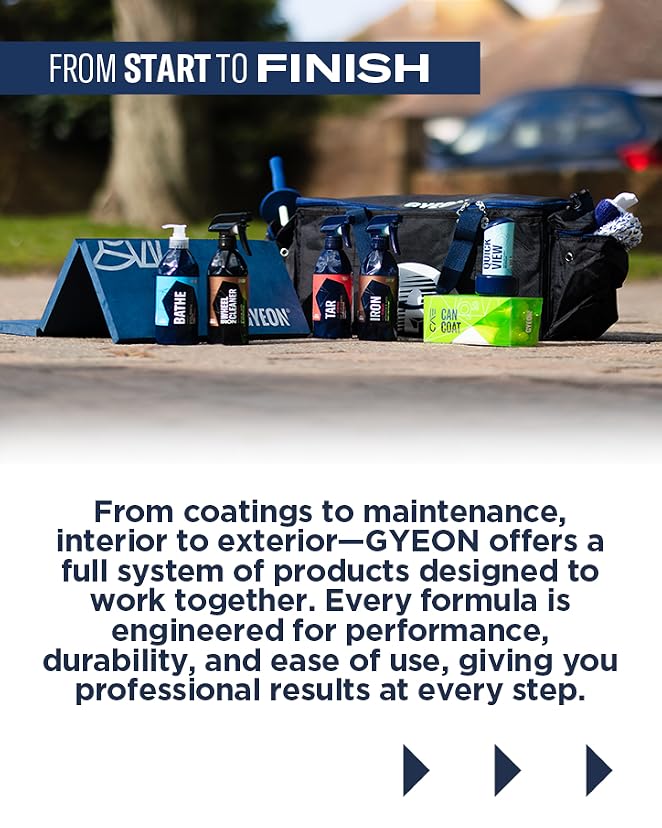
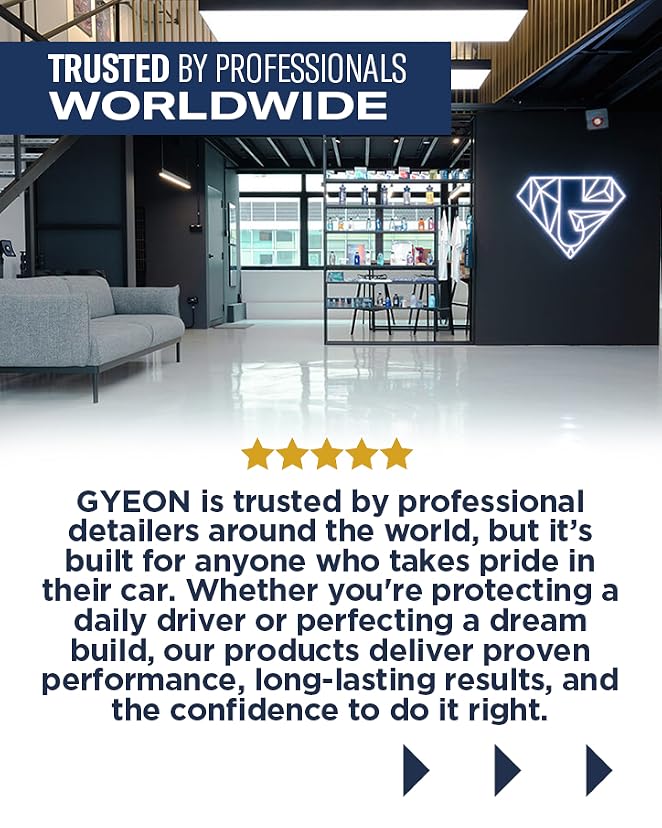
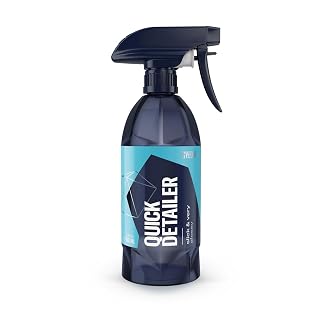
Marketing copy from Gyeon, via Amazon. Not editorial.
Weekly pick
One product, one safety verdict, every week. No spam.
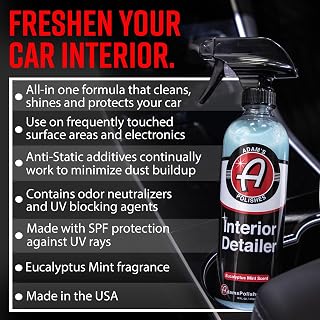
Adam's Polishes
Interior Detailer (Eucalyptus Mint)
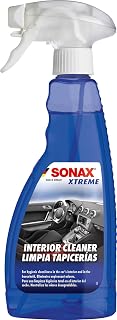
SONAX
XTREME INTERIOR CLEANER
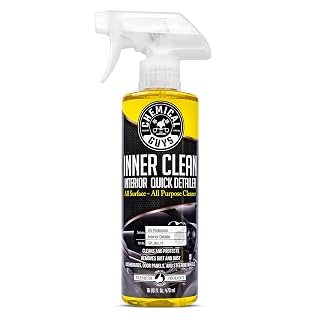
Chemical Guys
InnerClean Interior Quick Detailer
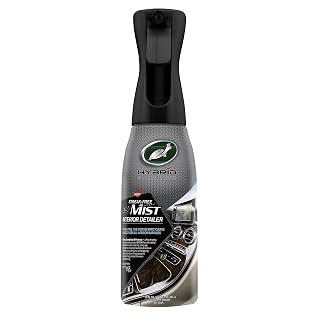
Turtle Wax
Hybrid Solutions Streak-Free Mist Interior Detailer
As an Amazon Associate I earn from qualifying purchases. Full disclosure

Community
0 postsShare how you use this product
Drop a quick comment or post a full review with photos and a star rating.
Sign in to postNew here? Create a free account.