CarCareTruth Score
Decent, but it's tough on the environment.
Opens Amazon in a new tab. No account needed to look.
Saved to your guest loadout. Sign up to also save to your Cabinet (consumables) or Kit (tools you own).
As an Amazon Associate I earn from qualifying purchases. Full disclosure
Prices may varyThe manufacturer's Safety Data Sheet classifies this product with one or more GHS Category 1 health hazards — the most severe tier. The hazard statements in quotes below are the verbatim GHS language from the SDS, as required by OSHA's Hazard Communication Standard. The line under each statement translates the GHS classification into plain language.
GHS Category 1 aspiration toxicity — thin, oily liquids can slip into the lungs if swallowed, causing chemical pneumonia.
If swallowed:
The aspiration hazard (H304) is about the liquid being swallowed and reaching the airway, not about breathing fumes during normal use.
Call Poison Control immediately at 1-800-222-1222 (US, 24/7, free) and have the product container with you. Poison Control's standing guidance is to not induce vomiting after chemical exposure; they will direct first-aid steps based on the specific product.
About this product's hazards. This product's Safety Data Sheet uses signal word DANGER.Read the manufacturer's SDS and follow all safety instructions before use. CarCareTruth ratings translate the manufacturer's safety sheet. They do not replace the SDS or substitute for a hazard assessment specific to your task.
Health score is for adult use as intended, per the manufacturer's SDS. It does not model child ingestion, accidental spill cleanup, or off-label use. See the safety panel below for full hazard classification, and /disclaimer for the full editorial scope.
GHS hazard codes are quoted from the manufacturer’s Safety Data Sheet. PPE tiers below translate those codes and the listed ingredient chemistry; they are not CarCareTruth recommendations.
Show details for all categories ▾Hide details ▴
Only when: in enclosed space
Beyond SDS: translated from the ingredient chemistry
No H319 or H318 at mixture level in SDS §2. The product is applied wipe-on with an applicator pad · not pump-sprayed · but the 12 °C flash point and high volatile fraction make solvent vapor a real presence in the cabin during application. The enclosed-space trigger captures the cabin-vapor pathway during wipe-on application.
CarCareTruth publishes the cited sources verbatim and does not advise what action a user should take. Consult the full SDS before use.
Only when: prolonged use
Beyond SDS: translated from the ingredient chemistry
No H315, H317, or H314 at mixture level in SDS §2. Wipe-on application with an applicator pad means direct hand contact with the saturated pad is the realistic pathway. Naphtha and Stoddard solvent are documented defatting agents on prolonged or repeated skin contact · the situational tier reflects the wipe-on application method, not an acute irritation classification.
CarCareTruth publishes the cited sources verbatim and does not advise what action a user should take. Consult the full SDS before use.
Only when: in enclosed space
Beyond SDS: translated from the ingredient chemistry
No H335, H331, or H334 at mixture level in SDS §2. H336 (drowsiness/dizziness via CNS, STOT SE Cat 3) is present but the product is applied wipe-on · the pump-spray ×1.25 modifier does NOT apply. H372 (STOT RE Cat 1) reflects organ damage from prolonged or repeated occupational exposure, not a single home application. SDS §8 explicitly states 'breathing protection is not required' under correct and proper use. The 12 °C flash point and high VOC fraction make cabin vapor a real-but-bounded exposure during wipe-on application in an enclosed cabin · situational with enclosed_space captures the practical risk.
U.S. regulatory standard
29 CFR 1910.134; 1910.138; 1910.1000
“Each employer shall assure that no employee is exposed [in excess of the PEL]…”
OSHA standards apply to workplaces. Cited here as the U.S. reference threshold for the underlying hazard class.
UN GHS hazard statement
H372“Causes damage to organs through prolonged or repeated exposure”
UN GHS Rev. 9 (2021)
CarCareTruth publishes the cited sources verbatim and does not advise what action a user should take. Consult the full SDS before use.
The published Safety Data Sheet for this product does not specify ventilation protection for consumer use.
Workplace context
29 CFR 1910.134(a); 1910.1000
“the primary objective shall be to prevent atmospheric contamination [via] accepted engineering control measures (for example, enclosure or confinement of the operation, general and local ventilation…).”
Triggered by GHS H336 on the SDS.
OSHA standards apply to workplaces. Cited here as the U.S. reference threshold for the underlying hazard class.
PPE tiers translate the manufacturer’s SDS and U.S. regulatory standards. Not professional safety advice. How we report safety.
Scope of these PPE tiers. The tiers on this page translate the product's Safety Data Sheet where one is published, plus its ingredient chemistry, into a comparable rating. They describe a formulation, not a situation: a tier is not a safety determination for any specific user, task, quantity, or environment. The manufacturer's label and use instructions govern how the product is handled. Where the product is used at work, the employer's PPE program and hazard assessment under 29 CFR 1910.132 decide what protection is selected, not this page.
No warranties. CarCareTruth makes no warranties, express or implied, and expressly disclaims the implied warranties of merchantability and fitness for a particular purpose.
This product ranks #7 of 9 in Fabric Protectant.Three above it ↓
Last reviewed June 14, 2026
TL;DR Non-PFAS textile coating applied wipe-on with an applicator pad · not pump-sprayed. Community durability evidence is thin and Gyeon's "months of protection" claim is not corroborated by time-stamped reviews. DANGER from a solvent-base carrier: H304 aspiration and H372 organ-damage risk on prolonged exposure.
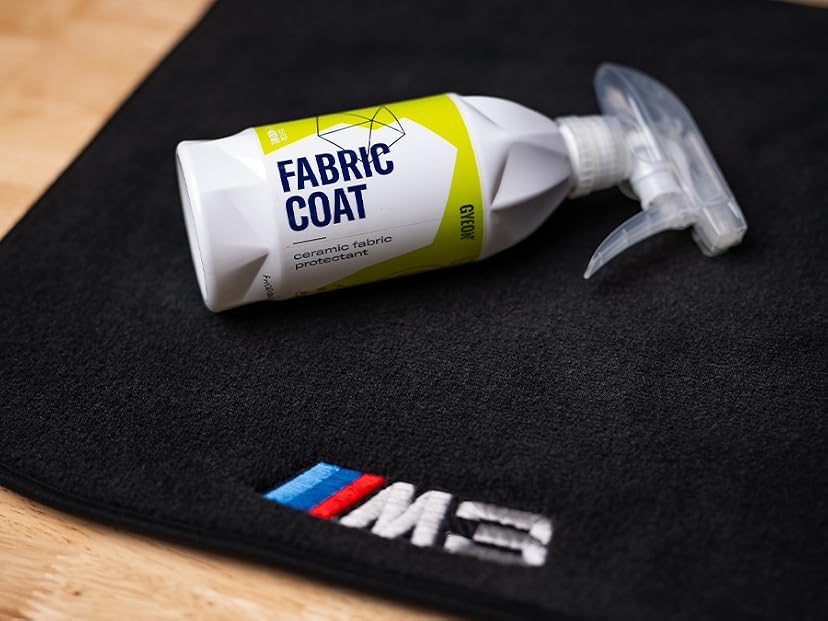
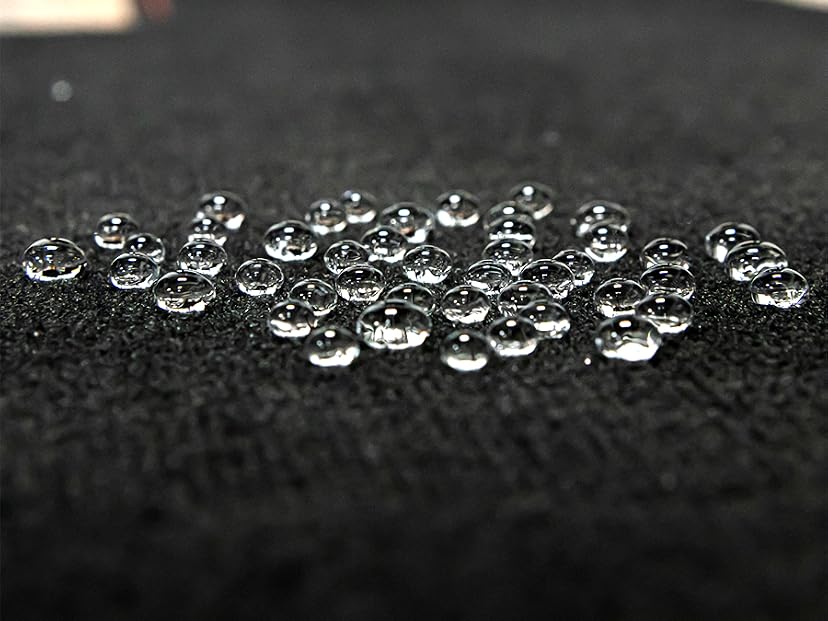
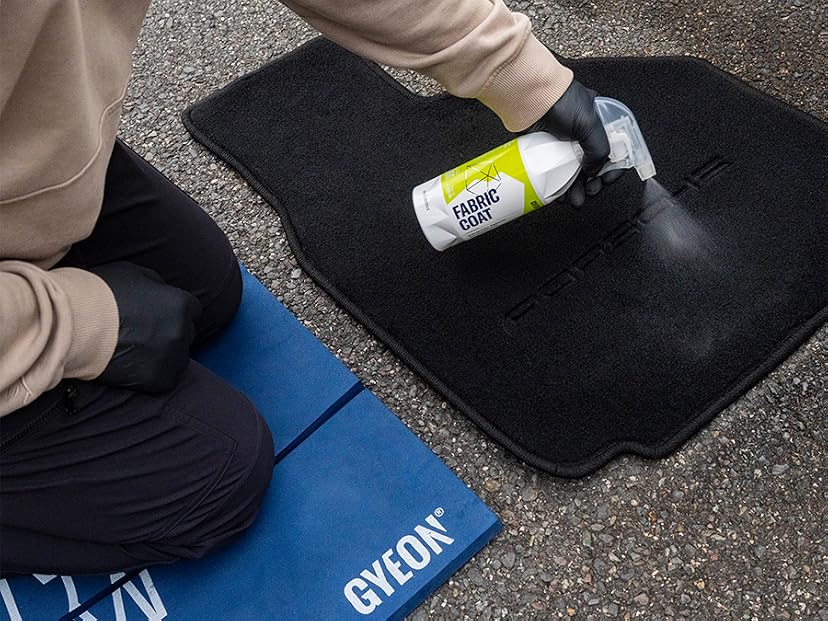
Q² Fabric Coat applies wipe-on with a saturated applicator pad to clean dry fabric, flashes off, and cures into a hydrophobic barrier on upholstery, carpet, and convertible tops. The owner reviews corpus notes initial beading but does not document controlled multi-week durability; no r/AutoDetailing or AutogeekOnline threads track the window with time-stamped follow-ups. Plan reapplication well before the marketing implies.
A fit for Gyeon-system detailers who want a non-PFAS coating that integrates with the Q² line and prefer a wipe-on workflow. Skip it for Alcantara or suede without spot-testing · the solvent-base carrier risks compatibility on delicate napped fabrics. Buyers needing durability evidence should wait for more community data.
The PPE tiers are translated from the GHS classifications and ingredient chemistry · not from SDS Section 8 boilerplate. DANGER is driven by H304 (aspiration if swallowed) and H372 (organ damage on prolonged solvent-base exposure). H226 (flammable Cat 3) is a physical hazard and does not contribute to health. H336 (drowsiness or dizziness) is present, but the wipe-on method means the pump-spray modifier does not apply. SDS §3 confirms no fluorinated compound · non-PFAS, a positive distinction relative to fluoropolymer-based protectants. Environment reflects the high-VOC carrier (~620 g/L) and a non-biodegradable carrier fraction.
Yes. SDS Section 3 (Rev 5.0, dated 2024-04-30) discloses the full ingredient set down to 1%: naphtha and Stoddard solvent as carriers, a titanate active, plus xylene and an octylene-glycol co-solvent. No fluorinated, fluoropolymer, fluorotelomer, or perfluoroalkyl compound is disclosed. The chemistry is confirmed non-PFAS based on the SDS ingredient list, not just a label claim.
The product listing markets a 'durable ceramic SiO₂ barrier' but SDS §3 discloses a titanate active (titanium tetraisopropanolate, CAS 546-68-9) at 3-<7% · not a silica fraction. The 'ceramic' language is marketing positioning for the metalate crosslinker chemistry, not a confirmed silica-based formulation. Buyers comparing this to silica-based ceramic coatings should treat the SiO₂ marketing claim as unverified.
Wipe-on with an applicator pad · not pump-sprayed. Per Gyeon's documented installer method: saturate a microfiber or foam applicator pad with the liquid, apply evenly to clean dry fabric, allow to flash off, and cure undisturbed. The 4.06 fl oz bottle covers a moderate interior; the 13.53 fl oz size covers larger jobs. Apply with vehicle doors open · the 12 °C flash point and high solvent VOC make full ventilation important even though the application method is wipe-on rather than spray.
Two GHS health-hazard classifications drive the DANGER signal word: H304 (may be fatal if swallowed and enters the airways · an aspiration hazard, not an inhalation hazard during normal application) and H372 (organ damage from prolonged or repeated exposure to the Stoddard solvent and naphtha carrier fraction). H226 (flammable liquid Cat 3) is a separate physical-hazard classification. Neither H304 nor H372 reflects an acute inhalation risk from a single home application · they are honest chemistry disclosure for the petroleum-solvent carrier.
Long-term community evidence on this specific product is thin as of 2026-05-18. Gyeon's marketing claims 'months of UV and stain resistance,' but no multi-month durability tracking threads on r/AutoDetailing or AutogeekOnline document the protection window with time-stamped follow-ups. The owner reviews corpus notes initial beading but does not contain controlled multi-week durability documentation. Plan for reapplication well before the label claim until more community data accumulates.
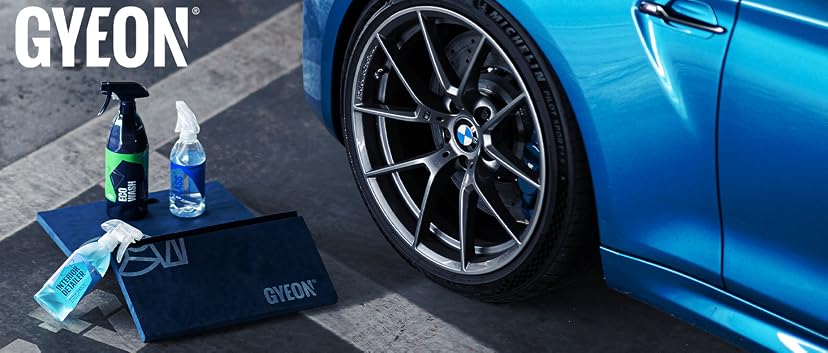
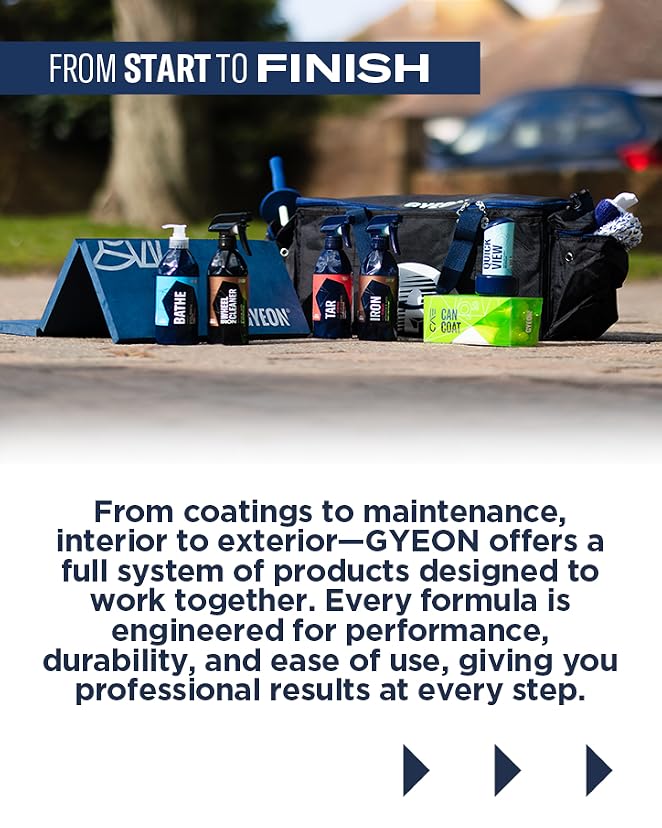
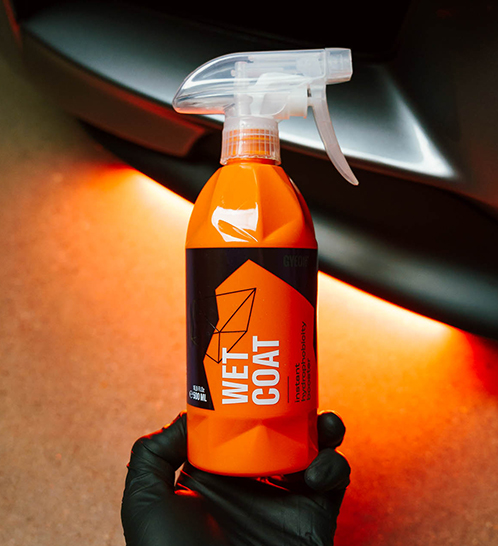
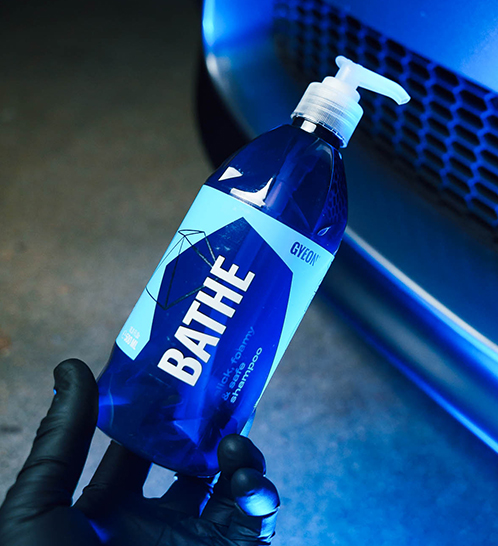
Marketing copy from Gyeon, via Amazon. Not editorial.
Weekly pick
One product, one safety verdict, every week. No spam.


Chemical Guys
HydroThread Ceramic Fabric Protectant & Stain Repellent
303 Products
303 Fabric Guard (32 oz)
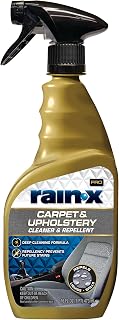
Rain-X
Pro Carpet & Upholstery Cleaner & Repellent
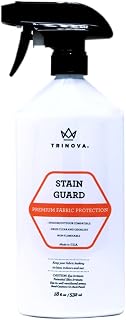
TriNova
Stain Guard Premium Fabric Protection
As an Amazon Associate I earn from qualifying purchases. Full disclosure

Community
0 postsShare how you use this product
Drop a quick comment or post a full review with photos and a star rating.
Sign in to postNew here? Create a free account.