CarCareTruth Score
Decent.
Opens Amazon in a new tab. No account needed to look.
Saved to your guest loadout. Sign up to also save to your Cabinet (consumables) or Kit (tools you own).
As an Amazon Associate I earn from qualifying purchases. Full disclosure
Prices may varyHealth score is for adult use as intended, per the manufacturer's SDS. It does not model child ingestion, accidental spill cleanup, or off-label use. See the safety panel below for full hazard classification, and /disclaimer for the full editorial scope.
GHS hazard codes are quoted from the manufacturer’s Safety Data Sheet. PPE tiers below translate those codes and the listed ingredient chemistry; they are not CarCareTruth recommendations.
Show details for all categories ▾Hide details ▴
Only when: when spraying · in enclosed space
Beyond SDS: translated from the ingredient chemistry
SDS §2 formally classifies the mixture as 'Not classified' with no eye-hazard H-code. The product's own back-label caution states 'Eye Irritant... Use in well ventilated areas,' a specific manufacturer-label warning rather than generic SDS boilerplate. Pump-spray application at face level inside a vehicle cabin creates a plausible eye-contact pathway during use.
CarCareTruth publishes the cited sources verbatim and does not advise what action a user should take. Consult the full SDS before use.
Only when: prolonged use
Beyond SDS: translated from the ingredient chemistry
SDS §2 assigns no skin-irritation H-code. The back-label caution notes 'Potential Skin Irritant' as a specific product-label warning. Extended manual spreading or wiping during application creates hand-contact exposure.
CarCareTruth publishes the cited sources verbatim and does not advise what action a user should take. Consult the full SDS before use.
Especially relevant: in enclosed space · when spraying
Beyond SDS: translated from the ingredient chemistry
The independently-disclosed composition includes a CMIT/MIT preservative blend, an AOEC-listed respiratory sensitizer, so contains_asthmagen is true and the lung tier is recommended. The finished mixture is below the classification threshold (SDS §2 is 'Not classified,' no H335/H336; SDS §11 lists inhalation toxicity as 'Not classified'), and the trace preservative concentration keeps the realistic sensitization risk low, but the ingredient-level flag holds regardless of concentration. The back-label caution ('May cause respiratory irritation, use in well ventilated areas') and enclosed-cabin pump-spray application reinforce the same practical action.
CarCareTruth publishes the cited sources verbatim and does not advise what action a user should take. Consult the full SDS before use.
No PPE specified in published sources for ventilation. Absence does not imply “not needed” — consult the full Safety Data Sheet.
PPE tiers translate the manufacturer’s SDS and U.S. regulatory standards. Not professional safety advice. How we report safety.
Scope of these PPE tiers. The tiers on this page translate the product's Safety Data Sheet where one is published, plus its ingredient chemistry, into a comparable rating. They describe a formulation, not a situation: a tier is not a safety determination for any specific user, task, quantity, or environment. The manufacturer's label and use instructions govern how the product is handled. Where the product is used at work, the employer's PPE program and hazard assessment under 29 CFR 1910.132 decide what protection is selected, not this page.
No warranties. CarCareTruth makes no warranties, express or implied, and expressly disclaims the implied warranties of merchantability and fitness for a particular purpose.
This product ranks #4 of 9 in Fabric Protectant.Three above it ↓
Last reviewed July 8, 2026
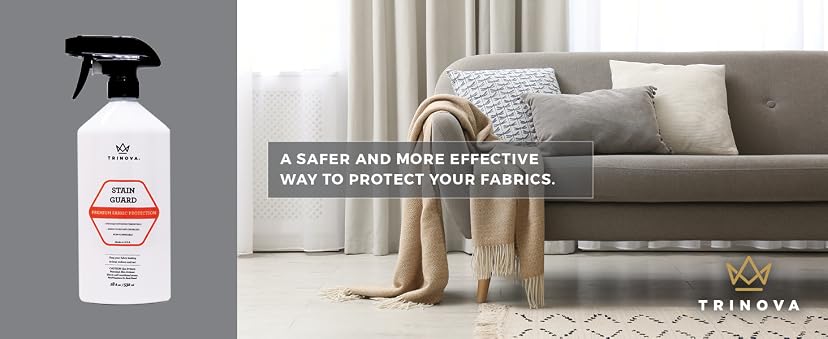
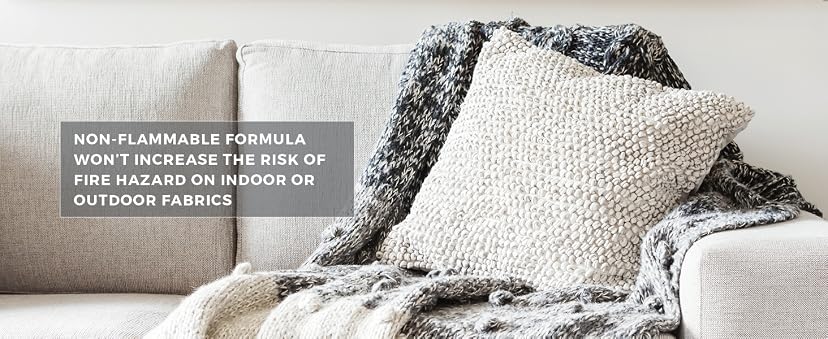
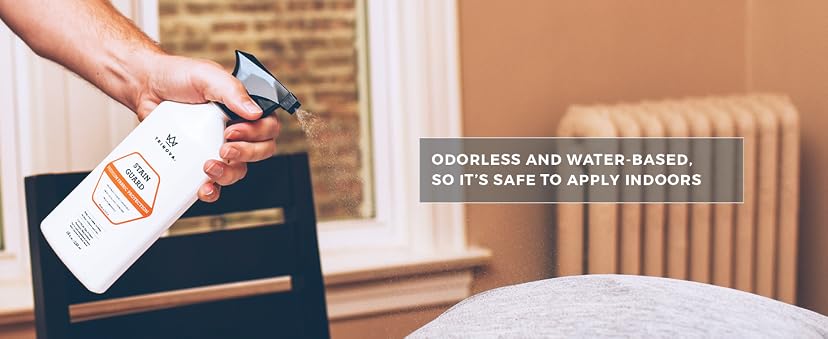
TL;DR Water-based, non-flammable fabric spray for spill protection on car seats, carpet, and rugs. Independent evidence on real-world repellency duration is thin, so treat the 30-45-day reapplication guidance as a starting point, not a benchmark. Non-PFAS per independent third-party ingredient disclosure. The SDS shows no GHS hazard statements, though the disclosed preservative is a respiratory sensitizer and the back label cautions eye and skin irritation.
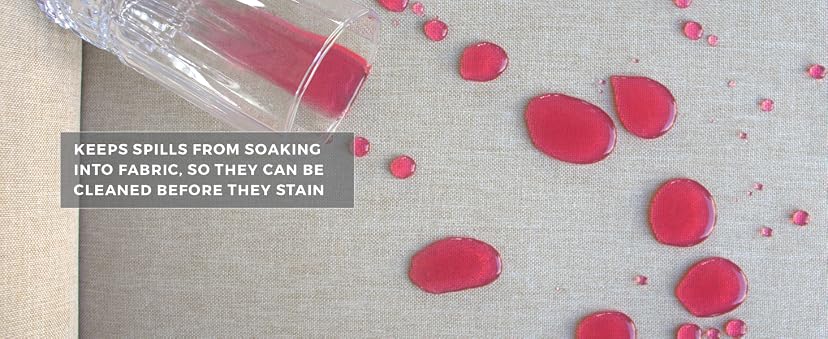
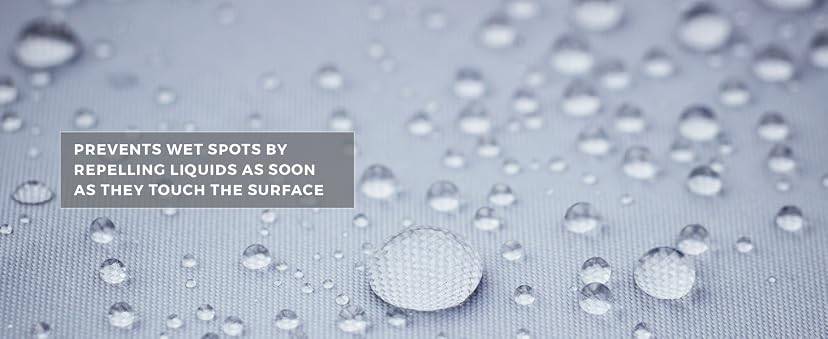
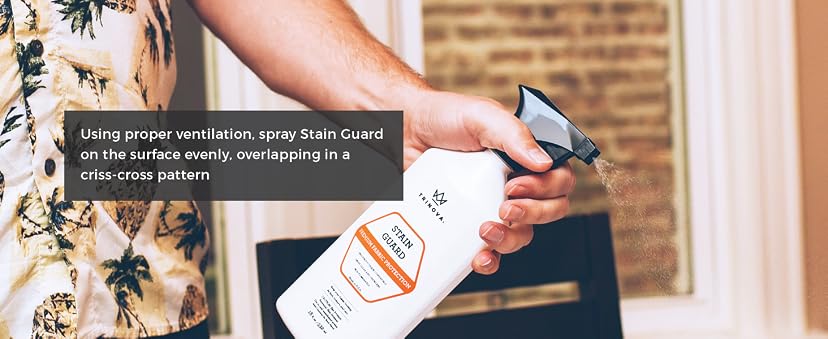
Stain Guard is a non-aerosol pump spray applied in a light, overlapping pattern to clean, dry fabric, then cured 24 hours. The 30-to-45-day reapplication window reads as more honest than many "lasts for months" claims, but independent bead-test data specific to this product is limited. The label is upfront that it is not a waterproofing treatment and that spills should be blotted up promptly.
A reasonable pick for buyers who want a basic, non-flammable, low-odor fabric spray for car seats, carpet, or rugs. A PFAS-free option has a defensible basis here, since independent disclosure shows no fluoropolymer or silicone active. Skip it for vinyl, plastics, rubber, or finished leather, which the manufacturer excludes, and skip it if you want a heavily community-vetted product.
The SDS classifies this product as "Not classified" under GHS-US, with no signal word or pictogram, and every Section 11 endpoint is likewise "Not classified." Independent disclosure shows no PFAS; composition is water, a CMIT/MIT preservative blend, and a glycol co-solvent. That preservative is an AOEC-listed respiratory sensitizer, which puts the lung PPE tier at "recommended" for the pump-spray step even though the trace concentration keeps the mixture unclassified; it is also an aquatic-toxicity contributor, reflected in the environment score. Section 15 confirms no Proposition 65 substances.
The manufacturer's own SDS does not itemize the formula's ingredients (composition falls below HazCom 2012 reporting thresholds), so TriNova does not make an explicit PFAS-free claim on the label or SDS. An independent third-party SDS ingredient disclosure database lists water, a CMIT/MIT preservative blend, magnesium salts, and tripropylene glycol as the composition, with no fluoropolymer, fluorotelomer, or other PFAS compound appearing in that disclosure.
No. SDS Section 15 states explicitly: 'This product does not contain any substances known to the state of California to cause cancer, developmental and/or reproductive harm.' The back-of-bottle label (reviewed 2026-07-05) carries no Prop 65 warning text.
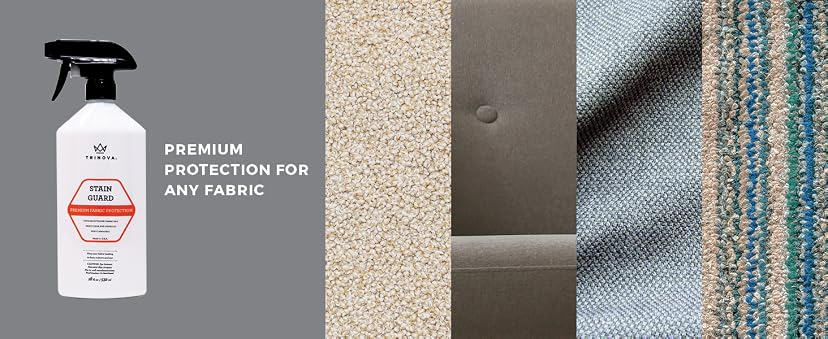
The manufacturer's label covers fabric, carpet, and rugs, and states the product is not safe for vinyl, plastics, rubber, or finished leather. It's also explicitly not a water-proofing product; the label instructs blotting up spills as quickly as possible rather than relying on the spray alone.
The manufacturer's directions say to re-treat every 30 to 45 days or as needed. This is a more conservative reapplication window than some competing fabric protectants claim, though independent long-term community testing specific to this product is limited.
No. The SDS Section 2 formally classifies the mixture as 'Not classified' under GHS-US, with no signal word, hazard statement, or pictogram assigned. The product's own back-of-bottle label carries a caution for eye and skin irritation and recommends good ventilation, which is a manufacturer-specific warning rather than a GHS classification.
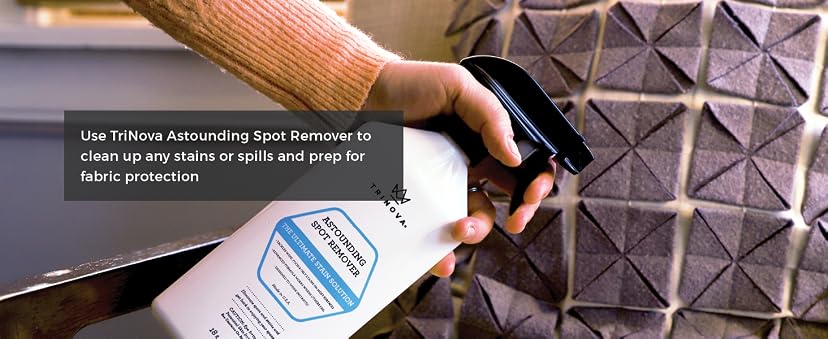
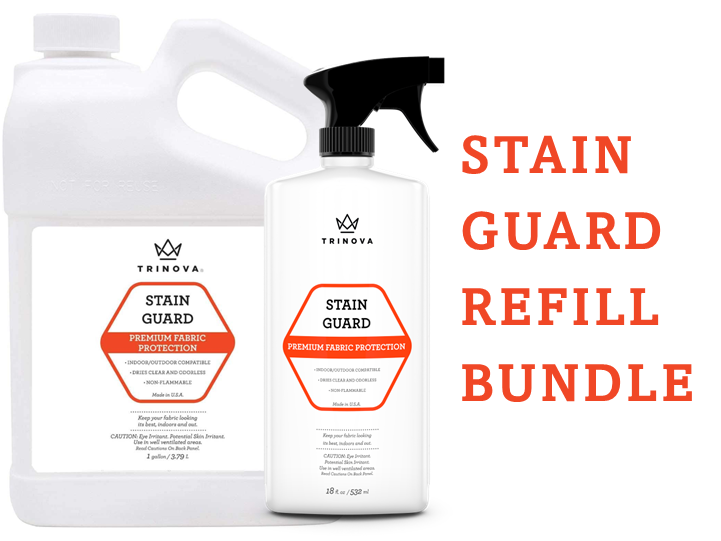
Marketing copy from TriNova, via Amazon. Not editorial.
Weekly pick
One product, one safety verdict, every week. No spam.

Chemical Guys
HydroThread Ceramic Fabric Protectant & Stain Repellent
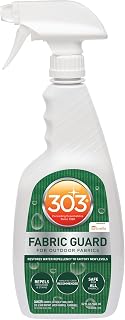
303 Products
303 Fabric Guard (32 oz)
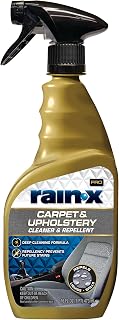
Rain-X
Pro Carpet & Upholstery Cleaner & Repellent
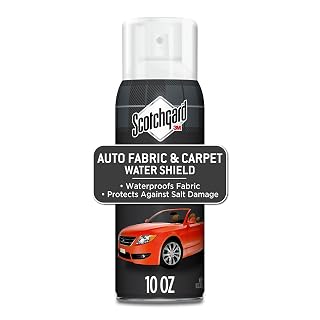
3M
Scotchgard Auto Fabric & Carpet Water Shield (4104D)
As an Amazon Associate I earn from qualifying purchases. Full disclosure

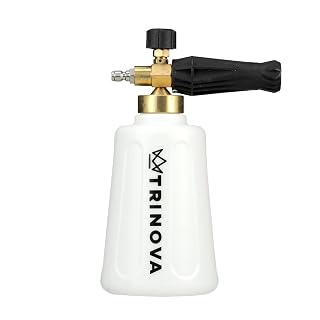
Community
0 postsShare how you use this product
Drop a quick comment or post a full review with photos and a star rating.
Sign in to postNew here? Create a free account.