CarCareTruth Score
Decent.
Saved to your guest loadout. Sign up to also save to your Cabinet (consumables) or Kit (tools you own).
As an Amazon Associate I earn from qualifying purchases. Full disclosure
The manufacturer's Safety Data Sheet classifies this product with one or more GHS Category 1 health hazards — the most severe tier. The hazard statements in quotes below are the verbatim GHS language from the SDS, as required by OSHA's Hazard Communication Standard. The line under each statement translates the GHS classification into plain language.
GHS Category 1 respiratory sensitizer — classified as capable of inducing asthma-like symptoms or sensitization on inhalation. Once sensitized, reactions can recur at much lower exposure levels.
If inhaled:
Call Poison Control immediately at 1-800-222-1222 (US, 24/7, free) and have the product container with you. Poison Control's standing guidance is to not induce vomiting after chemical exposure; they will direct first-aid steps based on the specific product.
About this product's hazards. This product's Safety Data Sheet uses signal word DANGER.Read the manufacturer's SDS and follow all safety instructions before use. CarCareTruth ratings translate the manufacturer's safety sheet. They do not replace the SDS or substitute for a hazard assessment specific to your task.
Health score is for adult use as intended, per the manufacturer's SDS. It does not model child ingestion, accidental spill cleanup, or off-label use. See the safety panel below for full hazard classification, and /disclaimer for the full editorial scope.
GHS hazard codes are quoted from the manufacturer’s Safety Data Sheet. PPE tiers below translate those codes and the listed ingredient chemistry; they are not CarCareTruth recommendations.
Show details for all categories ▾Hide details ▴
Only when: splash risk
Translated from the manufacturer’s Safety Data Sheet, Section 2
H320 eye irritation is classified in SDS §2. Situational tier with trigger splash_risk · incidental eye contact during aerosol handling is the identified pathway.
U.S. regulatory standard
29 CFR 1910.133(a)(1)
“appropriate eye or face protection when exposed to eye or face hazards from… liquid chemicals…”
ANSI Z87.1 (incorporated via §1910.6)
OSHA standards apply to workplaces. Cited here as the U.S. reference threshold for the underlying hazard class.
CarCareTruth publishes the cited sources verbatim and does not advise what action a user should take. Consult the full SDS before use.
Only when: when spraying
Translated from the manufacturer’s Safety Data Sheet, Section 2
H316 mild skin irritation is classified in SDS §2. Aerosol spray application is the identified skin contact pathway.
U.S. regulatory standard
29 CFR 1910.138(a)
“appropriate hand protection when employees' hands are exposed to hazards such as those from…”
OSHA standards apply to workplaces. Cited here as the U.S. reference threshold for the underlying hazard class.
CarCareTruth publishes the cited sources verbatim and does not advise what action a user should take. Consult the full SDS before use.
Especially relevant: in enclosed space
Translated from the manufacturer’s Safety Data Sheet, Section 2
H334 respiratory sensitizer (asthmagen) is classified in SDS §2. The aerosol format creates inhalation risk in enclosed spaces; use outdoors or with ventilation running.
U.S. regulatory standard
29 CFR 1910.134(a)(1)–(2)
“In the control of those occupational diseases caused by breathing air contaminated with harmful dusts, fogs, fumes, mists, gases, smokes, sprays, or vapors, the primary objective shall be to prevent atmospheric contamination… When effective engineering controls are not feasible… appropriate respirators shall be used.”
OSHA standards apply to workplaces. Cited here as the U.S. reference threshold for the underlying hazard class.
UN GHS hazard statement
H334“May cause allergy or asthma symptoms or breathing difficulties if inhaled”
UN GHS Rev. 9 (2021)
CarCareTruth publishes the cited sources verbatim and does not advise what action a user should take. Consult the full SDS before use.
No PPE specified in published sources for ventilation. Absence does not imply “not needed” — consult the full Safety Data Sheet.
PPE tiers translate the manufacturer’s SDS and U.S. regulatory standards. Not professional safety advice. How we report safety.
Scope of these PPE tiers. The tiers on this page translate the product's Safety Data Sheet where one is published, plus its ingredient chemistry, into a comparable rating. They describe a formulation, not a situation: a tier is not a safety determination for any specific user, task, quantity, or environment. The manufacturer's label and use instructions govern how the product is handled. Where the product is used at work, the employer's PPE program and hazard assessment under 29 CFR 1910.132 decide what protection is selected, not this page.
No warranties. CarCareTruth makes no warranties, express or implied, and expressly disclaims the implied warranties of merchantability and fitness for a particular purpose.
Last reviewed July 31, 2026
TL;DR Solid corrosion protection for trailer connectors, battery terminals, and spark plug boots · the aerosol spray reaches crevices a tube can't. Best used outdoors or in a well-ventilated bay, as the aerosol format creates inhalation risk in enclosed spaces.
GCD-003 deposits a protective film that seals out moisture and prevents pin oxidation on trailer plugs, battery terminals, and spark plug boots. The spray carrier flows into crevices and evaporates, leaving a clear, pliable coating. owners confirm it cleared recurring connection-error faults on fifth-wheel trailer connectors after a few applications and holds up on golf cart battery terminals outdoors. The thinner film vs. paste grease means it's not ideal for spark plug boots requiring a heavy seal, but for connectors and terminals it works without disassembly.
Best for trailer owners, boaters, and anyone managing corroded multi-pin connectors where a spray can reach without disassembly. Skip it for sealed multi-pin automotive connectors where over-spray could contaminate pin contacts · a syringe-format grease gives better application control for those jobs.
The SDS classifies DANGER based on H334 respiratory sensitizer chemistry · a real asthmagen code, not boilerplate. Use outdoors or with ventilation running. H316 mild skin irritation and H320 eye irritation are also classified at the mixture level. The product carries a California Prop 65 listing for a solvent ingredient (see SDS §15). Leave-on application means no drain pathway; the silicone residue is not readily biodegradable but per-use volume is small.
The Safety Data Sheet for Gardner Bender GCD-003 Dielectric Grease carries a DANGER signal word, with classified hazards including H222 (extremely flammable aerosol); H229 (pressurized container: may burst if heated); H280 (contains gas under pressure; may explode if heated). The Amazon listing also carries a California Prop 65 warning. See the PPE breakdown above for use-case-specific guidance translated from the SDS hazard codes.
CarCareTruth scores Gardner Bender GCD-003 Dielectric Grease at 6.1 out of 10 on the composite CCT score, with a health sub-score of 5.5/10. The CCT score blends real-world effectiveness, ingredient health impact pulled from the manufacturer's safety sheet, and environmental footprint against a published category rubric. See the methodology link on this page for the full scoring breakdown.
Marketing copy from Gardner Bender, via Amazon. Not editorial.
Weekly pick
One product, one safety verdict, every week. No spam.

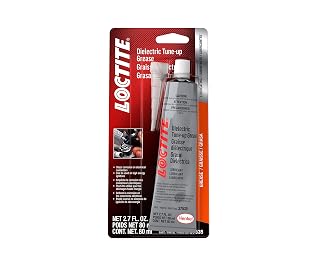
Loctite
37535 Dielectric Tune-Up Grease
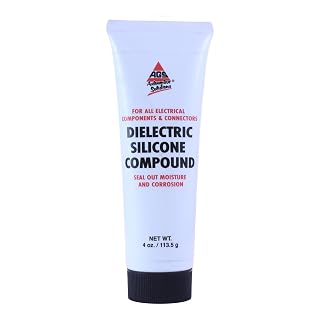
AGS
Dielectric Silicone Grease Compound
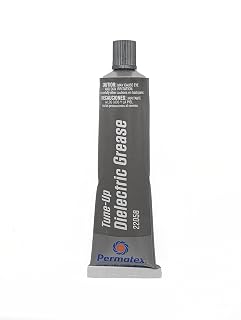
Permatex
Dielectric Tune-Up Grease, 3 oz
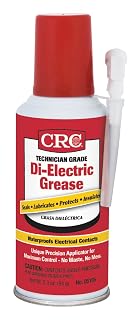
CRC
Technician Grade Di-Electric Grease Compound (3.3 oz)
As an Amazon Associate I earn from qualifying purchases. Full disclosure

Community
0 postsShare how you use this product
Drop a quick comment or post a full review with photos and a star rating.
Sign in to postNew here? Create a free account.