CarCareTruth Score
Mediocre, but it's tough on the environment.
Opens Amazon in a new tab. No account needed to look.
Saved to your guest loadout. Sign up to also save to your Cabinet (consumables) or Kit (tools you own).
As an Amazon Associate I earn from qualifying purchases. Full disclosure
Prices may varyThe manufacturer's Safety Data Sheet classifies this product with one or more GHS Category 1 health hazards — the most severe tier. The hazard statements in quotes below are the verbatim GHS language from the SDS, as required by OSHA's Hazard Communication Standard. The line under each statement translates the GHS classification into plain language.
GHS Category 1 aspiration toxicity — thin, oily liquids can slip into the lungs if swallowed, causing chemical pneumonia.
If swallowed:
The aspiration hazard (H304) is about the liquid being swallowed and reaching the airway, not about breathing fumes during normal use.
Call Poison Control immediately at 1-800-222-1222 (US, 24/7, free) and have the product container with you. Poison Control's standing guidance is to not induce vomiting after chemical exposure; they will direct first-aid steps based on the specific product.
About this product's hazards. This product's Safety Data Sheet uses signal word DANGER.Read the manufacturer's SDS and follow all safety instructions before use. CarCareTruth ratings translate the manufacturer's safety sheet. They do not replace the SDS or substitute for a hazard assessment specific to your task.
Health score is for adult use as intended, per the manufacturer's SDS. It does not model child ingestion, accidental spill cleanup, or off-label use. See the safety panel below for full hazard classification, and /disclaimer for the full editorial scope.
GHS hazard codes are quoted from the manufacturer’s Safety Data Sheet. PPE tiers below translate those codes and the listed ingredient chemistry; they are not CarCareTruth recommendations.
Show details for all categories ▾Hide details ▴
Especially relevant: splash risk
Translated from the manufacturer’s Safety Data Sheet, Section 8
SDS Section 8 imperative, 'Wear eye/face protection,' backed by H319 (eye irritation) at the SDS Section 2 mixture level. The wadding is worked directly by hand at close range on bumpers, trim, and wheel wells, often near eye level.
U.S. regulatory standard
29 CFR 1910.133(a)(1)
“The employer shall ensure that each affected employee uses appropriate eye or face protection when exposed to eye or face hazards from… liquid chemicals…”
ANSI Z87.1 (incorporated via §1910.6)
OSHA standards apply to workplaces. Cited here as the U.S. reference threshold for the underlying hazard class.
CarCareTruth publishes the cited sources verbatim and does not advise what action a user should take. Consult the full SDS before use.
Especially relevant: prolonged use
Translated from the manufacturer’s Safety Data Sheet, Section 8
SDS Section 8 specifies hand protection ('wear protective gloves') plus explicit skin-recovery guidance (barrier creams, recovery periods for skin regeneration), backed by H315 (skin irritation) at the SDS Section 2 mixture level. The wadding is held directly in the bare hand throughout application.
U.S. regulatory standard
29 CFR 1910.138(a)
“appropriate hand protection when employees' hands are exposed to hazards such as those from… chemicals which produce an adverse effect on the skin or eyes…”
OSHA standards apply to workplaces. Cited here as the U.S. reference threshold for the underlying hazard class.
CarCareTruth publishes the cited sources verbatim and does not advise what action a user should take. Consult the full SDS before use.
Especially relevant: in enclosed space · prolonged use
Translated from the manufacturer’s Safety Data Sheet, Section 8
SDS Section 8 names a specific respirator type (particulate filter device, EN 143), and Section 2 carries two real mixture-level inhalation-pathway codes, H332 (harmful if inhaled) and H336 (may cause drowsiness or dizziness), consistent with a genuinely high total solvent content rather than SDS boilerplate.
U.S. regulatory standard
29 CFR 1910.134(a); 1910.1200(f)
“The employer shall assess the workplace to determine if hazards are present, or are likely to be present, which necessitate the use of personal protective equipment.”
OSHA standards apply to workplaces. Cited here as the U.S. reference threshold for the underlying hazard class.
CarCareTruth publishes the cited sources verbatim and does not advise what action a user should take. Consult the full SDS before use.
The published Safety Data Sheet for this product does not specify ventilation protection for consumer use.
Workplace context
29 CFR 1910.134(a); 1910.1000
“the primary objective shall be to prevent atmospheric contamination [via] accepted engineering control measures (for example, enclosure or confinement of the operation, general and local ventilation…).”
Triggered by GHS H336 on the SDS.
OSHA standards apply to workplaces. Cited here as the U.S. reference threshold for the underlying hazard class.
PPE tiers translate the manufacturer’s SDS and U.S. regulatory standards. Not professional safety advice. How we report safety.
Scope of these PPE tiers. The tiers on this page translate the product's Safety Data Sheet where one is published, plus its ingredient chemistry, into a comparable rating. They describe a formulation, not a situation: a tier is not a safety determination for any specific user, task, quantity, or environment. The manufacturer's label and use instructions govern how the product is handled. Where the product is used at work, the employer's PPE program and hazard assessment under 29 CFR 1910.132 decide what protection is selected, not this page.
No warranties. CarCareTruth makes no warranties, express or implied, and expressly disclaims the implied warranties of merchantability and fitness for a particular purpose.
This product ranks #8 of 8 in Chrome Polish.Three above it ↓
Last reviewed August 14, 2026
TL;DR Nevr-Dull's cotton wadding cuts through tarnish and oxidation on bare chrome, stainless, and aluminum in a few passes, but it's built for bare metal only, not painted or clear-coated panels. The SDS carries a DANGER signal word from a confirmed aspiration hazard, so work outdoors or with the garage door open.
This is not a liquid or paste. The tin holds treated cotton wadding: tear off a piece, rub it onto bare or plated metal, and buff off the residue with a clean cloth. Forum accounts describe it cutting through tarnish and oxidation in a handful of passes on exhaust tips and trim. It's a cleaner and polish, not a sealant, so treat reapplication as routine maintenance. It works on bare or plated metal only, never painted panels or clear coat, and it has a strong, distinctive solvent smell.
A good fit for owners maintaining bare chrome, stainless, or aluminum trim who want an inexpensive polish and don't mind hand-rubbing it in. Skip it for painted bumpers or clear-coated wheels, or if you're sensitive to strong solvent fumes without good ventilation. A liquid or paste sealant is the better pick for lasting protection.
The SDS carries a DANGER signal word from a confirmed aspiration hazard: if swallowed, it can be fatal if it enters the lungs, so do not induce vomiting and seek medical attention. The formula is roughly four-fifths petroleum solvent, driving real skin, eye, and inhalation irritation too, so gloves, eye protection, and a particulate respirator are the SDS's own call; work outdoors or with the door open. It is wiped off rather than rinsed, but the carrier is toxic to aquatic life with long-lasting effects, so keep runoff away from storm drains.
No. The product and community accounts agree it is formulated for bare or plated metal, chrome, stainless steel, brass, copper, and aluminum, not painted panels or clear coat. Applying it to a painted or clear-coated surface risks dulling or scratching the finish; a dedicated paint-safe polish or wax is the right tool there.
The DANGER signal word comes from the SDS's aspiration hazard classification, which applies if the product is swallowed and enters the lungs, plus a heavy petroleum-solvent content that also drives skin, eye, and inhalation irritation codes. It is a real classification for the concentrated solvent in the tin, not a comment on how it performs when used as directed with normal ventilation.
No, a strong solvent smell is characteristic of this formula, consistent with its high total solvent content per the SDS. It's still worth working outdoors or with the garage door open, since the SDS itself classifies the formula for drowsiness and dizziness at the mixture level and calls for a respirator during use.
This is a cleaner and polish rather than a wax-style sealant, so it has no protective-film chemistry, and owner reports on how long the shine holds before it needs redoing are thin and mixed. Treat reapplication as routine maintenance for bare metal rather than a one-time fix.
It can if the cotton picks up grit or debris during use. Owners commonly advise keeping the wadding clean between passes and tearing off a fresh section if it gets dirty, since the listing describes a fine, non-abrasive polishing grit intended for tarnish and oxidation rather than heavy cutting.
Marketing copy from Eagle One, via Amazon. Not editorial.
Weekly pick
One product, one safety verdict, every week. No spam.
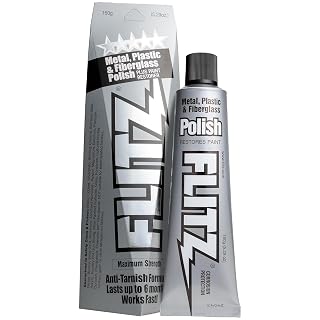
Flitz
Multi-Purpose Metal Polish Paste
Simichrome
All Metal Polish Tube
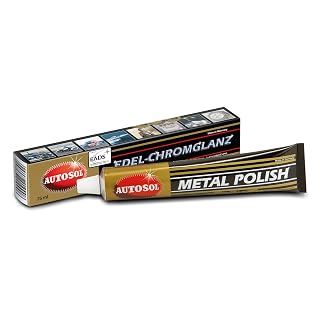
Autosol
Metal Polish
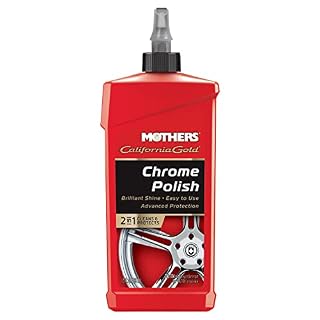
Mothers
California Gold Chrome Polish
As an Amazon Associate I earn from qualifying purchases. Full disclosure

Community
0 postsShare how you use this product
Drop a quick comment or post a full review with photos and a star rating.
Sign in to postNew here? Create a free account.