CarCareTruth Score
Mediocre.
Opens Amazon in a new tab. No account needed to look.
Saved to your guest loadout. Sign up to also save to your Cabinet (consumables) or Kit (tools you own).
As an Amazon Associate I earn from qualifying purchases. Full disclosure
Prices may varyHealth score is for adult use as intended, per the manufacturer's SDS. It does not model child ingestion, accidental spill cleanup, or off-label use. See the safety panel below for full hazard classification, and /disclaimer for the full editorial scope.
GHS hazard codes are quoted from the manufacturer’s Safety Data Sheet. PPE tiers below translate those codes and the listed ingredient chemistry; they are not CarCareTruth recommendations.
Show details for all categories ▾Hide details ▴
Only when: when spraying
Beyond SDS: translated from the ingredient chemistry
H320 (Eye Irritant Cat 2B) classified at mixture level per SDS §2. Cat 2B is below the GHS07 pictogram threshold and below the H319 Cat 2A threshold; it does not force a required tier. Situational because the fogger delivers product mist to cabin air; the user is outside the cabin during the fog cycle; direct eye exposure during can placement and valve activation is the primary incidental exposure pathway.
U.S. regulatory standard
29 CFR 1910.133(a)(1)
“appropriate eye or face protection when exposed to eye or face hazards from… liquid chemicals…”
ANSI Z87.1 (incorporated via §1910.6)
OSHA standards apply to workplaces. Cited here as the U.S. reference threshold for the underlying hazard class.
CarCareTruth publishes the cited sources verbatim and does not advise what action a user should take. Consult the full SDS before use.
Only when: sensitive individuals
Beyond SDS: translated from the ingredient chemistry
No skin H-codes (H315, H317) are classified at the mixture level in SDS §2. The aerosol is directed into cabin air via total-release mechanism, not applied to surfaces by hand. Situational with sensitive_individual trigger as a precautionary default for a fragrance-containing aerosol.
CarCareTruth publishes the cited sources verbatim and does not advise what action a user should take. Consult the full SDS before use.
Especially relevant: in enclosed space
Beyond SDS: translated from the ingredient chemistry
Total-release aerosol fogger form factor: all total-release foggers require lungs protection regardless of H-code profile. The fog cycle fills the entire sealed cabin with propellant-carried fragrance mist; peak-concentration enclosed-space exposure occurs during the fog cycle and during re-entry before adequate airing. The SDS §8 states respiratory protection is 'not required with normal use'; this is ambient/industrial-context boilerplate. This categorical rule for total-release foggers overrides the SDS §8 boilerplate.
CarCareTruth publishes the cited sources verbatim and does not advise what action a user should take. Consult the full SDS before use.
No PPE specified in published sources for ventilation. Absence does not imply “not needed” — consult the full Safety Data Sheet.
PPE tiers translate the manufacturer’s SDS and U.S. regulatory standards. Not professional safety advice. How we report safety.
Scope of these PPE tiers. The tiers on this page translate the product's Safety Data Sheet where one is published, plus its ingredient chemistry, into a comparable rating. They describe a formulation, not a situation: a tier is not a safety determination for any specific user, task, quantity, or environment. The manufacturer's label and use instructions govern how the product is handled. Where the product is used at work, the employer's PPE program and hazard assessment under 29 CFR 1910.132 decide what protection is selected, not this page.
No warranties. CarCareTruth makes no warranties, express or implied, and expressly disclaims the implied warranties of merchantability and fitness for a particular purpose.
This product ranks #8 of 12 in Odor Eliminator.Three above it ↓
Last reviewed August 2, 2026
TL;DR Health score 5.0: this one-shot lemon fogger is a total-release aerosol, so the cabin has to sit sealed for a full 2-hour fog cycle and then ventilate for 30 minutes before re-entry, no matter how mild the SDS chemistry looks. It's fragrance masking only, no enzyme or antimicrobial active is disclosed on the SDS, and community reviews confirm the underlying odor returns once the lemon scent fades, typically within 1-5 days.
A 5 oz total-release aerosol fogger: you lock the valve open, and the can deploys its entire contents into a sealed cabin over the fog cycle, so the propellant-carried lemon fragrance reaches into the headliner, vents, and seat fabric that a pump spray would miss. The formula listed on the SDS is a carrier solvent, a pressurized propellant, and a solvent; the remaining 55-80% is a trade-secret fragrance package, with no enzyme, no EPA-registered antimicrobial, and no molecular-binding active disclosed. The "eliminates odors" label claim is marketing; the actual mechanism is replacing the cabin smell with a lemon scent, not removing the odor source. Community evidence is split by odor type: the fogger works reasonably well on accessible biological odors like mouse urine in an enclosed truck cab, mold from an AC system, and light pet odors in an enclosed space, but it consistently fails on deeply embedded sources such as tobacco smoke in headliner fabric and carpet backing, or milk soaked into upholstery padding. The manufacturer's own spec lists a 3-day scent duration, and the community confirms it: embedded odors typically return within 1-5 days once the fragrance fades. The product has been available since 2009, and owner reception sits a notch below the category benchmark, a bimodal pattern where buyers who matched the right use case love it and buyers who tried it on embedded smoke are uniformly disappointed.
Best for owners treating light-to-moderate biological odors in enclosed spaces where the source is accessible to the fog: dead-mouse smell in a stored vehicle, AC mold odor, ambient pet smells in a daily driver. The low price and simple format make it a reasonable option for a one-time odor event in a cabin you can leave sealed for two hours. Skip it if the odor is embedded in carpet padding or headliner foam; for tobacco smoke, food soaked into upholstery, or pet urine in the substrate, an enzyme spray applied directly to the saturated source is the right tool, not a fogger. Also skip it if you can't vacate the vehicle for the full 2-hour fog cycle plus 30-minute airing.
The SDS (QuestVapco/Dakota Products, Product Code 3180, revised 2014-11-11) classifies this product WARNING, with Flammable Aerosol Category 2 (H223, from the propane/butane propellant) and Eye Irritant Category 2B (H320). Neither code triggers a Cat-1 ceiling, but the total-release fogger format carries a categorical lung-protection requirement regardless of the H-code profile, because the fog cycle fills an entire sealed cabin with mist and re-entry before full airing is the real exposure risk; the SDS §8 statement that respiratory protection is "not required with normal use" is ambient/industrial-context boilerplate, not a home-fogger assessment. That categorical PPE requirement, combined with the real H320 eye-irritation deduction, brings the health score to 5.0, a meaningful drop from what the raw H-code list alone would suggest. The SDS is over 10 years old (2013 preparation, 2014 revision) and should be re-verified if this product is regenerated again after 2028. VOC is 243 g/L per SDS §9 (25% by weight), placing it in the 151-350 g/L bracket and driving the only environmental deduction via the leave-on ×0.75 pathway multiplier. No aquatic toxicity is classified at the mixture level, and California Prop 65 is affirmatively cleared per SDS §15.
It masks them. SDS §3 (QuestVapco Product Code 3180, rev 2014-11-11) lists only three disclosed ingredients: C13-C16 isoalkane carrier (5-10%), propane/butane propellant (10-30%), and acetone solvent (3-7%). The remaining 55-80% is an undisclosed trade-secret fragrance package. There is no enzyme, no EPA-registered antimicrobial, and no named molecular-binding active. Community reviews confirm the pattern: the lemon scent covers the underlying odor temporarily, but on embedded sources (tobacco smoke, deeply saturated carpet) the original odor returns once the fragrance fades, typically within 1-3 days per the Amazon-listed scent duration spec.
Place the can on a flat surface inside the vehicle. Depress the valve into the locking catch; the can will release its entire contents. Exit the vehicle and close all doors and windows immediately. Leave the vehicle sealed for at least 2 hours. Then open all doors and windows and allow 30 minutes of ventilation before re-entry. The most common mistake is re-entering too early before the cabin has aired out.
WARNING is the GHS signal word. The SDS classifies this product as Flammable Aerosol Category 2 (from the propane/butane propellant) and Eye Irritant Category 2B (a mild eye-irritation classification, below the threshold for a GHS07 warning pictogram). The flammable-aerosol classification means the can should be stored away from heat and not used near open flames or ignition sources; it does not indicate an elevated toxicity or respiratory hazard from the ingredients.
Community reviews confirm the Odor Bomb performs best on moderate or surface-level biological odors where the source is accessible to the fogger mist: mouse urine in an enclosed truck cab, mold from an AC system, light pet odors in a room or cabin. It consistently underperforms on deeply embedded tobacco smoke in headliners and carpet padding; the fragrance covers it briefly but the smoke odor returns. For embedded odors, applying an enzyme spray directly to the saturated area before using the fogger as a finishing step gives better results.
For an average passenger car cabin, a single 5 oz can is the standard use case per the manufacturer. Community reviews on trucks and SUVs are split; some find a single can sufficient with doors closed, others use two cans for larger-cab applications. The total-release format means the entire can deploys automatically once the valve is locked, so there is no partial-use option.
Marketing copy from Dakota, via Amazon. Not editorial.
Weekly pick
One product, one safety verdict, every week. No spam.

Moso Natural
Air Purifying Bag 200g (Bamboo Charcoal Odor Absorber)
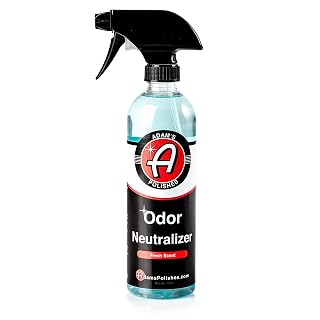
Adam's Polishes
Odor Neutralizer
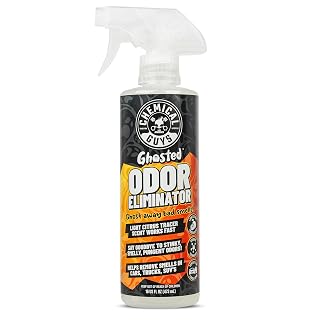
Chemical Guys
Ghosted Complete Interior Vehicle Odor Eliminator
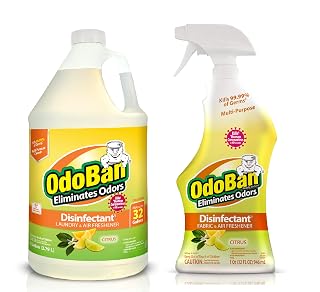
OdoBan
Ready-to-Use Disinfectant and Odor Eliminator (Citrus, 32 oz)
As an Amazon Associate I earn from qualifying purchases. Full disclosure

Community
0 postsShare how you use this product
Drop a quick comment or post a full review with photos and a star rating.
Sign in to postNew here? Create a free account.