CarCareTruth Score
Decent, but wear gloves and ventilate.
Opens Amazon in a new tab. No account needed to look.
Saved to your guest loadout. Sign up to also save to your Cabinet (consumables) or Kit (tools you own).
As an Amazon Associate I earn from qualifying purchases. Full disclosure
Prices may varyThe manufacturer's Safety Data Sheet classifies this product with one or more GHS Category 1 health hazards — the most severe tier. The hazard statements in quotes below are the verbatim GHS language from the SDS, as required by OSHA's Hazard Communication Standard. The line under each statement translates the GHS classification into plain language.
GHS Category 1 skin corrosion — classified as causing irreversible skin damage on contact.
GHS Category 1 eye damage — classified as causing irreversible eye damage on contact.
If on skin or splashed in eyes:
Call Poison Control immediately at 1-800-222-1222 (US, 24/7, free) and have the product container with you. Poison Control's standing guidance is to not induce vomiting after chemical exposure; they will direct first-aid steps based on the specific product.
About this product's hazards. This product's Safety Data Sheet uses signal word DANGER.Read the manufacturer's SDS and follow all safety instructions before use. CarCareTruth ratings translate the manufacturer's safety sheet. They do not replace the SDS or substitute for a hazard assessment specific to your task.
Health score is for adult use as intended, per the manufacturer's SDS. It does not model child ingestion, accidental spill cleanup, or off-label use. See the safety panel below for full hazard classification, and /disclaimer for the full editorial scope.
GHS hazard codes are quoted from the manufacturer’s Safety Data Sheet. PPE tiers below translate those codes and the listed ingredient chemistry; they are not CarCareTruth recommendations.
Show details for all categories ▾Hide details ▴
Translated from the manufacturer’s Safety Data Sheet, Section 2
H318 (serious eye damage, Category 1) and H314 (skin corrosion/eye burns, Category 1) are classified at concentrate strength in SDS Section 2. The concentrate pH of 12.6 is above the 12.0 caustic threshold, which independently forces eye protection at concentrate strength regardless of the working-solution dilution math.
U.S. regulatory standard
29 CFR 1910.133(a)(1); 1910.151(c)
“The employer shall ensure that each affected employee uses appropriate eye or face protection when exposed to eye or face hazards from… liquid chemicals, acids or caustic liquids…”
ANSI Z87.1 (chemical splash protection — incorporated via §1910.6)
OSHA standards apply to workplaces. Cited here as the U.S. reference threshold for the underlying hazard class.
CarCareTruth publishes the cited sources verbatim and does not advise what action a user should take. Consult the full SDS before use.
Translated from the manufacturer’s Safety Data Sheet, Section 2
H314 (skin corrosion, Category 1) is classified at concentrate strength in SDS Section 2. The NaOH/KOH alkaline system at 2.5-10% concentrate drives the corrosive classification, and the concentrate pH of 12.6 exceeds the 12.5 caustic threshold, so skin protection is required when handling the undiluted concentrate.
U.S. regulatory standard
29 CFR 1910.132; 1910.133; 1910.138; 1910.151(c)
“Where the eyes or body of any person may be exposed to injurious corrosive materials, suitable facilities for quick drenching or flushing of the eyes and body shall be provided within the work area for immediate emergency use.”
ANSI Z87.1 (eye/face — incorporated via §1910.6)
OSHA standards apply to workplaces. Cited here as the U.S. reference threshold for the underlying hazard class.
CarCareTruth publishes the cited sources verbatim and does not advise what action a user should take. Consult the full SDS before use.
Translated from the manufacturer’s Safety Data Sheet, Section 8
SDS Section 8 calls for respiratory protection if working conditions cannot keep airborne concentration below exposure limits, and Section 11 separately reports that prolonged inhalation of the product is corrosive to mucous membranes and the upper respiratory tract, the same caustic chemistry behind the H314/H318 codes. Since this product is applied as a mist through a foam cannon, a mask or good ventilation is a sensible precaution beyond a quick outdoor bucket wash.
CarCareTruth publishes the cited sources verbatim and does not advise what action a user should take. Consult the full SDS before use.
No PPE specified in published sources for ventilation. Absence does not imply “not needed” — consult the full Safety Data Sheet.
PPE tiers translate the manufacturer’s SDS and U.S. regulatory standards. Not professional safety advice. How we report safety.
Scope of these PPE tiers. The tiers on this page translate the product's Safety Data Sheet where one is published, plus its ingredient chemistry, into a comparable rating. They describe a formulation, not a situation: a tier is not a safety determination for any specific user, task, quantity, or environment. The manufacturer's label and use instructions govern how the product is handled. Where the product is used at work, the employer's PPE program and hazard assessment under 29 CFR 1910.132 decide what protection is selected, not this page.
No warranties. CarCareTruth makes no warranties, express or implied, and expressly disclaims the implied warranties of merchantability and fitness for a particular purpose.
This product ranks #16 of 19 in Car Shampoo.Three above it ↓
Last reviewed August 2, 2026
TL;DR Strongly alkaline concentrate: a DANGER signal word, H314 skin corrosion and H318 serious eye damage codes, and a pH of 12.6 that requires eye and skin protection undiluted. That chemistry resolves at working dilution, where it cleans reliably and lathers well through a foam gun. The Prop 65 warning is genuine.
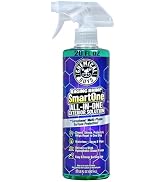
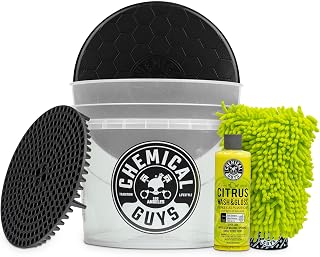
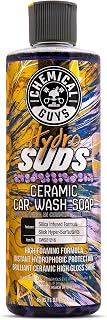
Citrus Wash & Gloss lifts road film and brake dust with a citrus-scented foaming formula for foam cannons, foam guns, and two-bucket washes. Use 1 oz per gallon in a bucket or 45-60 ml in a cannon chamber. Long-term owners confirm thick, slick suds that do not strip wax or sealants at recommended dilution. The gloss polymers can leave light streaking on glass at higher-than-label concentration; shake before use if the bottle has been sitting.
Best for owners with waxed or coated paint who want a high-lather foam-gun shampoo for routine weekly washes; the working solution is not corrosive even though the concentrate is. Skip it if you would rather avoid a caustic concentrate, or need a strip wash before a new coating; use a dedicated strip shampoo instead.
H314 (skin corrosion) and H318 (serious eye damage) are on the SDS at concentrate strength, and the pH of 12.6 requires eye and skin protection undiluted. At working dilution (about 1:256) both codes are expected to resolve. SDS §15 lists two confirmed Prop 65 substances: 1,4-dioxane (cancer, a trace byproduct of surfactant manufacturing) and sulphur dioxide (reproductive harm). One surfactant ingredient carries an aquatic toxicity flag. No EPA Safer Choice certification; "biodegradable" on the listing is a manufacturer claim without SDS confirmation.
Community owners consistently confirm it does not strip wax or standard sealants at the recommended dilution (1 oz per gallon). Chemical Guys markets it as coating-safe, and owners report no adverse effects on coated surfaces at normal wash concentration. Note that wax-safe and ceramic-coating-safe are distinct claims; if your coating requires a specific shampoo per the coating manufacturer's warranty, verify with the coating brand before using any non-approved shampoo.
Yes. The SDS (revised 2025-10-04, §15) lists two Prop 65 substances: 1,4-dioxane (a cancer-listed byproduct of the ethoxylation process in SLES) and sulphur dioxide (reproductive harm). This is a confirmed genuine warning verified against the SDS, not a product-listing false positive.
Yes; owners confirm foam cannon and foam gun compatibility. Owners use roughly 45-60 ml per cannon chamber and report thick, clinging suds. It also works in standard two-bucket washes at 1 oz per gallon.
The DANGER signal word and the required eye/skin protection both come from the concentrate's chemistry: the alkaline formula (pH 12.6 at full strength) carries H314 (skin corrosion) and H318 (serious eye damage) classifications in the SDS, and that pH sits above the 12.5 caustic threshold. That means eye and skin protection are required whenever the concentrate itself is handled, such as during measuring or mixing. At working-solution dilution (1 oz per gallon), the corrosive pH is expected to drop well below the hazard threshold; neither H-code is scored as surviving to working solution in CCT's breakdown, so the wash solution itself is not corrosive.
Yes, multiple owners note that the liquid separates on standing, particularly in larger sizes stored for extended periods. Shaking thoroughly before each use is confirmed practice across the owner reviews community.
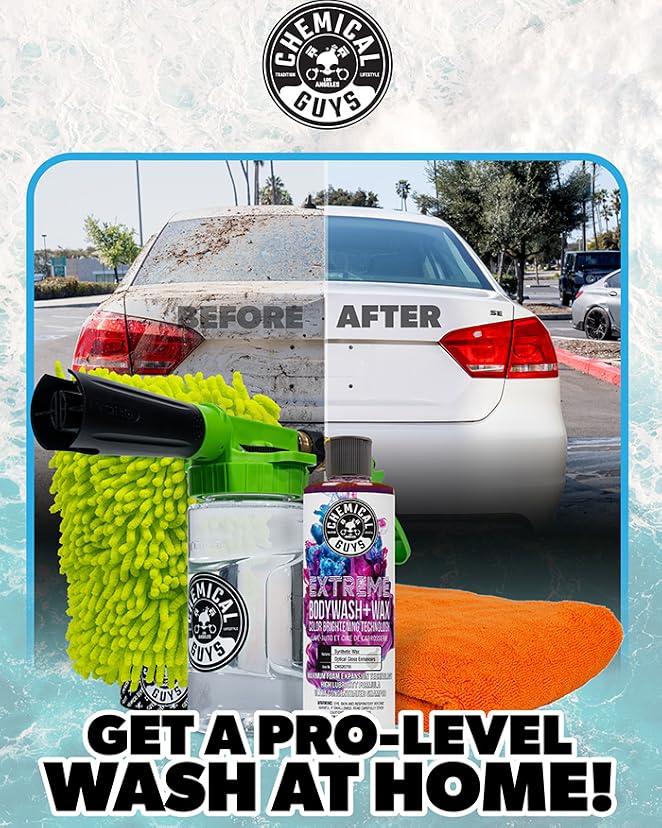
Marketing copy from Chemical Guys, via Amazon. Not editorial.
Weekly pick
One product, one safety verdict, every week. No spam.

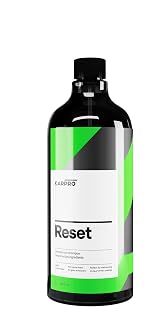
CarPro
Reset Intensive Car Wash Shampoo
SONAX
Gloss Shampoo Concentrate
P&S Detail Products
Pearl Auto Shampoo
Adam's Polishes
Car Wash Shampoo
As an Amazon Associate I earn from qualifying purchases. Full disclosure

Community
0 postsShare how you use this product
Drop a quick comment or post a full review with photos and a star rating.
Sign in to postNew here? Create a free account.