CarCareTruth Score
Decent, but wear gloves and ventilate.
Opens Amazon in a new tab. No account needed to look.
Saved to your guest loadout. Sign up to also save to your Cabinet (consumables) or Kit (tools you own).
As an Amazon Associate I earn from qualifying purchases. Full disclosure
Prices may varyThe manufacturer's Safety Data Sheet classifies this product with one or more GHS Category 1 health hazards — the most severe tier. The hazard statements in quotes below are the verbatim GHS language from the SDS, as required by OSHA's Hazard Communication Standard. The line under each statement translates the GHS classification into plain language.
GHS Category 1 eye damage — classified as causing irreversible eye damage on contact.
If splashed in eyes:
Call Poison Control immediately at 1-800-222-1222 (US, 24/7, free) and have the product container with you. Poison Control's standing guidance is to not induce vomiting after chemical exposure; they will direct first-aid steps based on the specific product.
About this product's hazards. This product's Safety Data Sheet uses signal word DANGER.Read the manufacturer's SDS and follow all safety instructions before use. CarCareTruth ratings translate the manufacturer's safety sheet. They do not replace the SDS or substitute for a hazard assessment specific to your task.
Health score is for adult use as intended, per the manufacturer's SDS. It does not model child ingestion, accidental spill cleanup, or off-label use. See the safety panel below for full hazard classification, and /disclaimer for the full editorial scope.
GHS hazard codes are quoted from the manufacturer’s Safety Data Sheet. PPE tiers below translate those codes and the listed ingredient chemistry; they are not CarCareTruth recommendations.
Show details for all categories ▾Hide details ▴
Translated from the manufacturer’s Safety Data Sheet, Section 2
SDS §2 classifies Eye Dam. Cat 1 (H318 'causes serious eye damage'). The DANGER signal word is driven by this classification. Safety glasses or chemical splash goggles are required during application and brush agitation · H318 means a splash can cause permanent eye damage, not mere irritation.
U.S. regulatory standard
29 CFR 1910.133(a)(1); 1910.151(c)
“The employer shall ensure that each affected employee uses appropriate eye or face protection when exposed to eye or face hazards from… liquid chemicals, acids or caustic liquids…”
ANSI Z87.1 (chemical splash protection — incorporated via §1910.6)
OSHA standards apply to workplaces. Cited here as the U.S. reference threshold for the underlying hazard class.
CarCareTruth publishes the cited sources verbatim and does not advise what action a user should take. Consult the full SDS before use.
Translated from the manufacturer’s Safety Data Sheet, Section 2
SDS §2 classifies Skin Irrit. Cat 2 (H315 'causes skin irritation'). No H314 (skin corrosion) at the mixture level · pH 12 falls below the 12.5 threshold that would escalate to required. Nitrile gloves are appropriate for the application and brush step; the chemistry causes irritation, not corrosion, at this mixture concentration.
U.S. regulatory standard
29 CFR 1910.138(a)
“appropriate hand protection when employees' hands are exposed to hazards such as those from… chemicals which produce an adverse effect on the skin or eyes…”
OSHA standards apply to workplaces. Cited here as the U.S. reference threshold for the underlying hazard class.
CarCareTruth publishes the cited sources verbatim and does not advise what action a user should take. Consult the full SDS before use.
Only when: in enclosed space
Translated from the manufacturer’s Safety Data Sheet, Section 8
No inhalation H-codes (H334/H335/H331) in SDS §2. The SDS §7 advises adequate ventilation as a general precaution. Spray mist at normal outdoor or open-garage application volumes presents no documented inhalation hazard; the enclosed-space trigger applies if applying in a poorly ventilated enclosed area.
CarCareTruth publishes the cited sources verbatim and does not advise what action a user should take. Consult the full SDS before use.
No PPE specified in published sources for ventilation. Absence does not imply “not needed” — consult the full Safety Data Sheet.
PPE tiers translate the manufacturer’s SDS and U.S. regulatory standards. Not professional safety advice. How we report safety.
Scope of these PPE tiers. The tiers on this page translate the product's Safety Data Sheet where one is published, plus its ingredient chemistry, into a comparable rating. They describe a formulation, not a situation: a tier is not a safety determination for any specific user, task, quantity, or environment. The manufacturer's label and use instructions govern how the product is handled. Where the product is used at work, the employer's PPE program and hazard assessment under 29 CFR 1910.132 decide what protection is selected, not this page.
No warranties. CarCareTruth makes no warranties, express or implied, and expressly disclaims the implied warranties of merchantability and fitness for a particular purpose.
This product ranks #5 of 7 in Tire Cleaner.Three above it ↓
Last reviewed August 2, 2026
TL;DR Moderate-alkaline tire cleaner (pH 12, DANGER signal word) that handles routine bloom removal reliably · but H318 serious eye damage means safety glasses are required, not optional. Heavy neglected bloom gets mixed results at best.
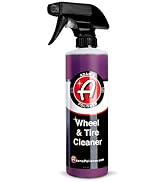
Class 2 moderate-alkaline chemistry: pH 12 alkaline silicate and nonionic surfactant system that dissolves antiozonant bloom and dressing residue. Spray on a wet tire, dwell 30-60 seconds, agitate with a stiff brush, rinse thoroughly. Foams well on application; community owners consistently call it a solid prep step before tire shine. On routine and moderate bloom, single-application results are reliable. On severely neglected tires, results are limited to no improvement on heavy browning · some saw no change even with agitation.
Buy it for routine bloom maintenance and dressing prep. The foaming pump-spray is easy to use and the finish-prep results are well-supported. Skip it if your tires have heavy neglected browning · the chemistry is not aggressive enough for a single-strip on severely oxidized rubber. Also skip it for weekly use; the pH 12 alkalinity is better suited to monthly or occasional cleaning.
DANGER signal word is driven by H318 (Eye Dam. Cat 1): direct eye contact can cause permanent damage. Eye protection required. H315 (skin irritation) is also present, but no H314 skin corrosion · nitrile gloves are appropriate. No inhalation H-codes; apply outdoors or with the garage door open per SDS §7. Water-based, VOC 0.64 g/L, CARB compliant, no PFAS. Prop 65: trace 1,4-dioxane (0.0000015 wt%) confirmed in SDS §15.
The DANGER signal word on the SDS is driven by H318 (Eye Dam. Cat 1 · serious eye damage), not by H314 skin corrosion. The mixture pH is 12, which is below the 12.5 threshold for the 'caustic alkaline' class. The formula can seriously damage eyes on direct contact, which is why eye protection is required · but it does not carry the same skin-corrosion risk as true caustic cleaners like Bleche-Wite.
Community evidence is mixed. The pH 12 moderate-alkaline chemistry is more aggressive than truly mild pH-9-10 alternatives, and the DANGER classification warrants caution at high-frequency cadence. Monthly or bi-monthly use for routine maintenance is the better cadence; for severe neglected bloom, use it as a one-time treatment rather than a weekly habit.
On routine bloom and dressing residue buildup, yes · community reports are solid for standard accumulation. On severely neglected tires with heavy oxidized bloom, effectiveness is limited; that type of neglect may require a more aggressive or repeated treatment approach.
The SDS §15 lists 1,4-dioxane (CAS 123-91-1) at 0.0000015 wt% as a trace California Prop 65 ingredient (cancer category). The concentration is extremely low, but California law requires disclosure at any detectable level. The product listing data field does not flag it, but the SDS §15 is the controlling source.
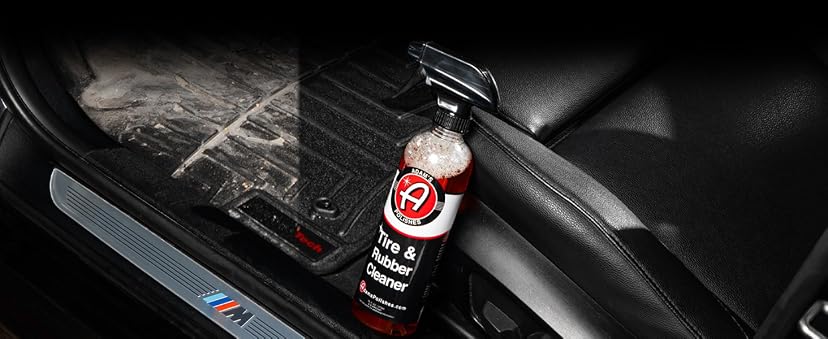
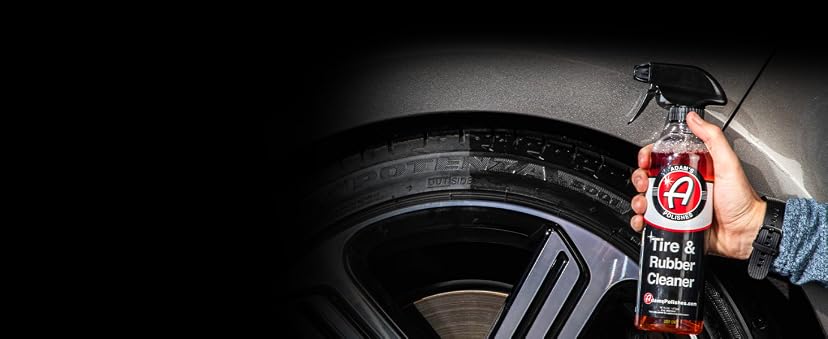
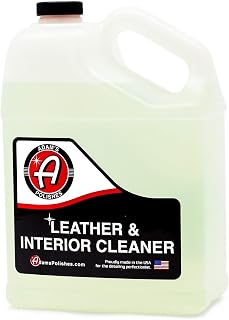
Marketing copy from Adam's Polishes, via Amazon. Not editorial.
Weekly pick
One product, one safety verdict, every week. No spam.

Griot's Garage
Rubber Cleaner
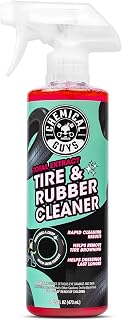
Chemical Guys
Total Extract Tire & Rubber Cleaner
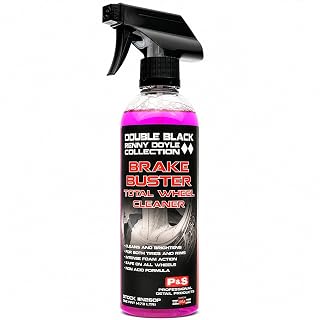
P&S Detail Products
Brake Buster Wheel & Tire Cleaner
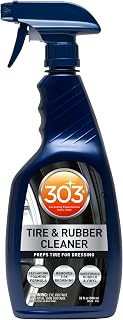
303 Products
303 Tire and Rubber Cleaner
As an Amazon Associate I earn from qualifying purchases. Full disclosure

Community
0 postsShare how you use this product
Drop a quick comment or post a full review with photos and a star rating.
Sign in to postNew here? Create a free account.