CarCareTruth Score
Recommended.
Opens Amazon in a new tab. No account needed to look.
Saved to your guest loadout. Sign up to also save to your Cabinet (consumables) or Kit (tools you own).
As an Amazon Associate I earn from qualifying purchases. Full disclosure
Prices may varyHealth score is for adult use as intended, per the manufacturer's SDS. It does not model child ingestion, accidental spill cleanup, or off-label use. See the safety panel below for full hazard classification, and /disclaimer for the full editorial scope.
GHS hazard codes are quoted from the manufacturer’s Safety Data Sheet. PPE tiers below translate those codes and the listed ingredient chemistry; they are not CarCareTruth recommendations.
Show details for all categories ▾Hide details ▴
Only when: when spraying
Beyond SDS: translated from the ingredient chemistry
No H319 or H318 classified in SDS §2; mixture is GHS-unclassified. Pump-spray application at close range inside the vehicle cabin creates a mist exposure pathway. The situational tier reflects the spray_application trigger in the enclosed-cabin use scenario, not an SDS classification.
CarCareTruth publishes the cited sources verbatim and does not advise what action a user should take. Consult the full SDS before use.
Only when: prolonged use
Beyond SDS: translated from the ingredient chemistry
No H315 or H314 classified in SDS §2. Sodium metasilicate (CAS 6834-92-0) carries H314/H318 at the pure ingredient level, but SDS §2 confirms the mixture is unclassified. Situational tier applies during prolonged manual brush agitation where repeated skin contact occurs.
CarCareTruth publishes the cited sources verbatim and does not advise what action a user should take. Consult the full SDS before use.
Only when: in enclosed space
Beyond SDS: translated from the ingredient chemistry
No H335 or H331 classified in SDS §2. The enclosed-cabin exposure scenario (pump-spray into a vehicle interior with limited airflow) is the basis for the situational tier per the category health rubric, not an SDS classification.
CarCareTruth publishes the cited sources verbatim and does not advise what action a user should take. Consult the full SDS before use.
No PPE specified in published sources for ventilation. Absence does not imply “not needed” — consult the full Safety Data Sheet.
PPE tiers translate the manufacturer’s SDS and U.S. regulatory standards. Not professional safety advice. How we report safety.
This product ranks #1 of 13 in Fabric Upholstery Cleaner.
Last reviewed July 8, 2026
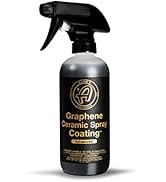
TL;DR Removes coffee, pet stains, food spills, and three-year-old set-in soiling reliably with a brush-and-blot technique; no wet-vac required for most jobs, though extraction improves results on heavy soiling. The dye-free, perfume-free formula is a genuine differentiator: no fragrance residue, no chemical smell, and no added dye risk on light-colored upholstery. The SDS is GHS-unclassified with no signal word.
This is a ready-to-use spray that lifts stains through surfactant action and mild alkalinity (pH 9.8 to 10.0) rather than enzymes. Spray onto the stain, agitate with a brush for 30 to 60 seconds, then blot. The non-foaming formula stays where you spray it, so you can work a spot without soaking the surrounding fabric. Across a solid base of owner reviews and a decade of Adam's Forums threads, the consistent finding is reliable lift on coffee, food spills, pet stains, and grime set for years. One caveat: heavy application on a deeply saturated liquid stain can temporarily draw up more material before it clears, so use a lighter hand or dry and retreat. Fabric condition after use is consistently good, with no stiffening, color shift, or residue reported on OEM cloth or headliner fabric.
A solid fit for owners dealing with typical interior stains on cloth seats, floor mats, and headliners who want a fragrance-free formula that works with basic tools. The absence of dye and perfume suits light-colored upholstery, where a tinted or scented cleaner could leave a trace. Buyers tackling heavy grease, oil, or petroleum-based stains may get better first-pass results from an all-purpose cleaner with a degreaser, since this formula is surfactant-based rather than solvent-heavy.
The SDS (GHS 2.0, rev. 2024-11-22) classifies this mixture as GHS-unclassified with no signal word and an HMIS Health rating of 0; no GHS hazard codes apply at the mixture level in SDS §2. Sodium metasilicate carries H314 and H318 at the pure-ingredient level, but SDS §2 and §11 confirm those do not apply to the finished mixture at working dilution. SDS §15 discloses a trace of 1,4-dioxane at 0.12 ppb, below the California Prop 65 safe-harbor threshold by orders of magnitude, so no label warning is required. The formula is water-based with no volatile co-solvent, giving an estimated VOC well below 10 g/L. Because residue remains in the fibers after blotting, environmental scoring treats it as leave-on; that pathway multiplier scales deductions, and with none to soften, the score holds at the base of 7.0.
The formula is dye-free and perfume-free, which removes two of the common risks to light upholstery: a tinted cleaner leaving a trace and a fragrance residue lingering in the fabric. Community threads spanning years report no color shift or fiber stiffening on OEM cloth or headliner fabric. At pH 9.8 to 10.0 it is mildly alkaline, so spot-testing a hidden area before repeated use on delicate or specialty fabric is sensible.
No. A brush-and-blot technique is sufficient for most stains: spray onto the stain, agitate with a brush for 30 to 60 seconds, then blot with a clean towel. The non-foaming formula stays where you spray it rather than spreading, which helps you work a specific spot. A wet-vac or extractor improves results on deep-set or heavily saturated soiling, but it is not required for typical interior stains.
No. Nothing in the SDS, on the label, or on the product page names an enzyme. The active mechanism is a nonionic surfactant blend combined with a phosphate builder and sodium metasilicate at mild alkalinity (pH 9.8 to 10.0), which lifts stains by surfactant action rather than enzymatic breakdown. That makes it broadly effective across coffee, food, pet, and grime stains, though it lacks the substrate-specificity an enzyme brings to protein stains.
The SDS (GHS 2.0, rev. 2024-11-22) classifies this mixture as GHS-unclassified with no signal word and an HMIS Health rating of 0, so no GHS hazard codes apply at the mixture level. Sodium metasilicate carries H314/H318 at the pure-ingredient level, but SDS §2 and §11 confirm those do not apply to the finished product at working dilution. The PPE tiers are situational, reflecting close-range pump-spray use in an enclosed cabin rather than a classified hazard.
Marketing copy from Adam's Polishes, via Amazon. Not editorial.
Weekly pick
One product, one safety verdict, every week. No spam.
Currently in the top 2 of its category — appears as a pick in:







SONAX
Upholstery & Alcantara Cleaner
Aero Cosmetics
Interior Cleaner
Autoglym
Interior Shampoo
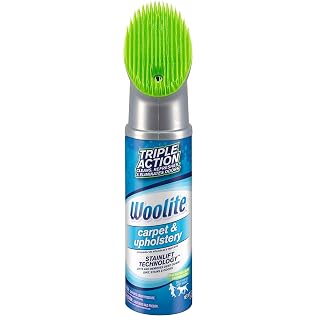
Woolite
Carpet & Upholstery Cleaner
As an Amazon Associate I earn from qualifying purchases. Full disclosure

Community
0 postsShare how you use this product
Drop a quick comment or post a full review with photos and a star rating.
Sign in to postNew here? Create a free account.