CarCareTruth Score
Decent, but wear gloves and ventilate.
Opens Amazon in a new tab. No account needed to look.
Saved to your guest loadout. Sign up to also save to your Cabinet (consumables) or Kit (tools you own).
As an Amazon Associate I earn from qualifying purchases. Full disclosure
Prices may varyThe manufacturer's Safety Data Sheet classifies this product with one or more GHS Category 1 health hazards — the most severe tier. The hazard statements in quotes below are the verbatim GHS language from the SDS, as required by OSHA's Hazard Communication Standard. The line under each statement translates the GHS classification into plain language.
GHS Category 1 eye damage — classified as causing irreversible eye damage on contact.
If splashed in eyes:
Call Poison Control immediately at 1-800-222-1222 (US, 24/7, free) and have the product container with you. Poison Control's standing guidance is to not induce vomiting after chemical exposure; they will direct first-aid steps based on the specific product.
About this product's hazards. This product's Safety Data Sheet uses signal word DANGER.Read the manufacturer's SDS and follow all safety instructions before use. CarCareTruth ratings translate the manufacturer's safety sheet. They do not replace the SDS or substitute for a hazard assessment specific to your task.
Health score is for adult use as intended, per the manufacturer's SDS. It does not model child ingestion, accidental spill cleanup, or off-label use. See the safety panel below for full hazard classification, and /disclaimer for the full editorial scope.
GHS hazard codes are quoted from the manufacturer’s Safety Data Sheet. PPE tiers below translate those codes and the listed ingredient chemistry; they are not CarCareTruth recommendations.
Show details for all categories ▾Hide details ▴
Translated from the manufacturer’s Safety Data Sheet, Section 2
H318 (serious eye damage Cat 1) confirmed in SDS §2; GHS05 pictogram on label. Eye protection required by the hazard classification. Upward pump-spray at wheel-arch height creates a credible mist-fallback pathway.
U.S. regulatory standard
29 CFR 1910.133(a)(1); 1910.151(c)
“The employer shall ensure that each affected employee uses appropriate eye or face protection when exposed to eye or face hazards from… liquid chemicals, acids or caustic liquids…”
ANSI Z87.1 (chemical splash protection — incorporated via §1910.6)
OSHA standards apply to workplaces. Cited here as the U.S. reference threshold for the underlying hazard class.
CarCareTruth publishes the cited sources verbatim and does not advise what action a user should take. Consult the full SDS before use.
Translated from the manufacturer’s Safety Data Sheet, Section 2
H317 (skin sensitizer) confirmed in SDS §2. Protective gloves recommended by the sensitization hazard classification; sensitized individuals react on any exposure. H312 and H314 are absent from SDS §2, so the tier remains recommended rather than required.
U.S. regulatory standard
29 CFR 1910.138(a); 1910.132(d)
“appropriate hand protection when employees' hands are exposed to hazards such as those from skin absorption of harmful substances.”
OSHA standards apply to workplaces. Cited here as the U.S. reference threshold for the underlying hazard class.
CarCareTruth publishes the cited sources verbatim and does not advise what action a user should take. Consult the full SDS before use.
Only when: in enclosed space
Translated from the manufacturer’s Safety Data Sheet, Section 8
No inhalation H-codes (H332, H335, H330, H331) appear in SDS §2. The sulfur odor during dwell is a sensory indicator of volatile thioglycolate exposure; use outdoors or in well-ventilated areas. Indoor or garage-with-door-closed application moves respiratory protection from situational to advisable.
CarCareTruth publishes the cited sources verbatim and does not advise what action a user should take. Consult the full SDS before use.
No PPE specified in published sources for ventilation. Absence does not imply “not needed” — consult the full Safety Data Sheet.
PPE tiers translate the manufacturer’s SDS and U.S. regulatory standards. Not professional safety advice. How we report safety.
Scope of these PPE tiers. The tiers on this page translate the product's Safety Data Sheet where one is published, plus its ingredient chemistry, into a comparable rating. They describe a formulation, not a situation: a tier is not a safety determination for any specific user, task, quantity, or environment. The manufacturer's label and use instructions govern how the product is handled. Where the product is used at work, the employer's PPE program and hazard assessment under 29 CFR 1910.132 decide what protection is selected, not this page.
No warranties. CarCareTruth makes no warranties, express or implied, and expressly disclaims the implied warranties of merchantability and fitness for a particular purpose.
This product ranks #8 of 12 in Iron Remover.Three above it ↓
Last reviewed July 31, 2026
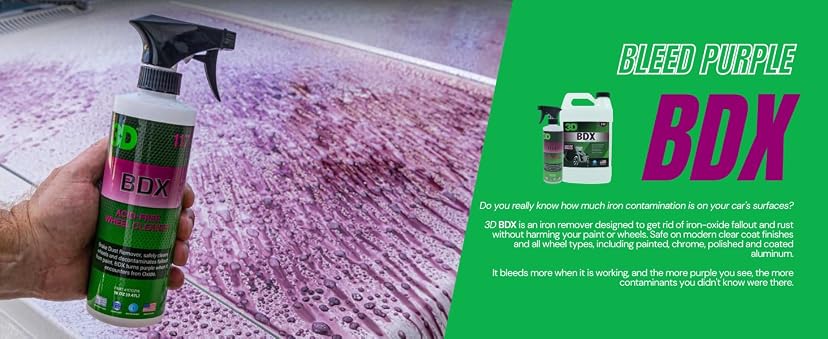
TL;DR A pH-neutral iron remover that bleeds vivid burgundy-to-magenta within the labeled dwell window, with the publicly hosted SDS to back the formula claims. Signal word is DANGER, driven by H318 (serious eye damage); eye protection is required by the SDS chemistry, gloves are recommended for the H317 sensitizer classification.
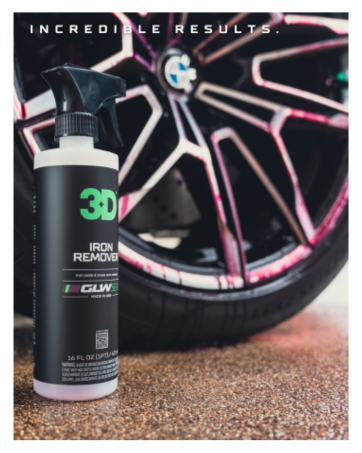
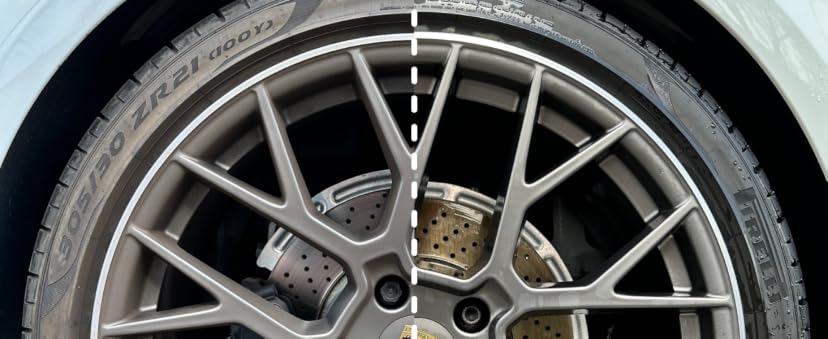
Spray onto cool paint, wheels, or glass, watch the color-change reaction develop on iron-contaminated spots, then rinse after the labeled under-60-second dwell. The active chemistry lifts bonded iron as a soluble complex, and the visible bleed is direct feedback the formula is doing its job. Community reports describe a vivid color change on typical brake-dust contamination at moderate dwell times; heavy industrial fallout or hot wheels can produce residue or need a second application. The gallon size is the value play for full-vehicle decontamination sessions.
The right buy for enthusiasts maintaining ceramic-coated paint or chrome wheels who want a publicly documented, pH-neutral formula with manufacturer SDS access. The 3D Pro Series brand transparency is a meaningful differentiator. Skip it if a fragrance-masked formula is non-negotiable, since BDX runs the full sulfur character; the heaviest rail-dust contamination may also need a more aggressive comparison product.
The manufacturer-direct SDS classifies the product as DANGER, driven by H318 (serious eye damage Cat 1), with H302 and H317 also confirmed. Eye protection is required by the H318 classification; gloves are recommended by the H317 sensitizer code. Both named ingredients are confirmed biodegradable per SDS §12; the C9-11 PARETH-6 surfactant carries aquatic toxicity, so avoid storm-drain disposal and rinse onto soil away from waterways.
The brand markets BDX as safe for paint, clear coat, wheels, plastic trim, and ceramic-coated surfaces. SDS §9 confirms pH 5-7 (essentially neutral), which supports the coating-tolerant claim. No independent community reports of coating or PPF damage have surfaced across the owner reviews base. Limit dwell to the labeled under-60-second window and rinse thoroughly; do not let the product dry on the surface.
The DANGER signal word comes from H318 (serious eye damage Cat 1), not from pH or acidity. The active ingredient (sodium mercaptoacetate) carries an eye-damage classification at the concentration used. Surface tolerance and user-safety are independent: BDX can be pH-neutral and coating-safe and still require eye protection per the SDS chemistry.
The active ingredient reacts with ferrous iron to form an iron-thioglycolate complex. The chemistry-precise color is deep red or burgundy; on a wheel the visible runoff often reads as magenta or pink-purple because the burgundy reaction product is diluted into rinse foam. The brand calls it purple; either way, the color confirms the formula is finding and dissolving bonded iron.
Yes. 3D Car Care hosts the SDS publicly on the compliance page (3dproducts.com/pages/safety-data-sheets-sds-compliance). The PDF is the manufacturer-direct US-market version, dated 2024-06-05, and lists product code 117 for BDX.
Marketing copy from 3D Car Care, via Amazon. Not editorial.
Weekly pick
One product, one safety verdict, every week. No spam.


CarPro
IronX Iron Remover (500ml)
CarPro
IronX Iron Remover (Lemon Scent, 500ml)
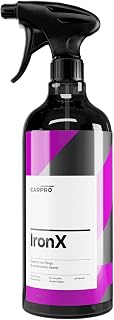
CarPro
IronX Iron Remover Cherry Scent (1 Liter)
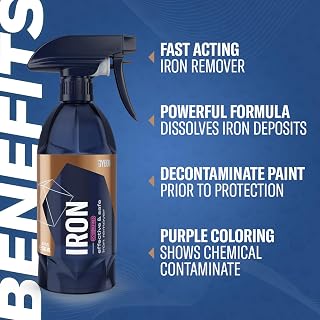
Gyeon
Q²M Iron Redefined
As an Amazon Associate I earn from qualifying purchases. Full disclosure

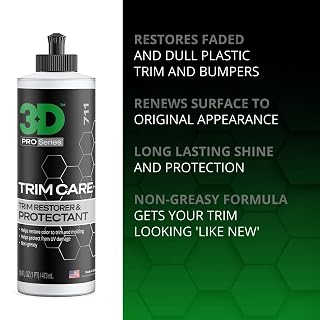
Community
0 postsShare how you use this product
Drop a quick comment or post a full review with photos and a star rating.
Sign in to postNew here? Create a free account.