
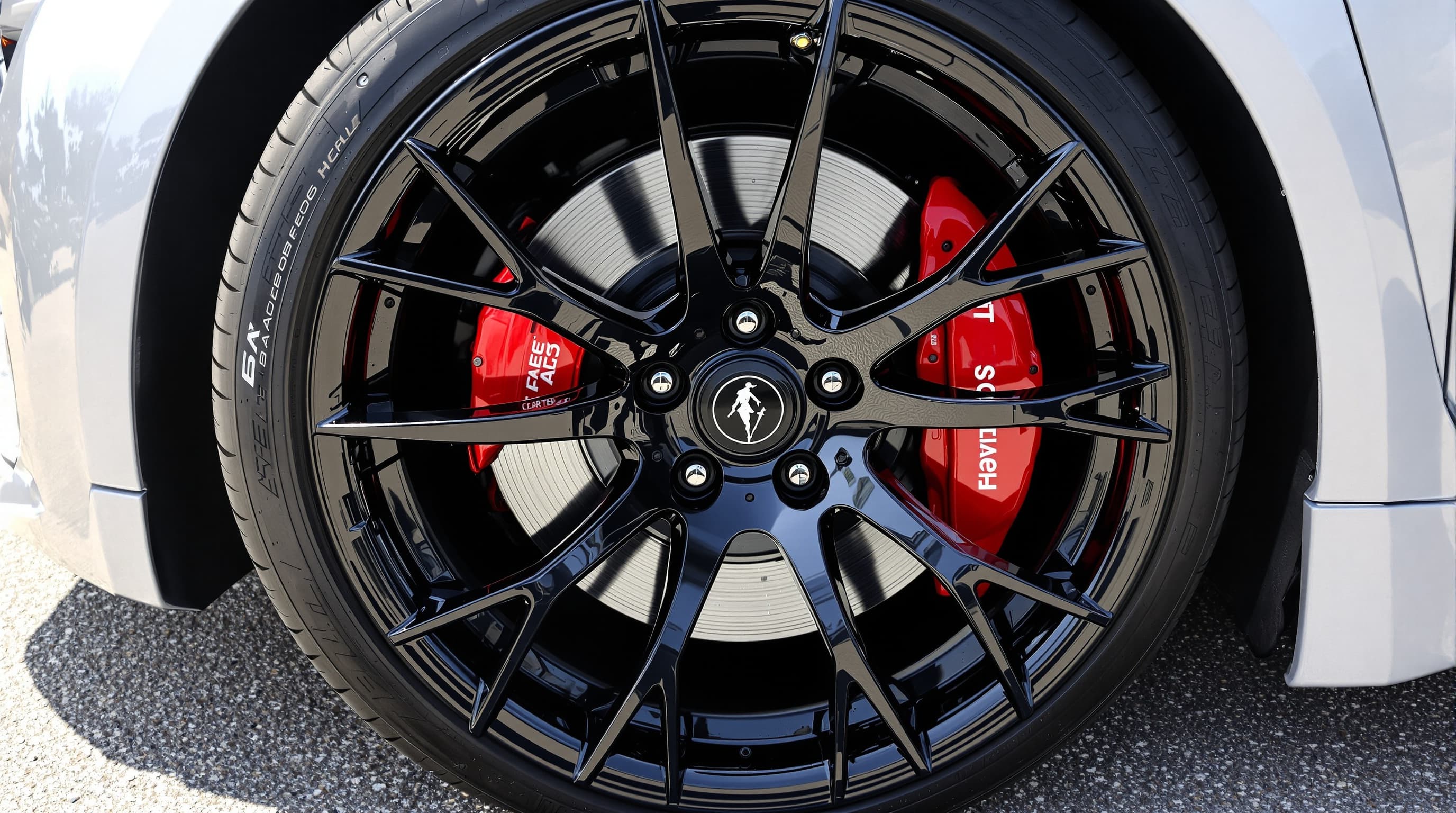
How to Clean Your Wheels Without Wrecking the Finish
Wheels are the dirtiest thing you'll touch on the whole car, and they're also the easiest to permanently ruin with the wrong bottle. Most "how to clean your wheels" articles skip the part that actually matters: the cleaner you pick has to match the finish on your wheel, or you etch it. So before the step-by-step, here's the call I'd make for almost everybody.
Use a pH-neutral, acid-free wheel cleaner. It's safe on every common finish, it lifts bonded brake dust through iron chemistry instead of brute acid, and it takes the single biggest way to wreck a wheel off the table. Reach for an acid cleaner only if you have a known bare-metal finish that can take it, and even then read the safety data sheet first.
That's the whole philosophy. Now the method.
Match the cleaner to the finish first
This is the step nobody else puts at the top, and it's the one that saves a $400 wheel. Your factory alloys are almost certainly clear-coated, which means a thin layer of clear lacquer sits over the aluminum. Acid eats that clear coat a microscopic layer at a time, and the damage is cumulative and permanent. Each acid wash takes a little more.
Here is the go/no-go grid. Find your finish, then pick the column on the right.
| Wheel finish | Acid / strong cleaner | Safe choice |
|---|---|---|
| Clear-coated factory alloy (most cars) | Unsafe. Etches and dulls the clear coat | pH-neutral / iron-reactive |
| Bare polished aluminum | Unsafe. Clouds and pits the raw metal instantly | pH-neutral, or a dedicated metal polish |
| Anodized | Unsafe. Acid strips and discolors the anodized oxide layer, and it can't be polished back out | pH-neutral only |
| Chrome | Unsafe. Milky, dark, or greenish staining that can't be reversed | pH-neutral |
| Powder-coated | Generally durable, but harsh acid can still dull or etch it over time with no upside | pH-neutral |
| Ceramic-coated | Unsafe. Acid degrades the coating | pH-neutral |
| Freshly painted / repaired | Unsafe. Crazes, cracks, discolors | pH-neutral, gently |
Notice the pattern. There is no row where acid is the right default. The closest thing to an exception is a bare, uncoated finish a pro is deliberately working, and even there it's a judgment call against the SDS.
This isn't a forum opinion. The gold-standard source here is a GM service bulletin filed with NHTSA, which flatly tells owners not to use cleaners containing ammonium bifluoride, hydrofluoric, hydrochloric, sulfamic, phosphoric, hydroxyacetic, and most other acids on chrome wheels "or any wheels," and notes that acid-stained wheels are not covered under warranty. On chrome especially, acid wicks through the micro-cracked plating and attacks the aluminum underneath, lifting the chrome, which is why that bulletin was written for chromed aluminum wheels in the first place. When the carmaker writes a bulletin telling its own dealers this, it isn't marketing.
So when you don't know exactly what finish you've got, the answer writes itself: pH-neutral, every time.
Brake dust is iron, and that changes everything
Here's why your regular car soap doesn't cut it on a dirty wheel. The black-gray grime caked onto your rim is mostly iron, worn off the cast-iron brake rotor as you drive and heat-fused onto the wheel face. Iron makes up a large share of brake dust by weight, most of it shed off the cast-iron rotor as you brake. It bonds to the finish, and once water hits it those embedded particles start to rust into little orange specks.
Soap and a brush slide right over bonded iron. That's the whole reason iron-removing wheel cleaners exist.
An iron remover uses a sulfur-based chemistry (a thioglycolate active) that grabs onto the iron and converts it into a compound that dissolves in water and rinses away. The visual proof is the bleed: spray it on a contaminated wheel and watch it run deep red or purple as it reacts. The first time you see it, it looks like the wheel is bleeding rust or the cleaner is eating the metal. It isn't. That color is the iron bonding with the cleaner's chemistry into a water-soluble complex, and it means the cleaner is doing exactly what it's supposed to. A wheel that barely bleeds usually wasn't holding much embedded iron, though a freshly sealed or ceramic-coated wheel won't bleed either, and tar or baked-on film won't react at all (that's a separate solvent job).
The reason this matters for finish safety: that thioglycolate chemistry pulls bonded iron without needing acid, which is why a modern iron remover can be pH-neutral and still beat heavy brake dust. You get the cleaning power and skip the etching risk.
Before you spray: cool, shaded, one wheel at a time
Two environmental rules, and they're not optional.
Work on cool wheels. If you just got home, give them time to cool to the touch, often around 30 minutes and longer after hard or stop-and-go driving, and park in the shade rather than full sun. A hot wheel or direct sunlight flash-dries the cleaner before you can rinse it off, and that's how you get streaks, spotting, and in the worst case etching from cleaner that concentrated as it dried.
Never let wheel cleaner dry on the surface. This is the single most-repeated warning from every manufacturer for a reason. Cleaner that dries on the wheel leaves chemical staining, and it's worst on dark, matte, and anodized finishes. The GM bulletin even traces concentrated damage to cleaner that pooled under wheel weights and never got rinsed out. So you work one wheel completely start to finish before moving to the next, and you keep it wet until it's rinsed.
While you're at it, keep your wheel tools separate from your paint tools. Wheel grit is iron-rich and abrasive, and a wheel mitt that goes back into your paint bucket grinds that grit into your clear coat on the next panel. Dedicated wheel bucket, dedicated wheel brushes, full stop.
How to clean your wheels: step-by-step
Do these in order, one wheel at a time, and don't let anything dry between steps.
- Pre-rinse. Blast the wheel with water first to knock off loose grit and road dirt. Skip this and you'll grind that grit into the finish when you start brushing, which leaves fine scratches.
- Spray the cleaner. Cover the face and get it into the barrel. Aim at the wheel face and barrel so most of the product lands on the finish rather than blasting deep behind the spokes.
- Let it dwell. Give it the labeled time, usually somewhere around one to four minutes, and let the color change work. Don't exceed the label, and don't let it dry. On a cool, shaded wheel that dwell is harmless; the risk is letting it sit and start drying on a warm wheel, which is exactly why you cooled it first.
- Agitate, barrels first. Use a long, soft barrel brush for the inner barrels, a soft face brush for the spokes, and a small soft detail brush for the lug nuts, emblems, and tight crevices. Clean the inner barrels first, because pulling a brush back out of the barrel drags contamination onto the face. Soft, natural-style bristles keep you from micro-scratching, so skip stiff or wire brushes on a coated face. Rinse your brushes between wheels.
- Rinse thoroughly. Strong stream of water, hit every crevice, the barrels, and the lug area, and get all of it off before any product dries. A thorough final rinse also flushes any overspray off the brake hardware, so there's no need to fuss over the rotor and pads separately. Keep high-pressure water off stickers, center caps, and wheel weights.
- Dry it. A blower into the lug nuts and tight spots, then a dedicated microfiber towel. This is what stops water spots and mineral deposits from drying on a clean wheel.
That's the core wash. One more optional step pays you back for weeks.
- Seal it (optional, recommended). On a clean, dry wheel, lay down a wheel sealant or ceramic wheel spray. The hydrophobic layer makes brake dust and road grime far less likely to bond, so your next several cleans are often just a rinse. Some sealants hold for a long stretch, even a couple of years on a daily driver.
Gloves, ventilation, and which cleaner you're actually holding
CarCareTruth grades wheel cleaners on cleaning power and on health straight from the safety data sheet, and the PPE you need depends entirely on which chemistry you bought. We don't echo blanket "wear a respirator" boilerplate. We read the hazard codes. For the bigger picture on when you actually need gloves or a respirator, we cover that in its own guide.
A mild pH-neutral cleaner like Griot's Heavy-Duty Wheel Cleaner carries a WARNING signal word with skin-irritation, eye-irritation, and respiratory-irritation codes, and nothing corrosive. The honest translation: gloves and eye protection are sensible if you're prone to splashing it around, and you just don't stand there misting it in a sealed garage. No respirator needed. The same is true of iron removers in general, though the thioglycolate active is a skin sensitizer, so gloves are a genuinely good idea for repeated use rather than a CYA line.
The strong acid cleaners are a different animal. Some heavy-duty and wire-wheel acid products still contain hydrofluoric acid or ammonium bifluoride, and those carry a DANGER signal word with severe skin-burn and eye-damage codes. Hydrofluoric acid is uniquely nasty: a dilute burn can feel painless for hours before causing deep tissue and systemic damage, and the CDC has documented a real cluster of HF injuries that came specifically from people washing vehicles with acid wheel cleaners. With this class, gloves, eye and face protection, and real ventilation aren't a suggestion, they're required by the chemistry, not by boilerplate. This is most of why we grade acid wheel cleaners harshly and steer owners to pH-neutral instead.
If you read the SDS and it shows corrosion (not just irritation), treat it like the corrosive it is. For the full hazard breakdown, see whether wheel cleaner is actually toxic, plus our rundown of detailing chemicals that can damage paint, trim, or your lungs.
Where wheels fit in the wash, and what to do next
Clean wheels first, before you wash the paint. They're the filthiest part of the car, and doing them first keeps all that iron grit out of your paint wash water. Once the wheels are done, move to the body and wash top-down. Our two-bucket, rinseless, and waterless wash methods guide walks through the body side.
Clean the tire and wheel before you dress the rubber, never after. Dressing first just gets washed and brushed off, and dressing slung onto a clean wheel is a mess. Our tire dressing chemistry guide covers the clean-then-dress sequence and which dressing to use.
One thing an iron remover won't touch: tar and road film smeared low on the wheel or fender. That's a solvent job, not an iron-chemistry job, so reach for a bug and tar remover for those spots.
When you're ready to pick a bottle, the full ranked list lives at our wheel cleaner buying guide, where every cleaner is scored on cleaning power and on its SDS health profile, acid versus pH-neutral. The current top pick is Bilt Hamber Auto-Wheel Active Wheel Cleaner, a pH-neutral iron remover that bleeds red and is safe across painted alloy, chrome, anodized, and powder-coated finishes. And if you want the rest of this chapter, tires, brakes, and the gear around them, the wheels, tires, and brakes hub ties it together.
Sources
- GM/NHTSA Service Bulletin 00-03-10-002K: Chemical Staining, Pitting, Corrosion of Chromed Aluminum Wheels. https://static.nhtsa.gov/odi/tsbs/2017/MC-10137600-9999.pdf
- Griot's Garage Wheel Cleaner Safety Data Sheet. https://www.griotsgarage.com/content/safetydatasheet/Wheel%20Cleaner%20SDS%2010-24-2016.pdf
- CarPro Iron-X Safety Data Sheet. https://labelsds.com/images/user_uploads/Iron%20X%20SDS%204-5-23.pdf
- Physicochemical and Toxicological Characterization of Airborne Brake Wear Particles. PMC. https://pmc.ncbi.nlm.nih.gov/articles/PMC12918519/
- NIOSH Pocket Guide to Chemical Hazards: Thioglycolic acid. https://www.cdc.gov/niosh/npg/npgd0610.html
- OSHA Chemical Sampling Information: Thioglycolic Acid. https://www.osha.gov/chemicaldata/480
- New Jersey Right-to-Know Hazardous Substance Fact Sheet: Thioglycolic Acid. https://www.nj.gov/health/eoh/rtkweb/documents/fs/1848.pdf
- CDC MMWR: Occupational Hydrofluoric Acid Injury from Car and Truck Washing, Washington 2001-2013. https://www.cdc.gov/mmwr/preview/mmwrhtml/mm6432a4.htm
- CDC/NIOSH Pocket Guide: Hydrogen Fluoride/Hydrofluoric Acid. https://www.cdc.gov/niosh/npg/npgd0334.html