
Optima Batteries
YellowTop D35 Dual-Purpose AGM BatteryCCT
Score8.0*/10
Score8.0*/10
Health9.0Env6.7Price
Editorial score, not a lab testOur #1 Optima Batteries pick
Top-ranked Automotive Battery in our Optima Batteries lineup, scored independently on effectiveness, health, and environmental impact. No paid placements.
As an Amazon Associate I earn from qualifying purchases. Full disclosure
Optima makes AGM car batteries built around SpiralCell — spiral-wound absorbed glass mat cells that pack more plate surface into the case than a conventional flat-plate battery, which is why an Optima car battery carries a distinctive cylindrical look under the lid. The lineup below is what we've reviewed and scored: the RedTop 25 for pure cranking power, and three YellowTop dual-purpose batteries sized for different vehicles. If you're shopping for an Optima car battery, the short version is: RedTop for a stock daily driver with no aftermarket electronics, YellowTop if you run a stereo, winch, or other accessory load that drains the battery between drives.
Affiliate disclosure: CarCareTruth is reader-supported. As an Amazon Associate I earn from qualifying purchases. We may also earn commissions from other retailers linked on this page, at no extra cost to you. Affiliate revenue never influences our scores or rankings. Full disclosure
Optima Batteries
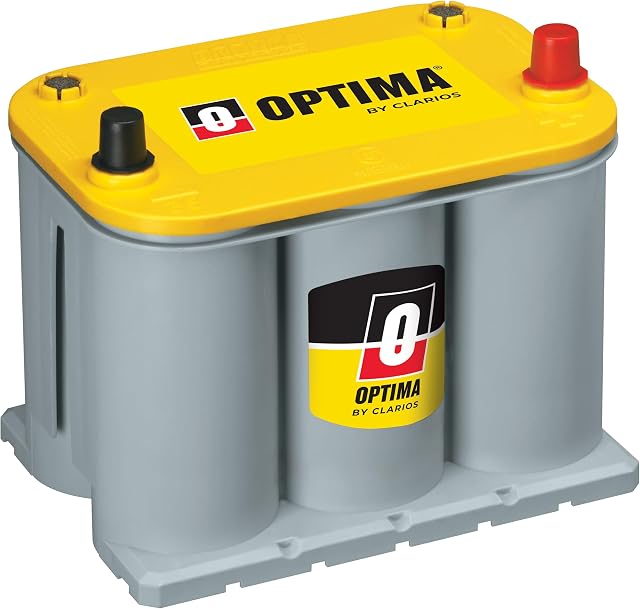
YellowTop D35 Dual-Purpose AGM Battery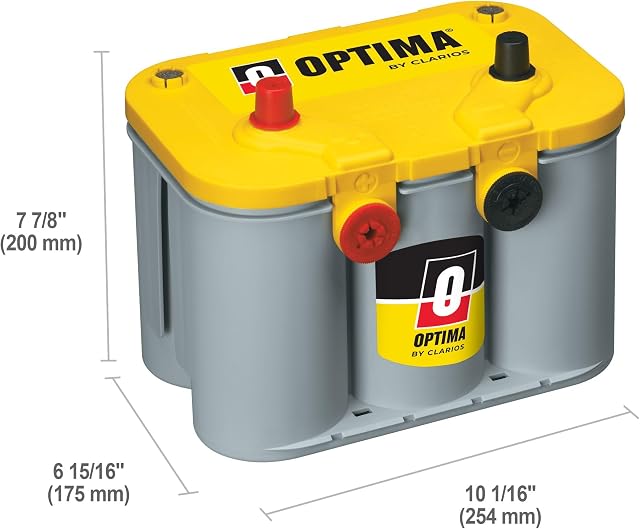
Optima Batteries
YellowTop D34/78 Dual-Purpose AGM Battery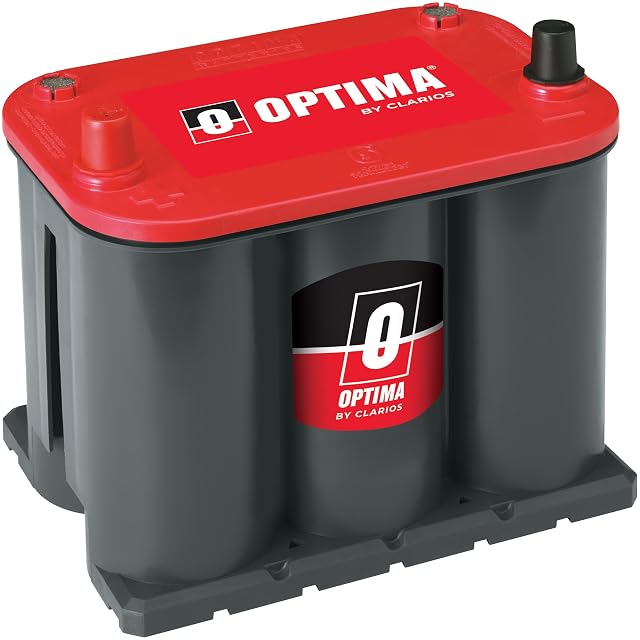
Optima Batteries
RedTop 25 Starting Battery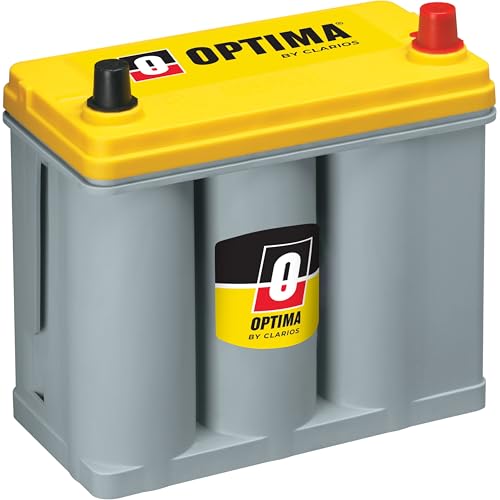
Optima Batteries
YellowTop D51R Dual-Purpose AGM BatteryAs an Amazon Associate I earn from qualifying purchases. Full disclosure
Optima segments its car batteries by how the vehicle actually uses them, not just by size. Get the segment wrong and you'll either underpower a heavy accessory load or overpay for cranking amps you don't need.
| Line | Best for | CCA (SAE) | Reserve capacity | Group sizes we've reviewed |
|---|---|---|---|---|
| RedTop | Starting-only — stock daily drivers, no aftermarket electrical load | 720 CCA (Group 25) | 90 min | Group 25 |
| YellowTop | Dual-purpose — starting plus deep-cycle tolerance for stereos, winches, dash cams left running, or a vehicle that sits between drives | 450–750 CCA depending on group size | 66–120 min | Group 35, Group 34/78, Group 51R |
| BlueTop | Marine and RV — starting and deep-cycle versions for boats, campers, and trolling-motor use | Line-specific, see optimabatteries.com | Line-specific | Not currently in our catalog |
RedTop is the starting-only line — highest peak cranking amps for the money, aimed at a vehicle that starts, runs, and gets driven regularly with no significant parasitic draw. It doesn't tolerate repeated deep discharge as well as YellowTop, so it's the wrong pick if you're running a sound system, a winch, or anything that pulls current with the engine off.
YellowTop is the dual-purpose line: it still starts the engine, but the SpiralCell construction is tuned to also handle the deep-discharge/recharge cycles that come from accessory loads or infrequent driving. That's why it's the default recommendation for anyone asking "which Optima battery do I need" — most enthusiasts modifying a vehicle or driving something that sits for stretches want dual-purpose tolerance, not just peak CCA. Within YellowTop, group size is a fitment decision, not a performance one: get the group that matches your factory battery tray and terminal layout. A YellowTop D51R, for example, is a reverse-polarity Group 51R built for compact-car trays like the current Honda Civic, while the D34/78 is a larger dual-terminal battery for trucks and SUVs.
BlueTop is Optima's marine/RV line, split into starting and dual-purpose (deep-cycle) versions the same way YellowTop splits from RedTop, but built for boat and camper electrical systems rather than passenger vehicles. We haven't added a BlueTop battery to the catalog yet, so if that's your use case, check current specs directly on optimabatteries.com.
Whichever line you land on, match the BCI group size to your factory tray and terminal layout before you buy — an Optima with more CCA than the stock battery won't help if it doesn't physically fit or the terminals are on the wrong side.
Optima Batteries was founded by Gates Rubber Company, spun off as an independent company, and is now owned by Clarios (formerly Johnson Controls Power Solutions). The brand's signature SpiralCell technology winds individual lead-acid cells into tight cylinders using 99.99% pure lead — a design that increases active plate surface area, stiffens the cells against vibration fatigue, and allows the AGM battery to accept deep discharge cycles that would sulfate a conventional flat-plate design.
The product line is segmented by use case: RedTop for starting-only applications (highest peak CCA), YellowTop for dual-purpose use where a vehicle's accessory load requires deep-cycle recharge tolerance alongside starter current, and BlueTop for marine and RV applications. Group sizes cover the most common BCI footprints in light-truck and passenger-car applications; Group 34/78 and Group 35 are the highest-volume automotive SKUs.
Optima is manufactured at a Clarios facility in Monterrey, Mexico. The SpiralCell construction is a proprietary Optima design; the Clarios manufacturing network also produces Interstate, DieHard, and other battery brands, but SpiralCell is exclusive to Optima.
Who makes Optima Batteries? Optima is owned by Clarios, the battery giant formerly known as Johnson Controls Power Solutions. The brand started under Gates Rubber Company, was spun off, and landed at Clarios through the Johnson Controls acquisition. Optima batteries are built at a Clarios plant in Monterrey, Mexico.
What's the best Optima car battery? It depends on how you use the vehicle, not a single "best" SKU. For a stock daily driver with no aftermarket electrical load, the RedTop 25 gives the highest cranking amps for its size. For anything with an accessory load — a stereo, a winch, a dash cam that runs with the engine off, or a car that sits between drives — a YellowTop is the safer pick because it's built to tolerate deep-discharge cycles that would wear down a starting-only battery. From there, group size is a fitment question: match the group and terminal layout to your factory tray.
RedTop vs YellowTop: what's the difference? RedTop is starting-only — it's optimized for peak cranking amps and isn't designed for repeated deep discharge. YellowTop is dual-purpose: it still starts the engine, but the SpiralCell construction is tuned to also handle the discharge/recharge cycles that come from running accessories or letting the vehicle sit. If your electrical system only ever sees normal starting and driving, RedTop is the simpler, cheaper choice. If you're running anything that draws current with the engine off, YellowTop is the one built for that duty cycle.
Are Optima and Interstate batteries made by the same company? Both come out of the Clarios manufacturing network, but they are different products. Optima's spiral-wound SpiralCell AGM design is exclusive to the Optima brand; Interstate and DieHard use conventional flat-plate construction.