
Lisle
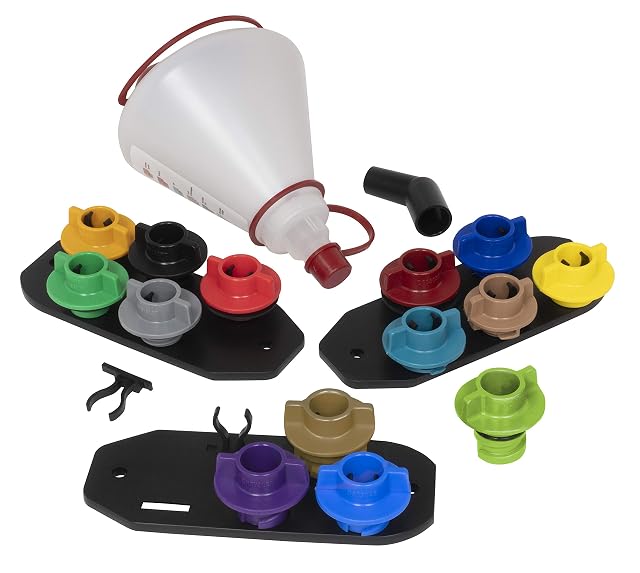
19912 Multi-Application Oil Funnel Set, 14-PieceCCT
Score7.3/10
Score7.3/10
Health9.0Env6.1Price
Editorial score, not a lab test
Our #1 Lisle pick
Top-ranked Oil Funnel in our Lisle lineup, scored independently on effectiveness, health, and environmental impact. No paid placements.
As an Amazon Associate I earn from qualifying purchases. Full disclosure
By CarCareTruth Editorial. Last updated May 2026.
Lisle Corporation is a Clarinda, Iowa tool maker that has built specialty automotive service tools since 1903. It is the brand you reach for when a single repair has you stuck and a general ratchet set will not finish the job. The catalog runs to more than seven hundred single-purpose tools (a brake piston wind-back cube, a claw-style oil filter wrench, a coolant funnel, hose pinch-off pliers) rather than one big socket set. That focus is the whole identity of the company, and it is the right way to think about the brand: Lisle does not want to sell you everything, it wants to sell you the one tool that solves the exact problem in front of you. We review 13 Lisle tools today, and this hub is the honest guide to who Lisle is, which of their tools earns its place in your box, and where the brand has real limits.
Affiliate disclosure: CarCareTruth is reader-supported. As an Amazon Associate I earn from qualifying purchases. We may also earn commissions from other retailers linked on this page, at no extra cost to you. Affiliate revenue never influences our scores or rankings. Full disclosure
Lisle
19912 Multi-Application Oil Funnel Set, 14-Piece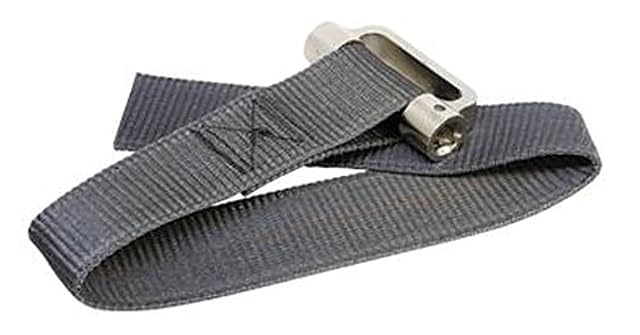
Lisle
Heavy Duty Strap Filter Wrench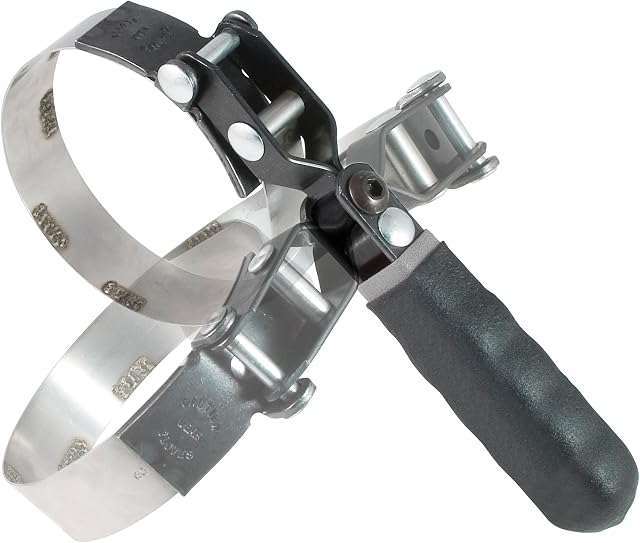
Lisle
Standard Oil Filter Swivel Wrench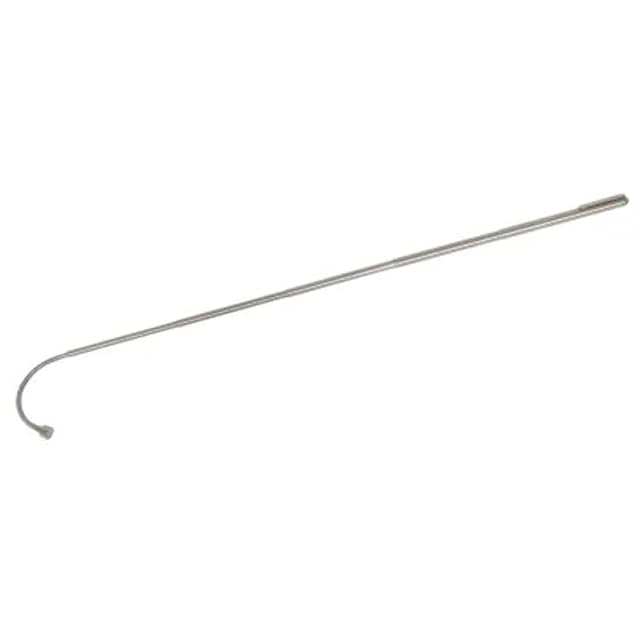
Lisle
66580 23-1/2" Flexible Magnetic Pick-Up Tool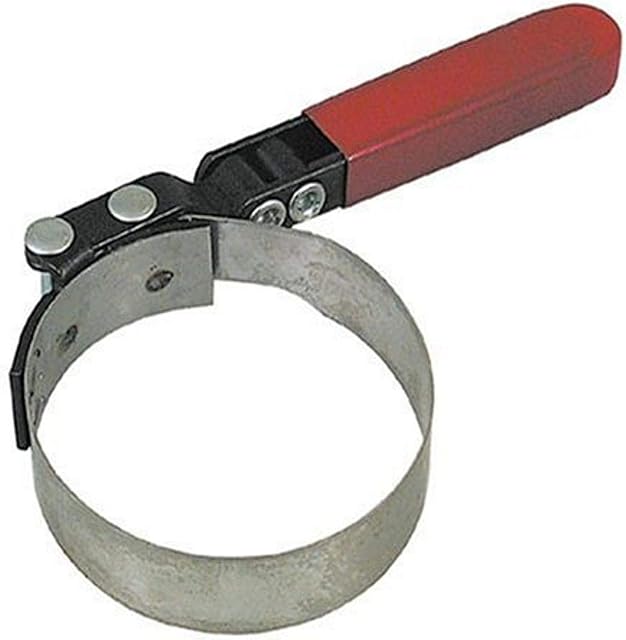
Lisle
Small Swivel Grip Oil Filter Wrench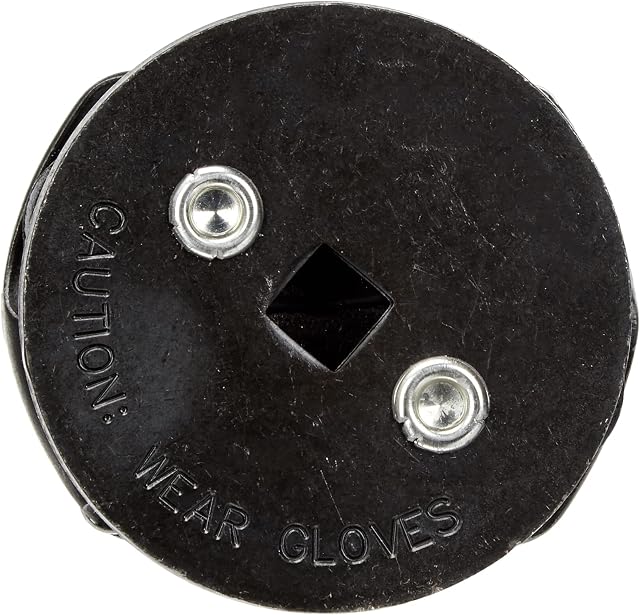
Lisle
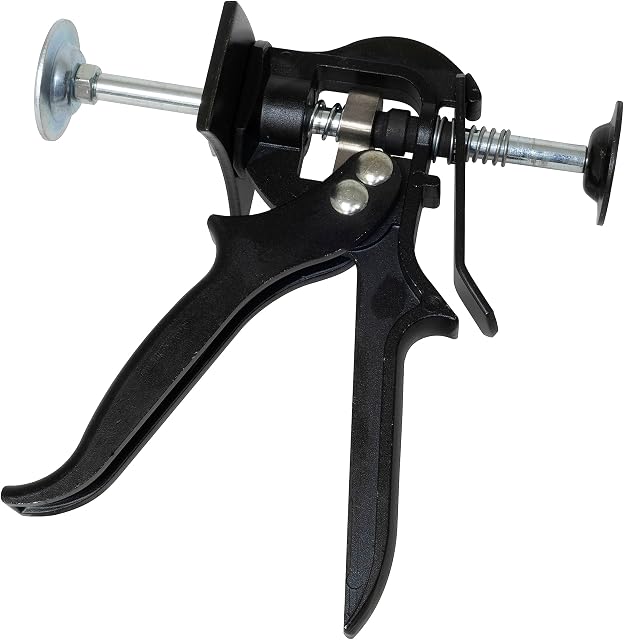
24300 Speedy Brake Pad Spreader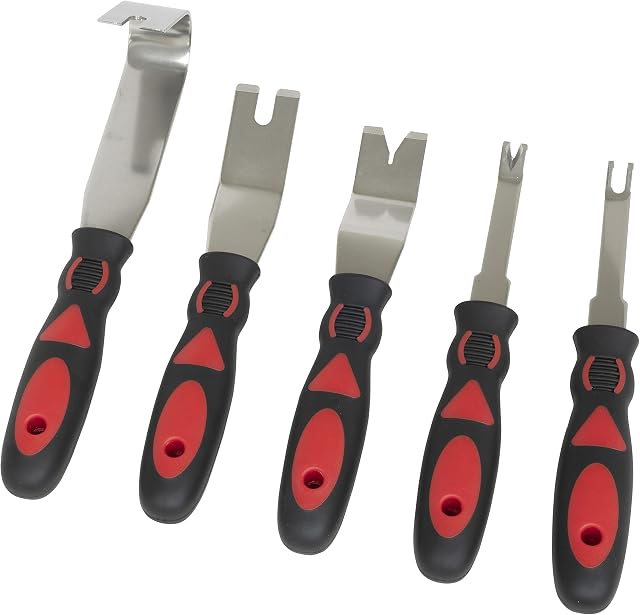
Lisle
83700 5-Piece Trim Removal Set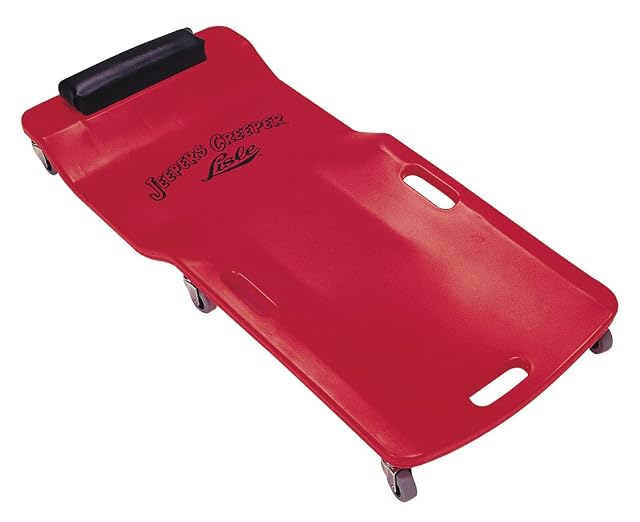
Lisle
92102 Red Low Profile Plastic Creeper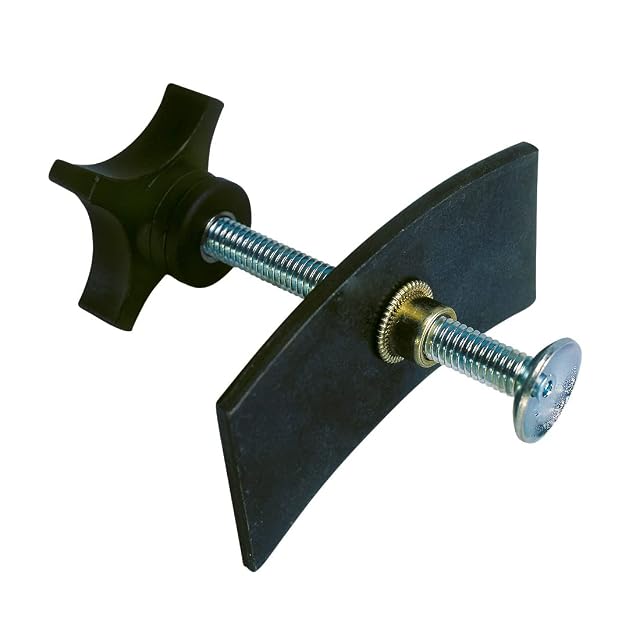
As an Amazon Associate I earn from qualifying purchases. Full disclosure
| Product | Job | CCT score | Notes |
|---|---|---|---|
| Lisle 60200 heavy-duty strap filter wrench | Large or seized housings to 6.5 in | 7.3 | Top score, CCT Recommended, 1/2 in drive |
| Lisle 66580 flexible magnetic pickup tool | Retrieving dropped fasteners | 7.1 | Telescoping magnet, thin review base |
| Lisle 57030 standard swivel oil filter wrench | Filter removal, 3.5 to 3.875 in | 7.0 | Swivel handle clears tight bays, but fits one size band only |
| Lisle 63600 oil filter wrench | Filter removal, 2.5 to 3.125 in | 6.8 | Spring-loaded claw, 3/8 in drive |
| Lisle 53700 small swivel grip oil filter wrench | Filter removal in tight spots | 6.8 | Narrow 73 to 82.5 mm band |
| Lisle 24300 speedy brake pad spreader | Push-in single-piston compression | 6.7 | Pistol-grip, fast |
| Lisle 68300 11-piece trim removal set | Interior panel and clip removal | 6.6 | Discontinued by Lisle, hard to buy now |
| Lisle 24400 disc brake pad spreader | Push-in single-piston compression | 6.4 | T-handle screw, Made in USA |
| Lisle 47900 hose remover pliers | Pulling stuck hoses off fittings | 6.3 | Made in USA |
| Lisle 28600 disc brake piston tool | Rear screw-in caliper wind-back | 6.2 | You supply the 3/8 in ratchet |
| Lisle 29100 quick quad pad spreader | Multi-piston fixed-caliper compression | 6.2 | Scissor type |
| Lisle 22850 hose pincher | Clamping a soft hose to stop flow | 6.0 | Nylon screw clamps |
| Lisle 50750 oil filter pliers | Grip-and-twist filter removal | 5.7 | Slip-joint, lowest score here |
| Lisle 92102 red low profile plastic creeper | Flat-deck ABS creeper for under-car work | 6.9 | Body-contoured deck, urethane casters |
Every one of these sits in the mid-6 to low-7 range on our 10-point scale, and the reason is consistent: as physical hand tools they carry no chemical-health penalty, so the score is driven almost entirely by build quality, fitment coverage, and how well each one does its single job. The pattern worth noticing is that Lisle's purpose-built specialty tools (the swivel wrenches, the magnetic pickup) score highest, while the simpler commodity items (the slip-joint filter pliers, the plastic trim set) score lowest. That tracks the brand's reputation, and we explain it in the honest section below.
Most tool brands sell breadth. They want to be the name on your socket set, your wrench set, your screwdrivers, and your tool chest. Lisle sells the opposite. The company calls itself "the innovator in specialty tools," and the line is full of items that exist to solve one specific repair task that a general-purpose set cannot: winding back a screw-in rear caliper piston, gripping a recessed spin-on oil filter, pinching off a coolant hose without cutting it, fishing a dropped bolt out of a deep engine bay.
That single-purpose philosophy has two practical consequences for a buyer. The good one: when a Lisle tool fits your job, it usually does that job better than improvising with the wrong tool, because it was designed for nothing else. The frustrating one: a single-purpose tool is, by definition, specific. A wind-back cube that covers one set of calipers will not cover the one next to it, and figuring out which Lisle part number actually fits your car is the single hardest part of buying the brand. We flag fitment on every Lisle review for exactly this reason.
Lisle did not start in tools. The company was founded in 1903 in Clarinda, Iowa by C.A. Lisle, and its first products were horse-powered water-well drilling machines, along with washing machines, cream separators, and reel lawn mowers to fill the off-season. The move into automotive came in the mid-1920s. The first automotive product was a master ignition vibrator for the Ford Model T, and the first actual Lisle tool was a valve refacer, built for an era when engine valves were reground roughly every twenty thousand miles. The magnetic drain plug line arrived in the 1930s and even saw use in military equipment during World War II.
The company is still privately held and family-run, and it marked 120 years of continuous manufacturing in Clarinda in 2023. For a category full of brands that are really just labels applied to imported tools, a genuinely old, genuinely family-owned American manufacturer is a real point of difference. We just take care not to oversell what that means on the factory floor, which is the next section.
This is the question buyers ask most, and the honest answer has a caveat. Lisle is a real American manufacturer. It machines, turns, and assembles tools at its expanded original factory site in Clarinda, Iowa, and some products are made fully in house. Two of the tools we review are reported by owners to be Made in USA: the Lisle 24400 disc brake pad spreader and the Lisle 47900 hose remover pliers.
But Lisle is not an all-American catalog, and it is important to be precise about that. The company has said it sources some lower-value items from foreign suppliers, and it does not publish a per-product country-of-origin list on its website. The practical result: "Lisle is an American, family-owned manufacturer in Iowa" is true and verifiable, while "every Lisle tool is made in the USA" is not. If country of origin matters to your purchase, check the specific product packaging or listing, because it varies by tool. We would rather tell you that plainly than let you assume the whole line is domestic.
Lisle backs most of its tools with a lifetime warranty against defects in materials and workmanship, excluding misuse, abuse, neglect, and accidents. That is a durability promise, and for an affordable specialty brand it is a real one. Two qualifiers keep it accurate. First, the warranty covers defects, not normal wear-out or a tool used outside its design. Second, the term is not uniform across every retail channel: some Lisle items at some retailers are listed with only a one-year limited warranty, so the lifetime claim is the general case rather than a blanket guarantee on every SKU. Read the warranty card on the specific tool you buy.
This is the category where Lisle is deepest, and the four tools barely overlap, because three of them cover different filter diameter bands. The first question is always the outside diameter of your filter.
The Lisle 63600 oil filter wrench (6.8) is the claw-style everyday pick. Self-adjusting steel jaws grip the front of a 2.5 to 3.125 inch (64 to 79 mm) spin-on filter on a 3/8 inch drive, so there is no cap size to match. It is the right tool for most import and domestic passenger cars. Its honest knock, and the reason it does not score higher, is the spring: it is the documented failure point, working loose after repeated oil changes and slipping on a severely over-torqued filter.
For filters in a cramped, obstructed spot, the swivel-handle band wrenches are the answer because the pivoting handle clears the engine bay. The Lisle 53700 small swivel grip oil filter wrench (6.8) covers a narrow 73 to 82.5 mm band. That range is genuinely narrow, and Honda and motorcycle filters fall below the 73 mm minimum, which is a documented mismatch, so confirm your size first. The Lisle 57030 standard swivel oil filter wrench is the same swivel idea sized larger, for 88.9 to 98.4 mm (3.5 to 3.875 inch) filters on trucks and SUVs, and at 7.3 it is tied with the 60200 strap wrench as the highest-scoring Lisle tool we review.
When the housing is large or seized, the Lisle 60200 heavy-duty strap filter wrench (7.3, a CCT Recommended pick) is the heavy tool: a nylon-web strap and an alloy-steel yoke that grip cylindrical housings up to 6.5 inches across. The one caveat is the drive: it takes a 1/2 inch square drive, not the common 3/8 inch, so you may need a 1/2 inch breaker bar to use it, and the strap needs a clean, oil-free surface to bite. There is also a fifth way to spin a filter off in our Lisle catalog, the slip-joint pliers covered below. For more options across brands, see our oil filter wrench reviews.
The single most important distinction in this category is whether your caliper piston screws in (wind-back) or pushes straight in. Choose wrong and the tool simply will not work, and that is the wrong tool, not bad technique.
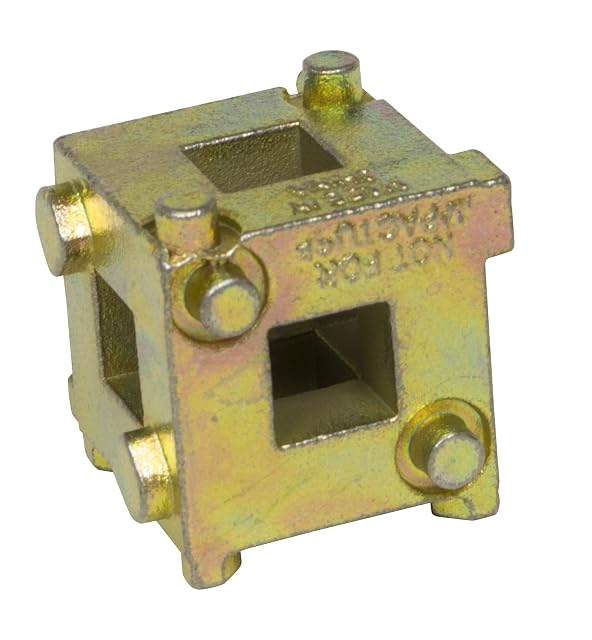
The Lisle 28600 disc brake piston tool (6.2) is the only wind-back tool of the four: a zinc-plated cube with several screw-in piston-pin face profiles, turned with your own 3/8 inch ratchet, for the screw-in rear caliper pistons found on rear brakes with an integrated parking brake. It cannot push a piston straight in, it ships with no handle or case, and its coverage of European dual-pin rear calipers is unconfirmed.
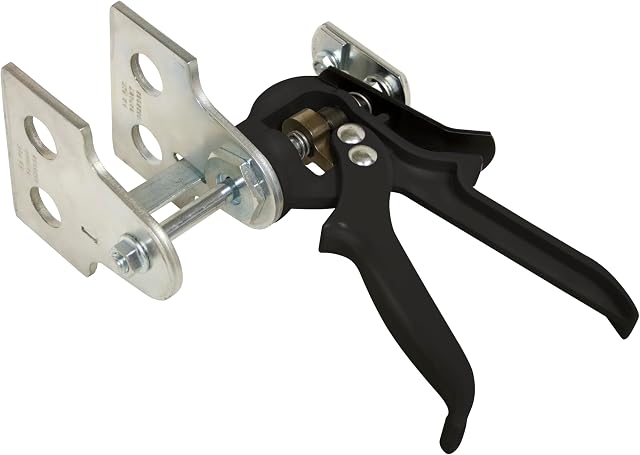
The other three are push-in spreaders, and they differ by mechanism and by how many pistons they compress at once. The Lisle 24400 disc brake pad spreader (6.4) is the simple T-handle screw type for a single front push-in piston: slow, reliable, inexpensive, and Made in USA. The Lisle 24300 speedy brake pad spreader (6.7) does the same single-piston job with a pistol-grip trigger in three or four squeezes, faster and more ergonomic for a price premium. One real caution from its own documentation: do not activate an electric parking brake while the tool is inside the caliper, because it will destroy the tool. The Lisle 29100 quick quad pad spreader (6.2) is the scissor-type tool that compresses all the pistons of a single, dual, or quad fixed caliper at once, for performance and luxury brakes. Its honest limits: the plastic handles flex under load, and it lacks the throw to fully seat the oversized four-piston calipers on 2019-and-newer full-size GM trucks.
A useful way to think about it: the 28600 wind-back cube plus any one of the push-in spreaders is the realistic combination that covers both axles. The full category lives at our brake service tools reviews.
These three sit in the same pliers and cutters category, but they do not compete, because each does a different job.
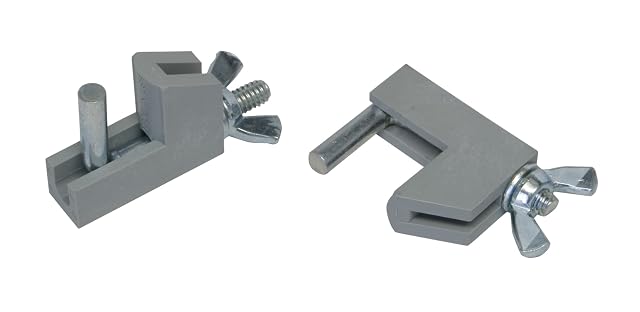
The Lisle 22850 hose pincher (6.0) is not really pliers at all. It is a two-piece set of fiberglass-reinforced nylon screw clamps that pinch a soft rubber hose shut to stop flow while you swap a fuel filter, bleed brakes, or work a vacuum line. It is for soft hose only, and there is a community report of the nylon body fracturing when used on a brake line, which is outside its intended soft-hose use.
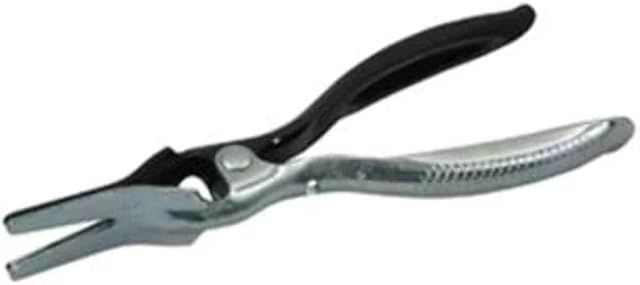
The Lisle 47900 hose remover pliers (6.3) pull a stuck hose off its fitting: a sharpened jaw grips and a flat jaw pushes the 5/32 to 1/2 inch vacuum or fuel hose free in one squeeze. It is Made in USA. At 10.5 inches long it can be a struggle in very tight clearances, and the sharp jaw can mark a metal fitting.
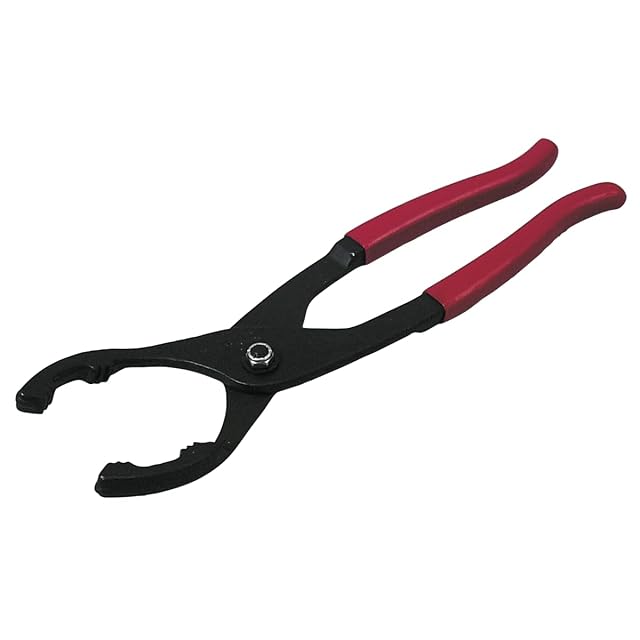
The Lisle 50750 oil filter pliers (5.7) are slip-joint pliers that grip and twist off a spin-on oil filter from 2.25 to 4 inches, with a 20-degree jaw bend that reaches a filter mounted at an angle. It is the lowest-scoring Lisle tool we review, partly because it is a single-function tool sold at a pliers price and the steel alloy is unspecified, but it is a genuinely useful fifth option when a band or claw wrench cannot get purchase.
The Lisle 66580 flexible magnetic pickup tool (7.1) is a telescoping magnetic retriever that extends from about 5.4 to 23.5 inches with a bendable flex neck, for fishing dropped bolts and nuts out of a deep engine bay. It scores well and carries a CCT Recommended badge, though that badge sits on a relatively thin owner-review base and the headline 2.5-pound pull strength is an unverified manufacturer claim rather than something we could confirm.
The Lisle 68300 11-piece trim removal set (6.6) is an all-plastic, non-marring kit for interior panels, dashboards, and clips. This is the one to read carefully: Lisle has discontinued it at the factory (retailers still have stock), it has a thin review base, and it reads like a generic imported kit that is functionally close to cheaper unbranded sets, with little that is distinctly Lisle about it. It works, but it is not a brand showcase. We file it under pry bars, pullers, and extractors, the closest category we have for panel tools.
The Lisle 92102 red low profile plastic creeper (6.9) is the brand's entry in a category where Lisle is well known among DIYers — the "Jeepers Creepers" line. The 92102 is a flat-deck ABS plastic creeper with a body-contoured deck, a molded raised headrest, and urethane rollers mounted in steel bushings. The manufacturer states a 5 in overall product height; owner feedback owners confirm a genuinely low profile for trucks, SUVs, and taller unibody vehicles at stock ride height. The urethane casters roll well on concrete per owner reports. ABS construction keeps the unit light at 10.5 lb, and no published weight rating appears in the spec, though owners at up to 240 lb report no flex or failure in multi-month use. It scores just below the CCT Recommended threshold — a solid mid-range creeper held back by unconfirmed deck height for modern low-clearance sedans and ABS construction versus tubular steel.
Part of being honest about a brand is admitting what we have not covered. A few of Lisle's most beloved tools in mechanic communities are not yet in our catalog: the Spill-Free Funnel (the coolant-fill funnel that prevents airlocks, arguably the single most recommended Lisle product), the fuel and AC line disconnect sets, and the oxygen sensor socket. The Jeepers Creepers line now has one review in our catalog; additional sizes and variants are on our list. These will link here when they land.
Lisle is a useful, fairly priced specialty brand with three real weaknesses an owner should know before buying.
First, the bits and Torx tools are the weak spot. The most consistent complaint across mechanic forums is that Lisle's one-piece Torx drivers and bit sockets run soft, and can twist or round off, with the smaller sizes worst. None of those are in the set we review here, and that is not an accident: the specialty pullers, wrenches, and purpose-built tools earn far more trust than the bit products do, so buy Lisle for the clever single-purpose tool, not for a set of drivers.
Second, fitment friction is built into the model. Because nearly every Lisle tool is application-specific, the hardest part of the purchase is confirming the tool fits your exact vehicle, caliper, or filter diameter before you order. Buyers do end up with the wrong tool because the coverage range was hard to pin down. The oil filter wrenches above are the clearest example: four tools, four different size bands. Match by part number and stated range, and when in doubt, verify against your service manual.
Third, the bare packaging and clone pressure surprise first-time buyers. Many Lisle tools ship with no case and no handle (the brake cube needs your own ratchet, the strap wrench needs your own 1/2 inch drive), and near-identical Amazon clones often undercut the price. The defensible reason to pay for the Lisle is the lifetime-against-defects warranty and more consistent fitment, neither of which the unbranded clones reliably honor. For a true commodity item, the clone may be fine. For a tool you want to outlast the repair, the warranty is the difference.
A sensible way to approach the brand:
Where are Lisle tools made? Lisle Corporation is an American manufacturer headquartered in Clarinda, Iowa, where it has built tools since 1903 and where it still machines and assembles much of its line. It is not an all-domestic catalog, though. The company has said it sources some lower-value items from foreign suppliers and does not publish a per-product country-of-origin list, so individual tools vary. Some products, like the 24400 brake pad spreader and the 47900 hose remover pliers, are reported by buyers to be Made in USA, while others are not, so check the specific product listing.
Is Lisle made in the USA? Partly. Lisle is a genuine American, family-owned manufacturer in Iowa, and some products are made fully in house. But "every Lisle tool is made in the USA" is not accurate, because some items are foreign-sourced and origin is not labeled uniformly. Verify on the specific listing rather than assuming the whole brand is domestic.
Are Lisle tools good quality? For their specialty and puller tools, generally yes. They are purpose-built and do their single job well, which is what the brand is known for, and our highest-scoring Lisle tools are the swivel oil filter wrenches and the magnetic pickup. The consistent caveat from mechanics is that Lisle's one-piece Torx drivers and bit sockets run soft and can fail, with smaller sizes worst. Buy Lisle for the clever single-purpose tools, not for bit sets.
Which Lisle oil filter wrench do I need? It depends on your filter's outside diameter and how tight the access is. The 63600 claw wrench covers 2.5 to 3.125 inch filters and is the everyday import and domestic pick. The 53700 swivel wrench covers a narrow 73 to 82.5 mm band for tight spots, and the 57030 swivel wrench covers the larger 88.9 to 98.4 mm truck and SUV band. For large or seized housings up to 6.5 inches, the 60200 strap wrench is the heavy-duty option, though it needs a 1/2 inch drive. Confirm your filter diameter before buying.
What is the difference between the Lisle brake pad spreader and the disc brake piston tool? They do opposite jobs. The 28600 disc brake piston tool winds back screw-in rear caliper pistons, which is the kind found on rear brakes with an integrated parking brake. The 24300, 24400, and 29100 pad spreaders push straight-in front pistons back into the caliper. A piston that screws in cannot be pushed straight, so you match the tool to the caliper, and many people own one wind-back tool plus one spreader to cover both axles.
Does Lisle have a lifetime warranty? Most Lisle tools carry a lifetime warranty against defects in materials and workmanship, excluding misuse and abuse. It is a durability promise, not a blanket return policy. The term is not uniform across every retailer, though. Some items are listed with only a one-year limited warranty, so read the warranty card on the specific tool you buy.
What is Lisle known for? Single-purpose specialty automotive tools that solve one exact repair task, a focus the company has kept since 1903. Rather than general socket and wrench sets, Lisle builds the niche problem-solvers (brake wind-back cubes, oil filter wrenches, hose pinch pliers, the spill-free coolant funnel) that a standard tool kit cannot replace.
Who makes Lisle tools? Lisle Corporation, a privately held, family-run company in Clarinda, Iowa, founded in 1903 by C.A. Lisle. It marked 120 years of continuous manufacturing in Clarinda in 2023 and remains family-owned.
Are Lisle tools worth it over cheaper Amazon clones? The difference is the warranty and fitment consistency. Lisle's lifetime-against-defects coverage and purpose-built fit are what you are paying for, and the near-identical unbranded clones often honor neither. For a true commodity tool the clone may be fine, but for a tool you want to outlast the repair, the Lisle is the safer buy.
Do Lisle tools come with a case or a ratchet? Often no. Many Lisle tools ship bare, with no case and no handle, and expect you to supply your own ratchet, breaker bar, or drive. The 28600 brake piston cube needs your own 3/8 inch ratchet and the 60200 strap wrench needs a 1/2 inch drive. This surprises first-time buyers, so check what is in the box before you order.